How to Increase Humidity for Tropical Houseplants
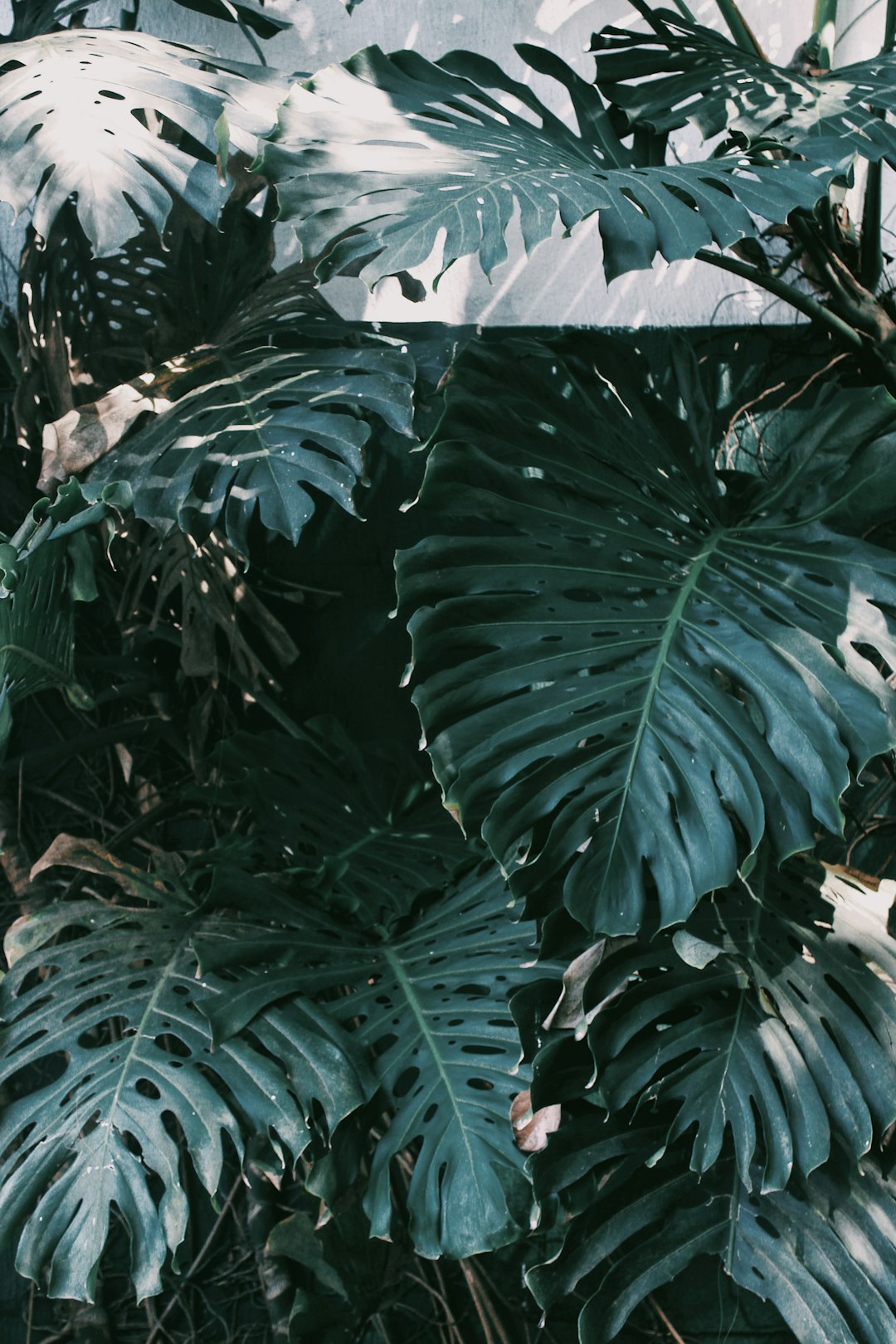
If your tropical houseplants keep developing crispy leaf edges, yellowing tips, or dropping leaves without explanation, low indoor humidity is often the hidden culprit. Most tropical species — think calatheas, ferns, orchids, and monsteras — evolved in environments where the air holds significant moisture year-round. The average home, especially during winter when heating systems run constantly, can drop to humidity levels that genuinely stress these plants. The good news is that raising indoor humidity is entirely achievable, even in a small apartment, and you do not need expensive equipment to make a real difference.
Understanding Your Plant's Environment
Before choosing a humidity method, it helps to understand what your plants are actually experiencing. Relative humidity (RH) measures how much moisture the air holds compared to its maximum capacity at a given temperature. Most tropical houseplants thrive between 50% and 70% RH, while the average heated or air-conditioned home typically sits between 30% and 50%.
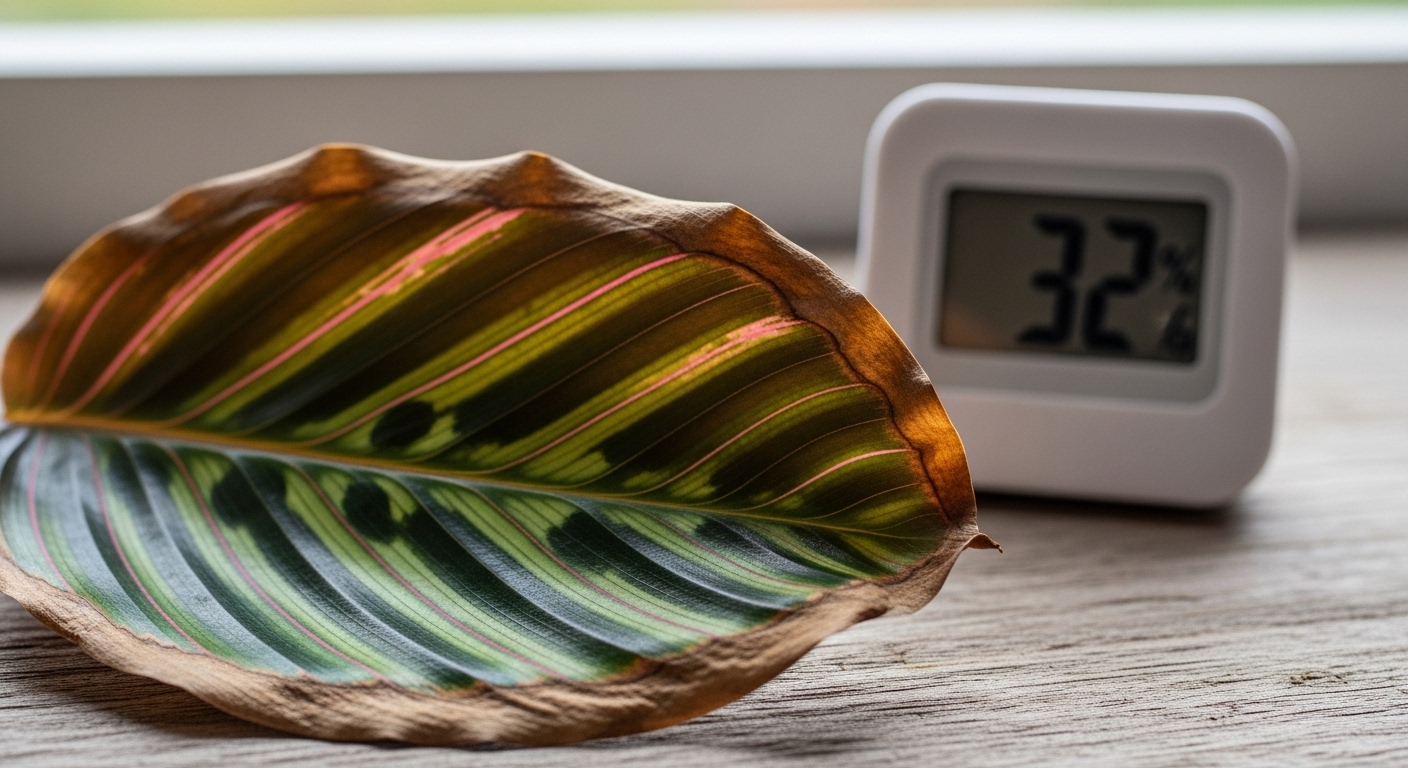
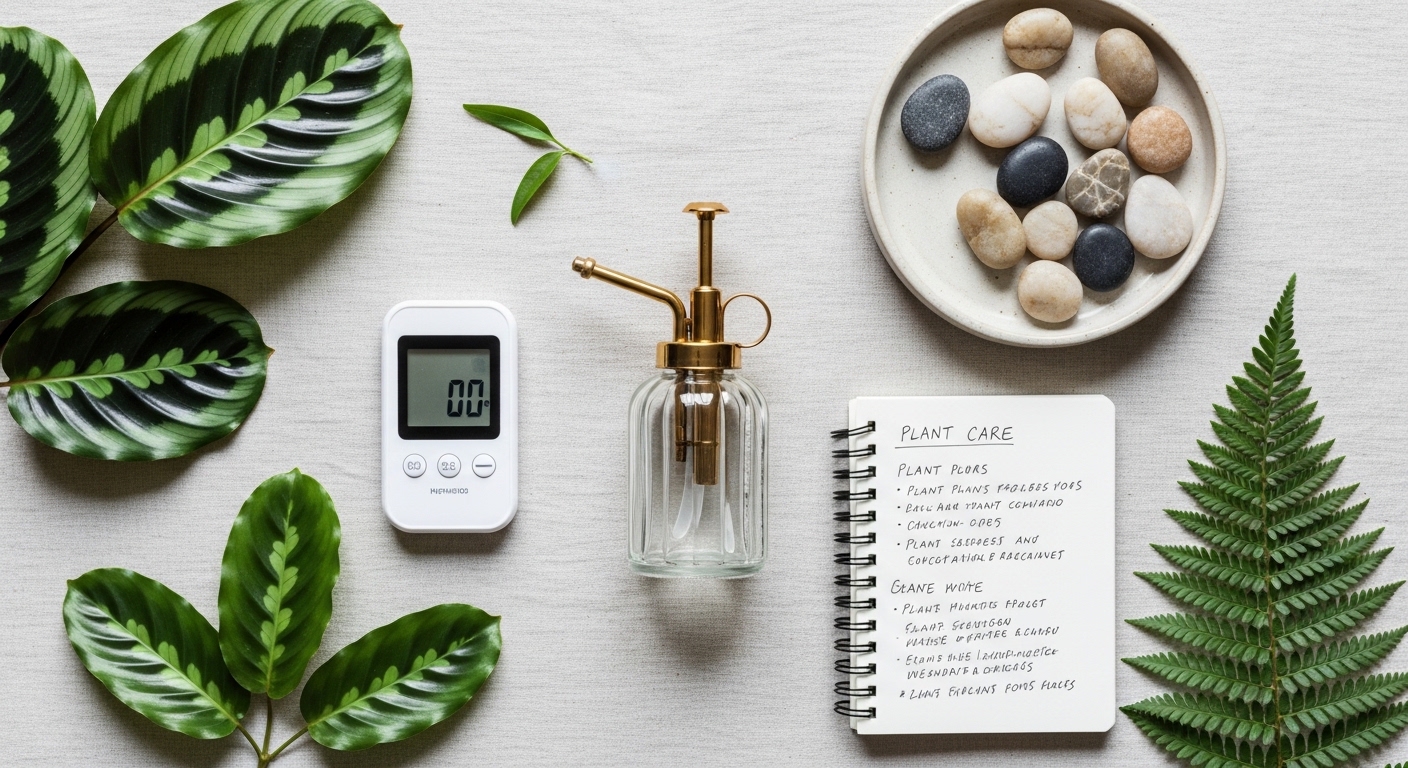
An affordable hygrometer — a small device that reads both temperature and humidity — is one of the most useful tools a plant parent can own. Place it near your most sensitive plants and check it at different times of day. You may be surprised to find that humidity near a sunny window drops significantly by midday, or that a bathroom stays naturally humid enough to skip extra measures entirely.
Knowing your baseline helps you choose the right solution rather than guessing. Plants showing these symptoms are likely experiencing humidity stress:
- Brown, crispy leaf tips or edges
- Curling or cupping leaves
- Premature leaf drop
- Slow or stunted new growth
- Flower buds dropping before opening
Watering the Right Way
It may seem counterintuitive, but how you water your plants has a direct relationship with the humidity they experience at root level and in the surrounding air. Overwatering in an attempt to compensate for dry air is one of the most common mistakes tropical plant owners make — and it leads to root rot rather than relief.
For moisture-loving tropicals, water thoroughly when the top 2 cm of soil feels dry to the touch, allowing excess to drain freely from the pot. Consistently moist (not waterlogged) soil releases gentle ambient moisture into the air around the plant, contributing modestly to local humidity. Using a well-draining, peat-free potting mix with added perlite helps maintain that balance — roots stay hydrated without sitting in standing water.
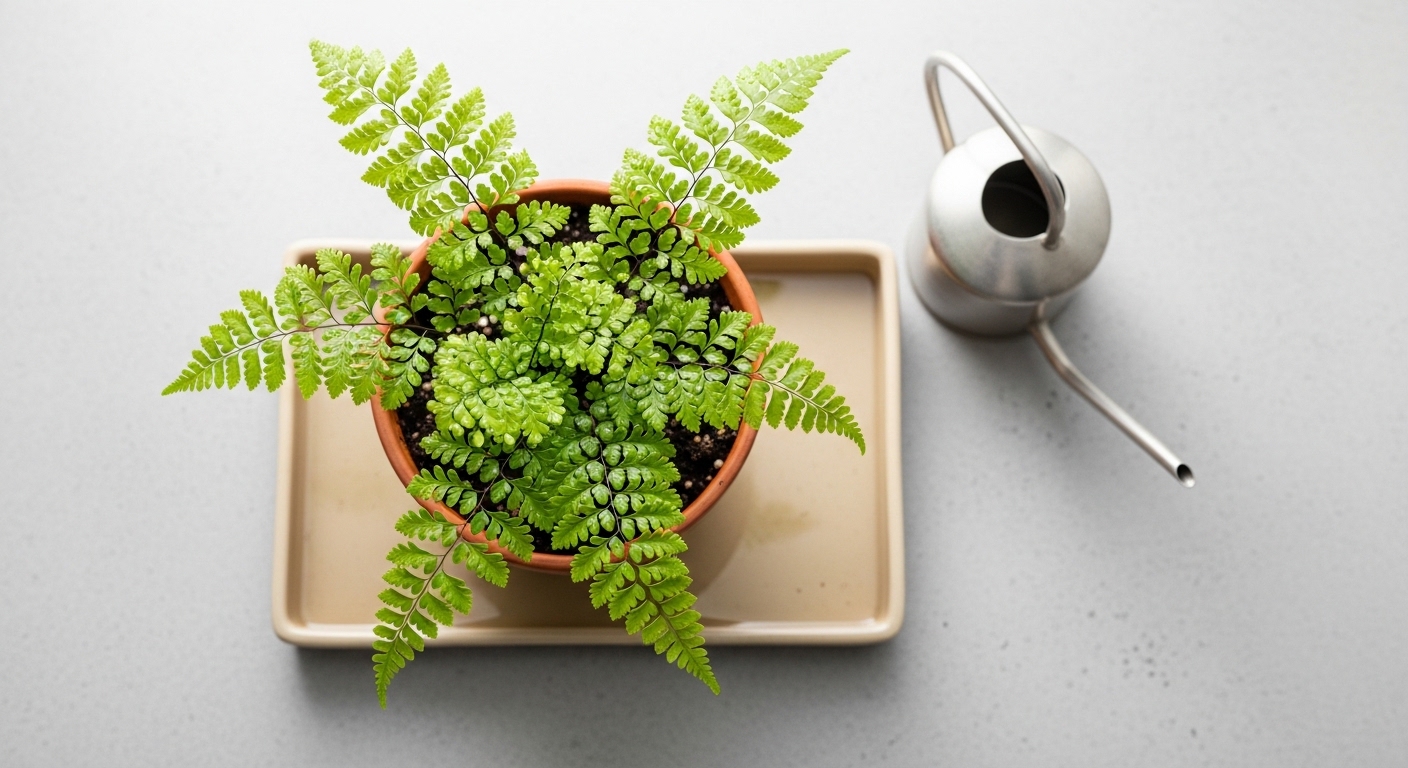
Bottom watering is particularly useful for humidity-sensitive plants like ferns and calatheas. Place the pot in a tray of water for 20–30 minutes, allow the soil to absorb moisture from below, then remove and drain. This keeps the foliage dry (reducing fungal risk) while ensuring the root zone stays consistently hydrated.
Light Requirements Explained
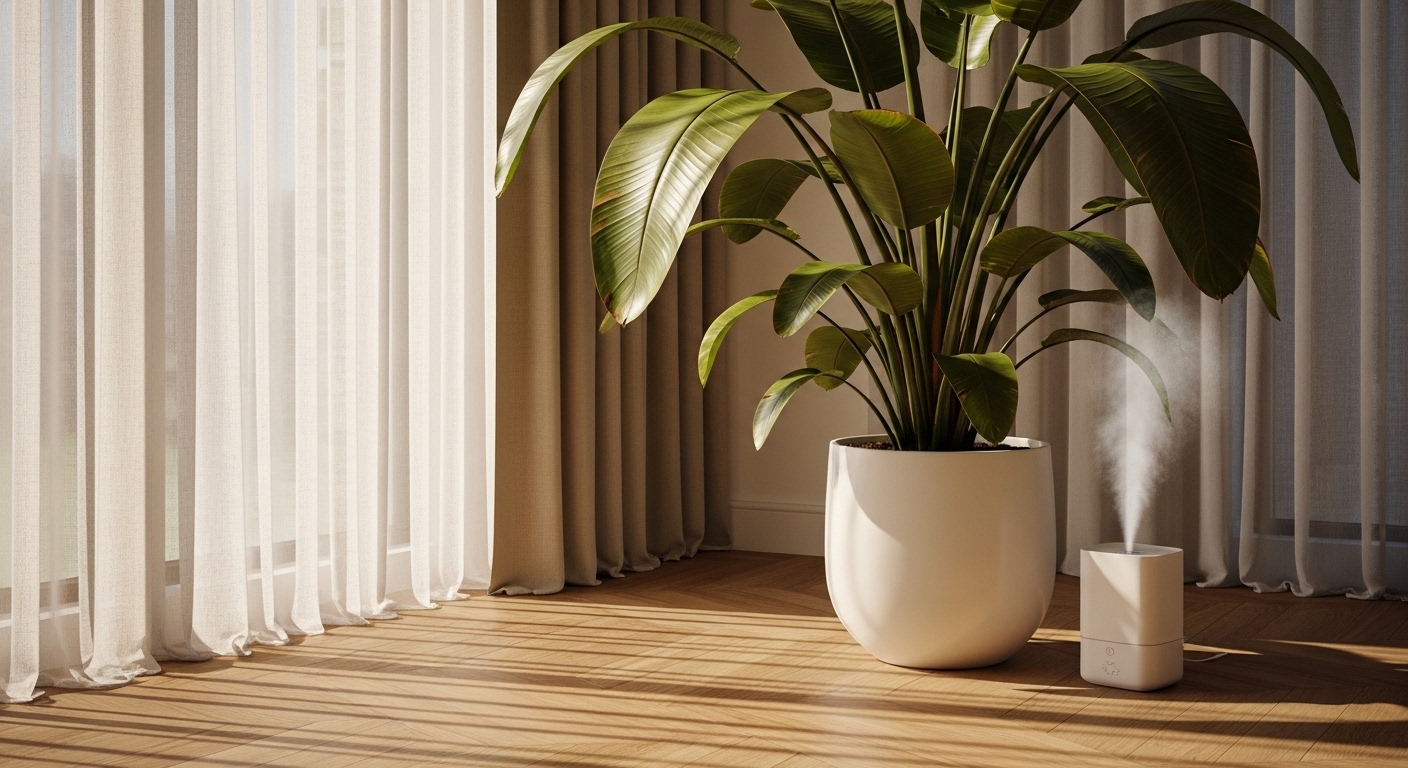
Light placement affects humidity more than most growers realize. A plant positioned directly against a sun-baked south-facing window in summer may experience dramatically drier air at leaf level due to radiant heat — even if the rest of the room feels comfortable. Bright indirect light, achieved by placing plants a meter or two back from a window or filtering direct sun with a sheer curtain, tends to create a more stable microclimate.
For tropical species that genuinely need higher light — like bird of paradise or fiddle-leaf fig — pairing a good light position with a nearby humidifier is often the most effective combination. Grow lights can also dry the air around foliage over extended periods, so if you use supplemental lighting, follow manufacturer instructions and monitor humidity levels closely. Consult a licensed electrician if you are setting up a more complex grow light system.
In general, most humidity-loving tropicals prefer:
- Bright, filtered indirect light for 6–8 hours daily
- Positions away from heating vents and radiators
- Stable temperatures between 18°C and 27°C (65°F–80°F)
- Distance from cold drafts near windows in winter
Humidity, Temperature & Soil
There are several practical, low-cost methods to raise humidity specifically around your tropical plants, and many growers find that combining two or three approaches works better than relying on any single technique.
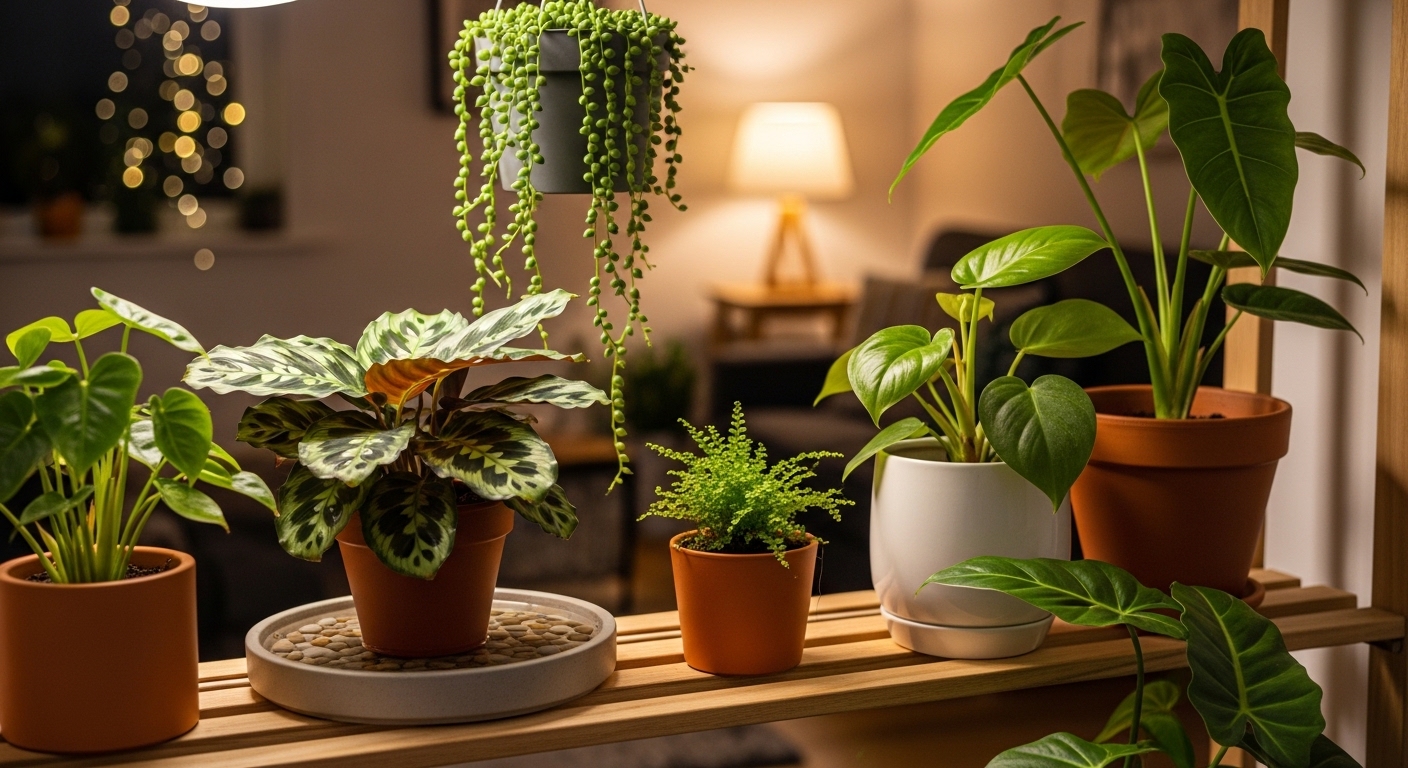
Pebble trays are a classic and genuinely effective passive method. Fill a shallow tray with pebbles or gravel, add water until it sits just below the top of the pebbles, then place your pot on top. As the water evaporates, it creates a zone of slightly elevated humidity directly around the plant. Top up the tray every few days and rinse it monthly to prevent algae or fungus gnat breeding.
Grouping plants together takes advantage of transpiration — the natural process by which plants release water vapor through their leaves. A cluster of three or more plants creates a shared humid microclimate that benefits all of them. This is one of the most natural and visually appealing approaches, and it tends to work well in living rooms and bedrooms.
Misting is popular but often misunderstood. Light misting with room-temperature water can temporarily raise humidity around foliage, but the effect generally lasts less than an hour. It is most useful as a supplemental measure on very dry days rather than a primary strategy. Avoid misting plants with fuzzy leaves (like African violets) or in low-airflow environments where wet foliage could encourage fungal issues.
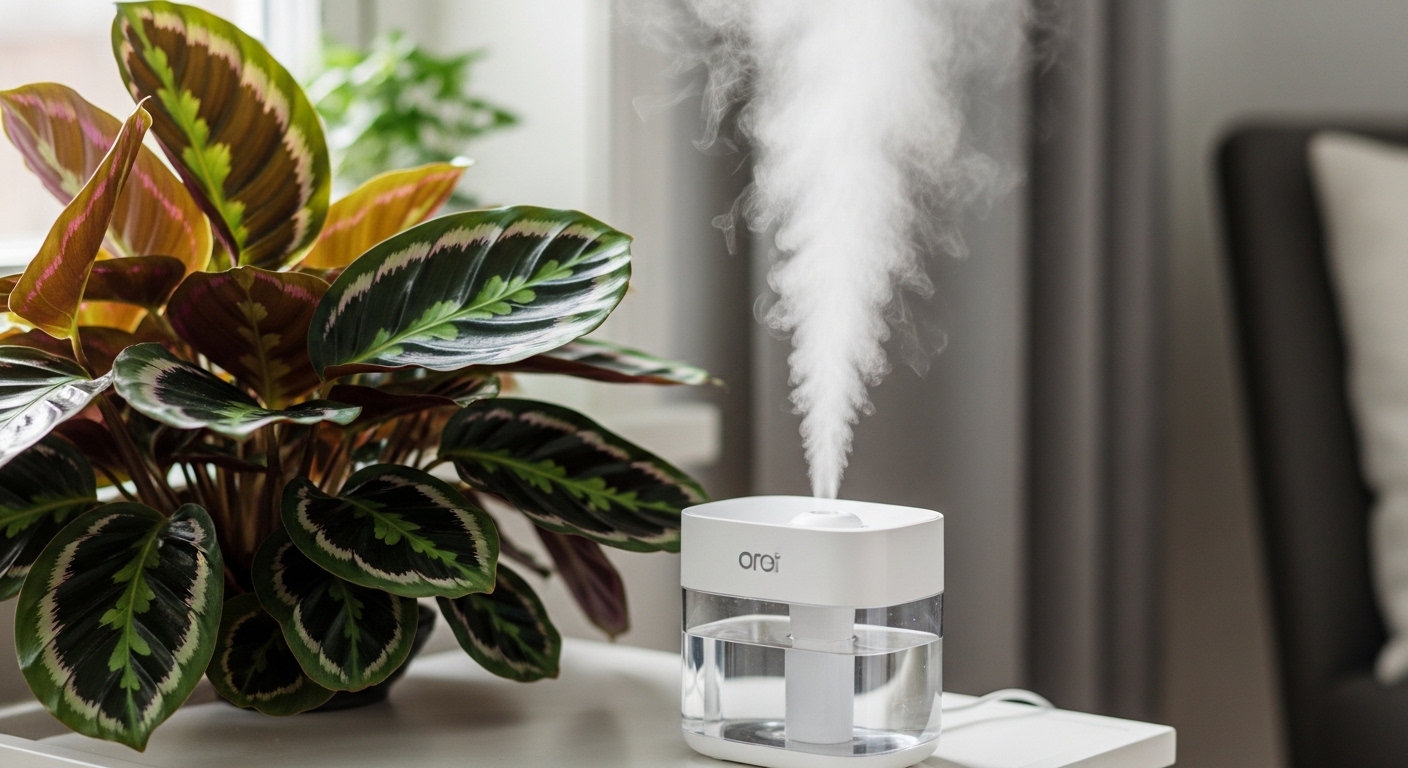
A dedicated humidifier is the most reliable and consistent solution, particularly for highly sensitive species like maidenhair ferns, calatheas, and orchids. Ultrasonic cool-mist humidifiers are widely used by plant parents because they are quiet, energy-efficient, and produce a fine mist that raises ambient RH measurably. Position the humidifier within one to two meters of your plants, and aim to maintain 50–60% RH for most tropical species.
A hygrometer paired with a small humidifier on a timer is arguably the most impactful investment a tropical plant parent can make — it removes the guesswork and keeps your plants in their comfort zone around the clock.
Common Indoor Care Mistakes
Even well-intentioned plant parents can accidentally make humidity problems worse. Recognizing these patterns early saves a lot of frustration.
- Placing plants near heating vents or radiators. Forced hot air is extremely drying and can drop local humidity dramatically within minutes. Always keep moisture-loving tropicals at least one meter away from any heat source.
- Misting in low-light or low-airflow rooms. Without adequate air circulation, moisture sitting on leaves can encourage powdery mildew or botrytis. If you mist, do so in the morning so leaves can dry before evening.
- Using cold tap water directly. Very cold water can shock tropical foliage and may leave mineral deposits on leaves over time. Allow tap water to sit at room temperature for an hour before misting or watering.
- Relying on misting alone. Misting is a supplement, not a solution. For genuinely humidity-sensitive species, it rarely raises RH enough to make a measurable difference on its own.
- Neglecting the humidifier water reservoir. Stagnant water in a humidifier can harbor bacteria and mold. Empty, rinse, and refill the reservoir every one to two days, and deep-clean the unit weekly according to manufacturer instructions.
- Grouping plants with incompatible needs. Grouping works beautifully when plants share similar light and humidity requirements. Pairing a cactus with a calathea, for example, creates a watering conflict that benefits neither plant.
Quick Care Checklist
Use this checklist as a seasonal reference — humidity needs tend to peak in winter when indoor heating is running, and again in summer if air conditioning is heavy.
- Purchase a hygrometer and measure current RH near your most sensitive plants.
- Identify which plants need 50%+ RH and group them together in a dedicated zone.
- Set up pebble trays beneath humidity-sensitive species and top up water every 2–3 days.
- Position plants away from radiators, heating vents, and cold drafts.
- If RH consistently falls below 45%, introduce an ultrasonic humidifier on a timer.
- Mist foliage lightly on particularly dry days — always in the morning.
- Clean pebble trays monthly and humidifier reservoirs weekly to prevent mold and algae.
- Monitor plant foliage weekly for crispy tips, curling, or new growth issues as early indicators.
Keeping a simple plant journal — even just a few notes on your phone — can help you track which methods are working and when your plants tend to show stress. Seasonal patterns become much clearer over time.
Tropical houseplants are genuinely rewarding to grow once you understand what they need — and humidity is one of the most impactful variables you can actually control. Small, consistent adjustments tend to produce far better results than occasional dramatic interventions. Start with a hygrometer, group your moisture-lovers together, and add a humidifier if needed. Your plants will communicate clearly when conditions improve: new growth will unfurl smoothly, leaf edges will stay clean, and that lush, jungle-like quality you fell in love with will start to feel very achievable.


Comments
Post a Comment