Terracotta vs Plastic vs Ceramic: Choosing the Right Pot
If your houseplant keeps struggling despite doing everything right, the pot itself might be the problem. Choosing the right pot for your houseplant is one of the most overlooked decisions in plant care — and it affects everything from how quickly soil dries out to whether roots get the oxygen they need. Terracotta, plastic, ceramic, and fabric pots each behave in fundamentally different ways, and matching the right material to your plant's needs (and your watering habits) can genuinely transform your results. This guide breaks it all down so you can make a confident, informed choice.
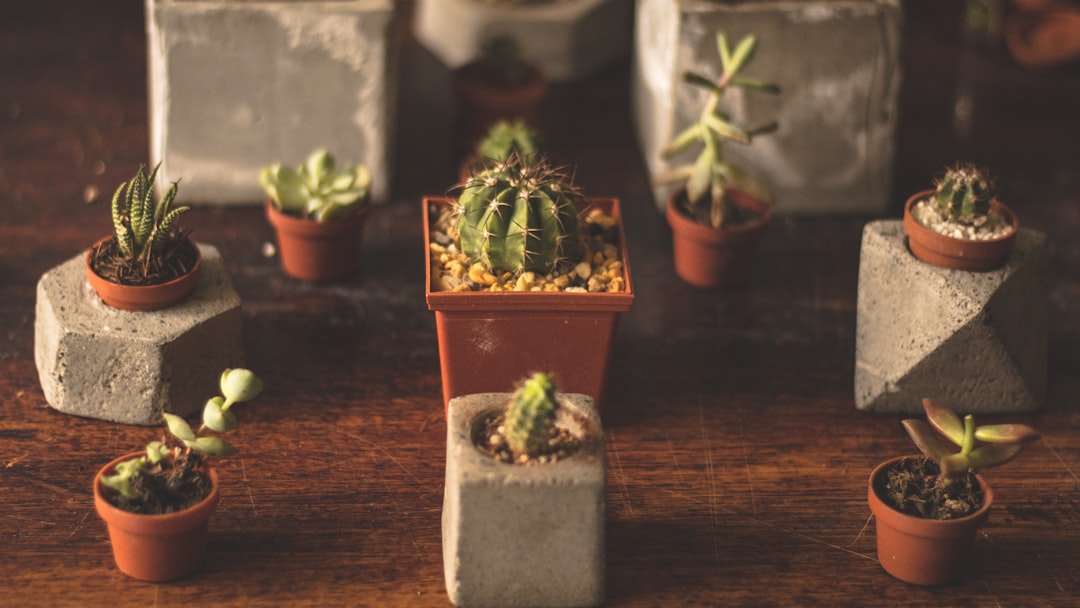
At-a-Glance Comparison Table
Before diving into the details, here is a quick reference to see how each pot material stacks up across the factors that matter most to plant health.
| Feature | Terracotta | Plastic | Ceramic (Glazed) | Fabric |
|---|---|---|---|---|
| Drainage | Excellent | Moderate (depends on holes) | Moderate | Excellent |
| Breathability | High (porous walls) | None | Low (sealed glaze) | Very High |
| Moisture Retention | Low — dries quickly | High — stays moist | High — stays moist | Low — dries quickly |
| Weight | Heavy | Very Light | Very Heavy | Very Light |
| Durability | Moderate (can crack) | High | High (but chips) | Moderate (degrades over time) |
| Best For | Succulents, cacti, herbs | Tropical foliage, ferns | Decorative display plants | Fast-growing plants, outdoors |
| Price Range | Low–Medium | Very Low | Medium–High | Low |
Keep this table in mind as we explore each material in depth — the right choice often comes down to your specific plant and how often you tend to water.
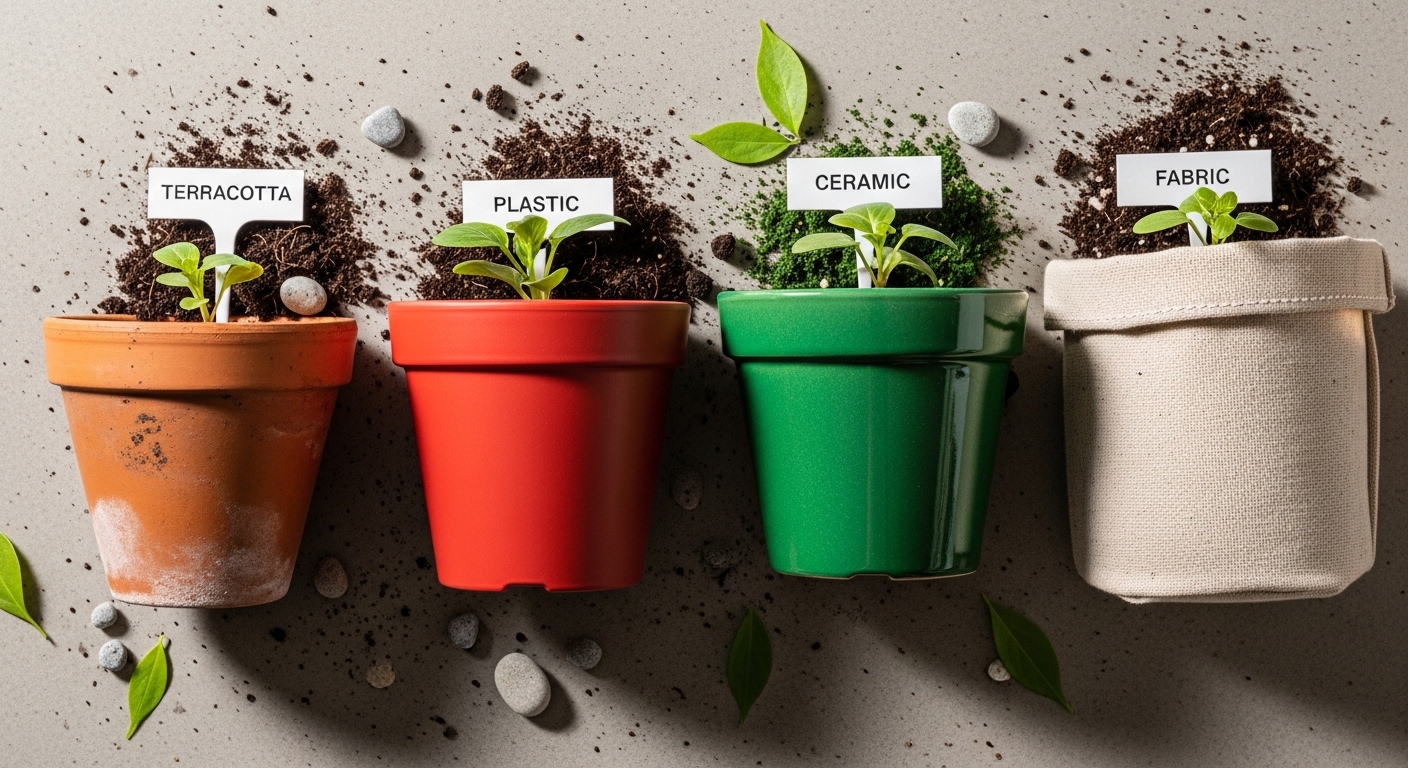
Terracotta Pots — The Classic Breathable Choice
Terracotta is one of the oldest pot materials in cultivation, and for good reason. Its unglazed clay walls are naturally porous, allowing both air and moisture to pass through the sides of the pot. This means the root zone dries out more evenly and more quickly than in sealed containers — a major advantage for plants that are prone to root rot.
Because terracotta wicks moisture away from the soil, it works beautifully for:
- Cacti and succulents that prefer dry conditions between waterings
- Mediterranean herbs like rosemary, thyme, and lavender
- Orchids and other epiphytes that need excellent aeration
- Any plant owned by someone who tends to overwater
The trade-off is that terracotta dries out fast — sometimes within a day or two in warm, dry conditions. If you grow moisture-loving tropicals like calatheas or ferns, you may find yourself watering constantly. Terracotta can also crack in freezing temperatures, so it is generally better suited to indoor use or frost-free climates.
A simple trick many growers use: soak a new terracotta pot in water for 30 minutes before planting. This prevents the dry clay from pulling moisture away from freshly transplanted roots too aggressively.
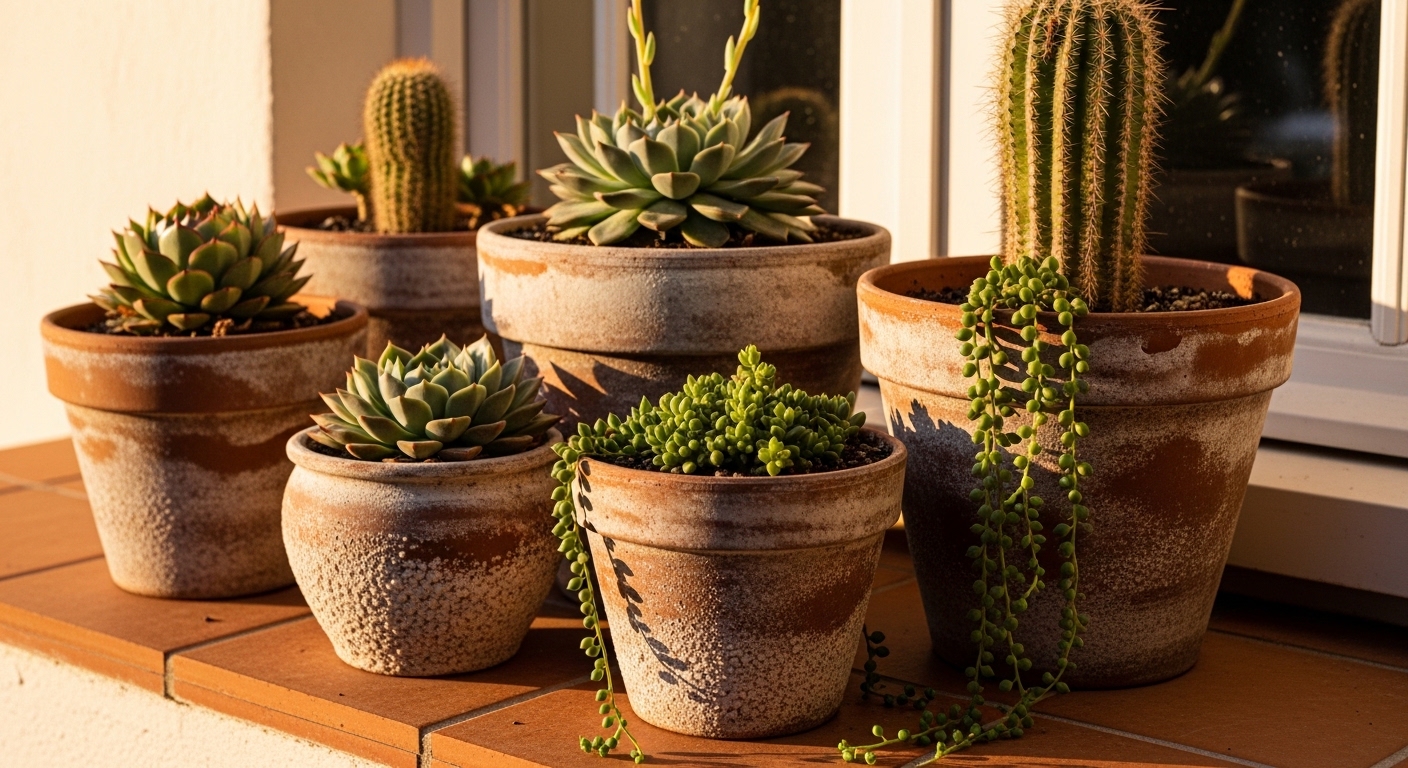
Plastic Pots — The Practical, Moisture-Retaining Option
Plastic pots have a reputation for being purely functional, but they are genuinely one of the best choices for a wide range of tropical houseplants. Because plastic is non-porous, moisture stays in the soil much longer — which is exactly what plants like monsteras, pothos, philodendrons, and peace lilies prefer. If you tend to underwater or simply have a busy schedule, plastic pots offer a helpful buffer.
Plastic pots are also lightweight, affordable, and available in every size imaginable. They are the go-to choice for:
- Tropical foliage plants that prefer consistently moist (not soggy) soil
- Ferns and calatheas that wilt quickly when they dry out
- Large plants where terracotta would be too heavy to move
- Growers who water on a weekly schedule rather than by feel
The key with plastic is drainage holes. A plastic pot without drainage is a recipe for waterlogged roots. Always check that holes are present and unobstructed — and if you are using a decorative outer pot (a cachepot), make sure to empty any standing water from the saucer within an hour of watering.
Yellowing lower leaves + soggy soil in a plastic pot: likely overwatering combined with poor drainage — check that holes are clear and reduce watering frequency.
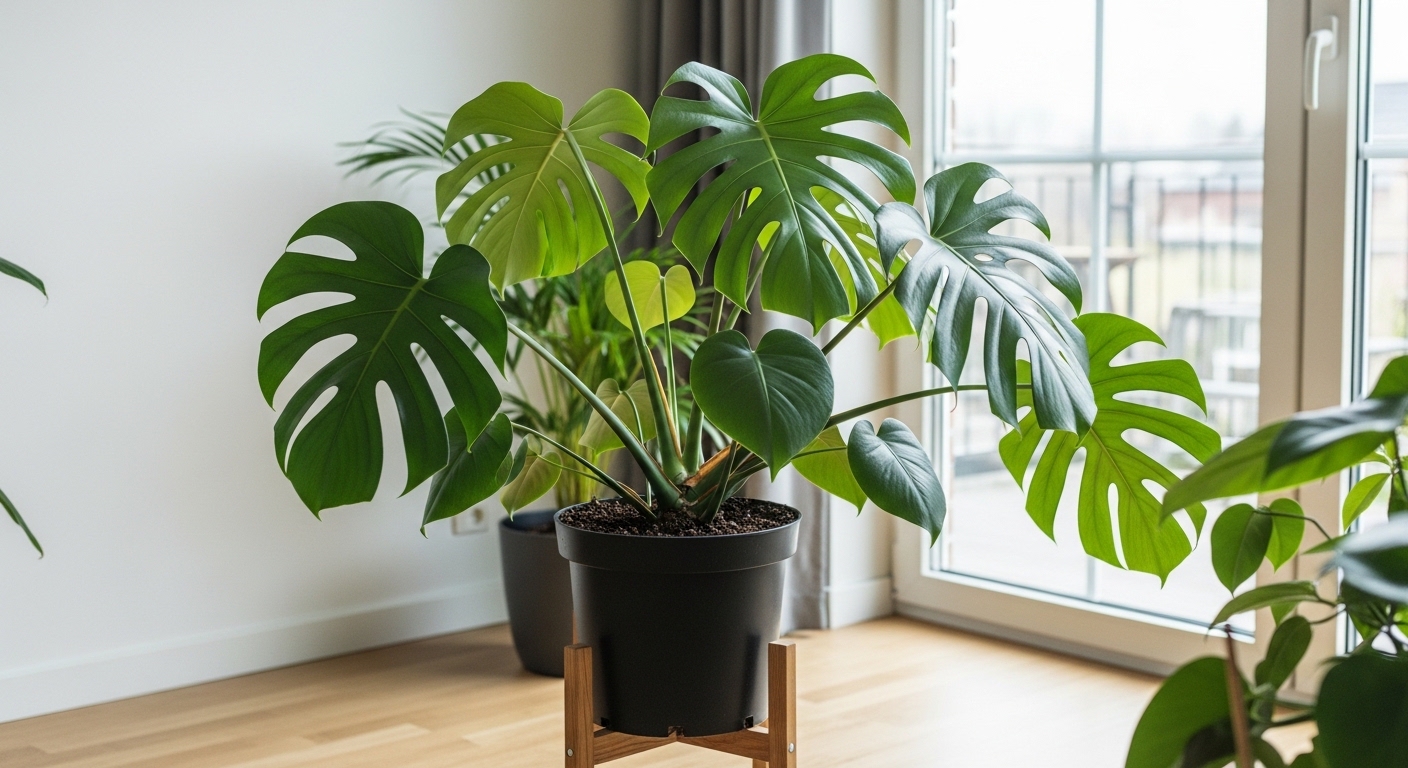
How to Decide What is Right for You
The honest answer is that the best pot is the one that matches both your plant's biology and your personal watering rhythm. There is no universally superior material — only the right fit for the situation. Here are the most useful questions to ask yourself before choosing:
- Do you tend to overwater? Choose terracotta or fabric — their breathability and fast-drying properties give roots a chance to recover between waterings.
- Do you tend to underwater or water infrequently? Plastic or glazed ceramic will hold moisture longer and reduce the risk of drought stress.
- Is your plant a drought-tolerant species? Terracotta is almost always the better choice for cacti, succulents, and Mediterranean herbs.
- Is your plant a moisture-loving tropical? Plastic or glazed ceramic supports the consistently moist (but not waterlogged) conditions these plants prefer.
- Are you growing outdoors or in a hot, dry climate? Fabric pots offer exceptional aeration and air-pruning of roots, but may need watering more frequently in warm weather.
- Does aesthetics matter for your space? Glazed ceramic offers the most decorative range — just ensure drainage holes are present before planting directly into them.
Many experienced plant parents keep a mix of pot types at home — terracotta for their drought-tolerant shelf, plastic nursery pots slipped inside decorative ceramics for their tropicals. This hybrid approach gives you the best of both worlds without compromising plant health.
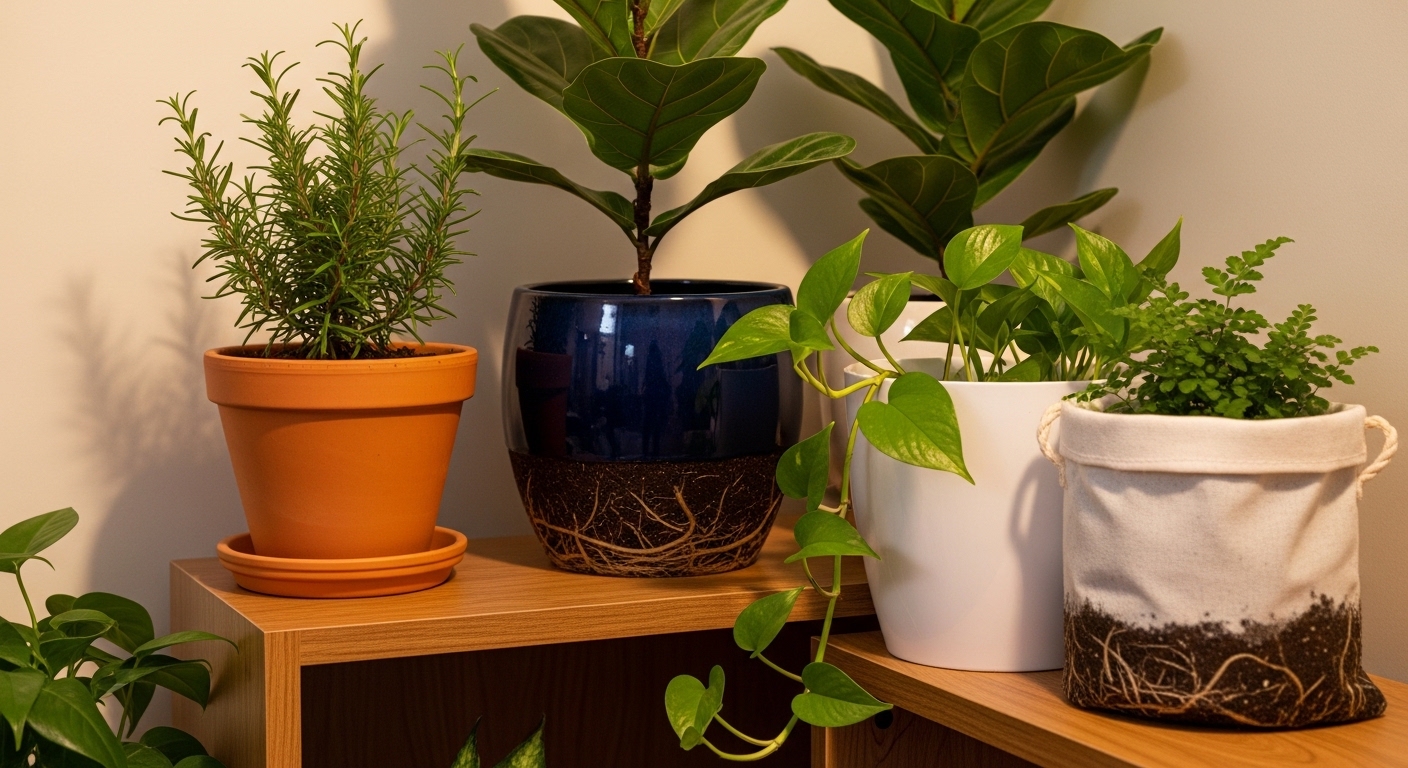
Can You Combine Both? Cachepots and Double-Potting
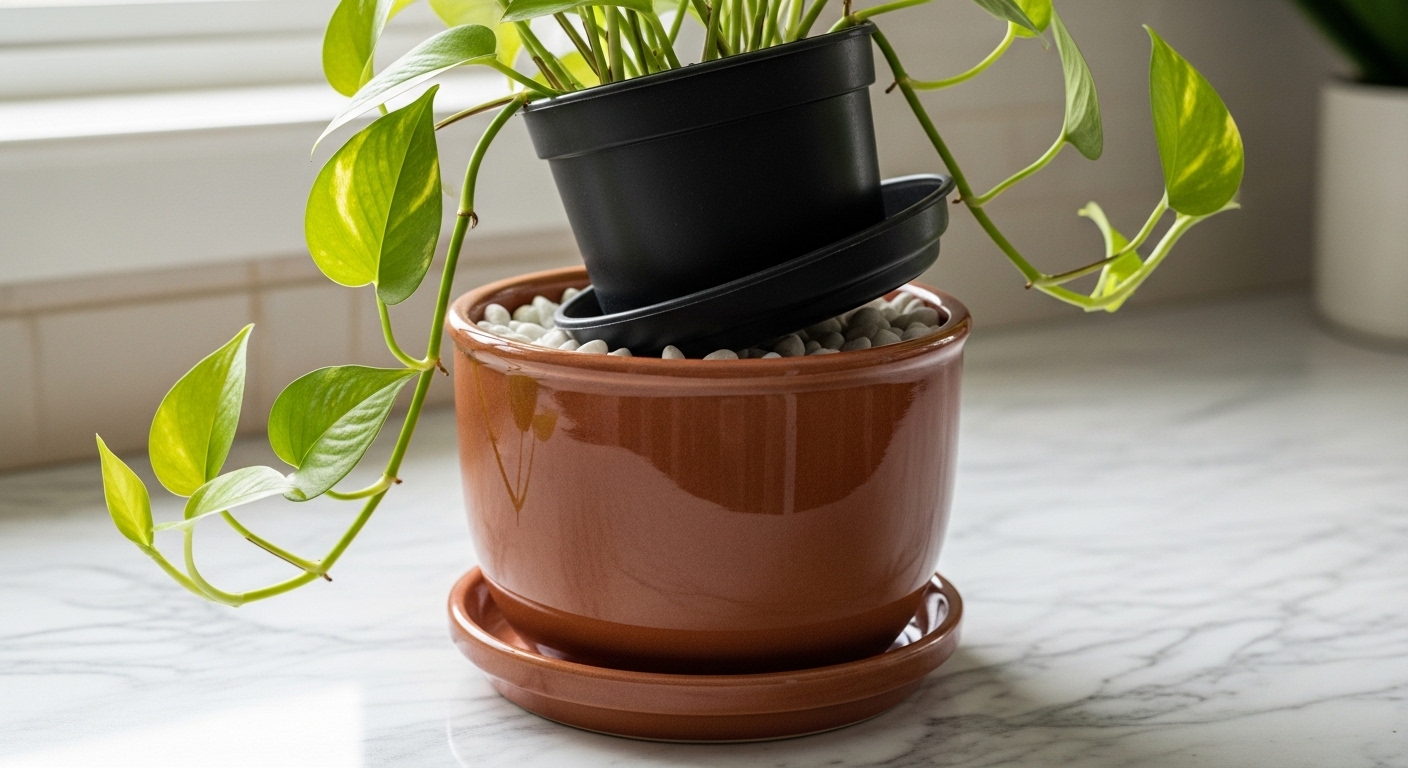
Absolutely — and this is actually one of the most popular approaches among indoor plant enthusiasts. Double-potting means keeping your plant in a functional nursery pot (usually plastic with drainage holes) and placing that inside a decorative outer pot, or cachepot, that has no drainage. This way, you get the aesthetic of a beautiful ceramic or woven basket without sacrificing root health.
To make double-potting work well:
- Always lift the inner pot out to water, or water in place and empty the cachepot within 30–60 minutes to prevent root-sitting in standing water.
- Place a layer of pebbles or a small saucer inside the cachepot to elevate the inner pot above any drainage water.
- Check the bottom of the inner pot regularly — roots growing through the drainage holes into standing water is a sign the outer pot needs emptying more consistently.
- Fabric pots can also be used as inner pots inside decorative ceramics, combining maximum aeration with beautiful presentation.
This method is especially useful for glazed ceramic pots that lack drainage holes — a common situation with decorative pieces. Rather than drilling into them (which risks cracking), simply use them as cachepots.
Whichever approach you choose, the fundamentals remain the same: drainage, breathability, and matching moisture retention to your plant's actual needs. Getting this right is one of the simplest and most impactful upgrades you can make to your plant care routine.


Comments
Post a Comment