Why Are My Plant Leaves Drooping? Fix It Fast
You walk past your favourite houseplant and something feels off. The leaves that were once perky and upright are now sagging, curling, or hanging limply over the edge of the pot. Drooping plant leaves are one of the most common distress signals indoor plants send — and the good news is that, in most cases, the problem is completely fixable. This guide walks you through every likely cause of wilting leaves, from underwatering and overwatering to heat stress, root rot, and low humidity, so you can diagnose the issue and act with confidence.
Identifying the Problem: Read What Your Plant Is Telling You
Before reaching for the watering can or moving your plant across the room, take a moment to observe. Drooping is a symptom, not a diagnosis — and different causes produce subtly different visual cues. Learning to read these signals is the single most valuable skill you can develop as a plant parent.
Start by asking yourself a few key questions: When did you last water? Where is the plant positioned relative to heat sources or windows? Has the weather changed recently? These context clues, combined with what you see and feel, will point you toward the right answer almost every time.
Here is a quick symptom-to-cause reference to get you oriented:
Leaves drooping + dry, pulling-away-from-pot soil: Likely underwatering.
Leaves drooping + soggy, dark, or foul-smelling soil: Likely overwatering or root rot.
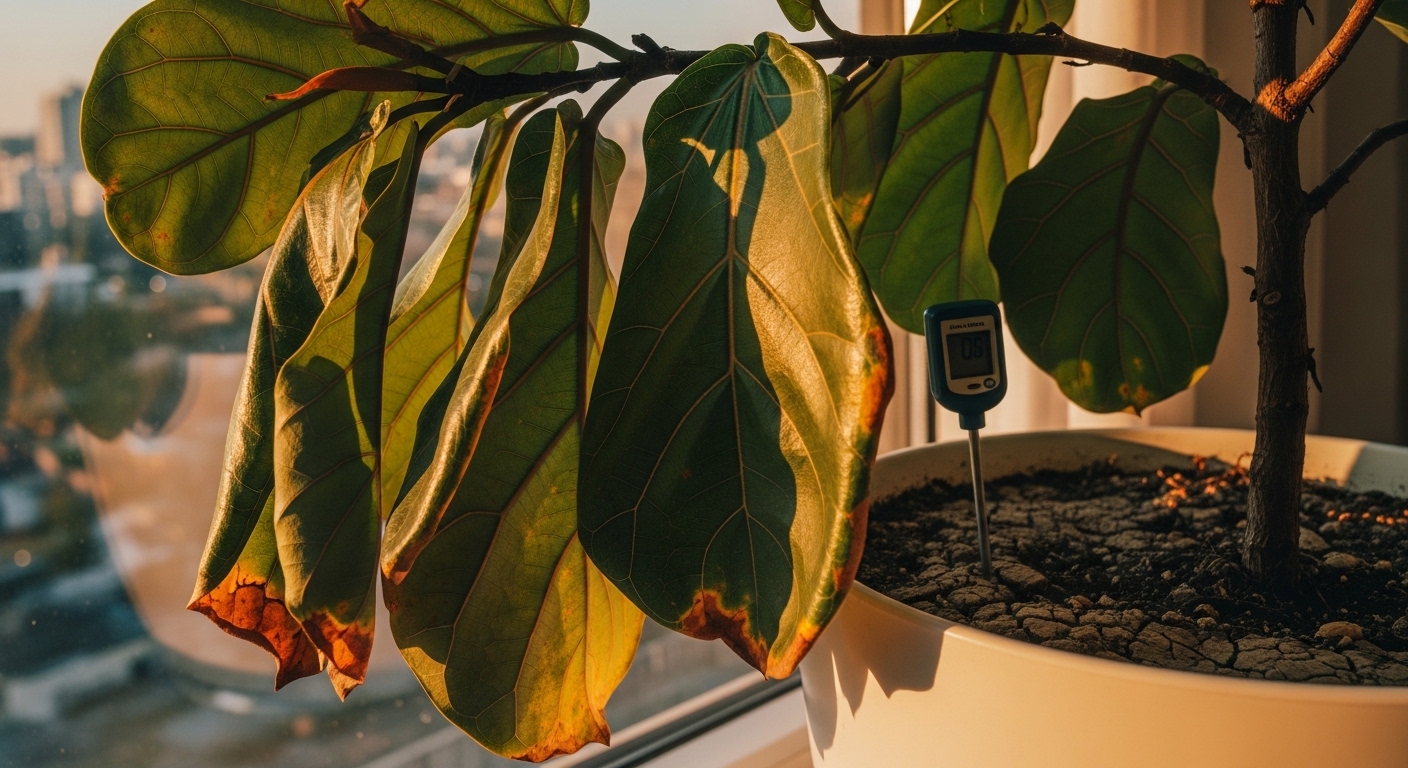
Leaves drooping + crispy brown edges + warm location: Likely heat stress or low humidity.
Leaves drooping + yellowing lower leaves + mushy stem base: Strong indicator of root rot.
Leaves drooping + pale colour + near a vent or radiator: Likely environmental stress — temperature or airflow.
Underwatering: The Most Common Culprit
Underwatering is the leading cause of drooping leaves in indoor plants, and it is often easier to spot than people expect. When a plant does not receive enough water, cells lose their internal pressure — called turgor pressure — and the leaves lose their structural rigidity. The result is that characteristic limp, wilted look.
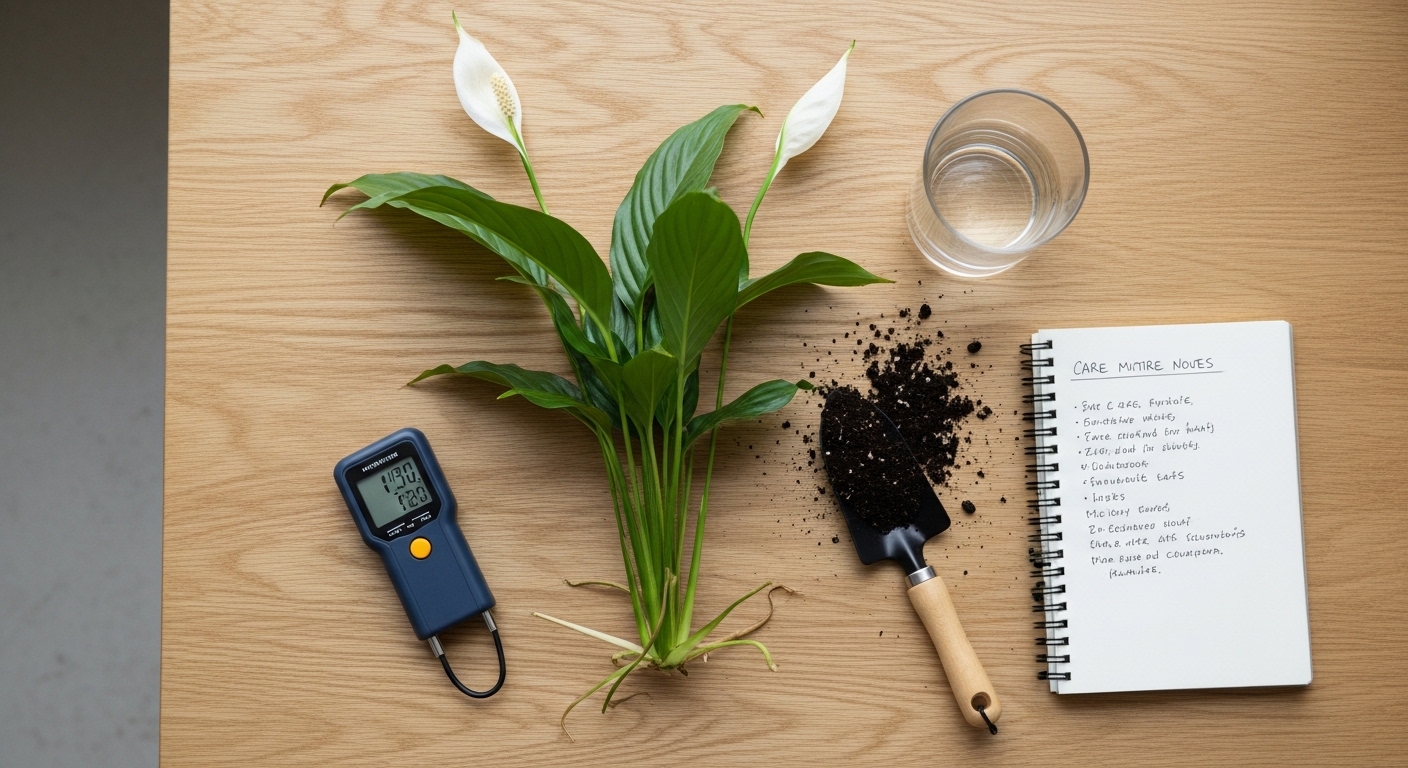
To check for underwatering, push your finger about 2 cm into the soil. If it feels completely dry and the pot feels unusually light when lifted, your plant is thirsty. You may also notice the soil pulling away from the edges of the pot, or water running straight through during watering without being absorbed.
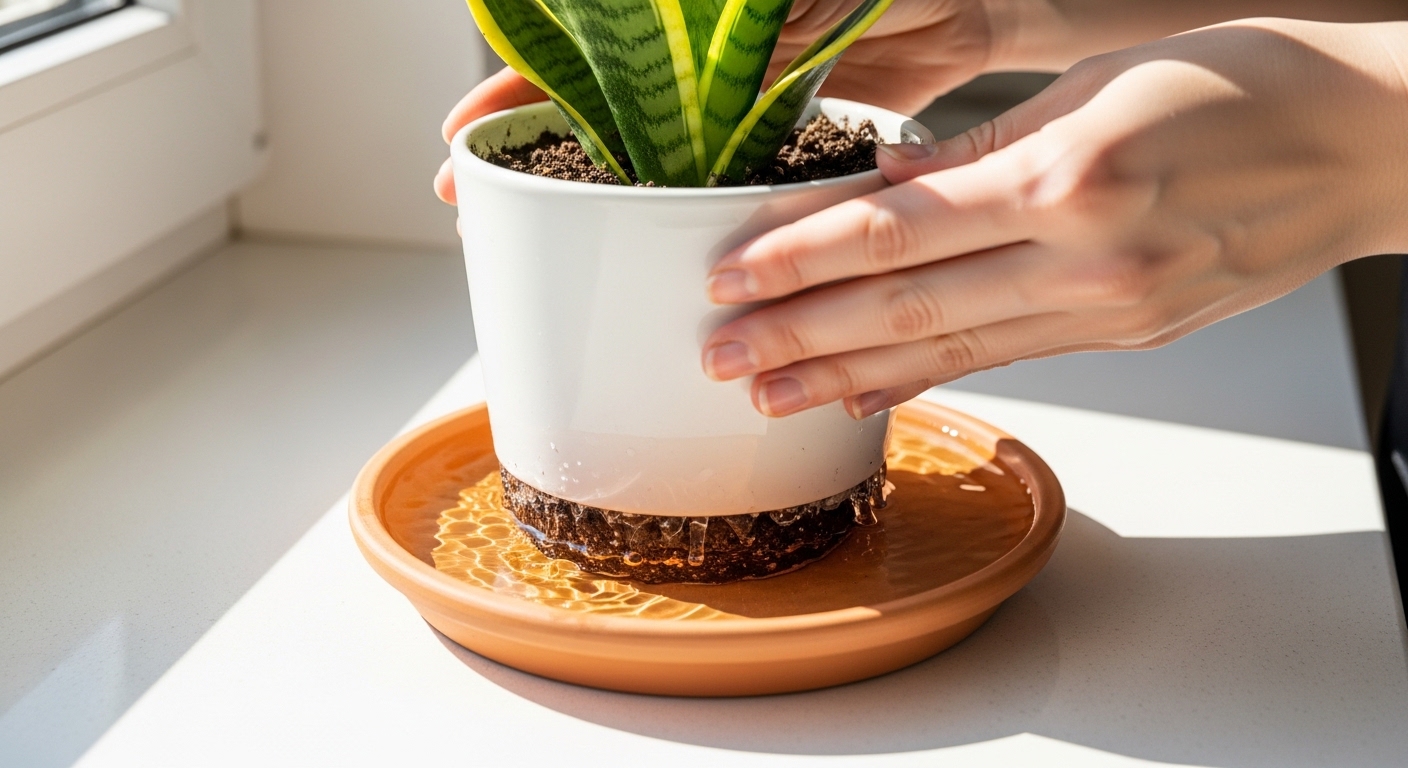
The fix is straightforward: water thoroughly until it drains from the bottom, then allow the soil to partially dry before watering again. For severely dehydrated plants, a 'bottom watering' soak — placing the pot in a tray of water for 20–30 minutes — can help rehydrate compacted soil more evenly. Most plants will perk back up within a few hours of a good drink.
A consistently light pot is one of the most reliable indicators that your plant needs water. Lift your pots regularly after watering and again when dry — your hands will learn the difference faster than any schedule.
Overwatering and Root Rot: The Slow Silent Threat
Overwatering is arguably the most misunderstood plant problem. It does not always look like what you expect — in fact, an overwatered plant often looks remarkably similar to an underwatered one, with drooping, soft leaves. The key difference is in the soil and roots. Consistently waterlogged soil starves roots of oxygen, causing them to suffocate and eventually rot.
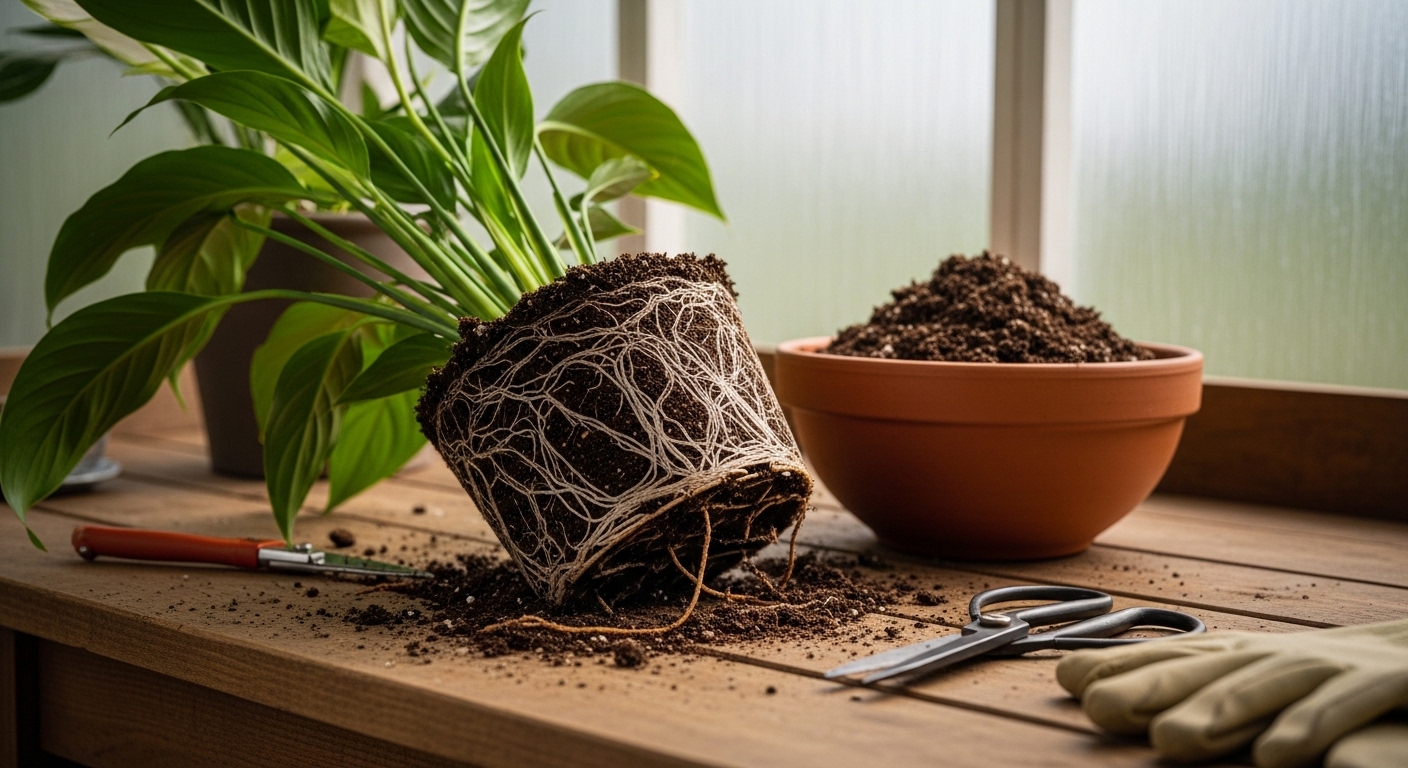
If you suspect overwatering, check the soil moisture before adding any more water. Soggy soil that has been wet for several days, a pot that feels heavy, or a sour, musty smell from the soil are all warning signs. Gently slide the plant out of its pot if you can — healthy roots are firm and white or tan, while rotted roots appear brown, black, mushy, and may smell unpleasant.
To treat mild overwatering, allow the soil to dry out completely before watering again and improve drainage by ensuring the pot has adequate holes. For root rot, more intervention is needed:
- Remove the plant from its pot and gently shake off as much soggy soil as possible.
- Trim away all visibly rotted roots with clean, sterilised scissors or pruning shears.
- Allow the roots to air-dry for 30–60 minutes in a warm, ventilated spot.
- Repot into fresh, well-draining soil in a clean pot with drainage holes.
- Hold off watering for 2–3 days to let any cut root ends callus slightly.
Recovery from root rot can take several weeks, and not every plant will pull through — but catching it early gives your plant a strong chance.
Heat Stress and Low Humidity: Environmental Wilting
Not all drooping is about water in the soil. Sometimes the problem is in the air around your plant. Heat stress occurs when a plant is exposed to temperatures above its comfortable range — typically above 30°C (86°F) for most common houseplants — or when it sits too close to a radiator, heating vent, or a south-facing window during summer. The plant wilts as a protective response, reducing the surface area exposed to intense heat.
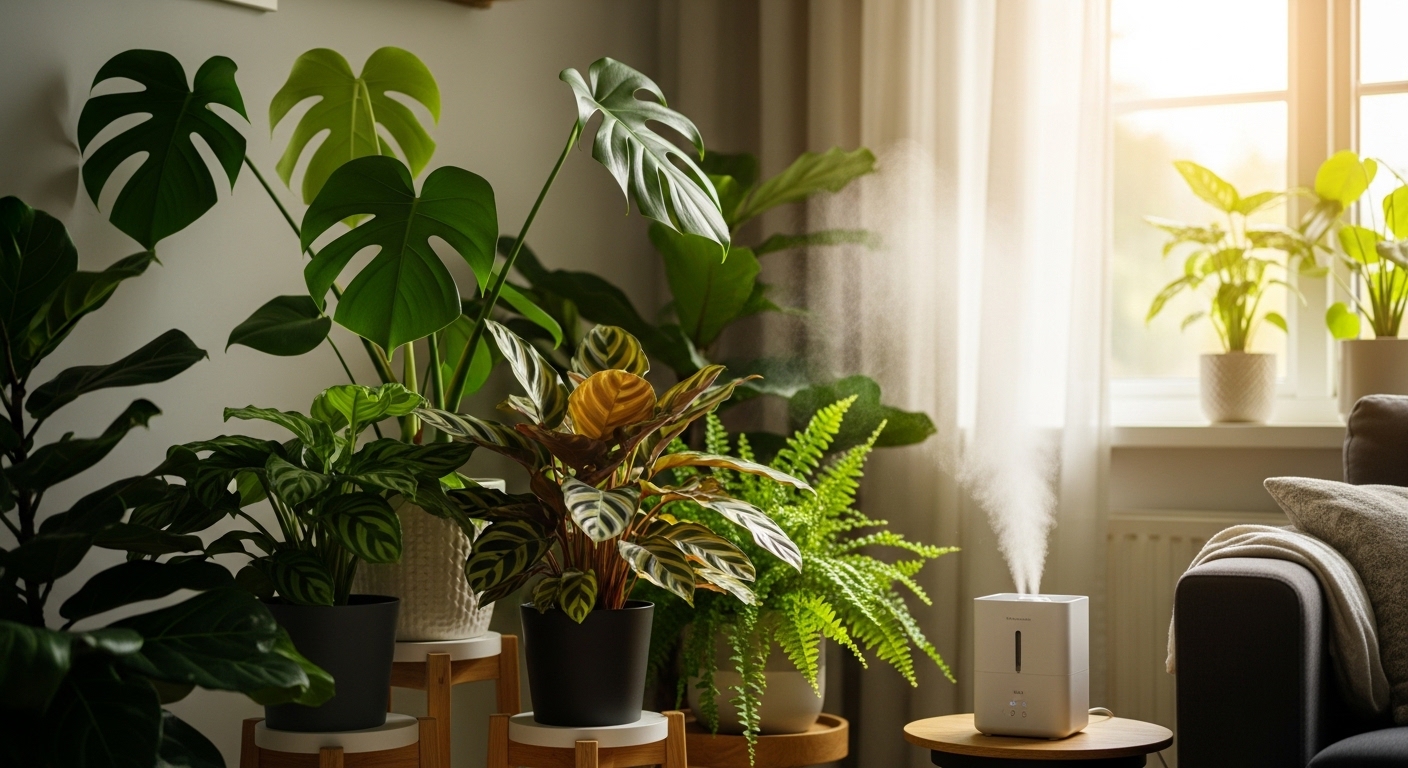
Low humidity compounds this problem significantly. Most popular indoor plants — including tropical species like monsteras, calatheas, and ferns — originate from environments with ambient humidity of 50–70%. Indoor air, especially in winter when heating systems run constantly, can drop well below 30%. When humidity is too low, plants lose moisture through their leaves faster than roots can replace it, causing the same turgor loss that leads to drooping.
To address environmental wilting, consider these practical steps:
- Move plants at least 60 cm away from radiators, heating vents, and air conditioning units.
- Group humidity-loving plants together — transpiration from clustered plants naturally raises local humidity.
- Place pots on a pebble tray filled with water, keeping the pot base above the waterline.
- Use a cool-mist humidifier near your plant collection during dry winter months.
- Avoid placing plants directly in front of south-facing windows during peak summer heat without sheer curtain diffusion.
Other Common Causes Worth Checking
Once you have ruled out the four main culprits, a handful of other factors can still cause drooping that is easy to overlook. Addressing these tends to be straightforward once identified.
Transplant shock is extremely common after repotting. When roots are disturbed, the plant temporarily loses its ability to take up water efficiently, and leaves may droop for several days to two weeks. Keep the plant in stable, indirect light, maintain consistent moisture, and avoid fertilising until new growth appears.
Root-bound plants can also droop because the root system has become so dense that it can no longer absorb water effectively, even when the soil is moist. If roots are visibly circling the bottom of the pot or emerging from drainage holes, it is time to size up by one pot diameter.
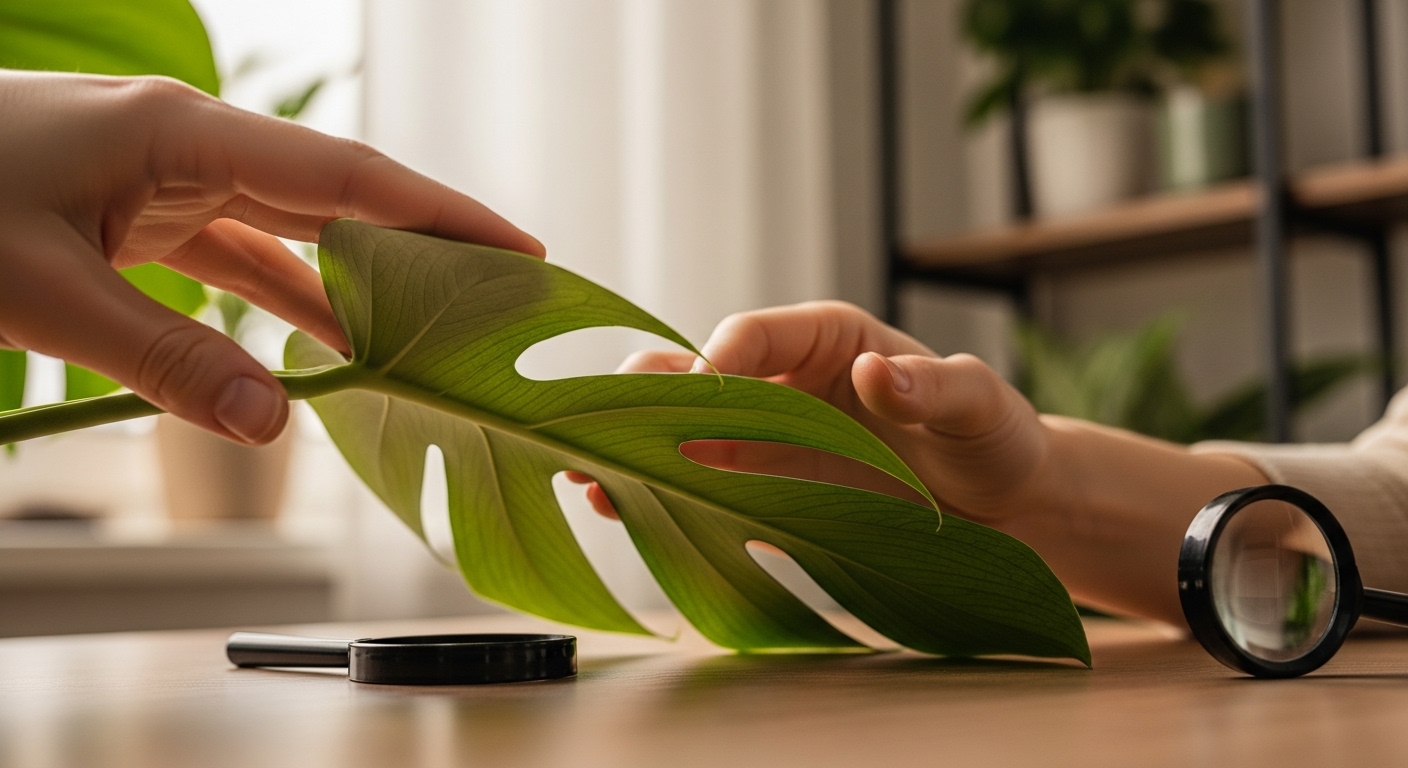
Pest damage — particularly from spider mites, fungus gnats, or root aphids — can weaken a plant's vascular system and cause wilting that mimics water stress. Check the undersides of leaves and the soil surface for signs of insect activity.
- Transplant shock: Maintain stable conditions and avoid fertiliser until recovery.
- Root-bound roots: Repot into a container one size larger with fresh mix.
- Pest damage: Inspect leaves and soil; treat with appropriate organic methods if needed.
- Cold drafts: Move plants away from draughty windows or exterior doors in winter.
- Compacted soil: Aerate gently with a chopstick or skewer to improve water penetration.
When to Worry: Signs Your Plant Needs Urgent Help
Most cases of drooping are manageable with simple adjustments, but some situations call for faster action. Knowing when to escalate your response can be the difference between saving a plant and losing it entirely.
Watch for these red flags that suggest the problem has progressed beyond basic care correction:
- Stem base is soft, dark, or collapsing — a sign of advanced rot that has moved from roots into the main stem.
- Leaves are drooping AND turning yellow or translucent simultaneously — often indicates severe overwatering or root damage.
- No improvement within 48 hours of correct watering — suggests a root-level problem preventing water uptake.
- Visible mould on the soil surface combined with drooping — points to persistently waterlogged conditions.
- Sudden collapse of an otherwise healthy-looking plant — can indicate root rot that was hidden beneath the surface.
In these cases, repotting with a full root inspection is generally the recommended next step. Acting quickly gives the plant its best chance at recovery.
Drooping leaves are your plant's way of asking for help — and now you have the tools to listen. Whether the cause turns out to be a missed watering, a soggy pot, a too-warm corner, or something lurking in the roots, the path forward is always the same: observe carefully, diagnose methodically, and act with intention. Most plants are far more resilient than they look, and with the right adjustment, many bounce back beautifully within days.


Comments
Post a Comment