Peace Lily Care Guide: Light, Water & Blooms
The peace lily has a reputation for being forgiving, and for the most part, that reputation is earned. But "forgiving" doesn't mean "indestructible." Spathiphyllum plants do communicate — through drooping leaves, browning tips, and the occasional refusal to bloom — and once you learn to read those signals, caring for one becomes genuinely intuitive. Whether yours is sitting in a dim office corner or a bright apartment window, this guide covers everything you need to keep it healthy and encourage those elegant white spathes to return season after season.
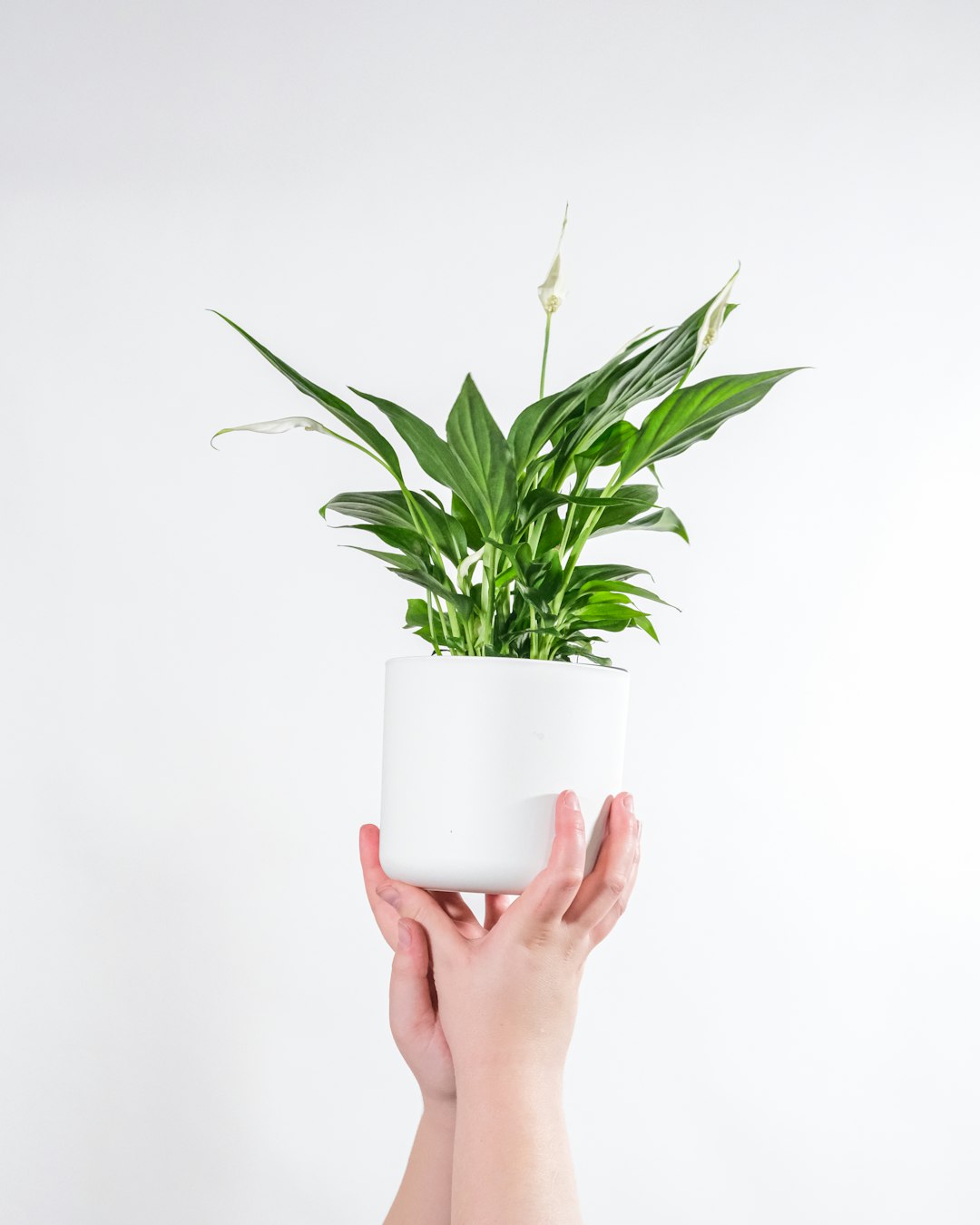
Species Overview & Origin
Spathiphyllum is a genus of tropical flowering plants native to the rainforest floors of Central and South America, as well as parts of Southeast Asia. In their natural habitat, they grow beneath dense forest canopies — which explains almost everything about their care preferences. Low light, consistent moisture, warm temperatures, and high humidity are the conditions they evolved in.
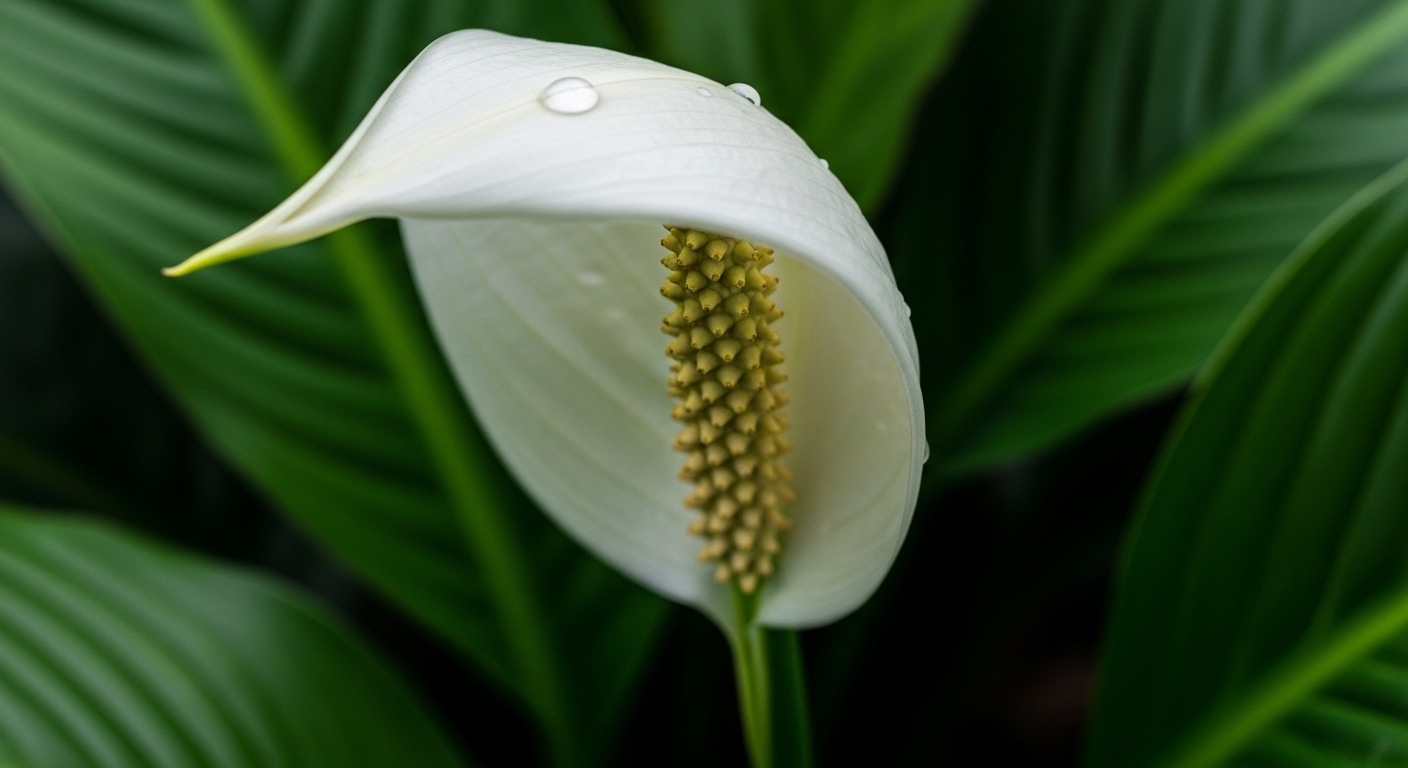
The "flower" most people recognize is actually a modified leaf called a spathe, which wraps around a finger-like spadix. This is the same structure you see in anthuriums and calla lilies — all members of the Araceae family. Peace lilies grown as houseplants are typically cultivars of Spathiphyllum wallisii or Spathiphyllum floribundum, though many hybrids exist in varying sizes, from compact desktop varieties to large floor specimens reaching nearly a meter tall.
One important note for households with pets or young children: peace lilies are generally considered toxic if ingested, causing oral irritation and gastrointestinal discomfort. The ASPCA lists them as toxic to cats and dogs — worth checking their resources directly for the most current guidance.
Light & Temperature Needs
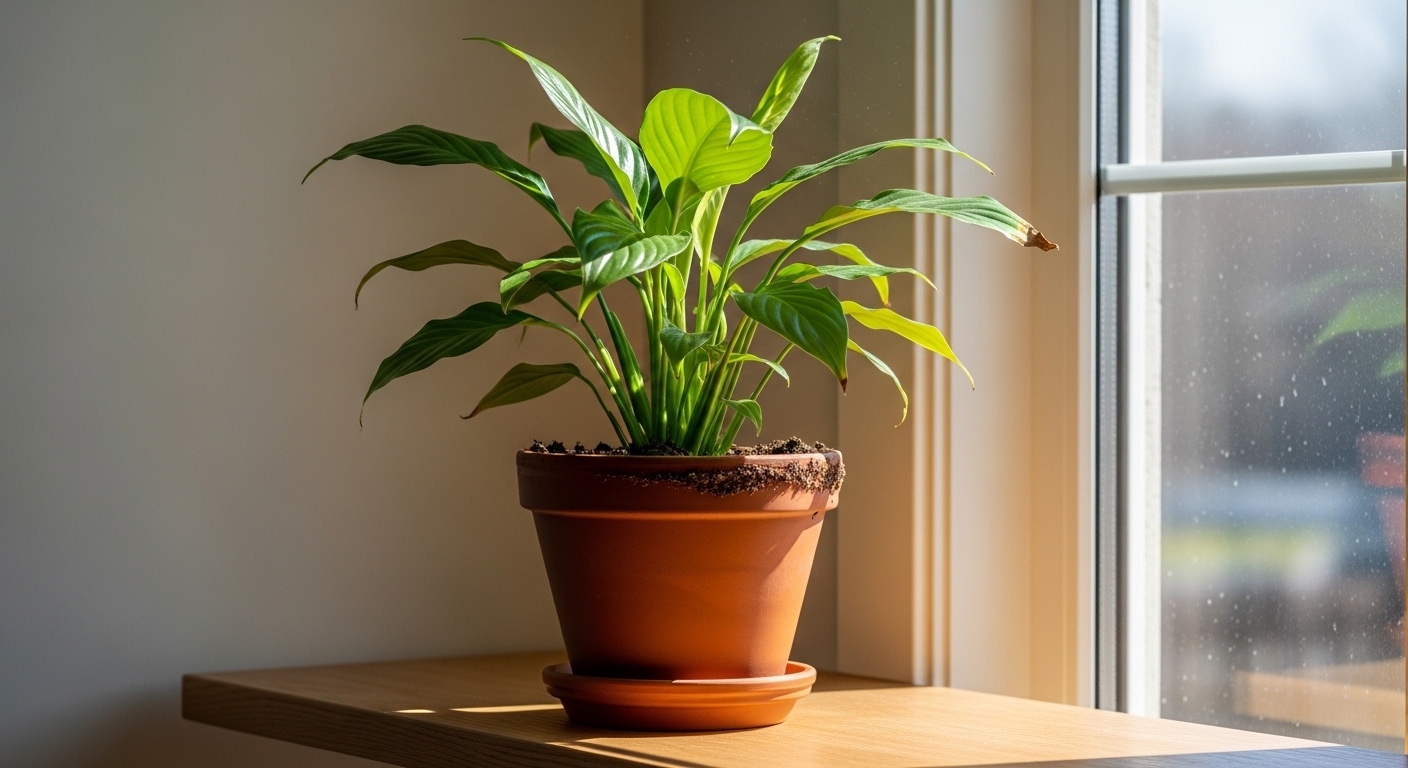
Peace lilies can survive in low light — but there's a difference between surviving and actually doing well. In very dim conditions, you'll get foliage growth but rarely flowers. Bright, indirect light is where they genuinely perform: leaves stay a deeper green, growth is more vigorous, and blooming becomes far more likely.
A north- or east-facing window is generally a good match. A few meters back from a south- or west-facing window works well too, especially with a sheer curtain to diffuse intensity. Direct sun is one of the fastest ways to scorch the leaves — the damage shows up as pale, bleached patches that won't recover.
In terms of temperature, peace lilies prefer a consistent range between roughly 18°C and 27°C (65°F–80°F). They're sensitive to cold drafts, air conditioning vents, and sudden temperature swings. Many growers notice a noticeable wilt or leaf curl after moving a peace lily near an air conditioning unit in summer — the cold, dry air hits them hard. Keep them away from exterior doors and heating radiators alike.
Peace lilies don't need a bright room — they need a consistent one. Stable temperature and predictable light matter more than intensity alone.
Watering & Humidity Guide
Water your peace lily when the top 2–3 cm of soil feels dry to the touch. In most indoor environments, this means watering roughly once a week in spring and summer, and every 10–14 days in cooler months — but always let the soil guide you rather than the calendar.
Peace lilies are famously dramatic about water. They'll droop noticeably when they're thirsty, which many new owners mistake for a serious problem. It's usually just thirst. Water thoroughly — until it drains from the bottom — and most plants will perk back up within an hour or two. That said, if drooping happens frequently, it's worth adjusting your watering schedule rather than waiting for the plant to signal distress each time.
Overwatering is the more serious risk. Consistently soggy soil leads to root rot, which is harder to reverse than underwatering. Signs include yellowing lower leaves, a musty smell from the soil, and a plant that droops even when the soil is wet. If you suspect root rot, unpot the plant, trim any black or mushy roots, and repot into fresh, well-draining mix.
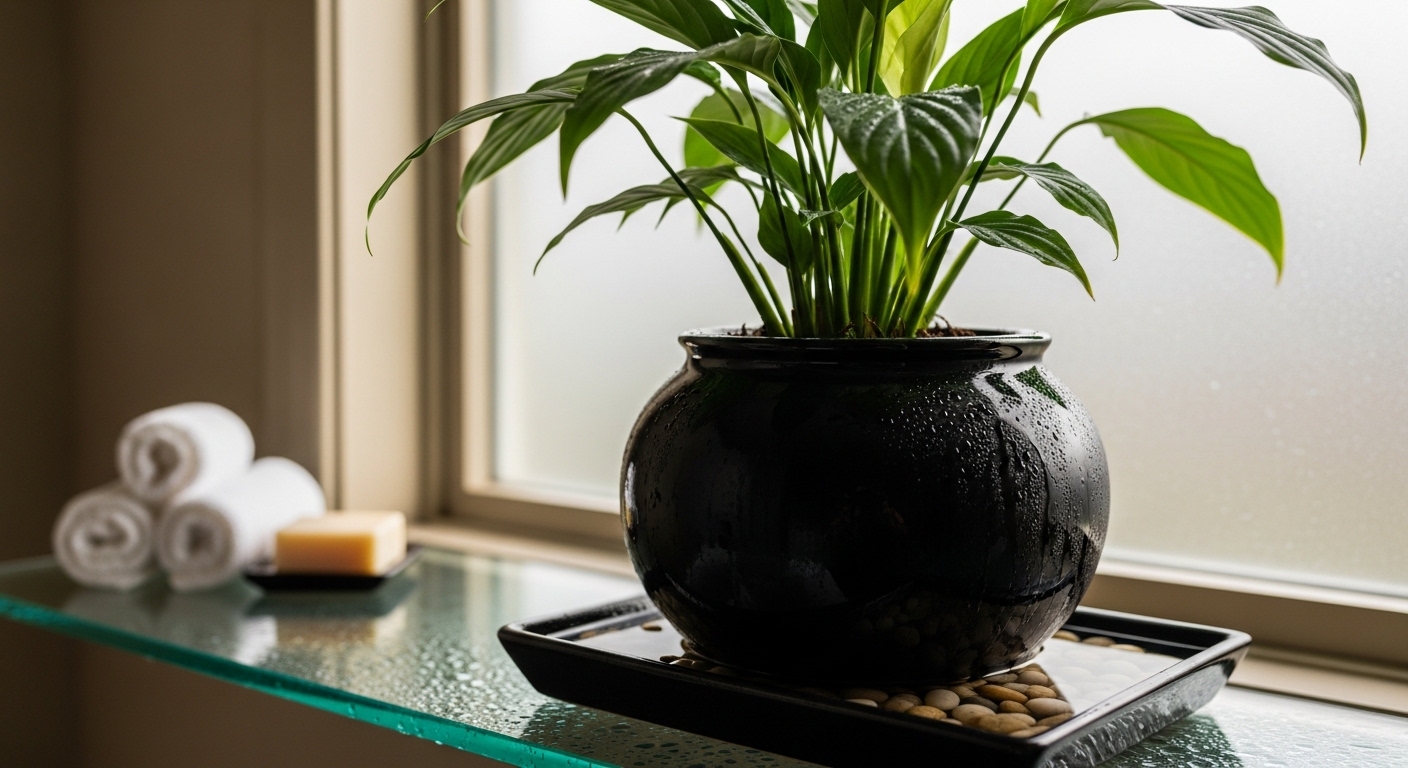
Humidity is where peace lilies really show their rainforest roots. They generally do best with humidity above 50%. In dry indoor environments — especially in winter with central heating running — brown leaf tips are almost inevitable without some intervention. A pebble tray with water beneath the pot, grouping plants together, or placing the plant in a naturally humid room like a bathroom with good indirect light can all help. Many growers find a small humidifier nearby makes a noticeable difference in tip health over winter.
Soil, Potting & Fertilizing
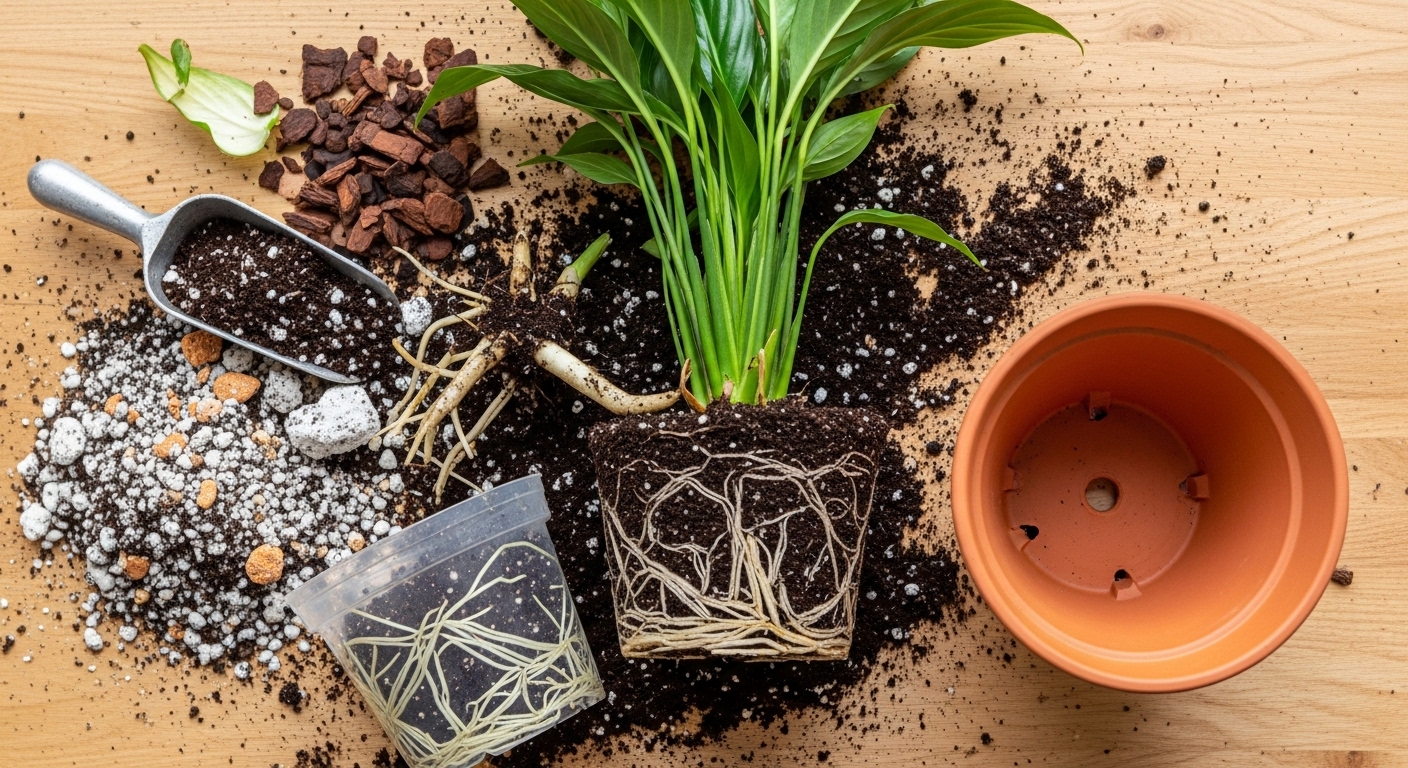
A well-draining, moisture-retentive mix tends to work well for peace lilies. A standard indoor potting mix amended with perlite — roughly a 3:1 ratio — gives roots both the moisture they need and enough aeration to prevent waterlogging. Some growers add a small amount of orchid bark for extra drainage and a slightly chunkier texture that mimics the loose forest floor substrate these plants evolved in.
Repotting is generally needed every 1–2 years, or when roots begin circling the bottom of the pot or emerging from drainage holes. Choose a new pot only one size up — jumping to a much larger container increases the risk of overwatering, since the excess soil stays wet long after the roots have absorbed what they need.
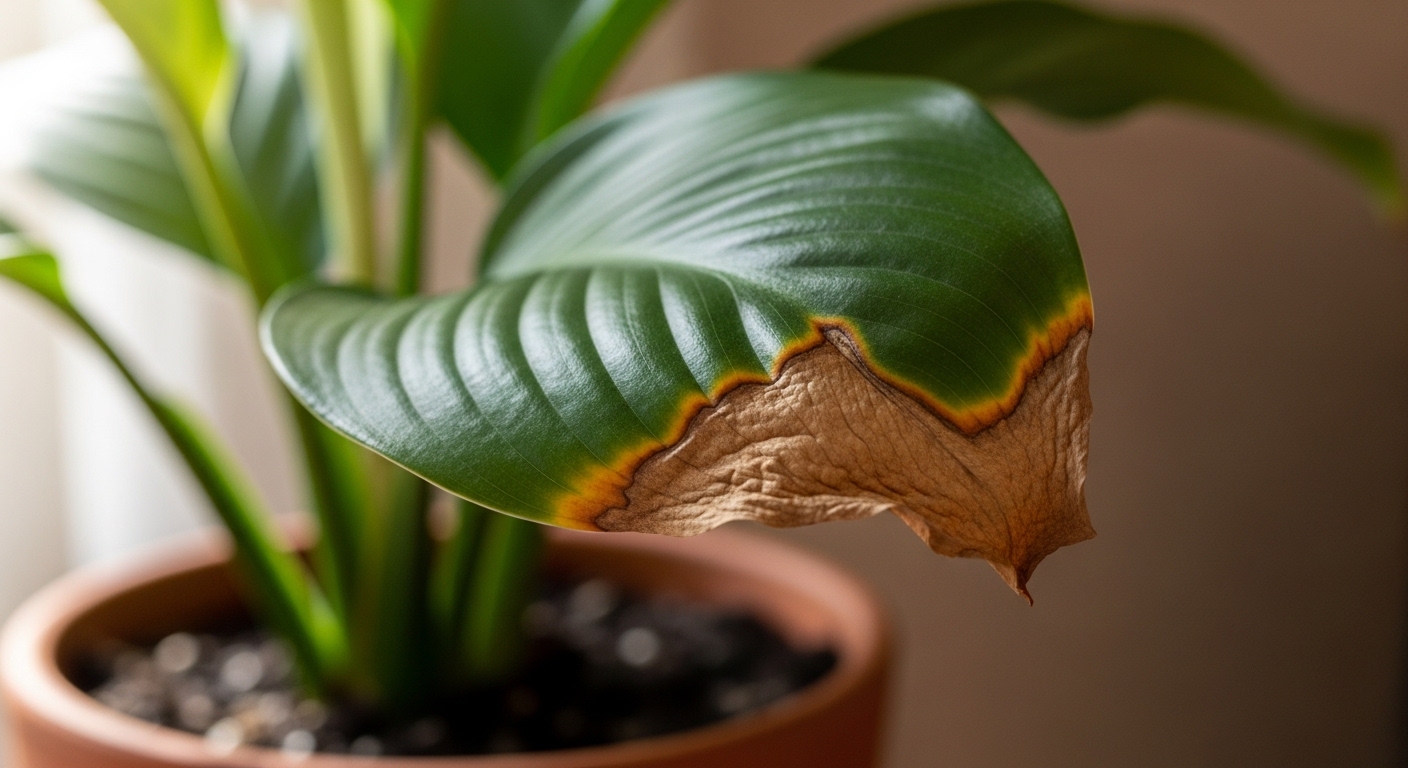
For fertilizing, a balanced liquid fertilizer applied monthly during the growing season (spring through early autumn) is usually sufficient. Avoid fertilizing in winter when growth slows. Over-fertilizing is a common cause of brown leaf tips — if you're feeding regularly and still seeing tip burn, try reducing the concentration or frequency before assuming it's a humidity issue.
- Soil mix: standard potting mix with added perlite for drainage
- Pot material: any pot with drainage holes; terracotta dries faster, glazed ceramic retains moisture longer
- Repotting timing: spring is ideal, when growth is resuming
- Fertilizer type: balanced NPK liquid feed, diluted to half strength
- Feeding frequency: monthly in spring and summer, none in winter
Common Problems & Fixes
Most peace lily problems are readable once you know what to look for. The plant is fairly expressive — which is both its charm and its occasional source of anxiety for new owners.
- Brown leaf tips: The most common complaint. Usually caused by low humidity, inconsistent watering, or salt buildup from over-fertilizing. Flush the soil thoroughly every few months to clear mineral deposits, and address humidity levels. Trim brown tips with clean scissors at a slight angle to keep the leaf looking tidy.
- Drooping leaves: Almost always thirst, but can also indicate root rot (if soil is wet) or cold stress (if near a draft). Check the soil moisture first before drawing conclusions.
- Yellow leaves: Lower leaves yellowing gradually is normal aging. Widespread yellowing often points to overwatering, poor drainage, or too little light.
- No flowers: The most common reason is insufficient light. Move the plant to a brighter (but still indirect) spot and maintain consistent care through the growing season. Some growers find that a brief period of slightly cooler temperatures in late winter can help trigger blooming in spring.
- Green flowers: Spathes that turn green as they age are completely normal — it's part of the bloom cycle, not a sign of poor health.
Symptom: Leaves pale or bleached in patches → Likely cause: Direct sun exposure. Move further from the light source or add a sheer curtain.
Symptom: Mushy stem base with yellowing → Likely cause: Root rot from overwatering. Unpot, assess roots, repot in fresh dry mix.
Frequently Asked Questions
How often should I water my peace lily?
Water when the top 2–3 cm of soil feels dry. In most homes, this works out to roughly once a week during warmer months and every 10–14 days in winter. Always check the soil rather than following a fixed schedule.
Why won't my peace lily bloom?
Insufficient light is the most common reason. Peace lilies need bright, indirect light to produce flowers reliably. If yours is in a very dim spot, try moving it closer to a window. Consistent feeding during the growing season and avoiding root-bound stress can also help encourage blooms.
Are peace lilies safe for cats and dogs?
Peace lilies are generally considered toxic to cats and dogs if ingested, causing oral irritation and digestive upset. The ASPCA website is a reliable resource for up-to-date pet toxicity information. Keep the plant out of reach of pets who tend to chew on foliage.
Why are the leaves turning yellow?
A few yellowing lower leaves is normal as the plant ages. If yellowing is widespread, overwatering and poor drainage are the most likely causes. Check that the pot has drainage holes and that you're allowing the top layer of soil to dry between waterings.
Can peace lilies grow in water alone?
Many growers successfully grow peace lilies in vases of water — a semi-hydroponic setup. The roots adapt over time, but it's worth starting with a plant that's already been propagated or transitioned gradually, rather than moving a soil-grown plant abruptly. Change the water regularly to prevent stagnation.
How do I get my peace lily to bloom again?
Move it to a brighter location, maintain consistent watering and monthly feeding through spring and summer, and ensure humidity stays reasonably high. Some growers find that a slightly cooler period in late winter — around 16°C–18°C for a few weeks — can help trigger the next bloom cycle.
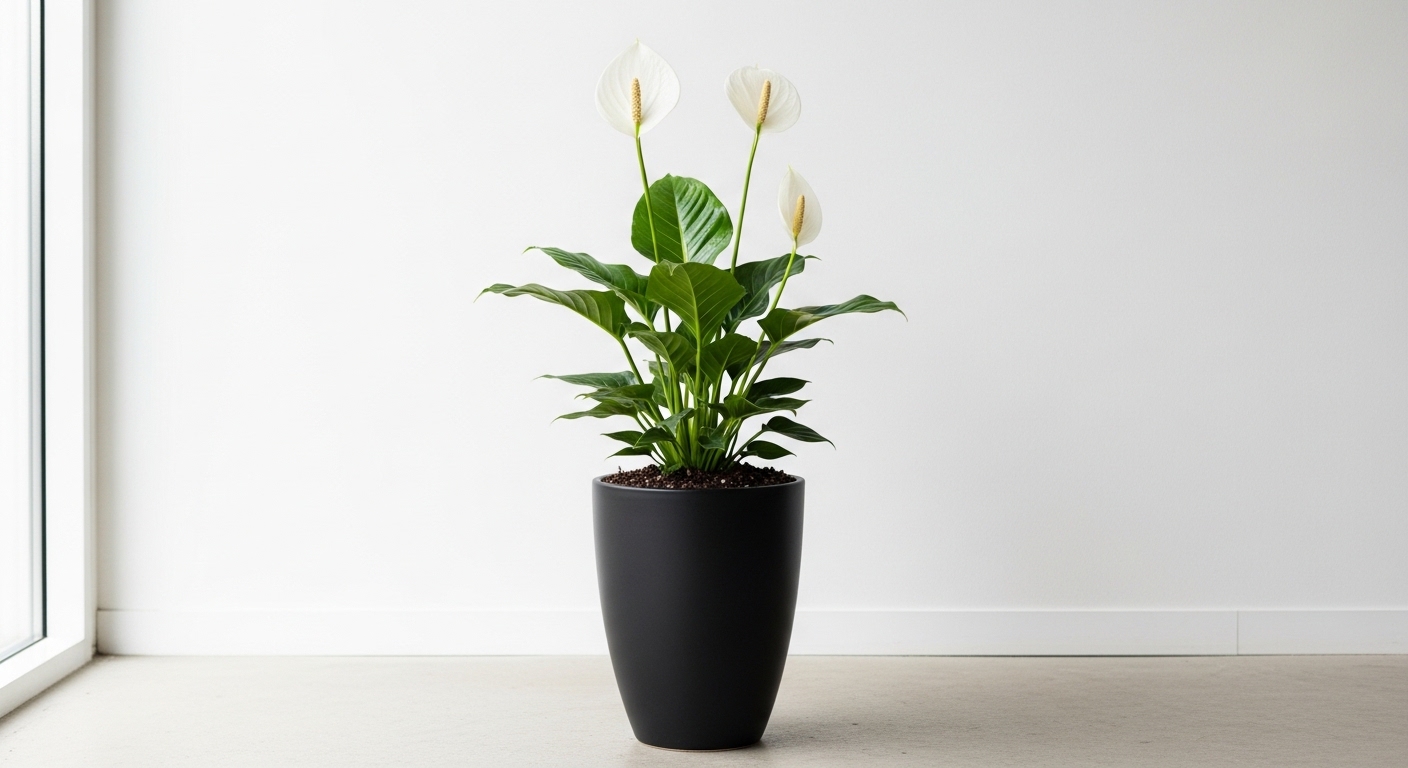
Peace lilies reward consistency more than perfection. Get the light roughly right, water when the soil tells you to, and keep them away from cold drafts — and they'll settle in and stay with you for years. If you're ready to go further, propagating peace lilies by division is a satisfying next step, and it's a good excuse to finally repot that root-bound plant you've been putting off. For anyone also navigating brown tips on other tropical houseplants, humidity management is often the common thread worth exploring next.


Comments
Post a Comment