Pothos Plant Care: The Ultimate Guide
Pothos (Epipremnum aureum) has a reputation for being nearly indestructible — and honestly, it earns it. But even the most forgiving houseplant has preferences. Whether your pothos is trailing from a shelf, climbing a moss pole, or sitting in a dim corner looking a little sorry for itself, understanding what it actually needs makes the difference between a plant that merely survives and one that genuinely grows. This guide covers everything: light, water, soil, propagation, vine training, and the most common problems you'll run into.
Species Overview & Origin
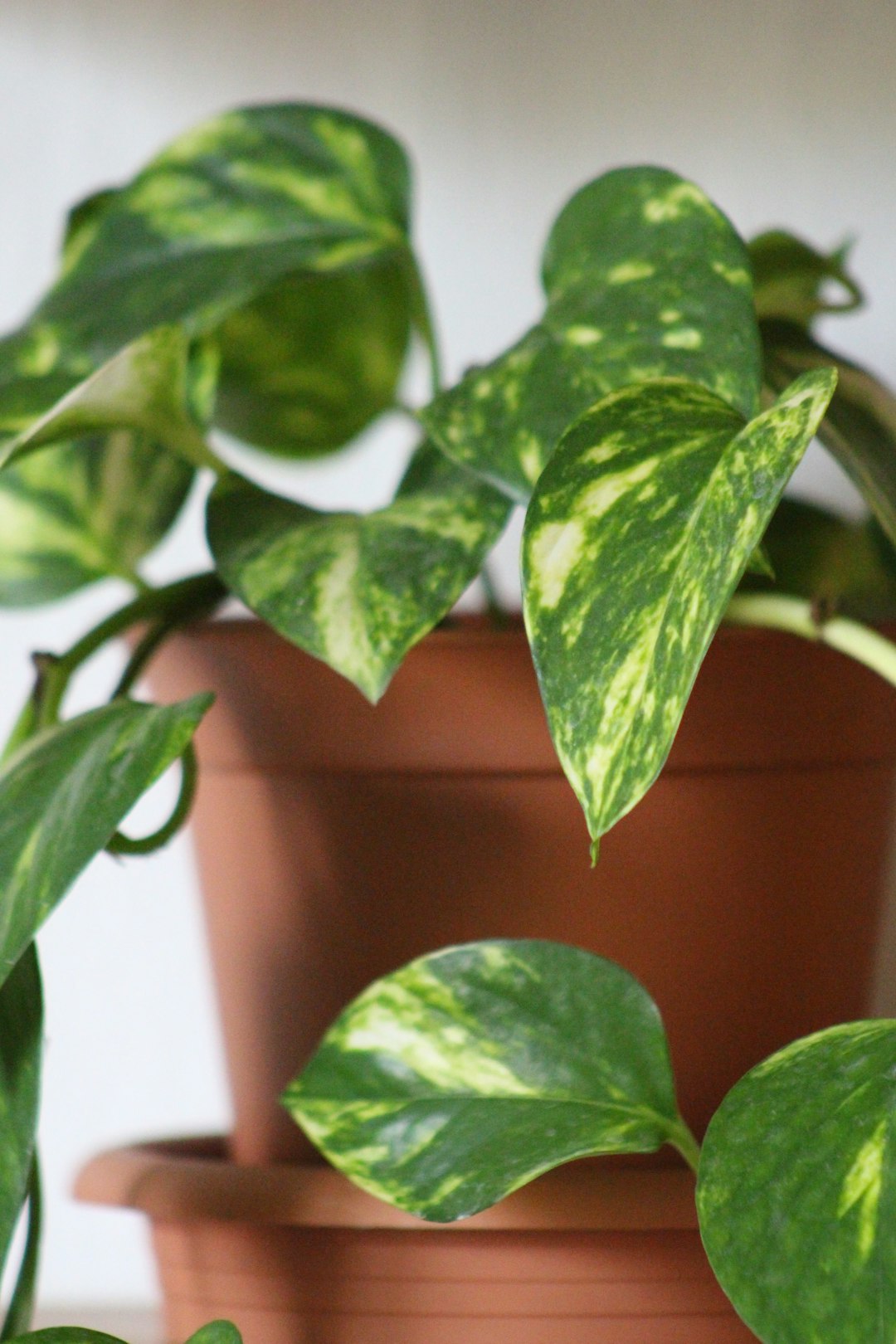
Pothos is native to the Solomon Islands in the South Pacific, where it grows as a vigorous forest floor and canopy climber. In its natural habitat, it scrambles up tree trunks toward filtered light, developing leaves that can reach dinner-plate size — a far cry from the compact, small-leafed vines most of us grow indoors.
The plant belongs to the Araceae family and is closely related to philodendrons, which explains why care requirements overlap so much. Its botanical name, Epipremnum aureum, was long confused with Scindapsus aureus, and you may still see both names used in nurseries. Taxonomically, they are distinct genera, though the care is nearly identical.
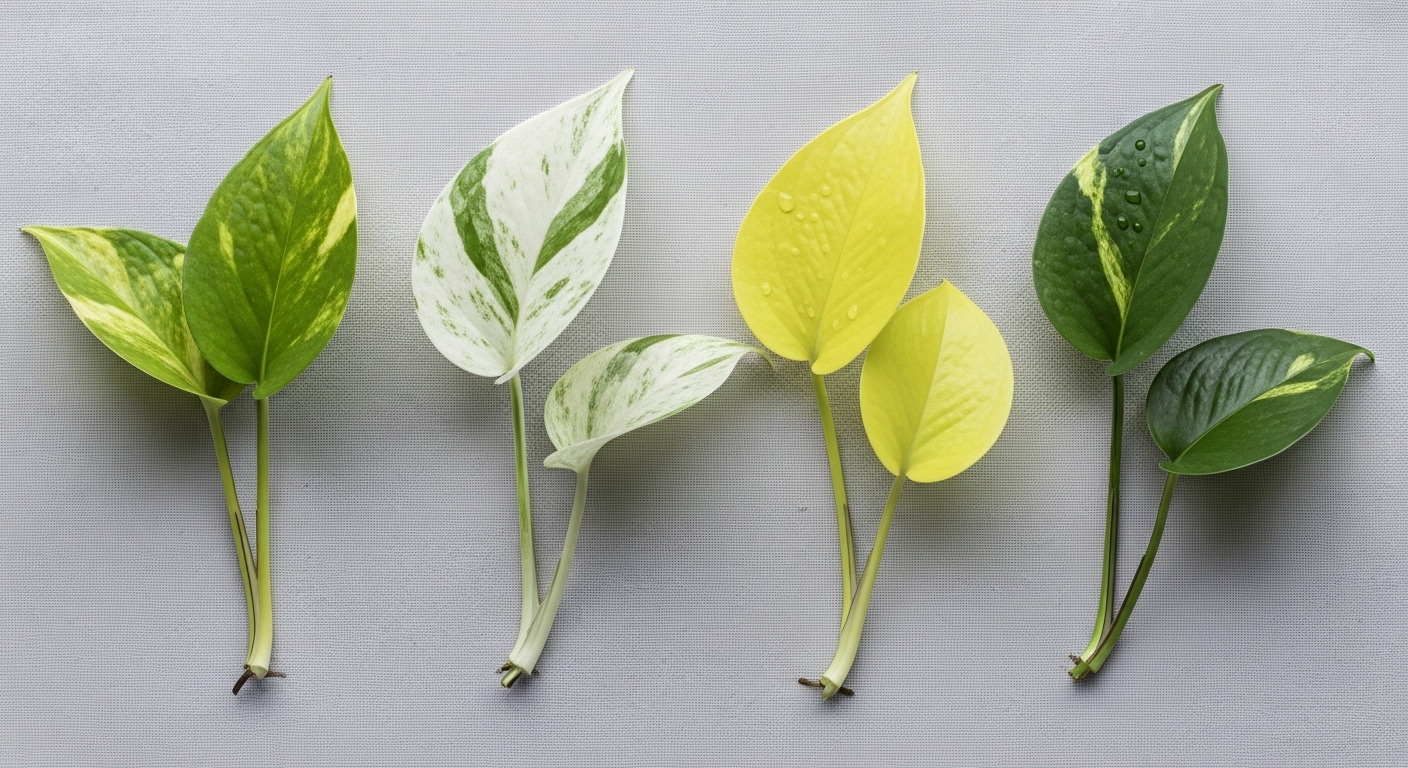
What makes pothos so adaptable is its evolutionary background. Growing beneath a forest canopy means tolerating low light, irregular rainfall, and fluctuating humidity — conditions that map surprisingly well onto the average apartment. Several cultivars are widely available, each with distinct foliage:
- Golden Pothos — the classic, with yellow-green marbling on mid-green leaves
- Marble Queen — heavily variegated in white and green, slower growing
- Neon Pothos — solid chartreuse-yellow leaves, no variegation
- Manjula — broad, slightly wavy leaves with cream and green patterning
- N'Joy — compact, with crisp white and green patches
- Cebu Blue — silvery-blue juvenile leaves, more elongated form
One important note: pothos is considered toxic to cats, dogs, and humans if ingested. The ASPCA lists it as toxic to pets — worth knowing if you have curious animals at home.
Light & Temperature Needs
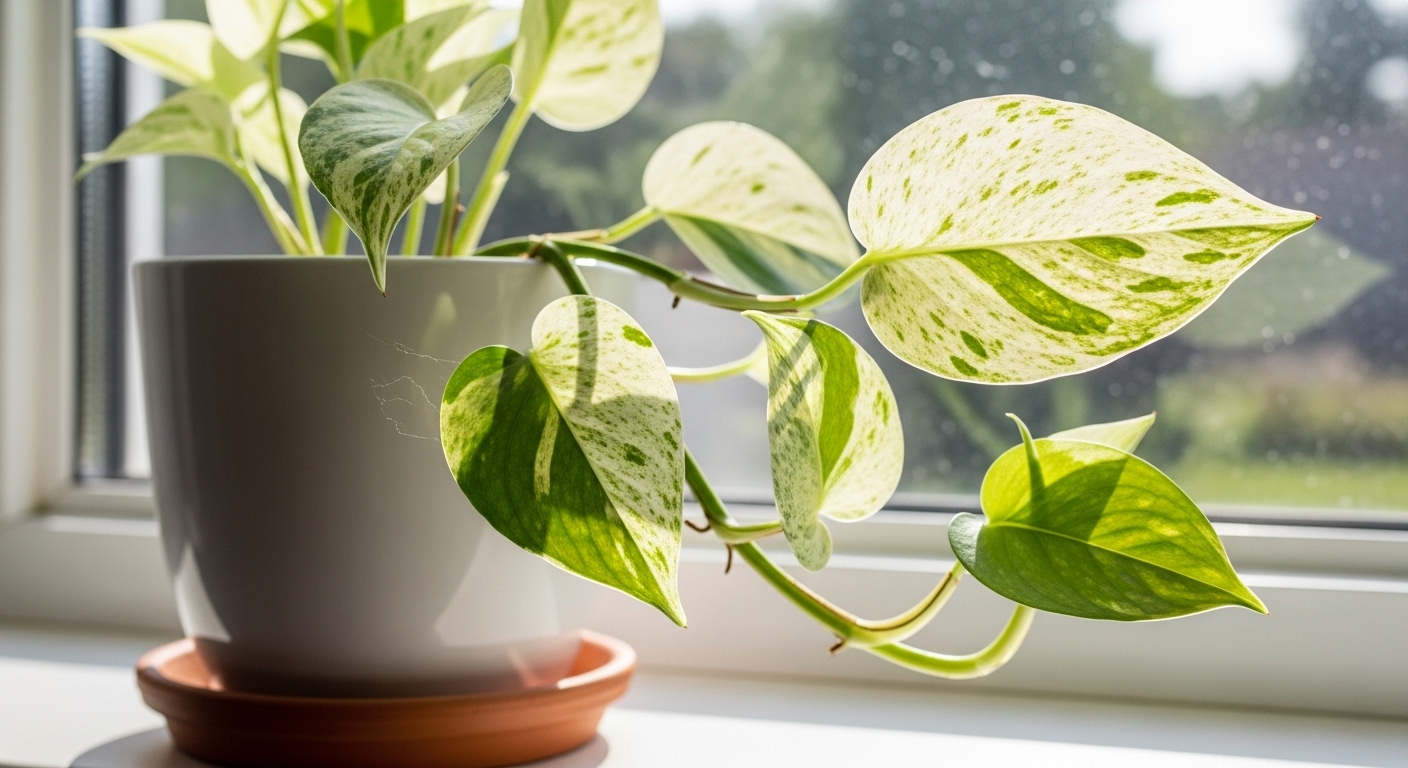
Pothos tolerates a wider light range than almost any other common houseplant. It can survive in low light, but it grows noticeably faster and maintains stronger variegation in bright, indirect light. Direct sun — especially through south or west-facing glass — will scorch the leaves, leaving bleached or papery patches that don't recover.
The relationship between light and variegation is worth understanding. Variegated cultivars like Marble Queen have less chlorophyll in their white sections, so they need more light to photosynthesize efficiently. In low light, many growers notice that Marble Queen gradually produces leaves with more green and less white — the plant compensating for reduced light by increasing its chlorophyll surface area. Neon Pothos, being fully green, handles lower light better than the heavily variegated types.
A north-facing windowsill is workable for golden pothos, though growth will slow considerably in winter. East-facing windows are generally ideal — bright morning light without the intensity of afternoon sun.
Temperature-wise, pothos is comfortable between 15°C and 30°C (59°F–86°F). Keep it away from cold drafts, air conditioning vents, and radiators. Temperatures below 10°C (50°F) cause visible damage — leaves may turn black or mushy at the tips. It's not frost-tolerant at all.
Watering & Humidity Guide
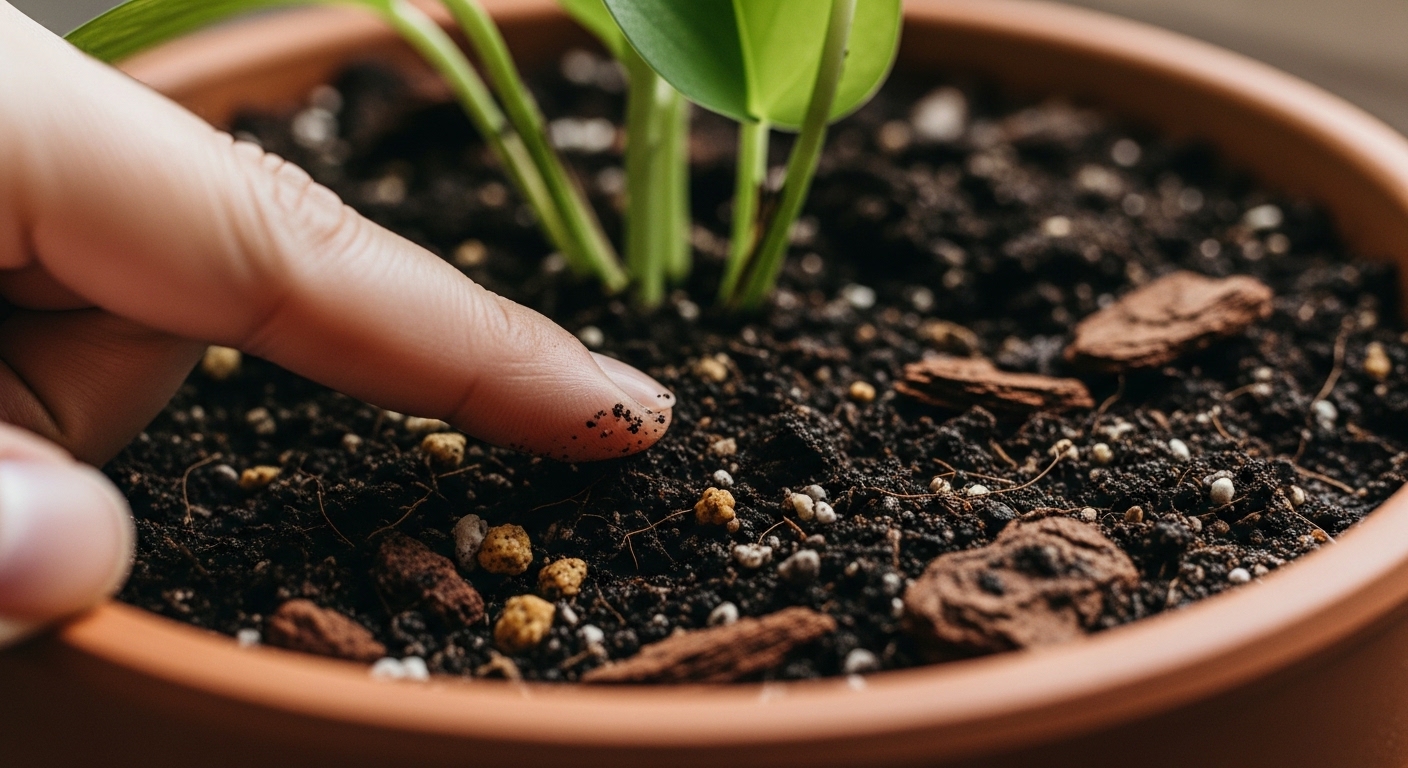
Water pothos when the top 2–3 cm of soil feels dry to the touch. In most indoor conditions, this works out to roughly every 7–10 days in summer and every 12–14 days in winter — but always let the soil, not the calendar, guide you.
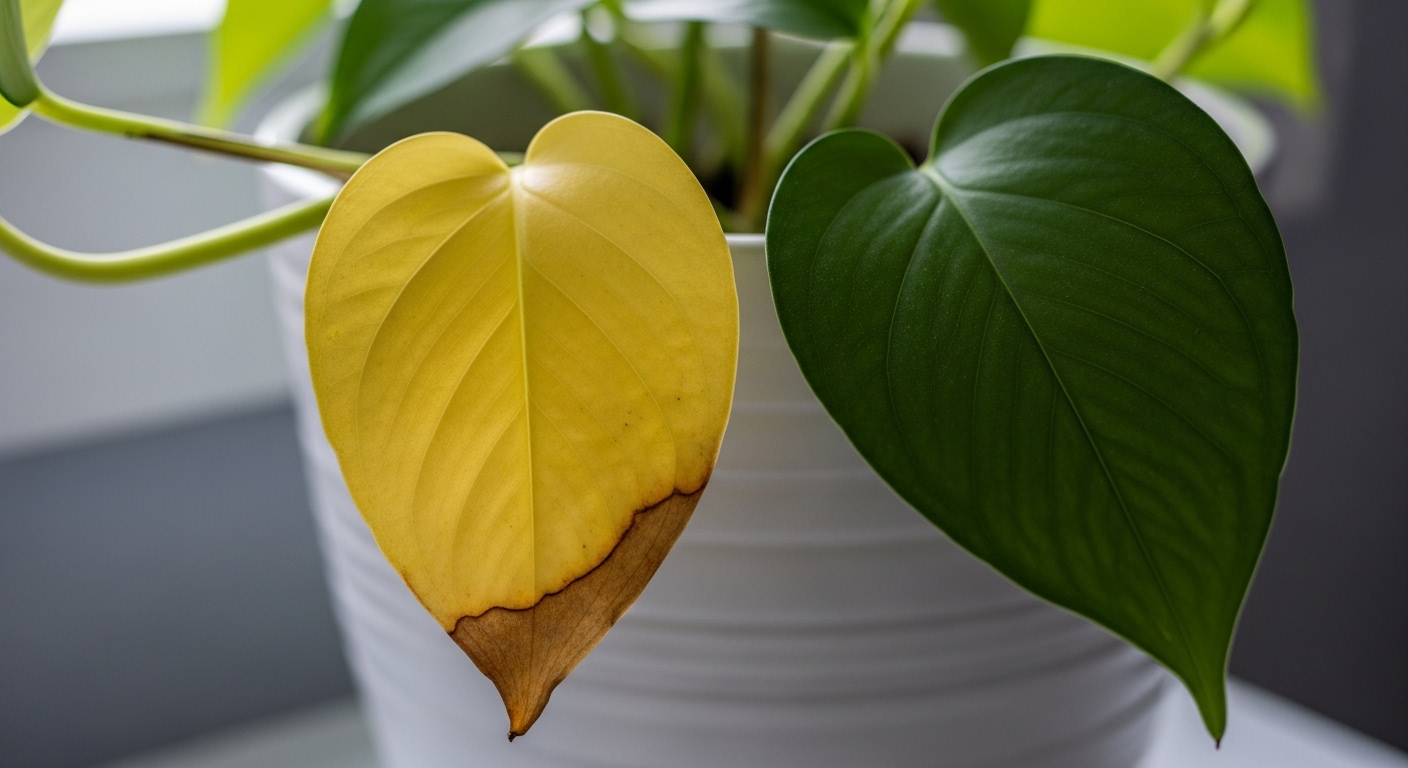
Pothos is far more tolerant of underwatering than overwatering. When it needs water, the leaves will begin to look slightly dull and may feel less turgid — almost a subtle softening. That's your cue. Overwatering is the most common cause of root rot in pothos, and the early signs are easy to miss: yellowing lower leaves, a faint musty smell from the soil, and stems that feel soft near the base.
When you do water, water thoroughly — pour slowly until water drains freely from the bottom, then empty the saucer after 30 minutes. Sitting in standing water accelerates root rot significantly.
Many growers find that switching to a terracotta pot dramatically reduces overwatering problems. The porous clay wicks excess moisture and lets the root zone breathe between waterings — a simple change that can reset a struggling plant.
On humidity: pothos manages fine in average household humidity (40–60%). It doesn't need misting or a humidifier, though it will grow faster in more humid conditions. Brown, crispy leaf tips are usually a sign of very dry air or inconsistent watering — not a humidity emergency.
Soil, Potting & Fertilizing
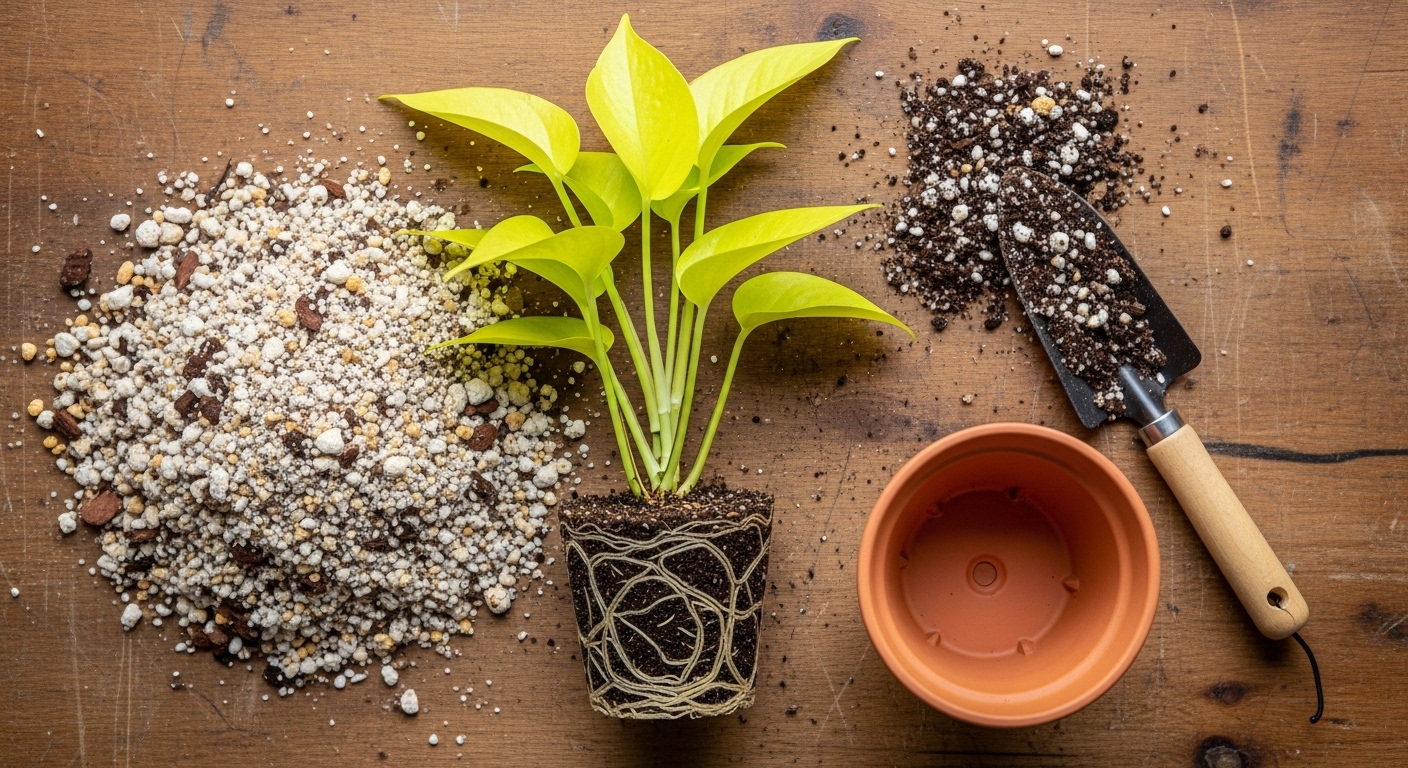
Pothos isn't fussy about soil, but it does best in a mix that drains well while retaining some moisture. A standard indoor potting mix amended with perlite works reliably — roughly 70% potting mix to 30% perlite is a common ratio many growers use.
Avoid dense, compacted mixes or garden soil, which tend to stay waterlogged and restrict airflow around the roots. If you notice water pooling on the surface rather than absorbing quickly, that's a sign the mix has broken down and it's time to repot into fresh substrate.
Repotting is generally needed every 1–2 years, or when roots begin circling the bottom of the pot or emerging from drainage holes. Choose a new pot only 2–5 cm larger in diameter — oversizing the pot dramatically increases the risk of overwatering because there's too much soil holding moisture around the roots.
For fertilizing, a balanced liquid fertilizer (such as a 10-10-10 or 20-20-20 formulation) applied at half strength every 4–6 weeks during spring and summer is generally sufficient. Stop or reduce feeding in autumn and winter when growth naturally slows. Signs of over-fertilizing include brown leaf tips and a white crusty residue on the soil surface from salt buildup — if you see this, flush the soil thoroughly with plain water.
Common Problems & Fixes
Most pothos problems are readable once you know what to look for. The plant communicates clearly — you just need to learn the signals.
Yellow leaves: Most often overwatering or root rot. Check the soil — if it's been consistently wet, let it dry out fully before watering again. If multiple lower leaves are yellowing rapidly, unpot and inspect the roots for brown, mushy sections.
Brown, crispy leaf tips: Usually low humidity, inconsistent watering, or fertilizer salt buildup. Flush the soil, move the plant away from heating vents, and water more evenly.
Pale or washed-out leaves: Too much direct light. Move the plant back from the window or add a sheer curtain to diffuse the light.
Loss of variegation: Insufficient light. Variegated cultivars need brighter indirect light to maintain their patterning. Move closer to a light source.
Leggy, widely spaced leaves: Not enough light, or the plant is simply stretching toward its source. Prune back the longest vines to encourage bushier growth and move to a brighter spot.
Pests are relatively uncommon on pothos, but spider mites, mealybugs, and fungus gnats do occasionally appear. Spider mites tend to show up in very dry conditions — look for fine webbing on the undersides of leaves. Mealybugs appear as white cottony clusters at leaf nodes. Fungus gnats are a soil moisture issue — their larvae live in consistently wet soil, so letting the top layer dry out between waterings is the most effective long-term fix.
- Isolate the affected plant immediately to prevent spread
- Wipe leaves with a damp cloth to remove visible pests
- Treat with neem oil solution or insecticidal soap, following product instructions carefully
- Repeat treatment every 5–7 days for at least three cycles
- Review your watering habits and humidity levels to address root causes
Frequently Asked Questions
Can pothos grow in water indefinitely?
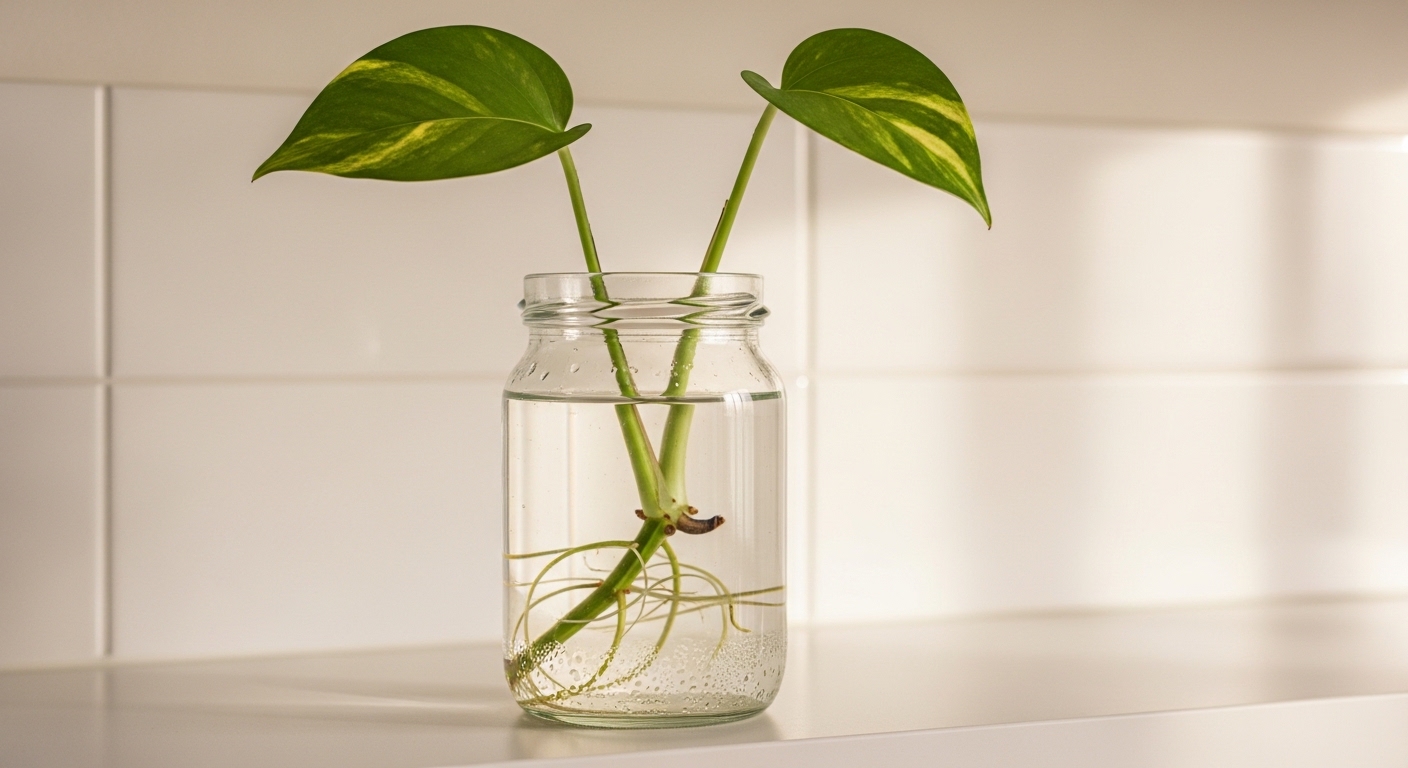
Yes — pothos can live in water long-term, though it grows more slowly than in soil. Use a clean glass vessel, change the water every 1–2 weeks to prevent stagnation, and add a small amount of liquid fertilizer at very low concentration every few weeks. Roots grown in water are structurally different from soil roots, so transitioning a water-grown cutting to soil can cause temporary stress.
How do I train pothos to climb instead of trail?
Pothos naturally climbs in the wild, and given a vertical support, it will attach aerial roots to a moss pole, coir pole, or textured wall. Secure young vines loosely to the support with soft plant ties or clips. As the plant climbs and receives more light, leaves tend to grow larger — this is normal and reflects the plant's natural growth pattern. Consistent moisture in the moss pole encourages aerial root attachment.
Why are my pothos leaves small?
Small leaves generally indicate insufficient light, a lack of nutrients, or a very root-bound plant. Try moving to a brighter spot first — this is the most common cause. If the plant hasn't been repotted in over two years and roots are densely packed, a fresh pot and soil may help significantly.
How do I propagate pothos?
Take a stem cutting just below a node (the small brown bump where roots emerge), with at least one leaf attached. Remove any leaves that would sit below the waterline. Place in water or moist sphagnum moss and keep in bright indirect light. Roots typically appear within 2–4 weeks. Once roots reach 3–5 cm, pot into a well-draining mix.
Is pothos safe for pets?
Pothos is generally considered toxic to cats and dogs if ingested, causing oral irritation, drooling, and digestive upset. The ASPCA lists it as toxic to pets — keep it out of reach of animals that chew on plants. It is not considered safe for human consumption either.
Pothos rewards attention without demanding it. Once you understand its signals — the slight leaf droop before it needs water, the slow fade of variegation in low light, the way new leaves unfurl tightly before opening over a day or two — caring for it becomes intuitive rather than effortful. Start with one adjustment at a time, observe how the plant responds, and trust what you see over any rigid schedule.
If you're ready to expand your collection, pothos propagation is one of the most satisfying places to start — a single trailing vine can yield half a dozen new plants in a matter of weeks. And if root rot has been a recurring struggle, exploring the relationship between soil mix and pot choice is worth your time next.


Comments
Post a Comment