Snake Plant Care Guide for Beginners
Snake plants have a reputation for being nearly indestructible — and honestly, that reputation is mostly earned. Sansevieria trifasciata (now reclassified under Dracaena trifasciata, though most growers still use the old name) tolerates low light, irregular watering, and neglect that would finish off most other houseplants. But 'hard to kill' doesn't mean 'impossible to kill.' Overwatering is the single most common way beginners lose a snake plant, and it happens quietly, beneath the soil, long before the leaves show distress. This guide covers everything you need to grow one confidently — from light and water to soil, propagation, and the mistakes worth avoiding.
Species Overview & Origin
Snake plants are native to the rocky, arid regions of West Africa — Nigeria, Congo, and surrounding areas — where they grow in thin, fast-draining soils under a canopy of sparse, dappled light. That origin story explains almost everything about how to care for them indoors. They evolved to survive dry spells, poor soil, and inconsistent sun. Indoors, they carry those same survival instincts.
There are dozens of cultivars worth knowing:
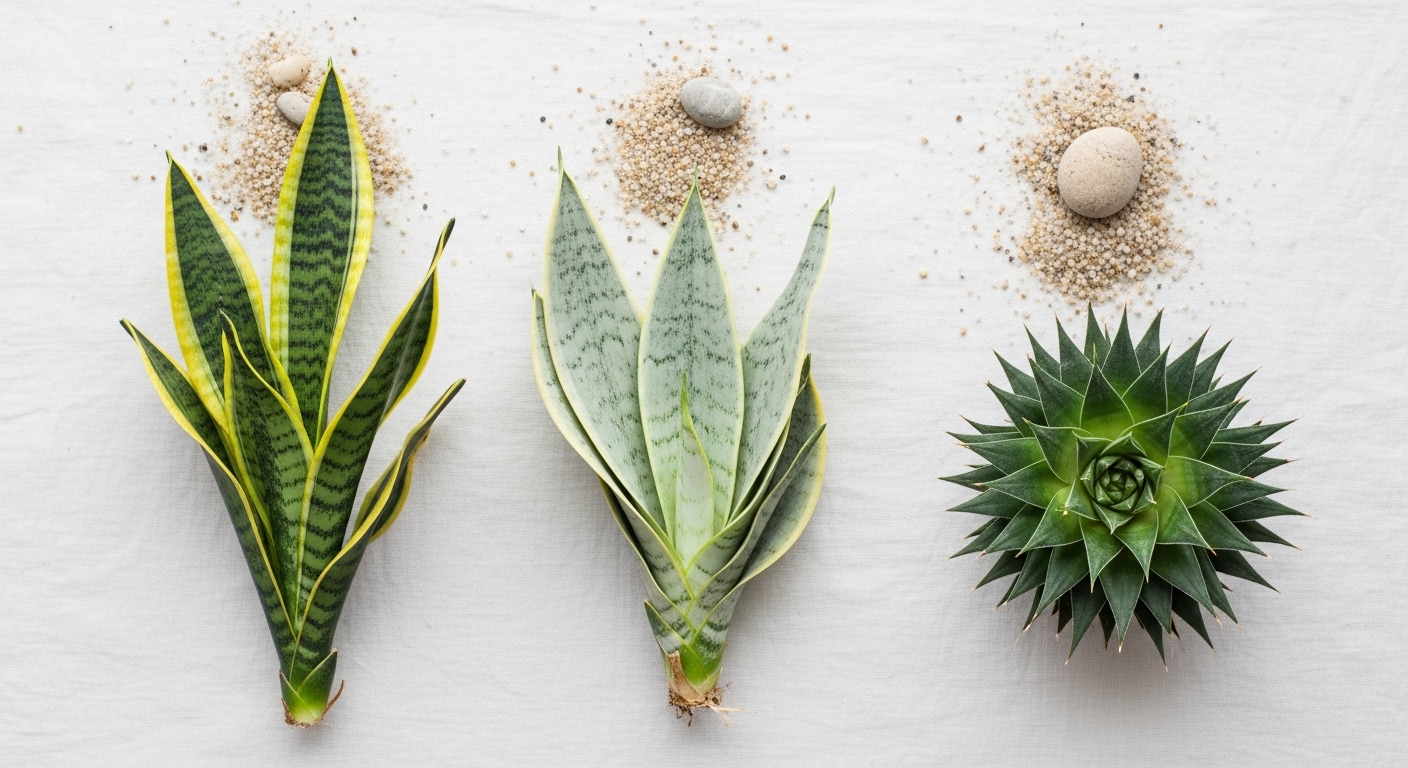
- Dracaena trifasciata 'Laurentii' — the classic yellow-margined variety, tall and architectural
- Dracaena trifasciata 'Moonshine' — pale silvery-green leaves, striking in low light
- Dracaena trifasciata 'Hahnii' (Bird's Nest) — compact rosette form, ideal for shelves and small spaces
- Dracaena cylindrica — cylindrical leaves, more sculptural, same care needs
All share the same core care requirements. The differences are mostly aesthetic, though compact cultivars tend to grow more slowly and may be slightly more sensitive to root disturbance.
Light & Temperature Needs
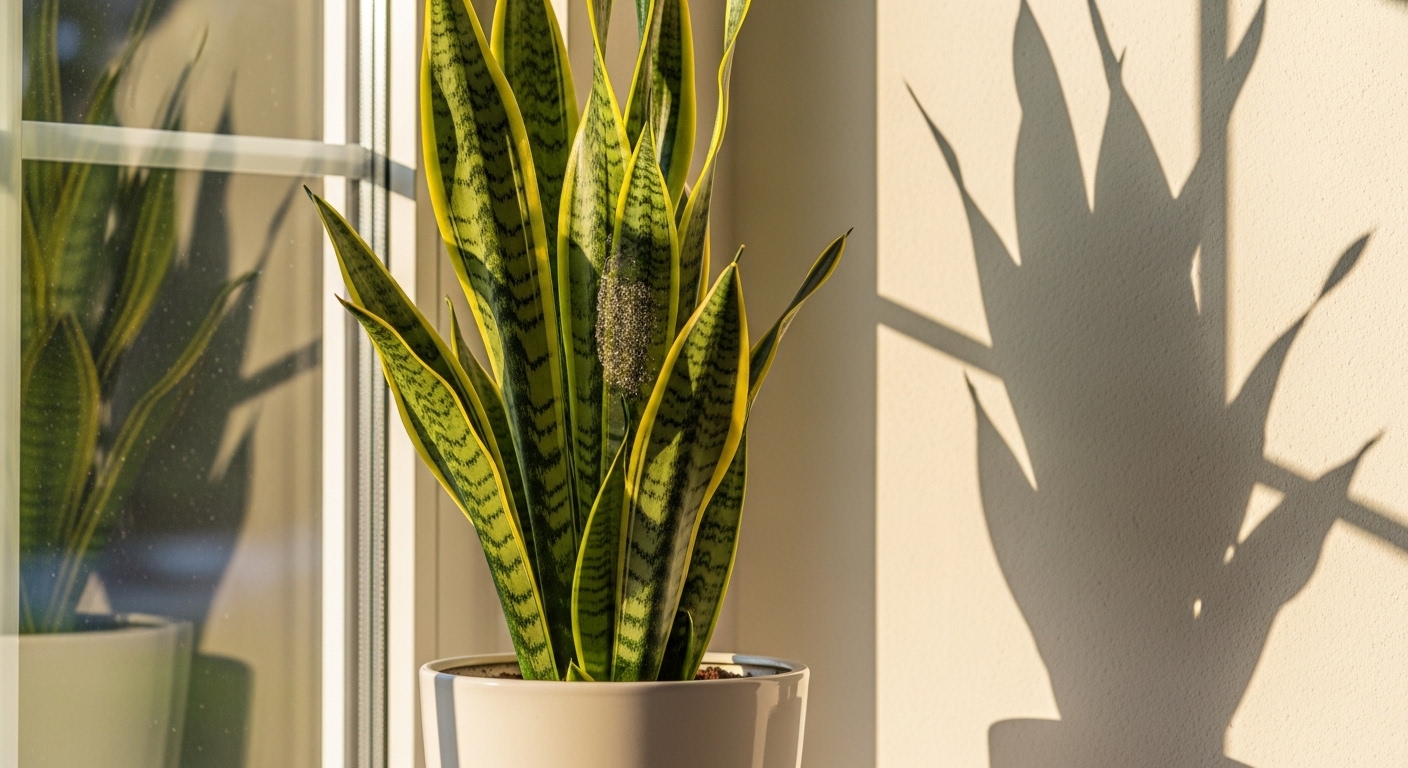
Snake plants tolerate a wide range of light conditions — from dim corners to bright indirect sun. Tolerating low light and actively growing in it are different things, though. In very low light, growth slows significantly and the risk of overwatering increases because the soil stays wet longer. Bright, indirect light generally produces the fastest growth and the most vivid leaf markings.
Direct midday sun through glass can scorch the leaves, leaving pale, papery patches that don't recover. A few hours of gentle morning sun is generally fine and often beneficial.
Temperature-wise, snake plants are comfortable between 15°C and 29°C (60°F–85°F). Below 10°C (50°F), cold damage becomes a real risk — the leaves may develop soft, mushy patches or turn translucent at the tips. Keep them away from drafty windows in winter and never leave them outdoors once nighttime temperatures start dropping.
A snake plant placed in a north-facing room will survive, but one near a bright east-facing window will genuinely grow — new leaves pushing up from the base through spring and summer.
Watering & Humidity Guide
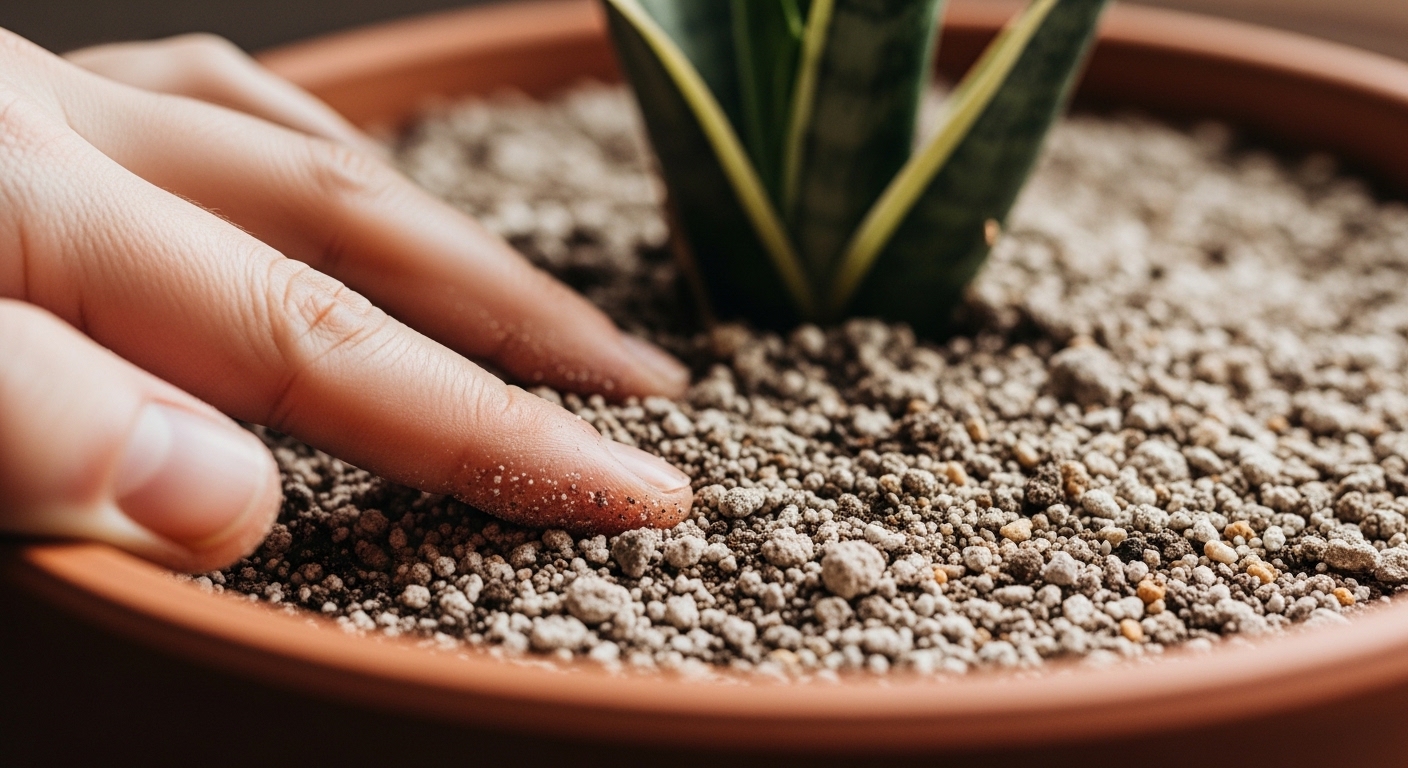
Water your snake plant when the top 2–3 cm of soil feels completely dry — and in winter, let it dry even deeper, closer to halfway down the pot. Most beginners water too often. In a typical home environment, that usually means watering every 2–4 weeks in summer and once a month or less in winter, depending on pot size, soil mix, and light levels.
Always water thoroughly — pour until water drains freely from the bottom, then empty the saucer within 30 minutes. Snake plants sitting in standing water are on a fast track to root rot, which is caused by the fungal pathogens that thrive in consistently wet, oxygen-deprived soil.
One frustrating part of diagnosing snake plant problems is that root rot can be well established before the leaves show any visible change. By the time leaves start to yellow at the base or feel soft when gently squeezed, the roots may already be significantly damaged. Checking the soil moisture before every watering — rather than following a fixed schedule — is the most reliable habit you can build.
Humidity is largely a non-issue. Snake plants are adapted to dry air and generally do fine in the low-humidity conditions of most homes and apartments. You don't need a humidifier or pebble tray for this one.
Soil, Potting & Fertilizing
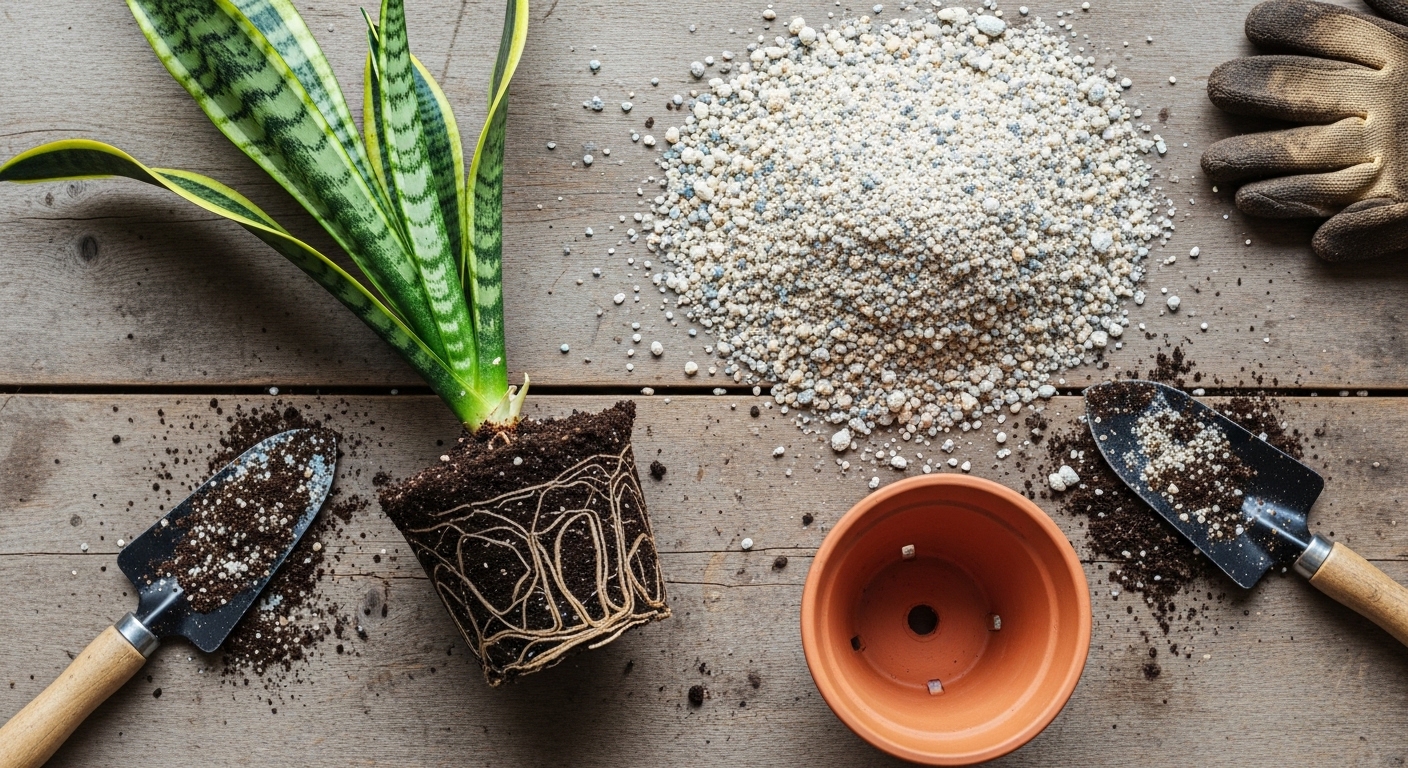
Fast drainage is the single most important quality in a snake plant soil mix. Standard potting soil alone tends to retain too much moisture. A practical mix that many growers rely on combines:
- 50% standard potting mix
- 25% coarse perlite or pumice
- 25% coarse sand or fine grit
Pre-made cactus and succulent mixes work well as a base, though adding extra perlite is still worth doing for containers that don't have exceptional drainage holes.
Choose a pot with at least one drainage hole — this is non-negotiable. Terracotta is particularly well-suited because it's porous and allows the soil to breathe and dry more evenly. Plastic pots retain moisture longer, which increases the margin for error in lower-light spots.
Repot only when the plant is visibly rootbound — roots circling the base, pushing through drainage holes, or lifting the plant out of the pot. Snake plants generally tolerate being slightly pot-bound and may actually flower when mildly stressed. Repot in spring, going up only one pot size at a time.
Fertilizing needs are modest. A balanced liquid fertilizer diluted to half strength, applied once a month during spring and summer, is generally sufficient. Skip fertilizing entirely in autumn and winter when growth slows.
Common Problems & Fixes
Most snake plant problems trace back to one of three causes: too much water, too little light, or cold exposure. The symptoms can look similar, which is why checking the roots and soil is often more informative than reading the leaves alone.
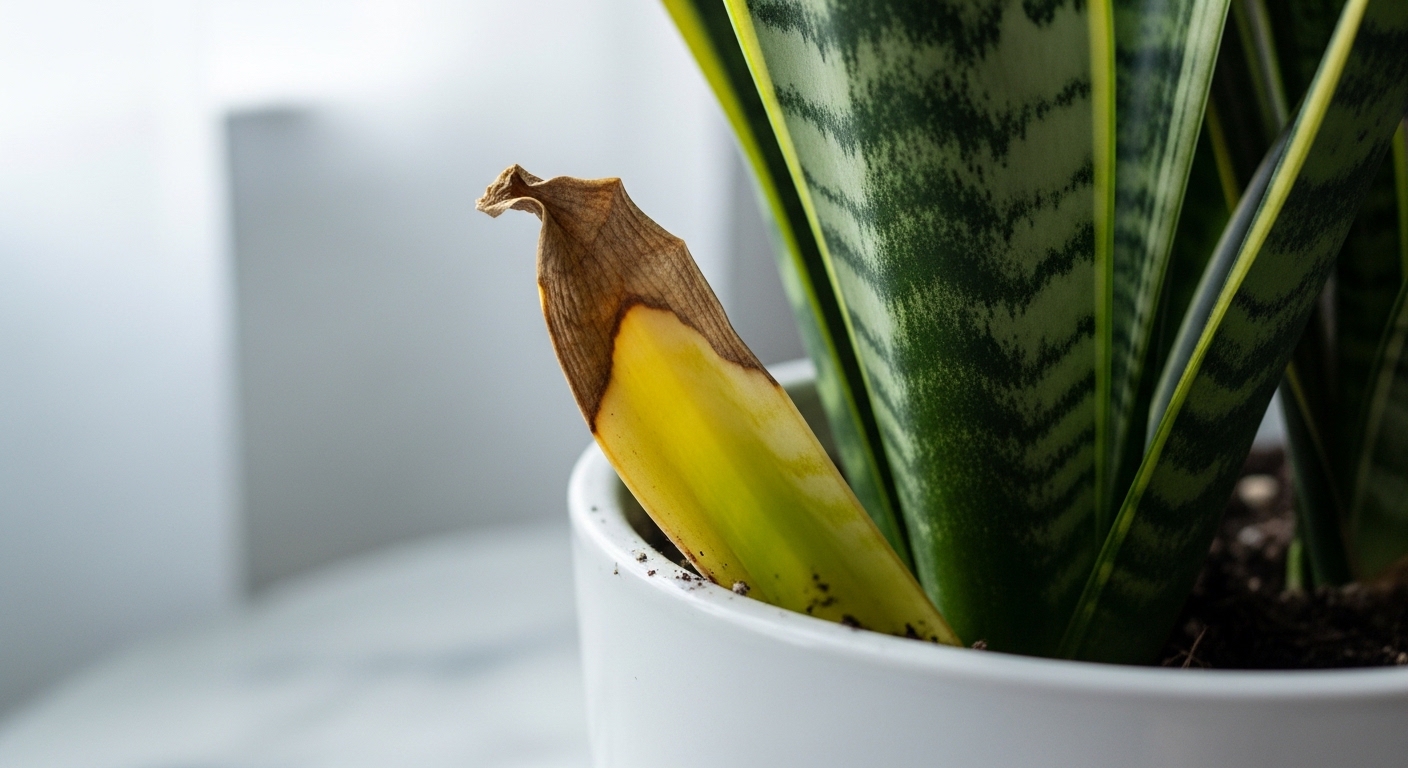
- Yellowing or mushy leaves at the base — almost always overwatering or root rot. Remove the plant from its pot, trim any black or mushy roots with clean scissors, let the roots air-dry for a few hours, and repot in fresh dry mix.
- Brown, crispy leaf tips — often caused by fluoride or salt buildup in tap water, very low humidity, or inconsistent watering. Flushing the soil thoroughly every few months can help reduce mineral accumulation.
- Pale, washed-out leaf color — usually too much direct sun. Move the plant to bright indirect light and the markings typically sharpen over time as new leaves emerge.
- Slow or no growth — common in low light or during winter dormancy. This is normal behavior, not a sign of illness. Patience through winter is usually all that's needed.
- Soft, translucent patches on leaves — cold damage. Move the plant somewhere warmer immediately. Affected leaf sections won't recover, but the plant can stabilize if the roots are healthy.
Pest pressure on snake plants is generally low. Spider mites occasionally appear in very dry conditions, and mealybugs sometimes settle into the tight leaf bases. Wiping leaves with a damp cloth and inspecting the base of the rosette regularly tends to catch problems early.
Frequently Asked Questions
Can snake plants grow in a room with no natural light?
They can survive in very low light, but growth will be minimal and the risk of root rot increases because soil dries slowly. If natural light is truly absent, a basic grow light on a timer (around 12 hours per day) can help maintain the plant's health. Follow manufacturer instructions when setting up any electrical grow light setup.
How do I propagate a snake plant?
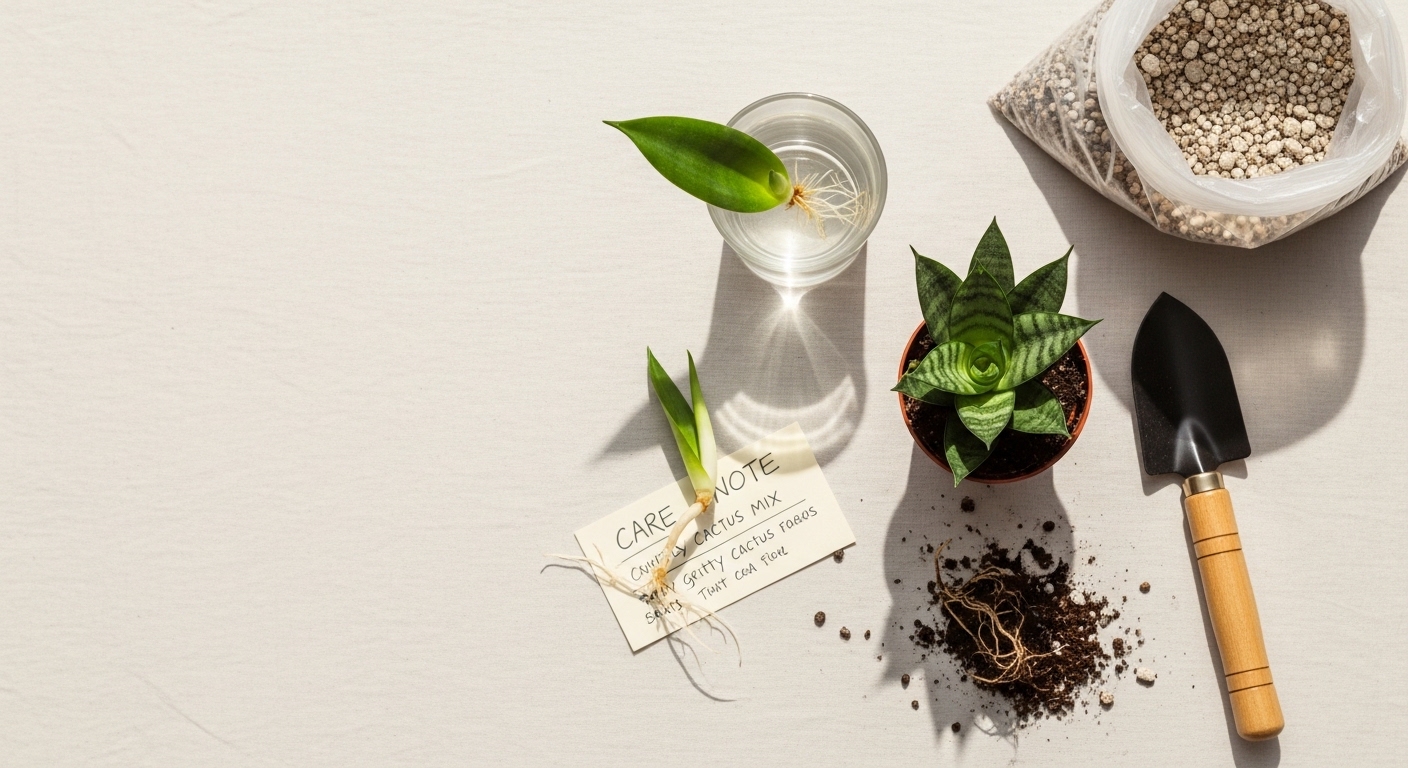
The two most accessible methods are leaf cuttings in water or soil, and division of the rhizome. Leaf cuttings are straightforward — cut a healthy leaf into sections roughly 8–10 cm long, let the cut ends callus for a day, then place them upright in water or moist soil. Roots typically appear within 4–8 weeks. Note that variegated cultivars like 'Laurentii' will revert to plain green when propagated from leaf cuttings — division is the only method that preserves the variegation.
Is the snake plant toxic to pets?
Snake plants are generally considered toxic to cats and dogs if ingested, potentially causing nausea, vomiting, or drooling. The ASPCA lists Sansevieria species as toxic to pets — check their database for the most current information and consult your veterinarian if you have concerns.
Why is my snake plant not growing?
Snake plants go through a natural dormancy period in autumn and winter when growth slows or stops entirely. This is normal. If growth is also absent during spring and summer, the most likely causes are insufficient light, a pot that's too large (which keeps soil wet), or a root system that's been damaged by overwatering.
How often should I repot my snake plant?
Every 2–3 years is a reasonable general guideline, but let the plant tell you when it's ready. Visible roots escaping the drainage hole or a plant that's clearly lifting itself out of the pot are reliable signs. Repotting too frequently — especially into a much larger pot — can cause more harm than good.
Snake plants reward a light touch more than constant attention. The best thing you can do for one is resist the urge to water it on a schedule and instead develop the habit of checking the soil first. Get that right, give it reasonable light, and it will ask very little of you in return — quietly putting out new leaves through the growing season, unfazed by the occasional missed watering or a week away from home.
If you're building out your collection of low-maintenance indoor plants, exploring other drought-tolerant species like ZZ plants or pothos in lower-light spots is a natural next step. And if propagation has caught your interest, dividing a mature snake plant is one of the most satisfying and beginner-friendly ways to start multiplying your plants for free.


Comments
Post a Comment