Lavender Growing Guide: Indoors & Outdoors
Lavender is one of those plants that looks effortless in photos — silvery foliage, upright purple spikes, buzzing with bees — and then quietly struggles in your garden until you figure out what it actually needs. The truth is, lavender growing success comes down to a handful of non-negotiable conditions: full sun, sharp drainage, and the discipline to water far less than feels natural. Get those three things right, and lavender is genuinely low-fuss. Miss them, and you'll be replacing plants season after season wondering what went wrong.
Species Overview & Origin
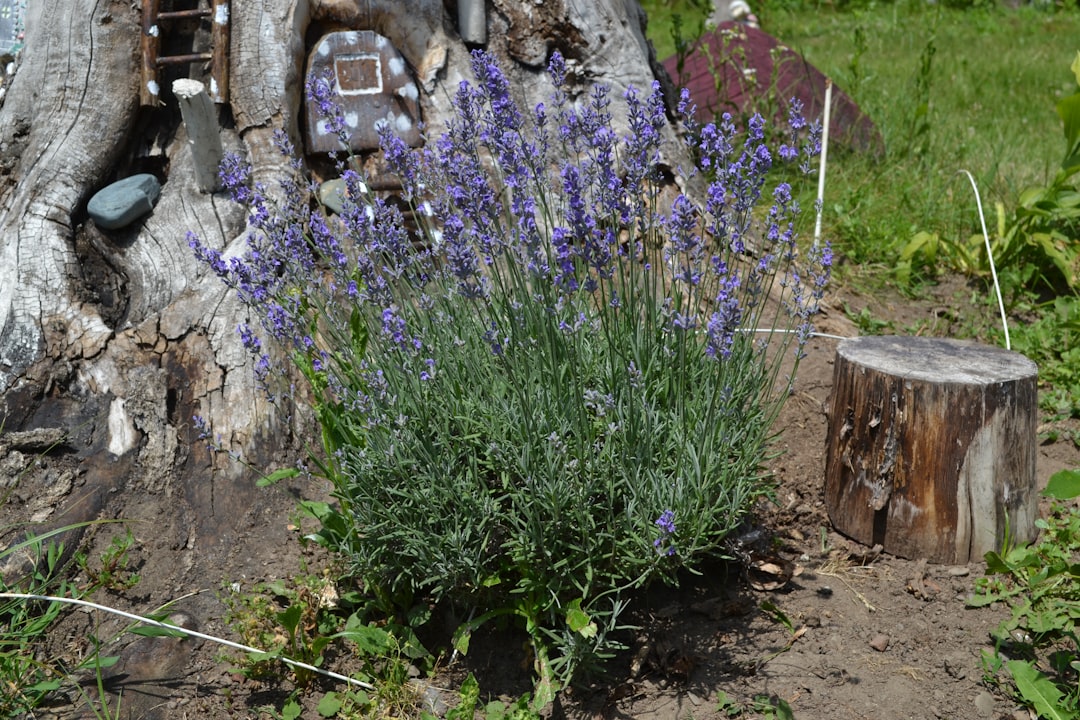
Lavender belongs to the genus Lavandula, a group of aromatic shrubs native to the Mediterranean basin, the Canary Islands, and parts of the Middle East. That origin story matters more than most people realize — these plants evolved on rocky, sun-baked hillsides with thin, alkaline soil and very little rainfall. Every care decision you make should trace back to that image.
The most commonly grown types for home gardens are:
- Lavandula angustifolia (English lavender) — the hardiest and most cold-tolerant, generally surviving down to USDA zone 5 with good drainage.
- Lavandula stoechas (French or Spanish lavender) — showier blooms with distinctive "rabbit ear" bracts, but less cold-hardy and shorter-lived.
- Lavandula x intermedia (lavandin) — a hybrid with larger flower spikes and a stronger fragrance, well-suited to warmer climates.
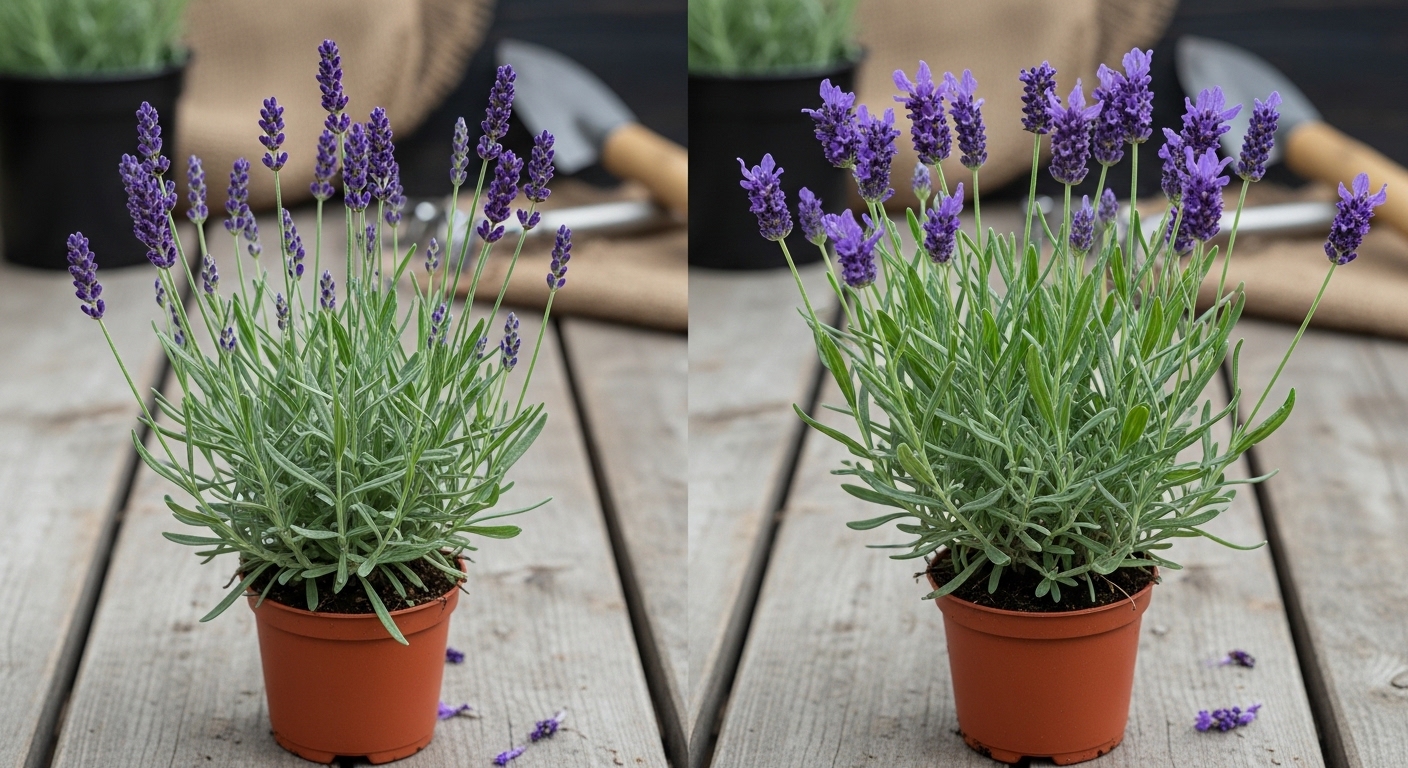
Knowing your species helps set realistic expectations. French lavender may bloom twice a season but won't survive a hard frost. English lavender is slower but far more forgiving of cold winters. If you're unsure which you have, check the flower bracts — stoechas types have those distinctive petal flags at the top of each spike.
Light & Temperature Needs
Lavender needs a minimum of six hours of direct sun daily — and eight is better. This isn't negotiable. In lower light, plants tend to produce weak, leggy stems, sparse flowering, and become far more susceptible to the fungal root issues that kill most lavender.
Indoors, this requirement is the single biggest challenge. A south-facing window in a northern hemisphere home can work during summer, but winter light is rarely sufficient without supplemental grow lighting. Many growers find that even a bright windowsill produces noticeably less compact growth compared to an outdoor position. If you're growing lavender inside, a full-spectrum grow light positioned 15–30 cm above the plant for 12–14 hours a day can help bridge that gap during darker months. Follow manufacturer instructions and consult a licensed electrician if you're setting up a permanent fixture.
Temperature-wise, established outdoor lavender is surprisingly cold-hardy — L. angustifolia varieties generally handle light frosts well, provided the soil drains freely and roots don't sit in wet, frozen ground. The danger zone is wet cold, not dry cold. Potted lavender is more vulnerable because roots are exposed on all sides; move containers to a sheltered spot or unheated garage once temperatures consistently drop below -5°C (23°F).
The most reliable indicator that your lavender is getting enough light: compact, upright stems and flower spikes that stand straight without flopping. Floppy, open growth almost always signals insufficient sun.
Watering & Humidity Guide
Water lavender deeply but infrequently. For established outdoor plants, this typically means watering only when the top 5–7 cm of soil feels completely dry — which in a well-draining bed during summer may be every 10–14 days, or less. Newly planted lavender needs more frequent watering for the first season while roots establish, but even then, allow the soil surface to dry between sessions.
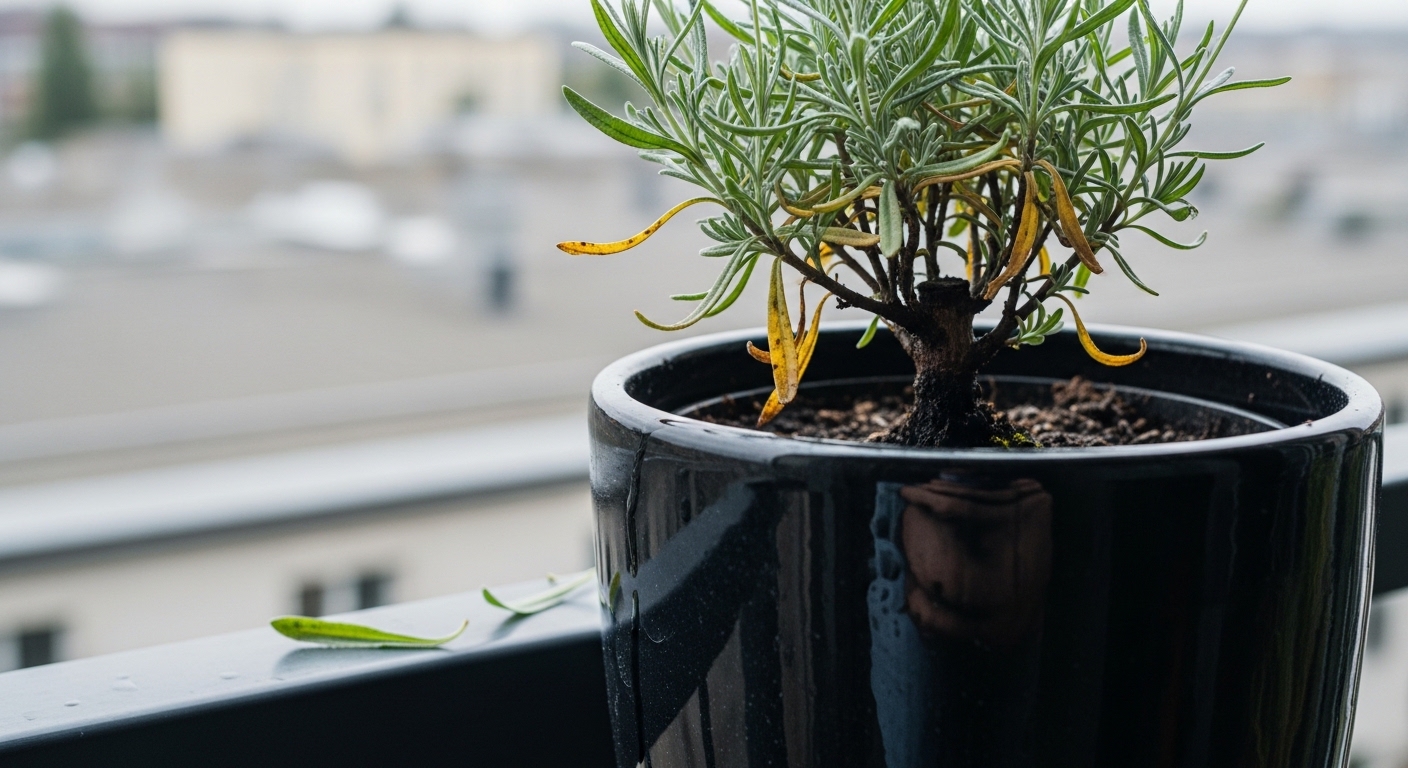
Overwatering is the most common reason lavender dies. The roots are highly sensitive to prolonged moisture, and soggy soil encourages Phytophthora root rot almost immediately. One frustrating part is that the early symptoms — wilting, grey foliage — can look exactly like drought stress, which leads many growers to water more and accelerate the decline.
For potted lavender, check drainage holes before every watering. Water should flow freely through within seconds. If it pools or drains slowly, your mix is too dense. A good rule: water thoroughly until it drains from the bottom, then don't water again until the pot feels noticeably lighter when lifted.
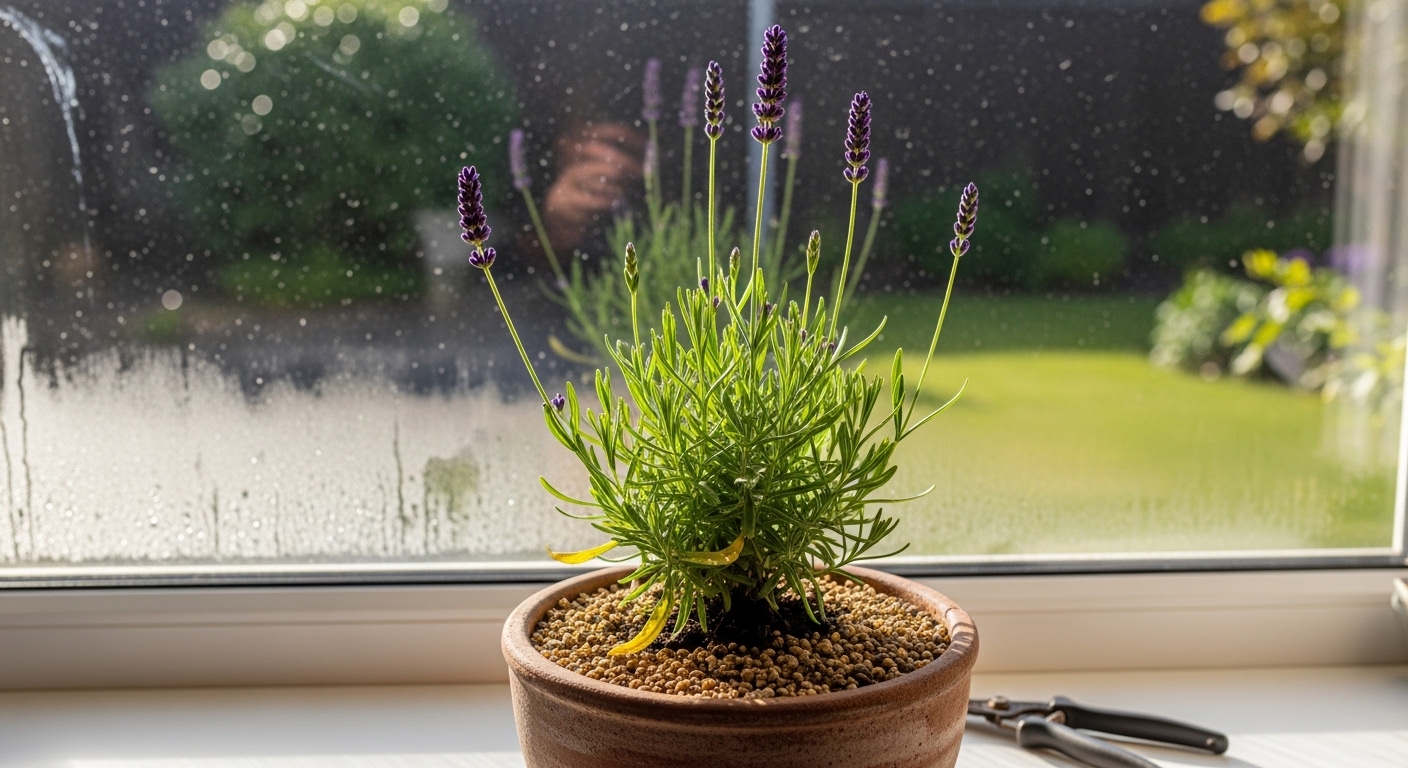
Humidity is another factor often overlooked. Lavender strongly prefers dry air. High indoor humidity — common in kitchens and bathrooms — creates conditions where fungal issues can develop on the foliage. Keep indoor lavender in the driest, sunniest room available, and avoid misting.
Soil, Potting & Fertilizing
Sharp drainage is the foundation of lavender care. In the ground, lavender does best in sandy or gravelly loam with a slightly alkaline pH — roughly 6.5 to 7.5. Heavy clay soil is the enemy. If your garden soil clumps and holds water, either amend it heavily with coarse grit and horticultural sand, or build a raised bed where you can control the mix entirely.
For containers, a suitable mix might include:
- 50% standard potting compost or loam-based compost
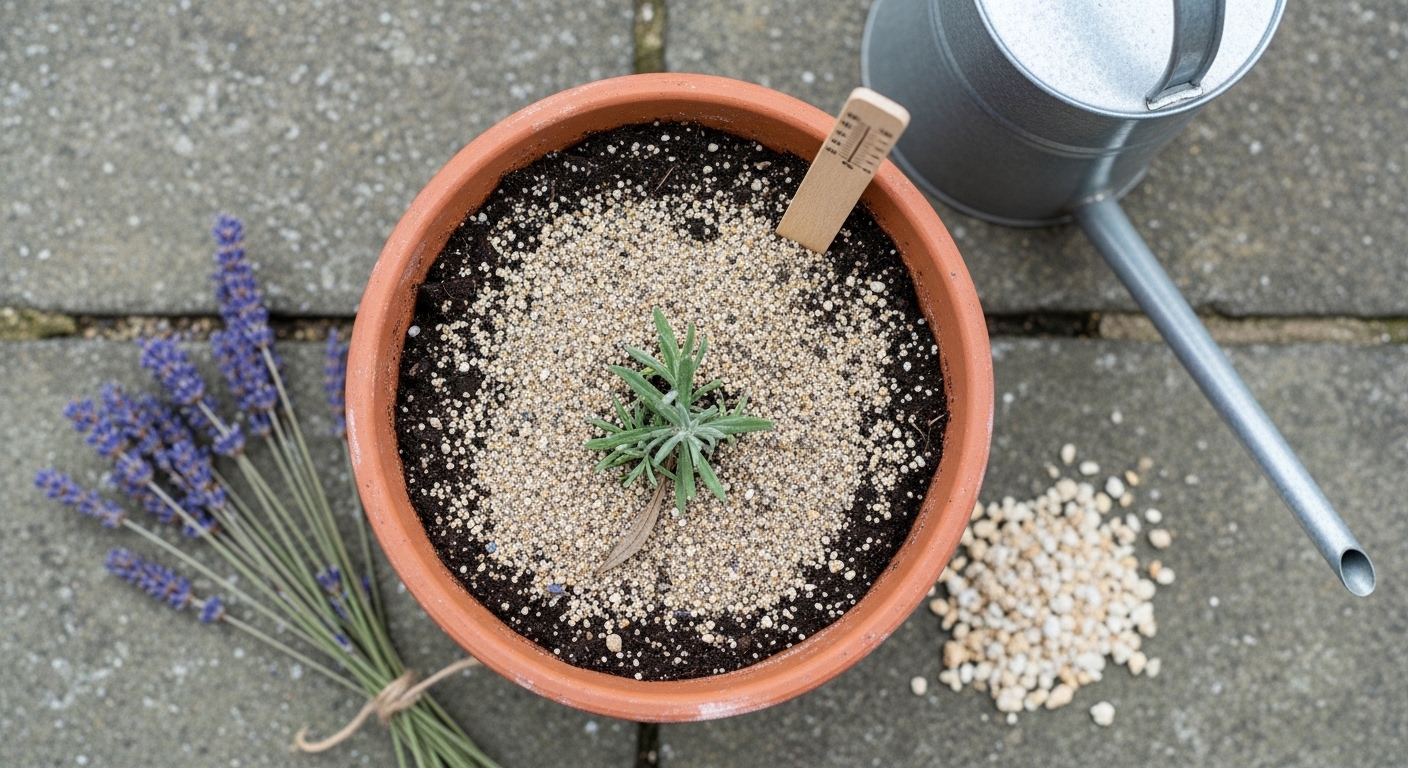
- 30% coarse horticultural grit or perlite
- 20% coarse sand (not fine beach sand, which compacts)
Adding a layer of fine gravel or grit as a surface mulch around the base of the plant can help prevent moisture sitting against the lower stems — a common trigger for stem rot.
Lavender is a light feeder. In most cases, a single application of a low-nitrogen, balanced fertilizer in early spring is sufficient. Too much nitrogen pushes leafy growth at the expense of flowers and makes the plant more susceptible to disease. Many growers find that lavender in lean, poor soil actually flowers more prolifically than plants given rich compost.
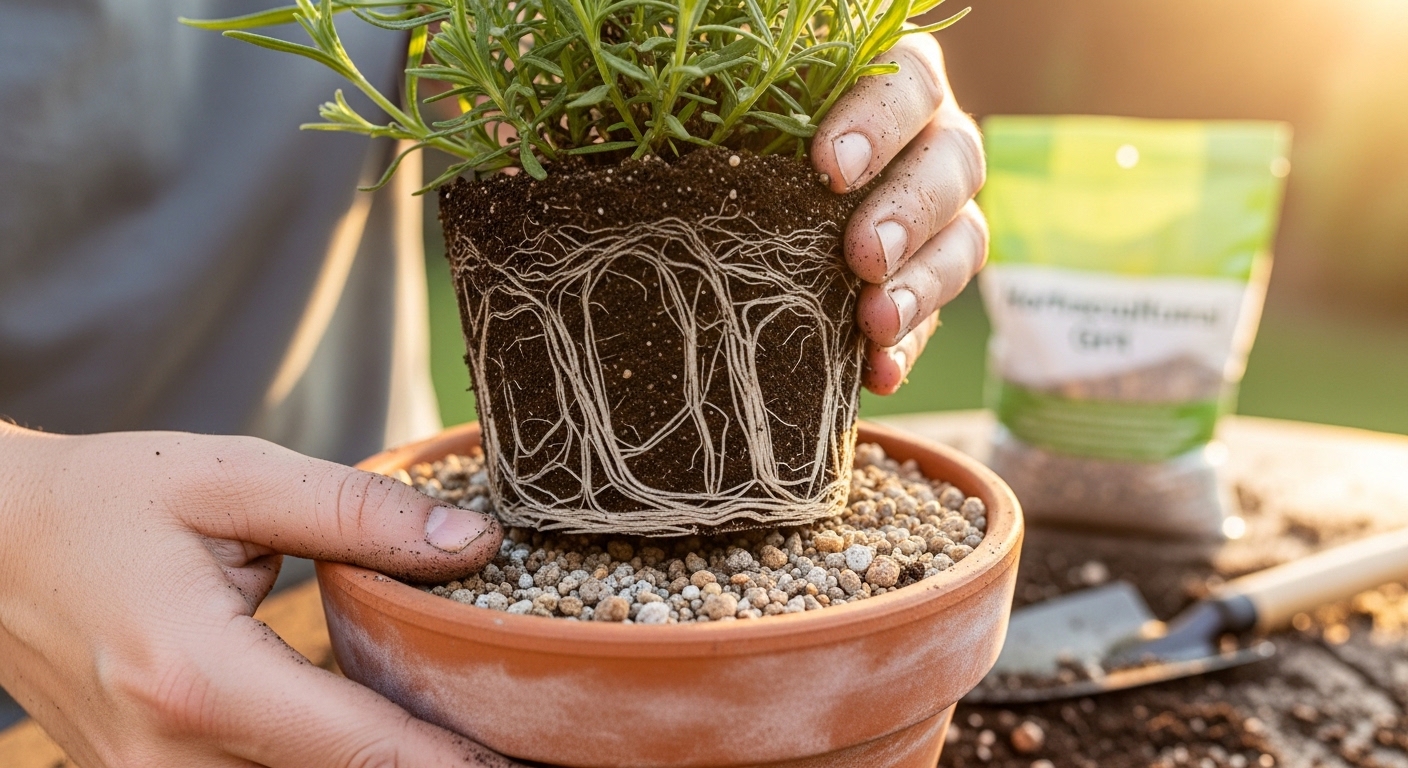
Repot container lavender every 2–3 years, or when you notice roots circling the base of the pot. Move up only one pot size at a time — too large a container holds excess moisture around the roots.
Common Problems & Fixes
Most lavender problems trace back to one of three causes: too much water, too little sun, or skipping the annual prune. Here are the symptoms you're most likely to encounter:
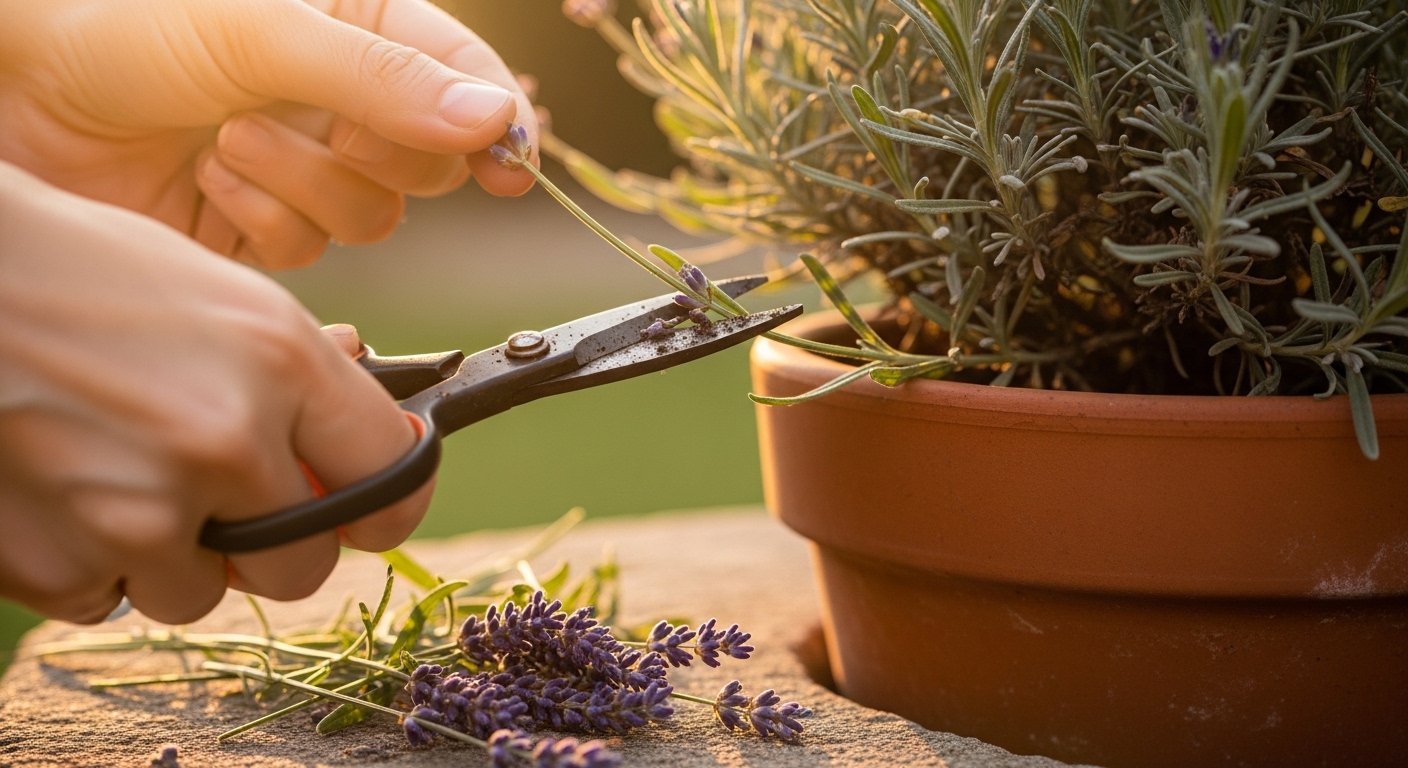
Woody, leggy stems with few flowers: This is almost always the result of not pruning regularly. Lavender becomes woody from the base over time, and unpruned plants stop producing new flowering stems from old wood. Prune by one-third after the first flush of bloom, cutting back into green growth — never into the grey, bare woody base, as this rarely regenerates.
Grey or brown wilting foliage: Check the soil immediately. If it's wet, you're likely dealing with root rot. Remove the plant, inspect the roots, trim any black or mushy sections, dust with powdered cinnamon (a mild antifungal many growers use as a home remedy), and repot into fresh, dry, gritty mix. If the soil is bone dry, it may be drought stress — water deeply and allow to recover.
Sparse, pale flowering: Usually a light issue. Move the plant to a sunnier position. If already in full sun, consider whether neighboring plants or structures have grown to shade it over the season.
Yellowing lower leaves: A small amount of lower leaf yellowing is normal as older foliage ages. Widespread yellowing, especially combined with soft stems, points to overwatering or poor drainage.
- Overwatering and poor drainage — the leading cause of lavender death
- Insufficient sunlight — leads to weak growth and disease vulnerability
- Skipping annual pruning — causes rapid woodiness and reduced flowering
- Rich, nitrogen-heavy soil — promotes foliage at the expense of blooms
- High humidity or poor air circulation — encourages fungal stem and root issues
Frequently Asked Questions
Can lavender grow indoors permanently?
It can survive indoors, but it rarely reaches its full potential without very strong light. A south-facing window supplemented with a full-spectrum grow light gives the best chance. Expect more modest flowering and slower growth compared to an outdoor plant in full sun. Treat indoor lavender as a seasonal guest — move it outside for summer when possible.
When and how should I prune lavender?
Prune twice a year for best results: once lightly after the first bloom flush in early summer, cutting spent flower stems back to just above the foliage, and once more firmly in late summer or early autumn. Cut back by roughly one-third of the plant's total height, always leaving green growth on the stems. Never cut back into bare woody growth — this portion generally will not regenerate.
How do I overwinter lavender?
Established in-ground L. angustifolia varieties generally handle winter well in zones 5–8, provided drainage is excellent. Avoid mulching heavily around the crown, as this traps moisture. For potted lavender, move containers to a sheltered spot — an unheated greenhouse, cold frame, or garage with some light — once hard frosts arrive. Do not stop watering entirely; water sparingly every 3–4 weeks to prevent complete desiccation.
Why won't my lavender bloom?
The most common reasons are insufficient sunlight, over-fertilizing with nitrogen, or failure to prune the previous season. Lavender also tends to bloom less in its first year while establishing roots — this is normal. Give it a full season before worrying.
Is lavender safe for pets?
Lavender is generally considered mildly toxic to cats and dogs if ingested in significant quantities. For specific guidance on pet safety, the ASPCA Animal Poison Control Center is a reliable general resource. Keep plants out of reach of pets that tend to chew foliage.
Lavender rewards patience and restraint more than attention. The growers who struggle most are often the ones doing too much — watering too often, feeding too generously, skipping the prune because the plant looks fine. Step back, give it sun, give it space, and let the soil dry out properly between waterings. That's genuinely most of what it needs.
If you're ready to expand your aromatic herb garden, exploring Mediterranean companions like rosemary, thyme, and sage — which share almost identical care requirements — is a natural next step. And if root rot has been a recurring issue across your container plants, a deeper look at soil drainage and pot selection is well worth your time.


Comments
Post a Comment