Bird of Paradise Care Guide: Indoors & Out
Bird of paradise (Strelitzia reginae and Strelitzia nicolai) has a reputation for being dramatic — and honestly, that reputation is earned. These plants grow slowly, demand serious light, and will sulk visibly when something is off. But get the conditions right, and you'll have one of the most architecturally striking plants you can grow, indoors or out. This guide covers everything: light, deep watering technique, fertilizing for those oversized leaves, why the leaves split, and how to repot a specimen that's outgrown its pot.
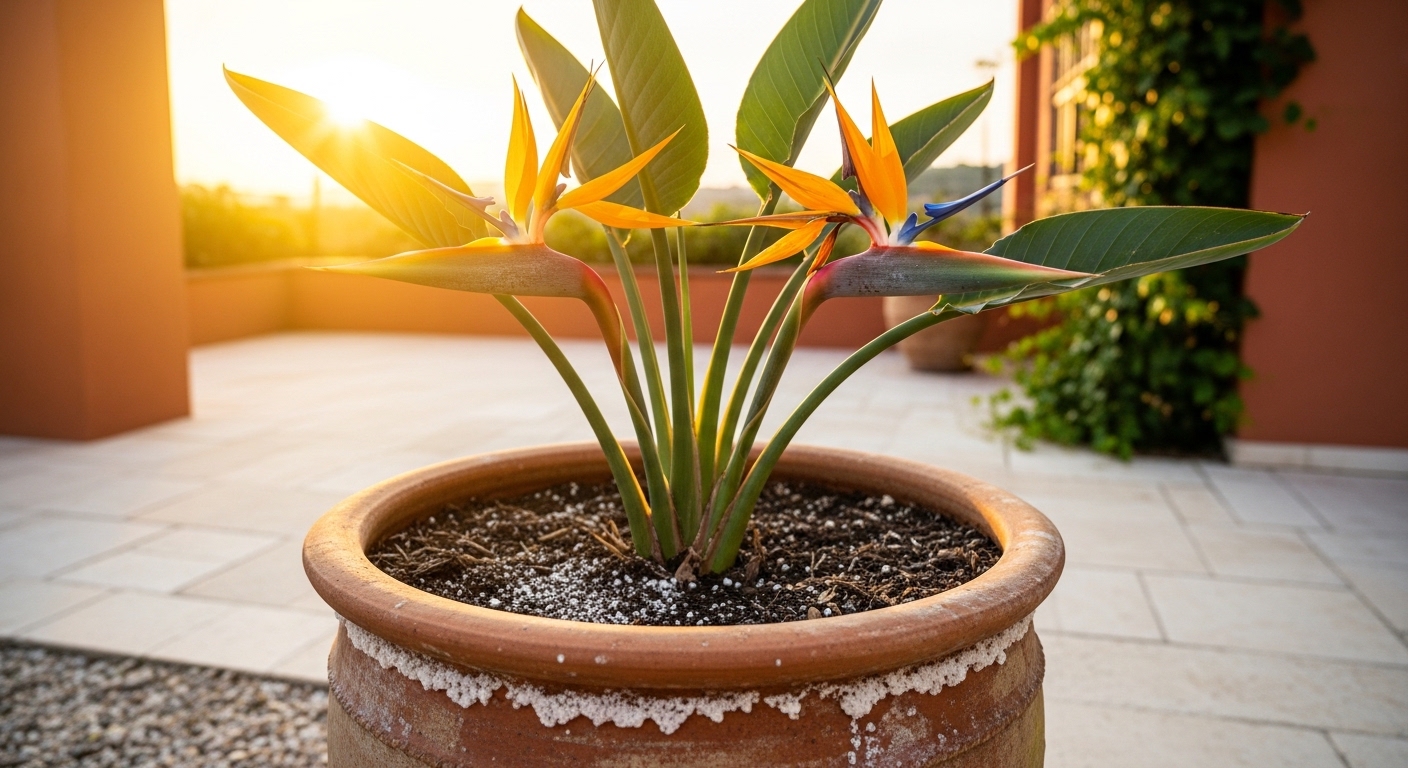
Species Overview & Origin
Strelitzia is native to the subtropical coastal regions of South Africa, where it grows in dense thickets along riverbanks and forest margins. Two species dominate the houseplant and garden trade:
- Strelitzia reginae — the classic orange-and-blue flowering species, typically reaching 1–1.5 m indoors, with narrower, more upright leaves.
- Strelitzia nicolai — the giant white-flowered species, capable of reaching 3 m or more indoors and significantly taller outdoors, with broad banana-like leaves.
Both species evolved in high-light, seasonally dry environments. That origin story explains almost every care decision you'll make: they want sun, they want their roots to dry out a little between waterings, and they don't appreciate being moved around or fussed with too often. Understanding where a plant comes from is genuinely useful — it removes a lot of guesswork.
Indoors, S. nicolai is the more commonly sold variety because of its bold, sculptural presence. S. reginae is more compact and more likely to flower when given enough light. Neither species is considered fast-growing by houseplant standards — expect 30–60 cm of new growth per year under good conditions, and considerably less in lower light.
Light & Temperature Needs
Bird of paradise needs more light than most houseplants. A spot that feels bright to you may still be insufficient — these plants genuinely want direct or near-direct sun for several hours a day to grow well and, eventually, flower.
Indoors, place your plant within 1–2 metres of a south- or west-facing window. An east-facing window can work for S. nicolai if the window is large and unobstructed, but flowering on S. reginae will be unlikely without stronger exposure. Many growers find that moving the plant outdoors for summer — even just to a sheltered balcony — makes a noticeable difference in growth rate and leaf size.
If you're supplementing with a grow light, a full-spectrum fixture positioned 30–50 cm above the canopy for 12–14 hours daily can help during winter months. Follow manufacturer instructions and consult a licensed electrician if you're installing a permanent fixture.
Temperature-wise, strelitzia is comfortable between 15°C and 30°C. It can tolerate brief dips to around 10°C but will show cold stress — darkening leaf edges, slowed growth — if exposed to frost or prolonged cold. Outdoors in temperate climates, it's generally suited to USDA zones 10–12 without winter protection.
Bright indirect light is often not enough. Bird of paradise tends to produce its largest, healthiest leaves when it receives at least 4–6 hours of direct sun daily — outdoors or through an unobstructed south-facing window.
Watering & Humidity Guide
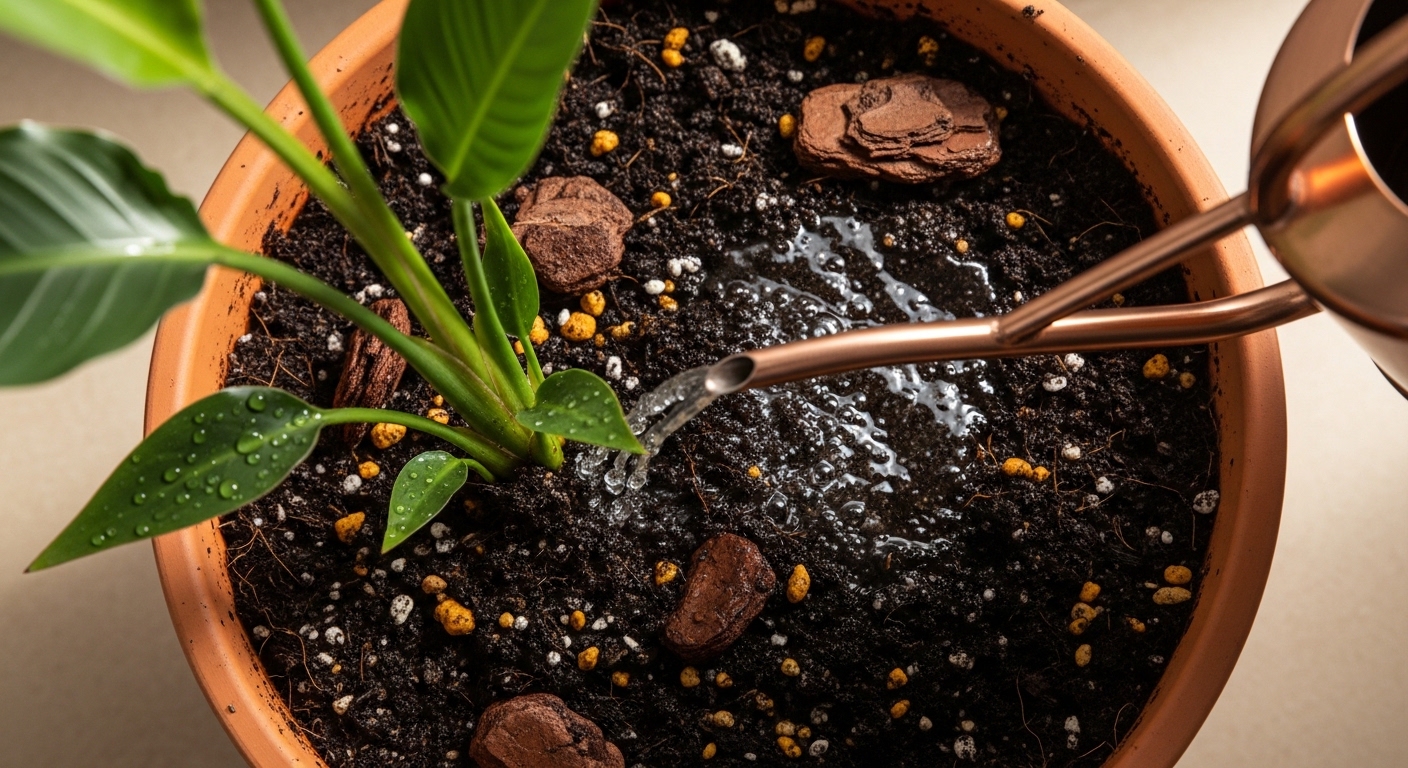
Deep, infrequent watering is the approach that works best for strelitzia. Water thoroughly until it drains freely from the bottom of the pot, then allow the top 3–4 cm of soil to dry out before watering again. In summer, this might mean watering every 7–10 days; in winter, every 2–3 weeks is often sufficient.
The deep watering technique matters here. Shallow, frequent watering encourages roots to stay near the surface, which makes the plant more vulnerable to drought stress and less structurally stable. When you water deeply, roots follow moisture downward, anchoring the plant and improving its drought resilience over time.
One frustrating part of bird of paradise care is that overwatering damage and underwatering damage can look similar at first — drooping leaves, browning tips. The soil is your best diagnostic tool. If the top few centimetres feel moist and the leaves are drooping, hold off on water. If the soil feels bone dry and the leaves are curling inward slightly, it's time to water thoroughly and let it drain.
Humidity is less critical than it is for many tropical houseplants. Strelitzia generally tolerates the humidity levels found in most homes (40–60%) without issue. In very dry indoor environments — particularly in winter near heating vents — occasional misting or a nearby humidifier may help prevent leaf tip browning, though this is rarely the primary cause of that symptom.
Soil, Potting & Fertilizing
Strelitzia prefers a well-draining, moderately fertile mix. A standard potting soil amended with perlite (roughly one part perlite to three parts potting mix) generally works well. Some growers add a small amount of coarse sand or fine bark to improve aeration further. The goal is a mix that holds some moisture but never stays waterlogged.
Fertilizing matters more for bird of paradise than for many houseplants, particularly if you're growing S. nicolai and want those large, paddle-shaped leaves to reach their full size. During the growing season (spring through early autumn), feed every 2–4 weeks with a balanced liquid fertilizer. A formulation with a roughly equal NPK ratio — or one slightly higher in potassium — tends to support both leaf development and, in mature plants, flowering.
Avoid fertilizing in winter when growth slows. Salts can accumulate in the soil over time, which may cause leaf tip browning. Flushing the pot thoroughly with plain water every few months can help prevent this buildup.
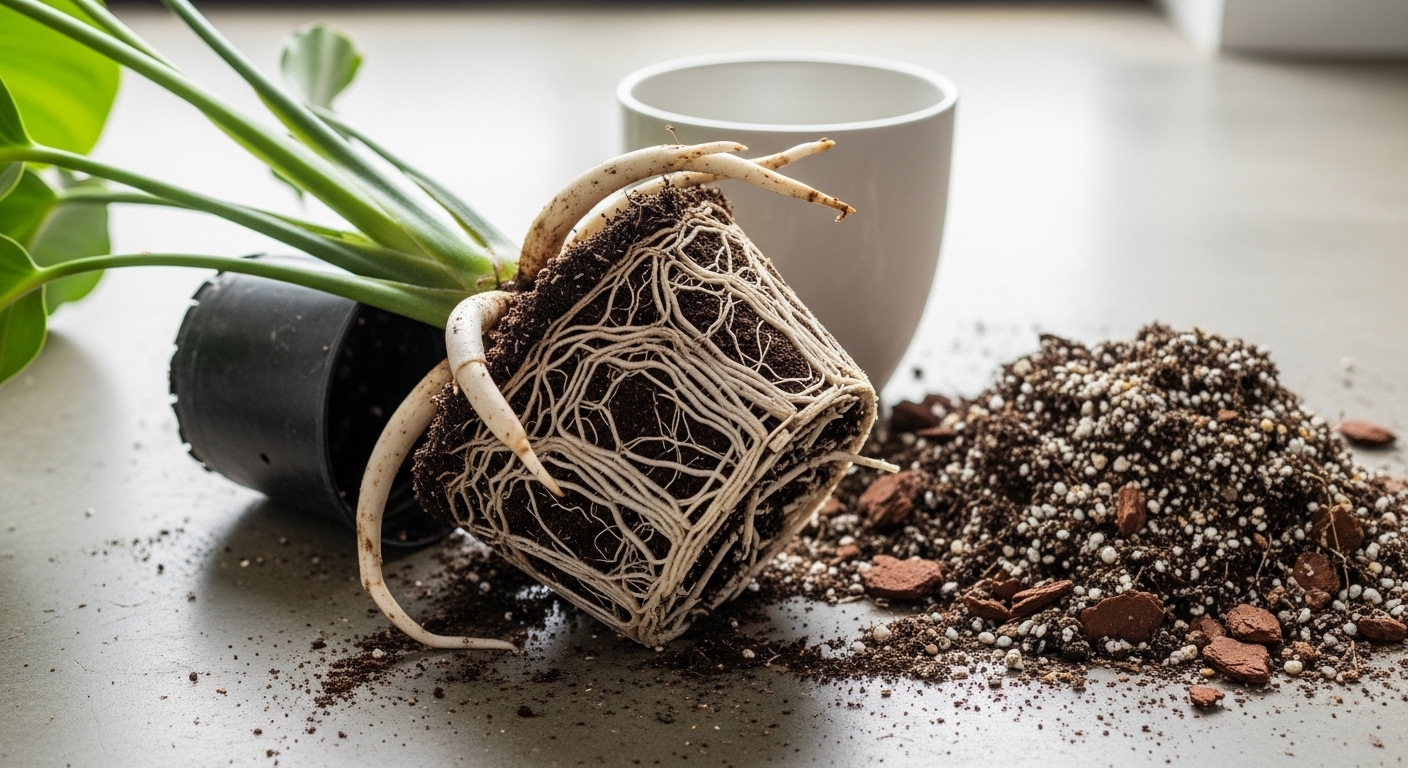
Repotting large specimens is a project in itself. Bird of paradise is somewhat root-bound tolerant — many growers find that slightly crowded roots can actually encourage flowering in S. reginae. That said, when roots are visibly circling the drainage holes or pushing up through the soil surface, it's time to size up. Go up one pot size (roughly 5 cm larger in diameter) rather than jumping to a much larger container, which can hold excess moisture and slow growth. For very large plants, top-dressing with fresh soil each spring — rather than full repotting — is a practical alternative.
Common Problems & Fixes
Most bird of paradise problems trace back to a handful of root causes, and the leaves usually tell you what's wrong before things get serious.
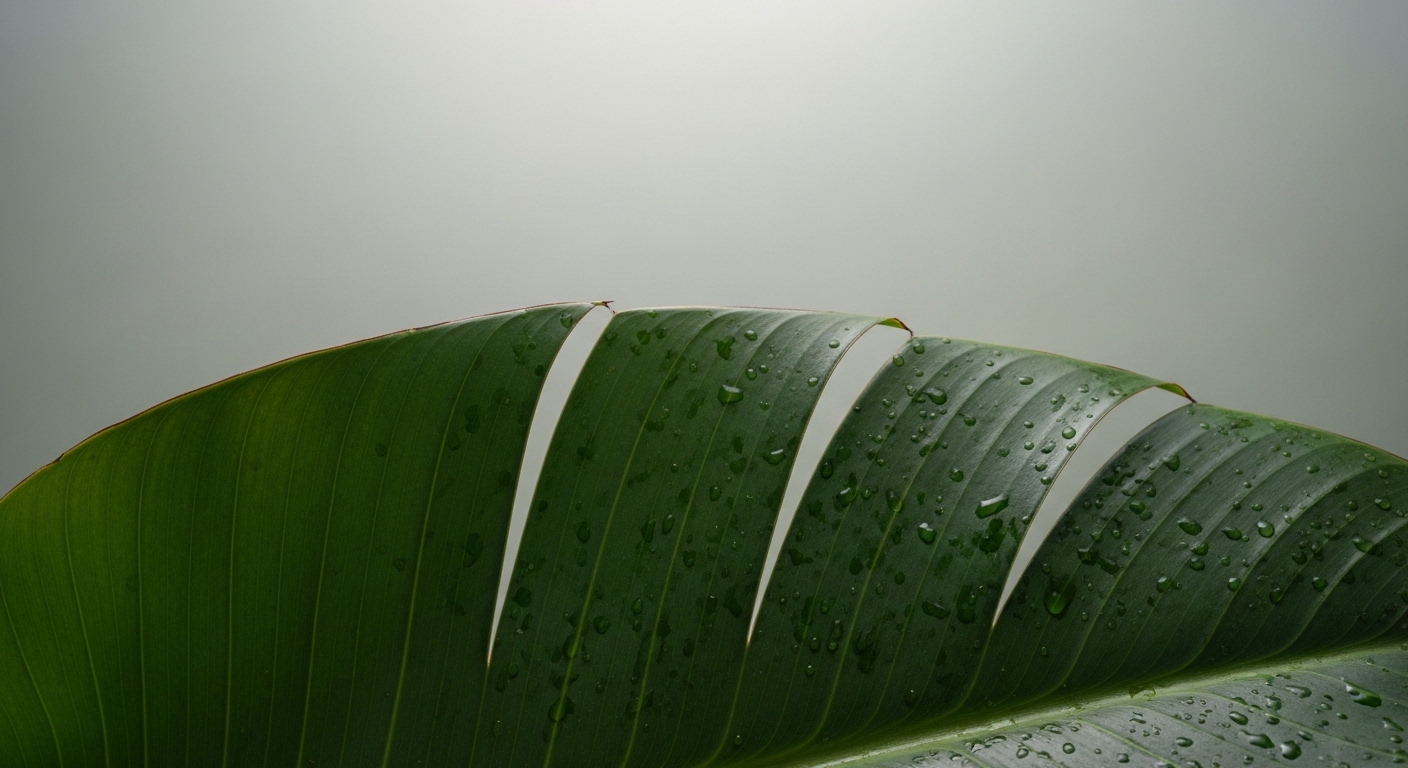
Leaf splitting: This is the question that comes up most often, and the answer is reassuring — splitting along the leaf blade is largely natural. In the wild, strelitzia leaves split in response to wind, which reduces resistance and prevents the plant from toppling. Indoors, splits tend to appear on mature leaves that have been handled, brushed against, or exposed to dry air. Some splitting is normal and not a sign of poor care. Excessive or early splitting on young leaves, however, can indicate very low humidity or physical damage during growth.
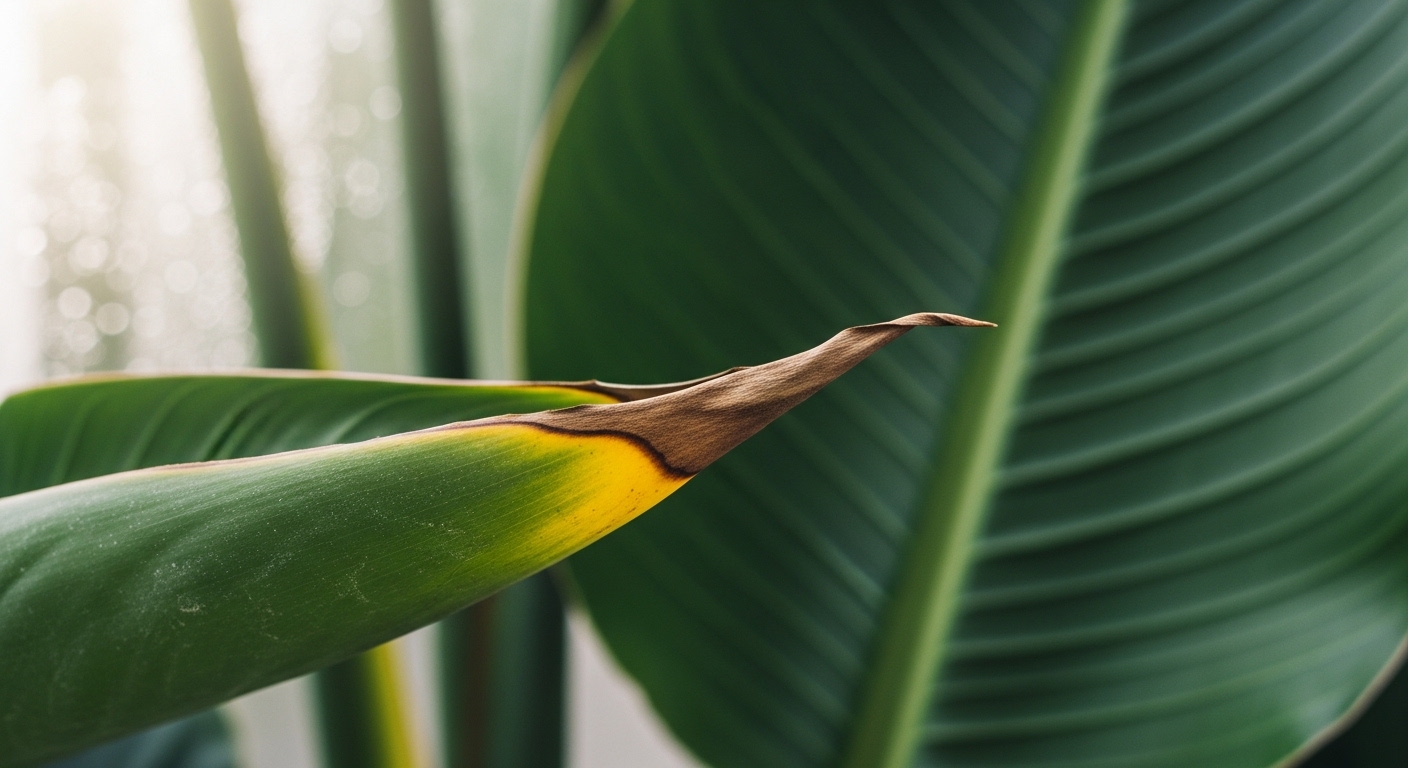
Brown leaf tips: Usually caused by inconsistent watering, low humidity, or salt accumulation in the soil. Check your watering rhythm first, then consider flushing the soil. If the problem persists through winter, a humidifier nearby may help.
Yellow lower leaves: A few yellowing lower leaves per season is normal — the plant sheds older growth as it matures. Widespread yellowing across multiple leaves, especially combined with soft stems near the base, typically points to overwatering or poor drainage.
No flowers: The most common reason is insufficient light. S. reginae generally needs to be at least 3–5 years old and receiving strong direct light before it will flower indoors. Slightly root-bound conditions and a cooler winter rest period (around 13–15°C) may also help trigger blooming. Patience is genuinely required here.
Pests: Scale insects and spider mites occasionally appear, particularly in dry indoor conditions. Check the undersides of leaves and along the midrib. Wiping leaves with a damp cloth and treating with neem oil solution is a common first response — always test on a small area first. For persistent infestations, consult a local garden center for appropriate options.
Frequently Asked Questions
How fast does bird of paradise grow indoors?
Growth rate depends heavily on light. In a bright, sunny spot, you might see 3–5 new leaves per year on a mature plant. In lower light, growth slows considerably — sometimes to just 1–2 leaves annually. Outdoors in a warm climate, growth is noticeably faster.
Why are my bird of paradise leaves curling?
Inward curling is typically a sign of underwatering or very low humidity. Check the soil moisture first — if the top 4–5 cm are completely dry, water thoroughly and the leaves should recover within a day or two. If the soil is moist and leaves are still curling, root rot from overwatering may be restricting water uptake.
Can bird of paradise grow in low light?
It can survive in moderate indirect light, but it won't grow well. Expect very slow growth, no flowering, and potentially more yellowing of lower leaves. If your space is genuinely low-light, this is not the plant for that spot — it will slowly decline rather than adapt.
Is bird of paradise toxic to pets?
Strelitzia is generally considered mildly toxic to cats and dogs if ingested, potentially causing nausea and digestive upset. The ASPCA lists it as toxic to cats, dogs, and horses. Keep it out of reach of pets who tend to chew on plants, and consult your veterinarian if ingestion occurs.
How do I know when to repot?
Look for roots circling visibly at the drainage holes, roots pushing up through the soil surface, or the plant becoming unstable and top-heavy in its pot. Strelitzia tolerates being slightly root-bound, so there's no need to rush — repotting every 2–3 years is generally sufficient for established plants.
Will my indoor bird of paradise ever flower?
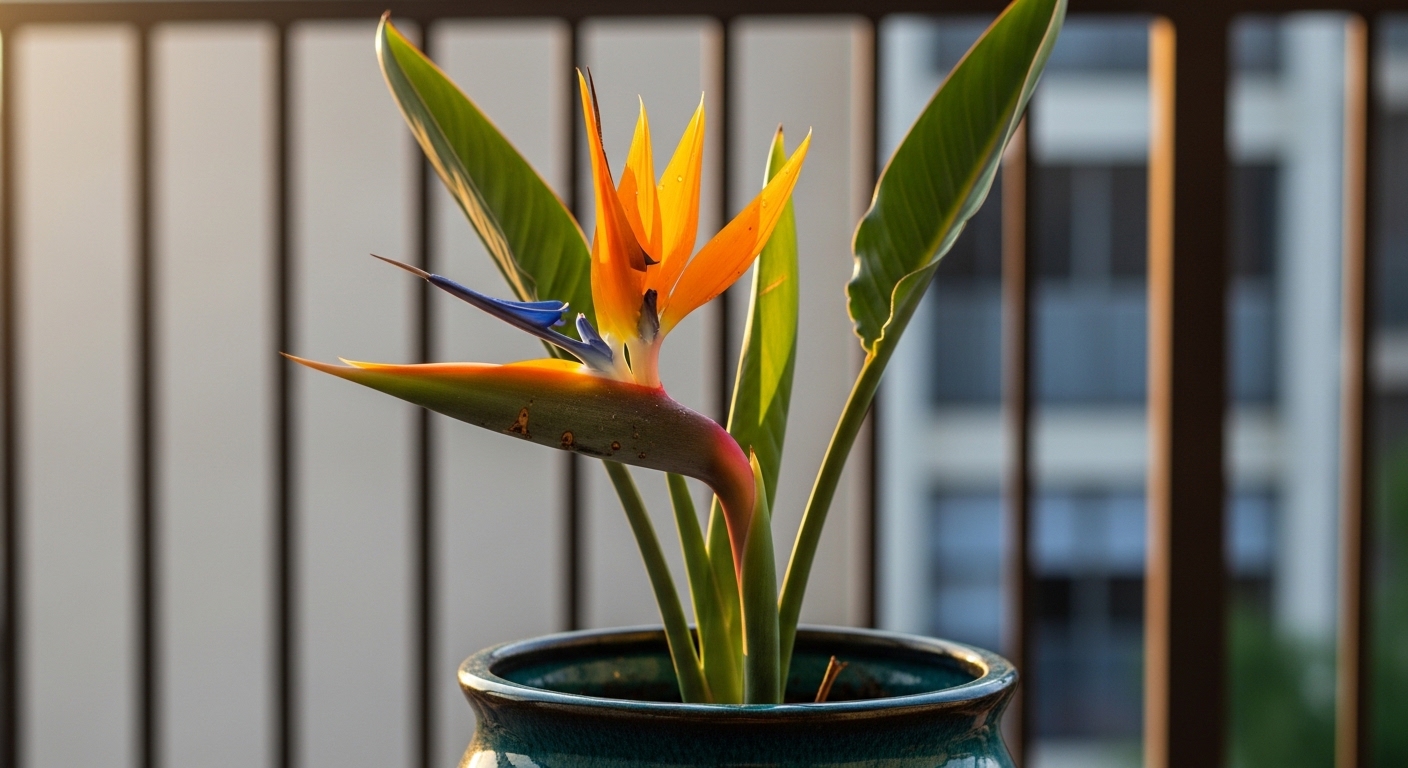
Strelitzia reginae can flower indoors given enough light and maturity — typically 3–5 years from a young plant. S. nicolai is much less likely to flower indoors; it's grown primarily for its foliage. Outdoor plants in warm climates tend to flower reliably once established.
Bird of paradise rewards patience and consistency more than any particular trick or product. Get the light right — genuinely bright, direct sun for a good portion of the day — and most of the other care decisions become easier. Water deeply, let it dry out a little, feed it through the growing season, and give it space to grow. The rest tends to follow.
If you're ready to take the next step, consider moving your plant outdoors for the warmer months — even a few weeks of real sun can reset its growth and energy in a way that indoor conditions rarely match. And if you're navigating other large-format tropicals alongside your strelitzia, exploring care for Musa (ornamental banana) or Heliconia species covers a lot of similar ground worth knowing.


Comments
Post a Comment