Growing Herbs on a Windowsill: Complete Guide
A sunny windowsill and a handful of seeds — it sounds simple, but anyone who has watched their basil collapse into a leggy, pale shadow of itself knows that growing herbs indoors takes a little more intention than it first appears. The good news is that most common culinary herbs are genuinely well-suited to container life, as long as you understand what they actually need. Light, drainage, and airflow do most of the heavy lifting. Get those three things right, and fresh herbs in arm's reach of your kitchen become a very realistic everyday reality.
Planning Your Windowsill Space
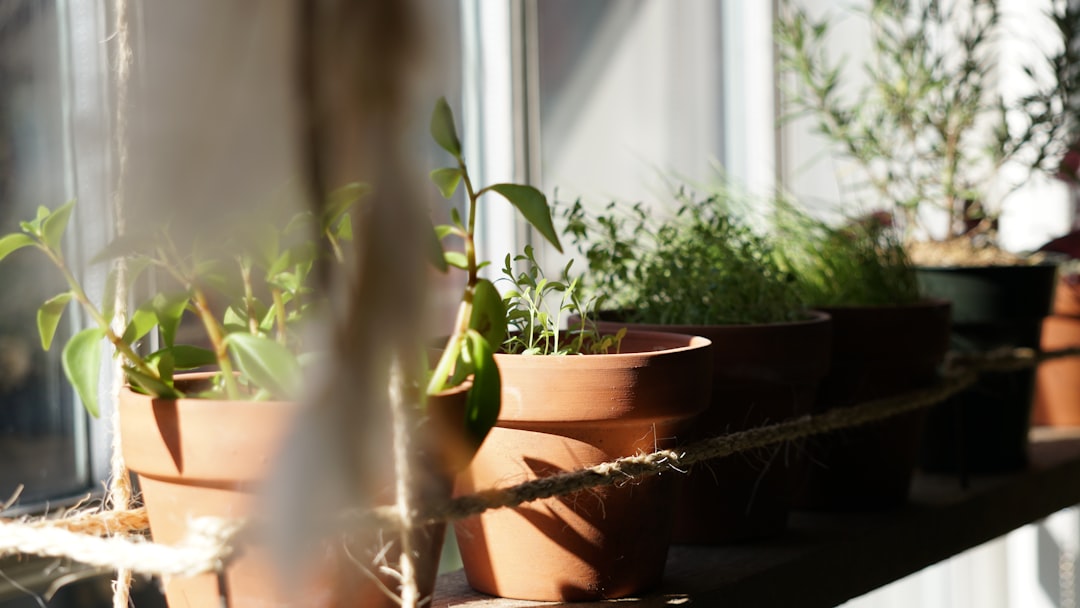
Before you buy a single seed packet, spend a day watching your windowsill. Which direction does it face? How many hours of direct or bright indirect light does it actually receive? This single observation will determine which herbs can succeed there — and which ones will quietly struggle no matter how attentively you care for them.
South-facing windows in the northern hemisphere are the gold standard for indoor herbs, typically offering six or more hours of direct light in spring and summer. East-facing sills get gentle morning sun and suit softer herbs like mint, parsley, and chives reasonably well. West-facing windows work for many herbs in summer but can be dim in winter. North-facing windowsills are genuinely challenging — most culinary herbs will become leggy and unproductive without supplemental lighting.
Measure your available surface area honestly. A 60 cm sill can comfortably hold three to four medium pots without crowding, and crowding matters — good airflow between plants reduces the risk of fungal issues and helps each plant access light without competition.
A windowsill that gets fewer than four hours of bright light daily will likely produce leggy, low-flavour herbs regardless of how well you water or fertilise. Light is the one variable you cannot compensate for with better technique.
Best Containers and Setup Ideas
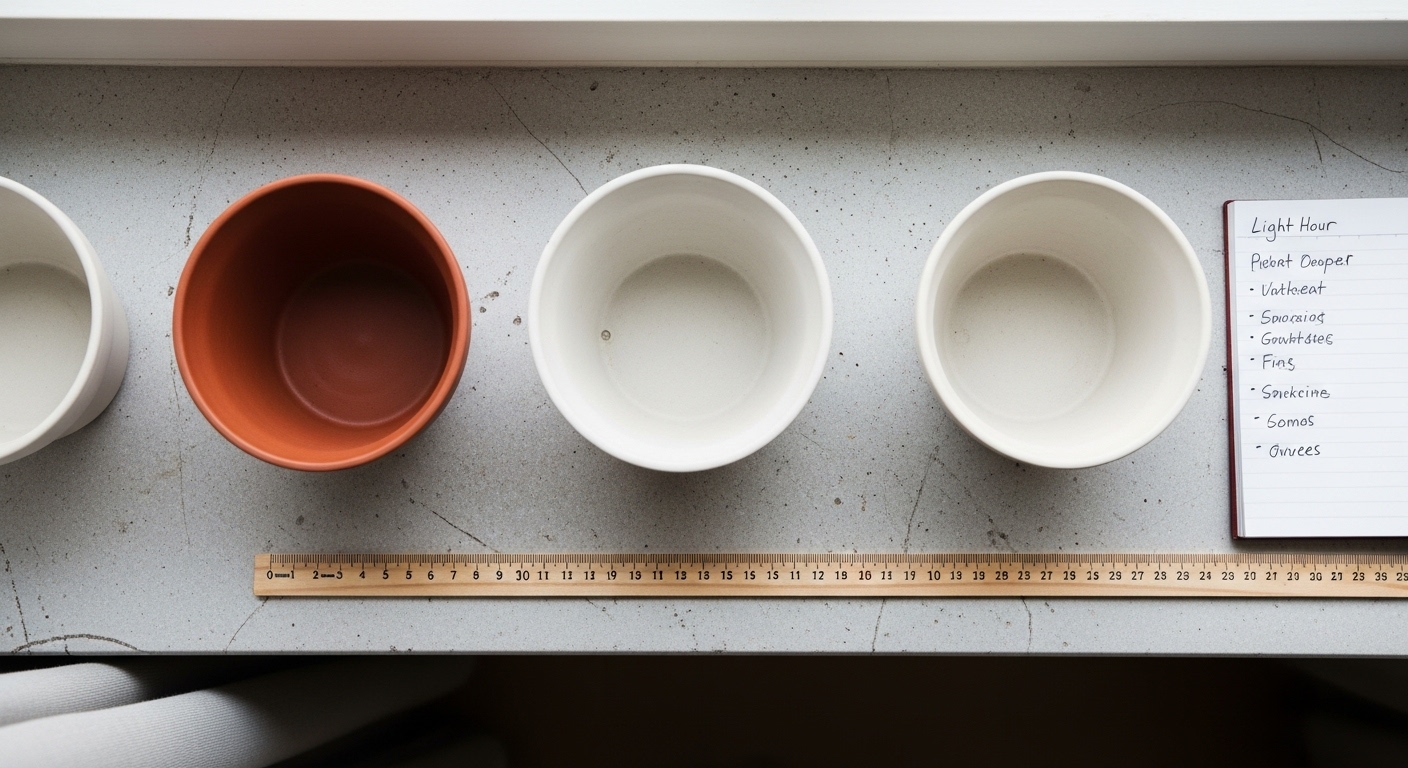
The container you choose affects drainage, root temperature, and moisture retention — all of which directly influence how your herbs perform. Terracotta is the classic choice for good reason: it breathes, wicks excess moisture away from roots, and keeps soil from staying waterlogged. The trade-off is that it dries out faster, so you may need to water more frequently in warm months.
Glazed ceramic pots retain moisture longer, which can suit moisture-loving herbs like basil and mint but may cause problems for drought-tolerant Mediterranean herbs like rosemary and thyme. Plastic pots are lightweight and inexpensive, but they offer no breathability — drainage holes become even more critical when using plastic.
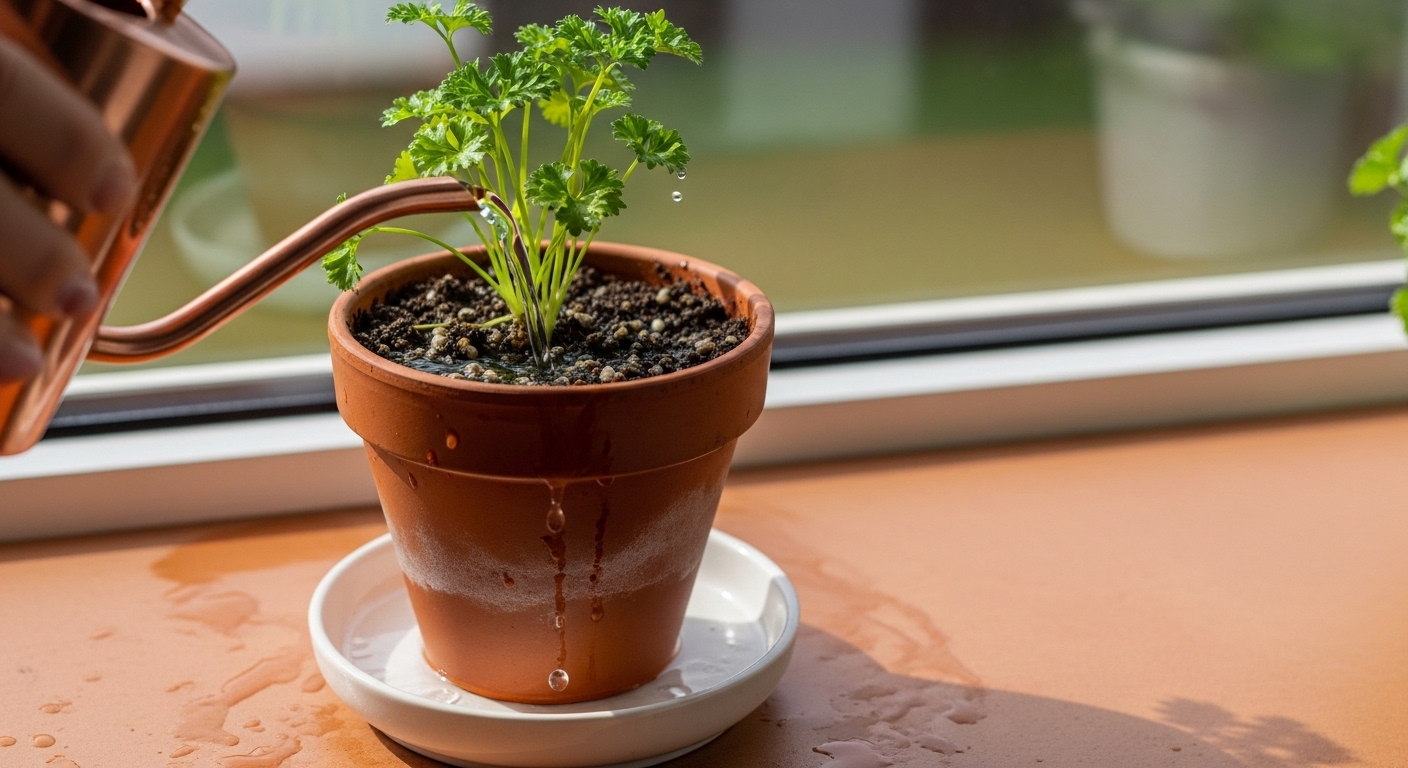
Whatever material you choose, drainage holes are non-negotiable. Herbs sitting in waterlogged soil will develop root rot far faster than most people expect. Use a saucer to protect your windowsill, but empty it within an hour of watering so roots are never submerged.
A few setup ideas worth considering:
- Individual pots per herb: Allows you to tailor watering to each plant's needs — the most reliable approach for beginners.
- Long window boxes: Space-efficient and visually cohesive, but best reserved for herbs with similar water requirements (e.g., thyme, rosemary, and oregano together).
- Self-watering inserts: Can help maintain consistent moisture for basil and parsley, though they are less suitable for drought-tolerant herbs.
- Pot-within-pot setup: A plain grow pot inside a decorative outer pot gives you flexibility to lift and check drainage without disturbing roots.
Best Herbs for a Windowsill Garden
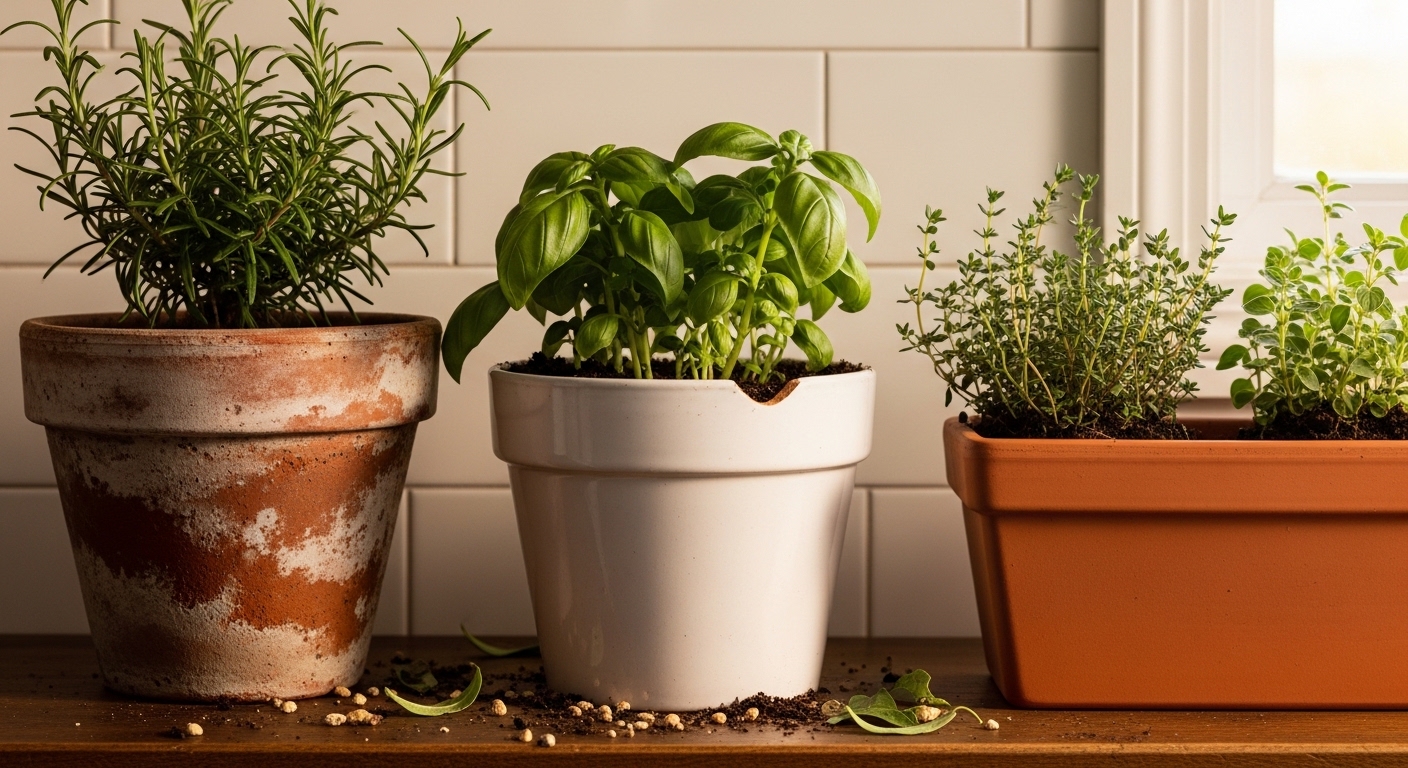
Not every herb adapts equally well to indoor container life. The most successful windowsill herbs tend to be compact growers that tolerate the slightly drier air and fluctuating temperatures of a home environment. Here are the strongest performers, grouped by their light and water needs:
High-light herbs (south or west window, 6+ hours):
- Basil: Needs warmth and consistent moisture — keep soil evenly damp and never let it dry out completely.
- Rosemary: Drought-tolerant once established; allow the top 3–4 cm of soil to dry before watering.
- Thyme: Compact and low-maintenance; excellent drainage is more important than frequent watering.
- Oregano: Handles dry conditions well; pinch regularly to prevent woodiness.
Moderate-light herbs (east window, 3–5 hours):
- Chives: Forgiving and fast-growing; water when the top 2 cm of soil feels dry.
- Parsley: Prefers consistent moisture and cooler temperatures; avoid placing near a radiator.
- Mint: Vigorous grower — keep in its own pot to prevent it from crowding out neighbours.
- Coriander (cilantro): Bolts quickly in heat; best grown in a cooler east-facing spot and harvested young.
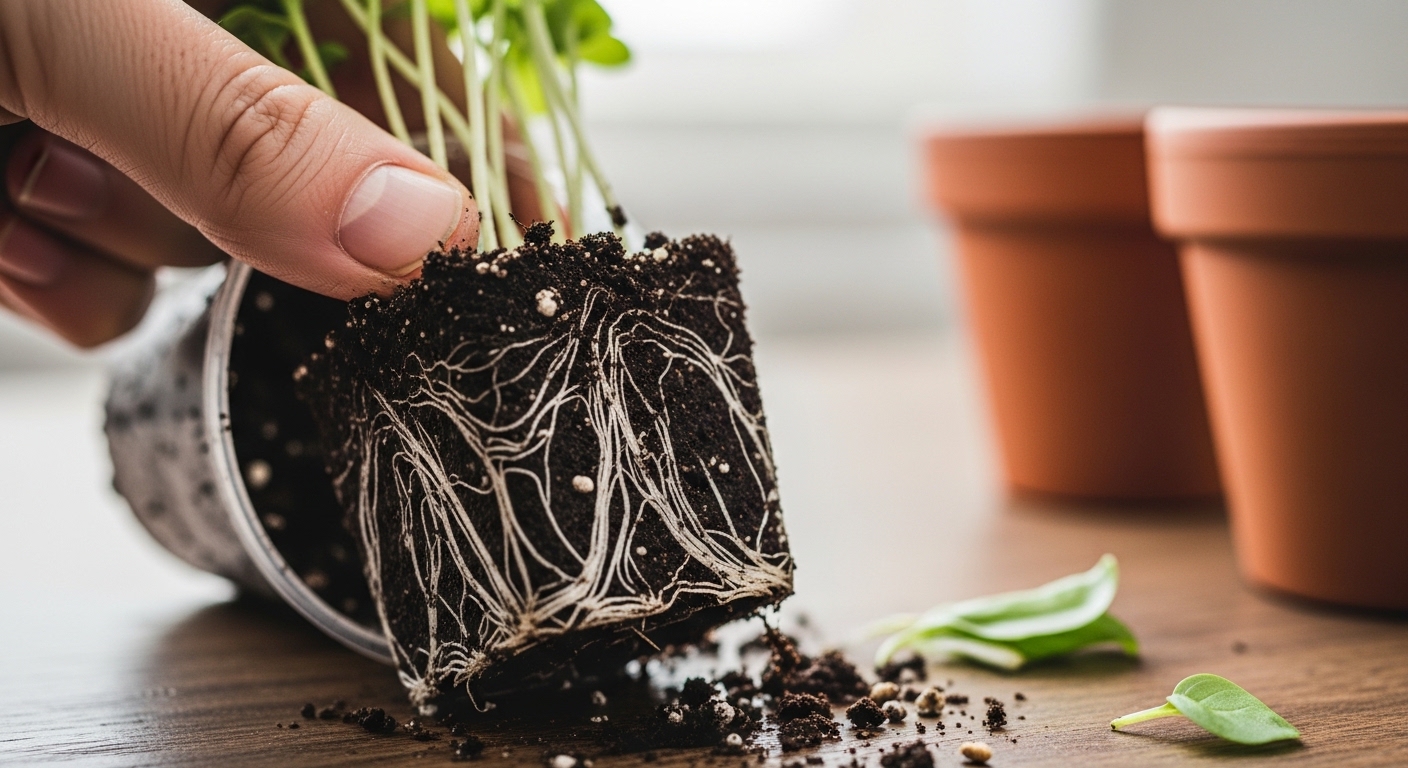
One thing many growers notice early on: supermarket herb pots are typically multiple seedlings crammed together for retail appearance, not long-term growth. Splitting them into two or three separate pots when you get home gives each plant room to develop properly.
Watering and Nutrition in Containers
Container herbs dry out faster than garden-grown plants because their root systems are confined and terracotta actively wicks moisture. Check soil moisture by pressing your finger 2 cm into the surface — water when it feels dry at that depth for most herbs, or when the top 3–4 cm are dry for rosemary and thyme.
Watering frequency varies more than most guides suggest. In a warm, south-facing window in July, basil may need water every one to two days. The same plant in a cooler east-facing spot in October might only need water every four or five days. Seasonal light and temperature shifts change everything.
When you water, water thoroughly — pour until water flows freely from the drainage hole, then empty the saucer. Light, frequent sips of water encourage shallow roots and can lead to salt build-up in the soil over time.
For nutrition, most potting mixes include enough slow-release fertiliser for the first six to eight weeks. After that, a diluted liquid fertiliser applied every two to three weeks during the active growing season can help maintain leaf production. Use a balanced formula rather than a high-nitrogen product — too much nitrogen tends to produce fast, soft growth that lacks flavour intensity.
Harvesting Without Harming Your Plant
Harvesting correctly is what separates a windowsill herb garden that produces for months from one that burns out in six weeks. The core principle: always harvest from the top, never strip the lower leaves, and never remove more than one-third of the plant at a time.
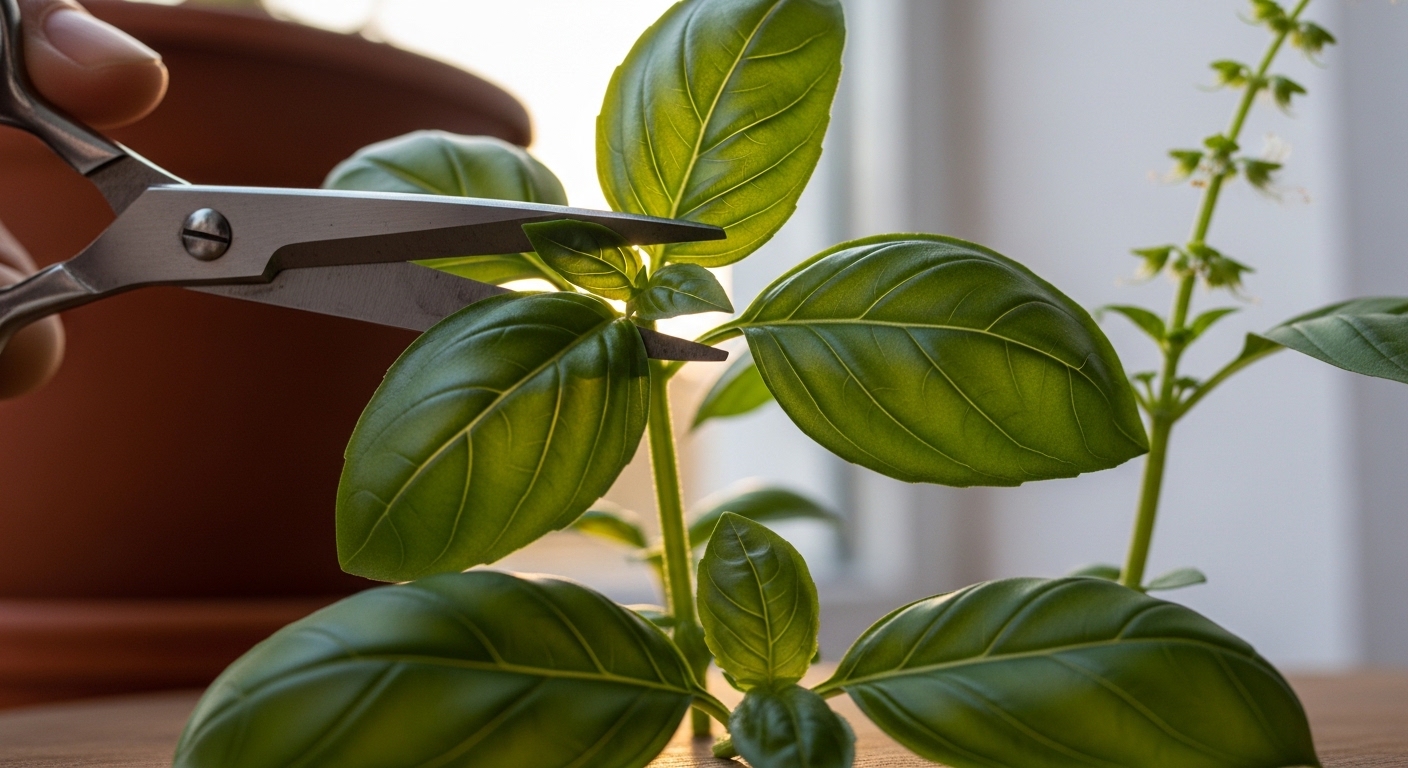
For basil, pinch stems just above a leaf node — the small bump where two leaves meet the stem. This triggers the plant to branch outward rather than continuing to grow vertically. Removing flower buds as soon as they appear redirects the plant's energy back into leaf production and delays the bitter flavour that comes with bolting.
Woody herbs like rosemary and thyme are harvested differently. Snip the soft, green tip growth — the newest 5–8 cm of each stem. Avoid cutting back into old, woody growth, as these sections rarely regenerate well.
Chives and parsley can be cut more aggressively. Snip chives to about 2–3 cm above the soil and they will regrow reliably. Parsley benefits from harvesting outer stems first, leaving the central crown to continue producing new growth.
- Harvest in the morning when essential oil concentration in leaves tends to be highest.
- Use clean, sharp scissors — torn stems are more vulnerable to disease.
- After a heavy harvest, give the plant a week or two before harvesting again.
- If a stem flowers, remove the flower head promptly to extend the productive season.
Troubleshooting Leggy Growth and Common Problems
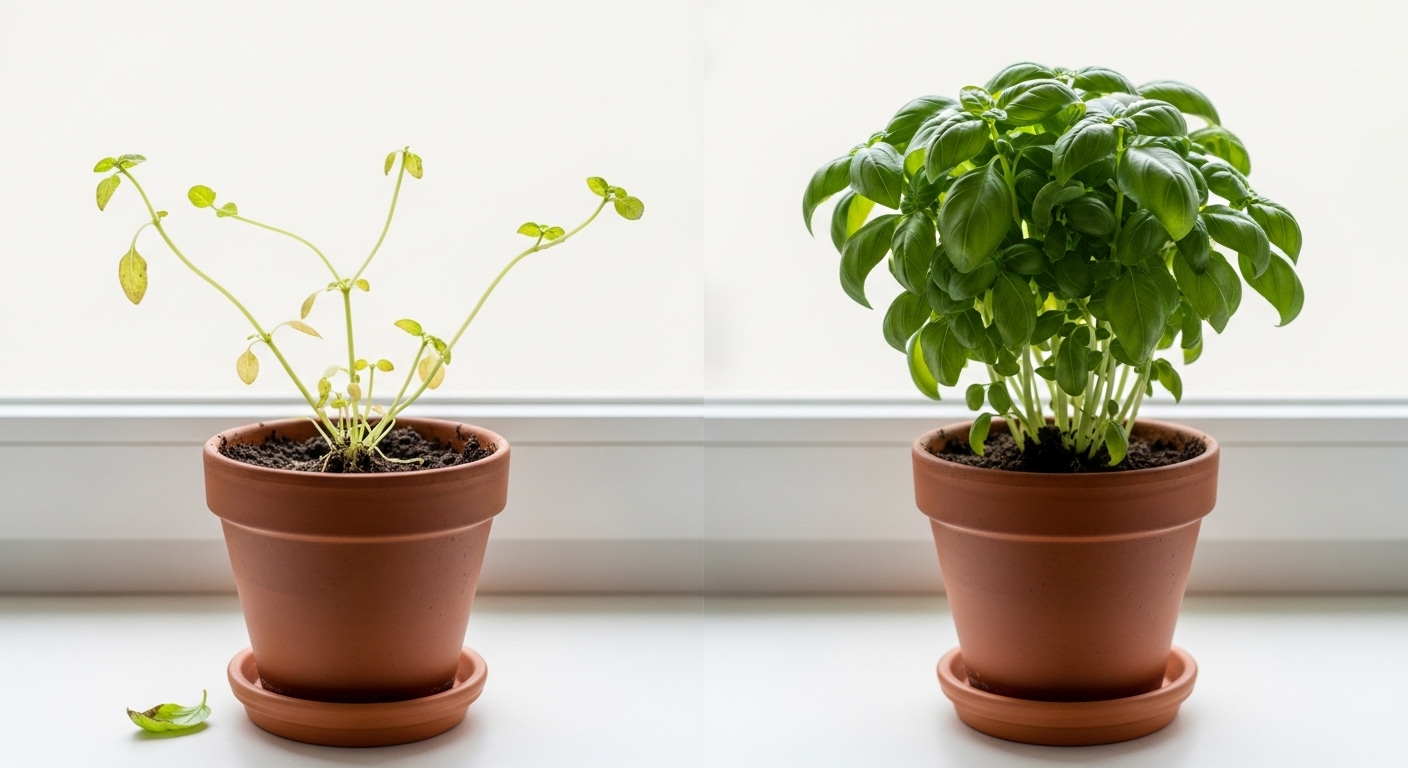
Leggy, stretched herbs — long pale stems with small, widely spaced leaves — are almost always a light problem. When a plant does not receive enough light, it allocates energy to stem elongation in search of a brighter spot rather than producing dense, flavourful foliage. Moving the pot closer to the window or rotating it a quarter turn every few days to expose all sides to light can help significantly.
If your window genuinely cannot provide enough light, a small LED grow light positioned 15–30 cm above the plants for 12–14 hours daily can compensate. Follow manufacturer instructions and consult a licensed electrician if you need to install additional outlets or wiring.
Other common issues and their likely causes:
Yellowing lower leaves: Often overwatering or poor drainage. Check that the saucer is not holding standing water and that the soil is not staying wet for more than two days after watering.
Wilting despite moist soil: Root rot is a possibility — unpot the plant and inspect the roots. Healthy roots are white or pale tan; rotted roots are brown, mushy, and may smell unpleasant. Trim affected roots and repot into fresh, well-draining mix.
Pale, washed-out leaves: May indicate nutrient deficiency after several months in the same soil. A diluted balanced liquid fertiliser applied every two to three weeks during the growing season generally helps restore colour.
Sticky residue or tiny insects on stems: Likely aphids or whitefly. Rinse the plant under lukewarm water, then wipe leaves with a damp cloth. Neem oil solution is a widely used natural option — always test on a single leaf first and follow product instructions carefully.
Soil gnats flying around the pot: Fungus gnats breed in consistently moist topsoil. Allow the top 2–3 cm of soil to dry out between waterings and consider placing yellow sticky traps near the pot to monitor and reduce adult populations.
Windowsill Herb Garden Setup Checklist
Use this as a starting reference before you plant, and revisit it whenever something seems off.
- Assess your light: Track how many hours of direct or bright indirect light your windowsill receives on a typical day before choosing which herbs to grow.
- Choose appropriate containers: Ensure every pot has at least one drainage hole. Match pot material to the herb's water needs — terracotta for drought-tolerant herbs, glazed ceramic for moisture-lovers.
- Use a quality potting mix: A general-purpose mix with added perlite (roughly one part perlite to four parts mix) improves drainage significantly for most windowsill herbs.
- Group herbs by water needs: Avoid planting rosemary and basil in the same container — their watering requirements are genuinely incompatible.
- Establish a watering check routine: Check soil moisture every one to two days rather than watering on a fixed schedule — adjust for season and temperature.
- Begin fertilising after six to eight weeks: Apply a diluted balanced liquid fertiliser every two to three weeks during the growing season.
- Harvest regularly from the start: Begin light harvesting as soon as plants are established — regular pinching encourages bushy growth rather than vertical stretching.
- Rotate pots weekly: A quarter turn each week ensures all sides of the plant receive light and prevents one-sided leaning.
- Monitor for pests monthly: Check the undersides of leaves and stem joints for early signs of aphids, whitefly, or fungus gnat activity.
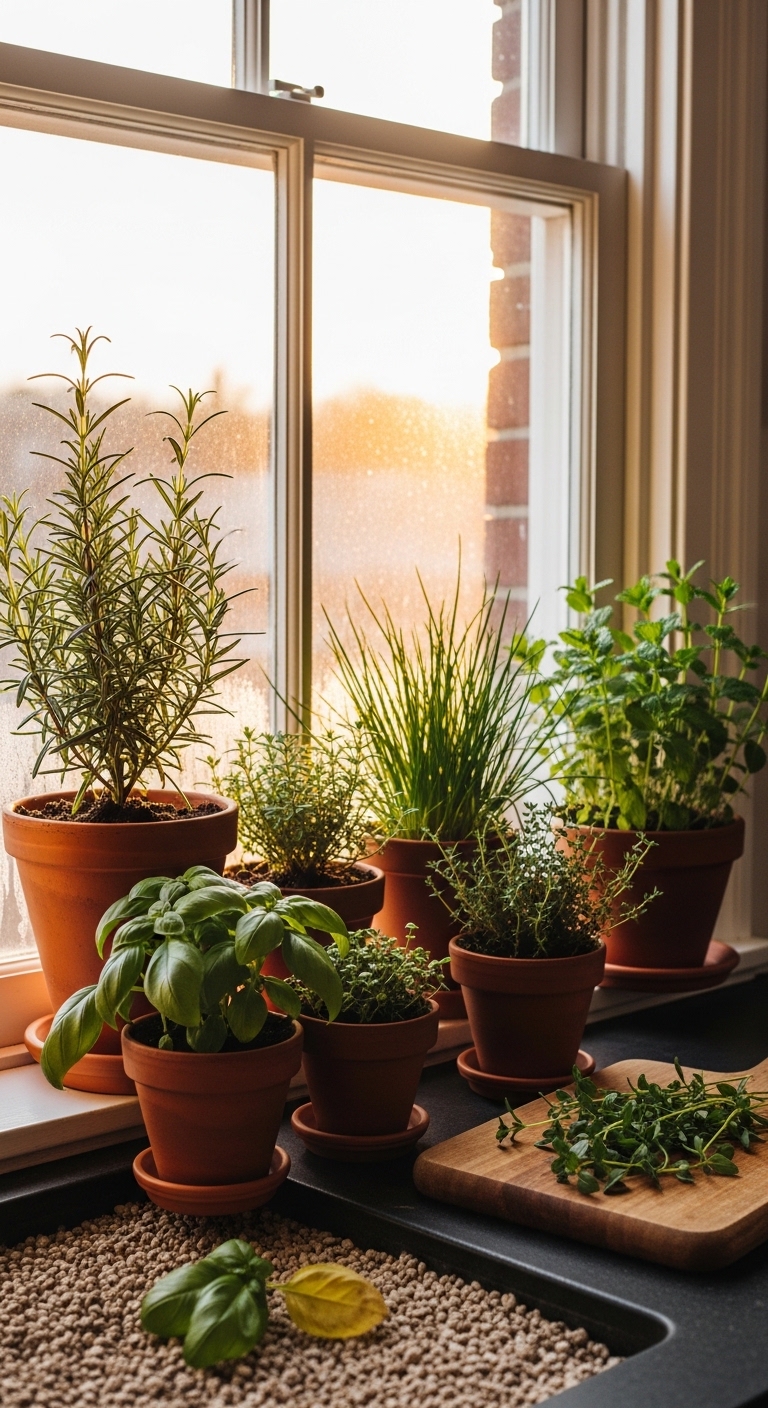
A windowsill herb garden rewards consistency more than expertise. Start with two or three herbs that suit your actual light conditions, get comfortable with their rhythms, and expand from there. There is something genuinely satisfying about snipping fresh thyme directly into a pan — a small, daily reminder that even a modest sill can be productive. If you find yourself curious about taking things further, exploring container vegetable growing on a balcony is a natural next step worth looking into.


Comments
Post a Comment