Calathea Care Guide: Mastering the Prayer Plant
Calathea has a reputation. Ask any plant owner who has brought one home, and you will likely hear a familiar story — crispy brown edges appearing within weeks, leaves curling inward despite regular watering, and a general sense that the plant is perpetually unhappy. The truth is, calathea care is not impossible. It simply requires understanding what this tropical understory plant actually needs, rather than treating it like a typical houseplant. Once you align your care routine with its natural environment, the rewards are striking — bold patterned foliage that moves with the light and a plant that genuinely responds to good attention.
Species Overview & Origin
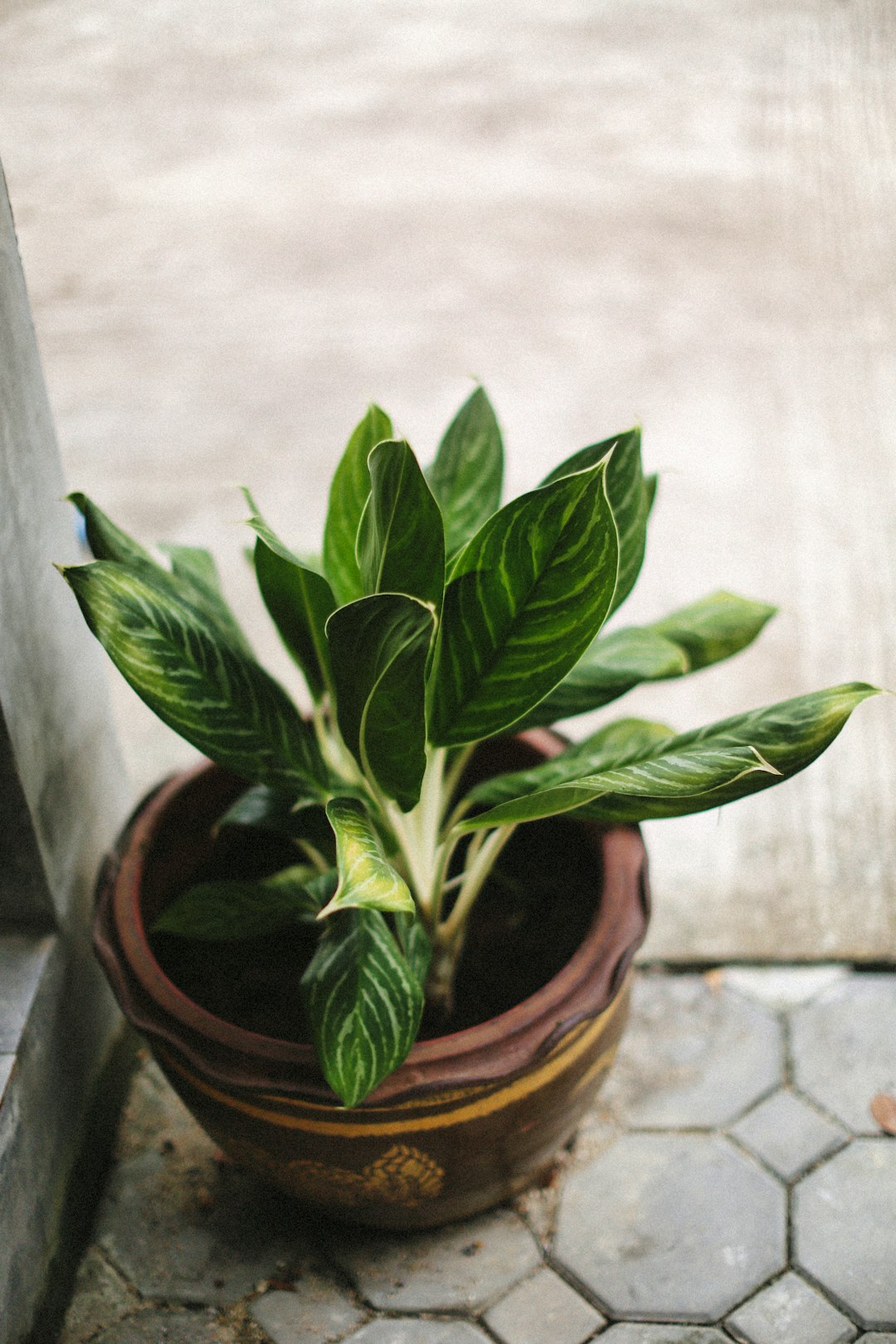
Calathea is a genus of flowering plants native to the tropical regions of Central and South America, particularly the rainforest floors of Brazil and Colombia. In the wild, these plants grow beneath a dense forest canopy, where light is filtered, humidity is consistently high, and temperatures rarely fluctuate dramatically. That context explains almost every quirk of calathea care.
The genus belongs to the family Marantaceae, which is why calatheas are commonly grouped with maranta and share the nickname "prayer plant" — a reference to the way their leaves fold upward in the evening, a movement called nyctinasty. While maranta and calathea are often confused, they are distinct genera with slightly different care tolerances. Calathea tends to be the more sensitive of the two.
Popular varieties you are likely to encounter include:
- Calathea ornata — deep green leaves with fine pink or white pinstripe markings
- Calathea medallion — broad oval leaves with a rose-patterned upper surface and deep burgundy undersides
- Calathea lancifolia (rattlesnake plant) — long, wavy-edged leaves with dark oval spots
- Calathea zebrina — velvety leaves with bold zebra-stripe patterning
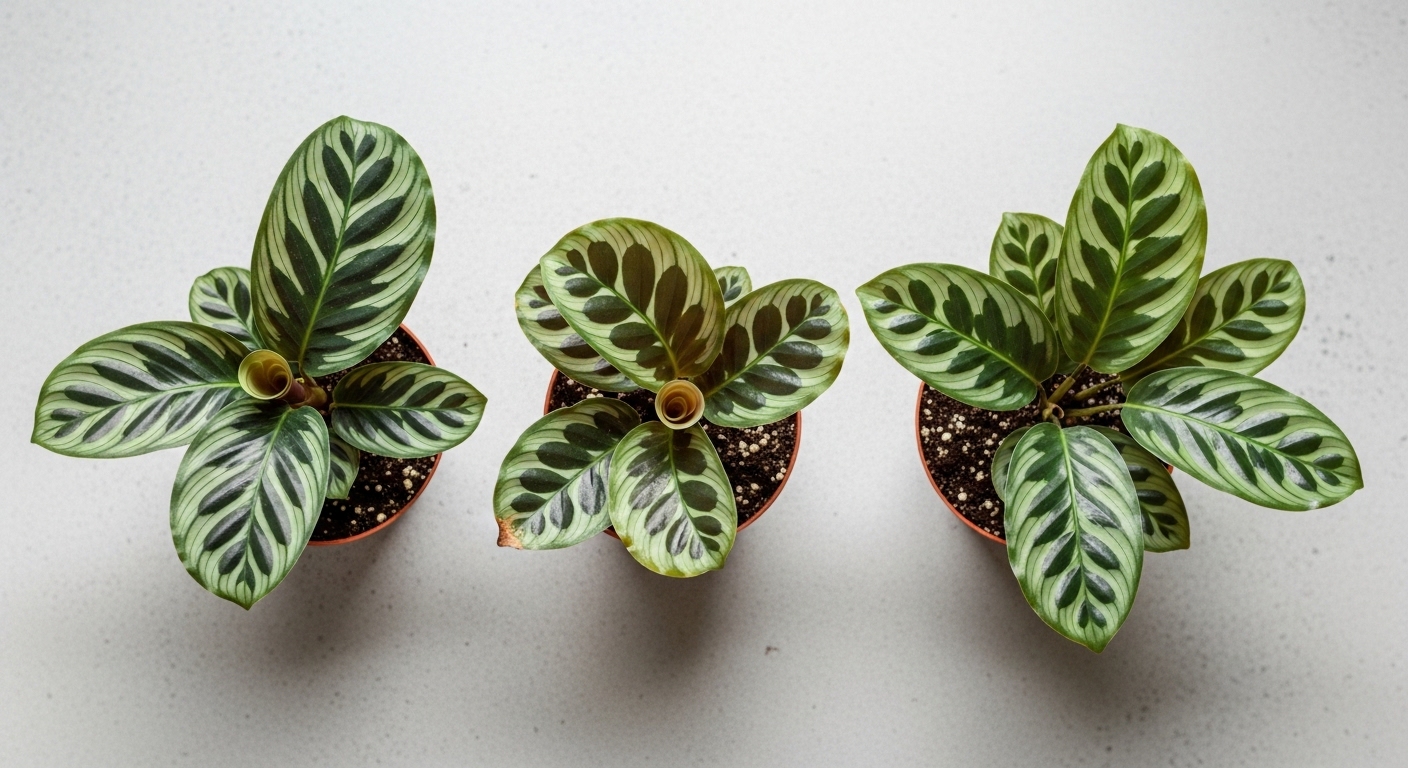
- Calathea orbifolia — large, silvery-green leaves with pale banding; generally considered slightly more forgiving
Many plants previously sold as calathea have been reclassified under the genus Goeppertia in botanical literature, though the name calathea remains the common trade name and is widely used by growers and retailers alike.
Light & Temperature Needs
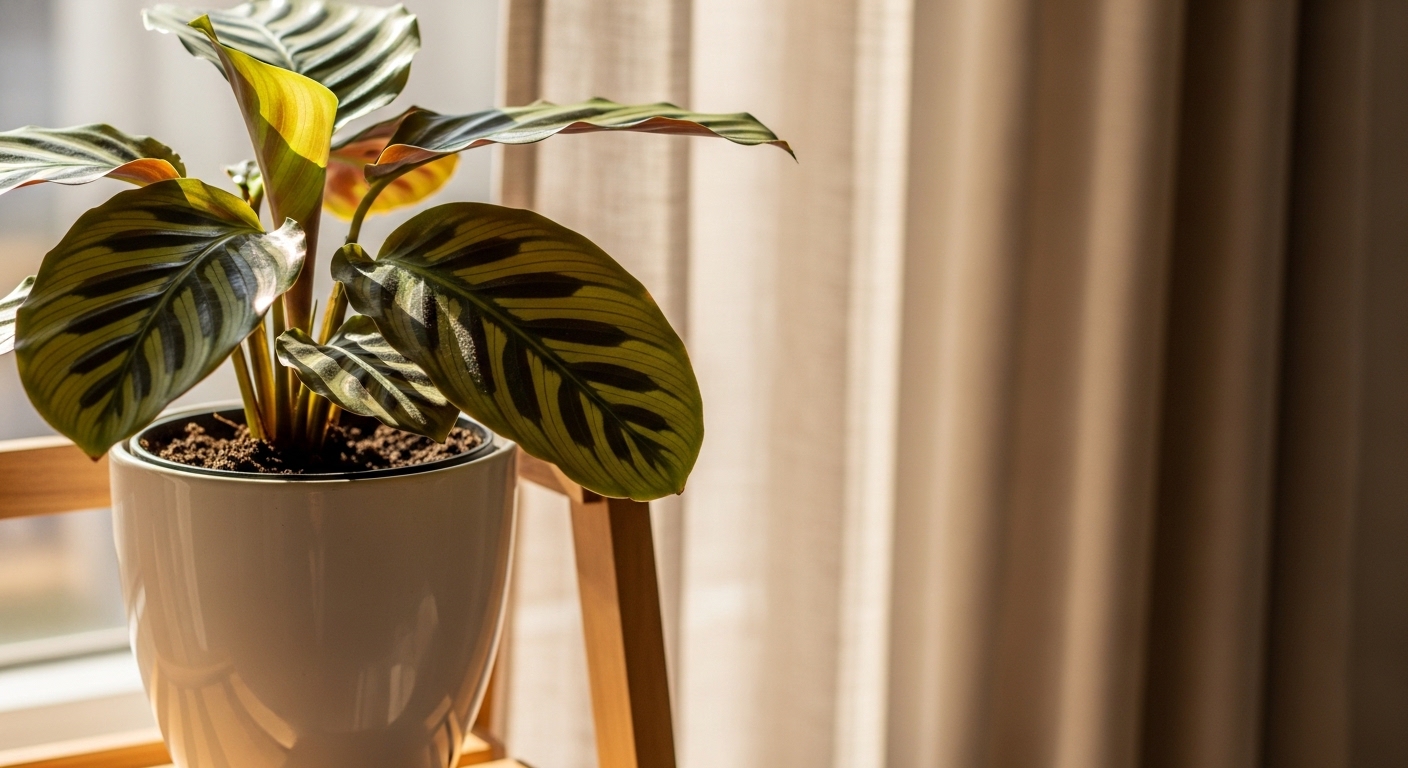
Calathea needs bright, indirect light — meaning it should receive good ambient brightness without direct sun rays ever landing on its leaves. A north- or east-facing window is generally well-suited. West and south exposures can work if the plant is set back from the glass or screened by a sheer curtain.
Direct sunlight is one of the fastest ways to damage calathea foliage. Even an hour of direct afternoon sun can bleach the intricate leaf patterns and cause the edges to scorch. The variegation and color depth that make calathea so appealing are actually adaptations to low-light forest conditions — the pigments evolved to absorb diffuse light efficiently, not to withstand intense direct exposure.
In lower light conditions, calathea will survive but growth slows noticeably and the leaf patterns may become less vivid. Many growers find that a spot roughly 1–2 meters from a bright window, without direct sun contact, produces the best balance of healthy growth and pattern intensity.
Temperature-wise, calathea prefers a stable range between 18°C and 27°C (65°F–80°F). Cold drafts, air conditioning vents, and radiators are all problematic. Temperatures below 15°C (59°F) can cause visible stress — leaves may curl or develop soft, water-soaked patches. Consistency matters more than the exact number on the thermometer.
Keep calathea away from any spot where you personally feel a draft. If it is uncomfortable for you to sit near a vent or window gap in winter, it is almost certainly too cold for your calathea.
Watering & Humidity Guide
Water quality and watering consistency are the two factors that most directly affect calathea health. Tap water in many regions contains fluoride and chlorine at levels that calathea finds irritating — the result is the characteristic brown leaf tip that frustrates so many owners. Using filtered water, distilled water, or rainwater makes a noticeable difference over time.
If filtered water is not practical, leaving tap water in an open container overnight allows some chlorine to dissipate, though this does not address fluoride. Many growers find this a reasonable compromise when fully filtered water is not accessible.
Water calathea when the top 2 cm of soil feels just barely dry to the touch. The soil should never fully dry out — calathea does not tolerate drought the way succulents or pothos do — but it should also never sit in waterlogged conditions. A consistently moist but well-draining medium is the goal.
Humidity is equally important. Calathea generally does best at 50–70% relative humidity. In most homes, ambient humidity sits between 30–40%, which is often not enough. Practical ways to raise humidity include:
- Grouping calathea with other humidity-loving plants to create a microclimate
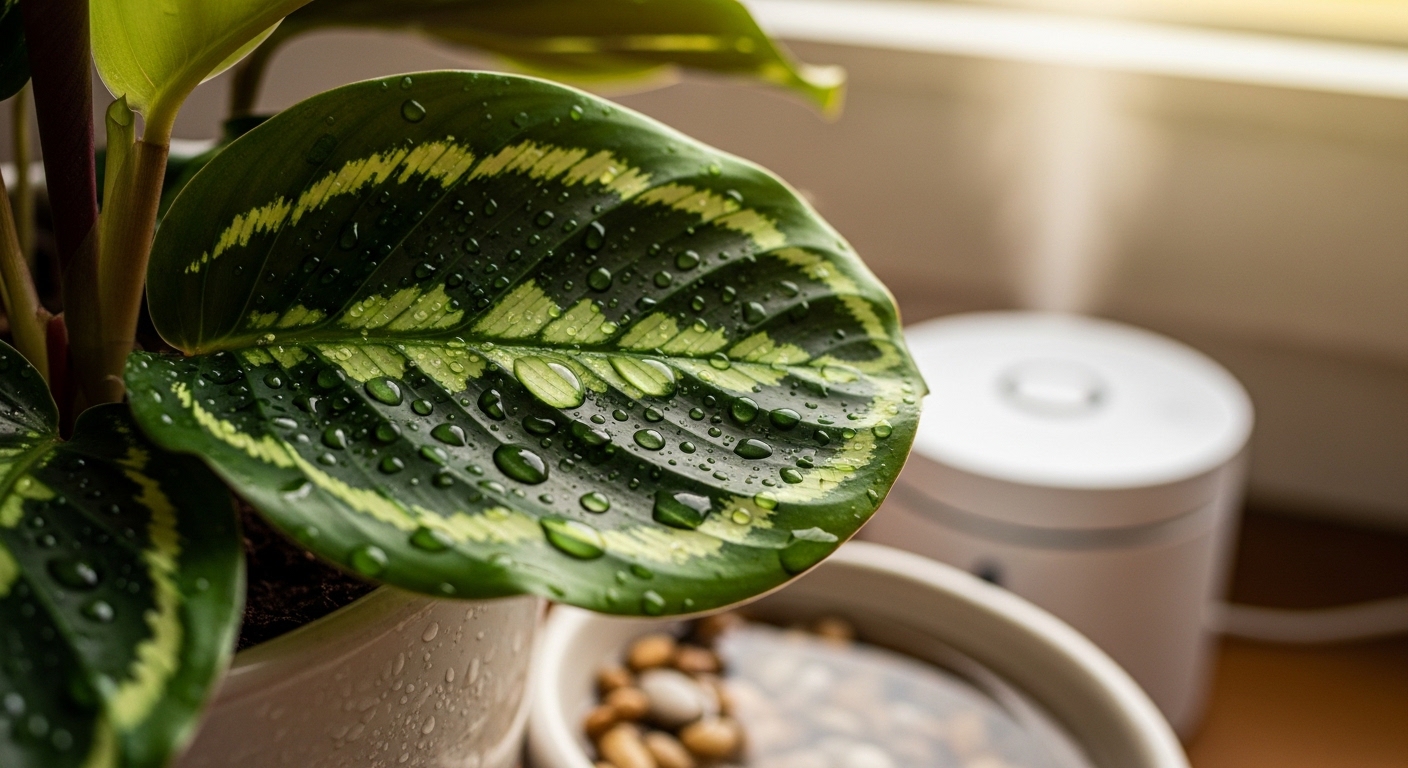
- Using a small ultrasonic humidifier near the plant, especially in winter when indoor heating dries the air significantly
- Placing the pot on a tray filled with pebbles and water, ensuring the pot base sits above the waterline
- Keeping calathea in a naturally humid room such as a bathroom with adequate indirect light
Misting is often recommended but tends to be inconsistent as a humidity solution. It raises humidity briefly but can also encourage fungal issues if water sits on leaves in low-airflow conditions. A humidifier is generally more reliable.
Soil, Potting & Fertilizing
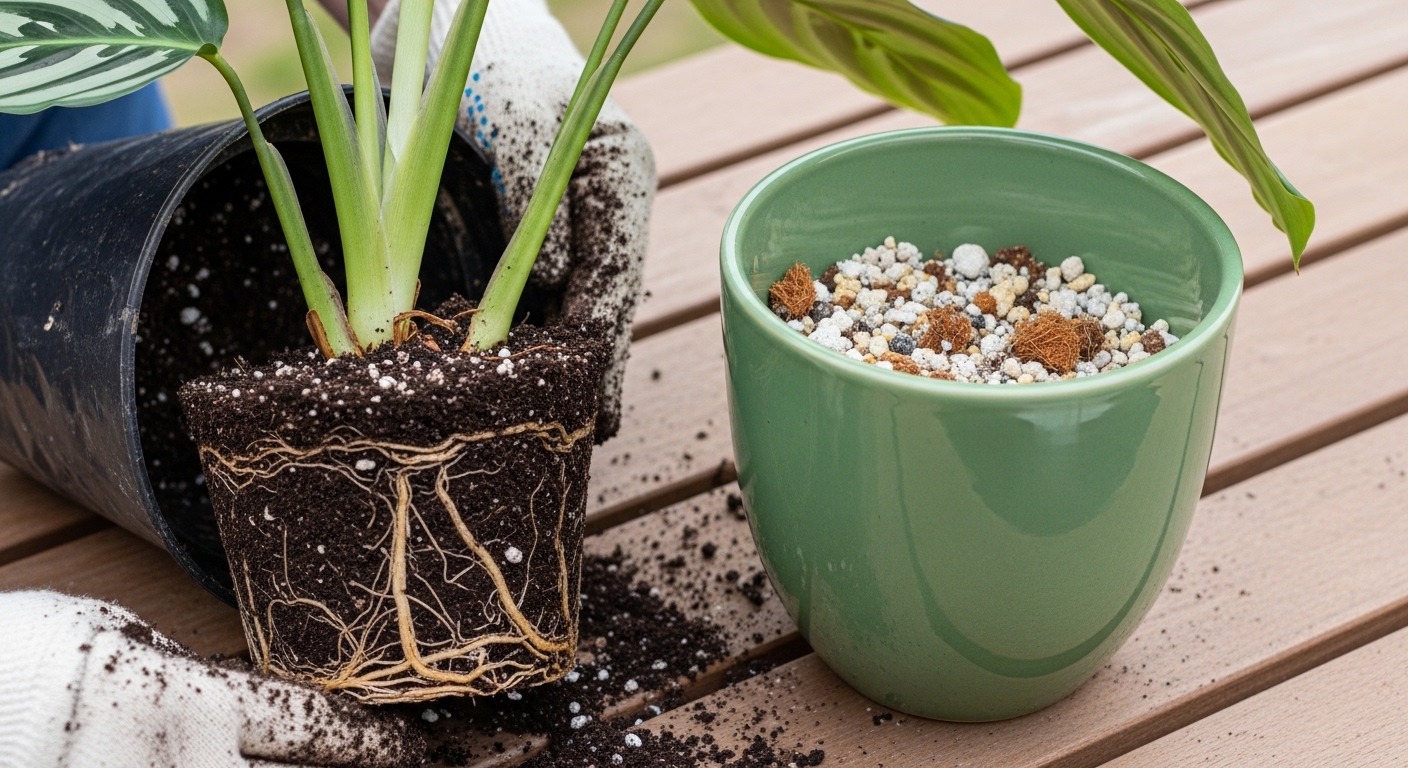
Calathea needs a soil mix that retains some moisture without becoming compacted or waterlogged. A standard potting mix works as a base, but it benefits from amendment. A commonly used ratio that many growers find effective is roughly two parts potting mix to one part perlite, with an optional addition of coco coir for extra moisture retention without heaviness.
Avoid dense, peat-heavy mixes that compact over time and restrict airflow to the roots. Calathea roots are relatively fine and sensitive — they do not handle prolonged anaerobic conditions well, and root rot can develop quickly in poorly draining soil.
When it comes to pot choice, terracotta can work but dries out faster than calathea typically prefers. Glazed ceramic or plastic pots tend to retain moisture longer, which suits calathea's preference for consistently moist soil. Whatever pot you choose, drainage holes are non-negotiable.
Repot calathea every one to two years, or when roots begin circling the base of the pot or emerging from drainage holes. Spring is the best time. Calathea can go through a period of adjustment after repotting — some leaf drooping or minor curling in the first week or two is common and generally resolves on its own.
Fertilize during the active growing season (spring through early autumn) with a balanced liquid fertilizer diluted to half the recommended strength, applied roughly once a month. Calathea is sensitive to fertilizer salts, and overfeeding can cause tip burn similar to the damage caused by fluoride in tap water. In winter, hold off on feeding entirely as growth slows and the plant has little use for additional nutrients.
Common Problems & Fixes
Most calathea problems are visible in the leaves long before they become serious. Learning to read those signals is the most useful skill a calathea owner can develop.
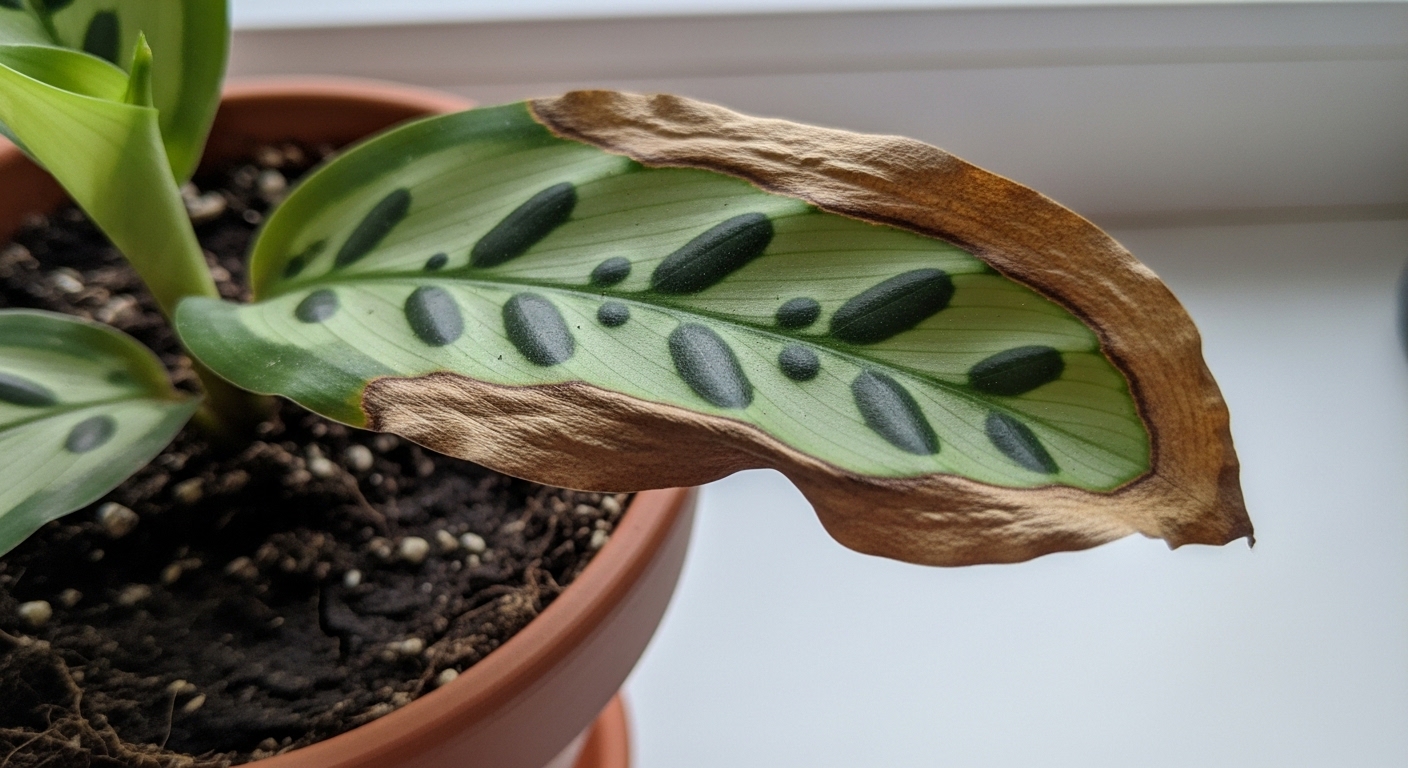
Brown leaf tips and edges: The most common complaint. Usually caused by low humidity, fluoride or chlorine in tap water, or inconsistent watering. Switch to filtered or rainwater, increase humidity, and check that the soil is not drying out completely between waterings.
Curling leaves: Leaves that curl inward lengthwise are almost always a stress response to underwatering, low humidity, or cold temperatures. Check soil moisture first — if the top few centimetres are dry, water thoroughly. If moisture is adequate, assess humidity levels and rule out cold drafts.
Yellow leaves: Yellowing, particularly of lower leaves, often points to overwatering or waterlogged soil. Check drainage and reduce watering frequency. A single yellowing lower leaf occasionally is normal as the plant sheds older growth.
Faded or washed-out leaf patterns: Too much direct light. Move the plant further from the light source or add a sheer curtain as a filter.
Drooping or limp leaves: Can indicate either underwatering or root rot from overwatering — check the soil and roots. Healthy roots are pale and firm; rotted roots are brown, mushy, and may have an unpleasant smell.
Pests are less common on calathea than on some other houseplants, but spider mites can appear in dry conditions, and fungus gnats may show up in consistently moist soil. Increasing humidity tends to deter spider mites, while allowing the top layer of soil to dry slightly between waterings can help manage fungus gnat populations. For general pest management guidance, the ASPCA website is a useful reference for toxicity information if you have pets.
- Overwatering with poor drainage — the leading cause of root rot and yellowing
- Using unfiltered tap water consistently — gradual fluoride buildup causes chronic tip burn
- Placing in direct sun — damages leaf pigmentation rapidly
- Ignoring humidity — low ambient humidity is the root cause of most curling and browning
- Fertilizing in winter or at full strength — excess salts stress the root system
Frequently Asked Questions
Why does my calathea move its leaves at night?
This is nyctinasty — a natural circadian movement driven by changes in light and temperature. The leaves fold upward in the evening and open again during the day. It is a sign of a healthy, responsive plant and requires no intervention.
Is calathea safe for cats and dogs?
Calathea is generally considered non-toxic to cats and dogs according to commonly referenced resources including the ASPCA. That said, no absolute safety guarantees can be made — if a pet ingests plant material and shows signs of distress, consult a veterinarian.
Can I use tap water if I let it sit overnight?
Leaving tap water out overnight can allow some chlorine to off-gas, which may reduce mild sensitivity. However, it does not remove fluoride, which is often the more persistent cause of tip burn in calathea. Filtered or rainwater tends to produce better long-term results.
Why are my calathea leaves losing their pattern?
Pattern fading is almost always a light issue. Too much direct or intense light bleaches the pigmentation. Move the plant to a spot with brighter ambient light but no direct sun contact, and the new leaves that emerge should show fuller colour and pattern.
How often should I repot calathea?
Generally every one to two years, or when the plant becomes visibly root-bound. Calathea does not need to be rushed into a larger pot — moving up one pot size at a time is sufficient, and going too large can increase the risk of overwatering.
Does calathea go dormant in winter?
Calathea does not go fully dormant, but growth slows considerably in lower light and cooler temperatures. Reduce watering frequency slightly and stop fertilizing until spring. Avoid placing the plant near cold windows or heating vents during this period.
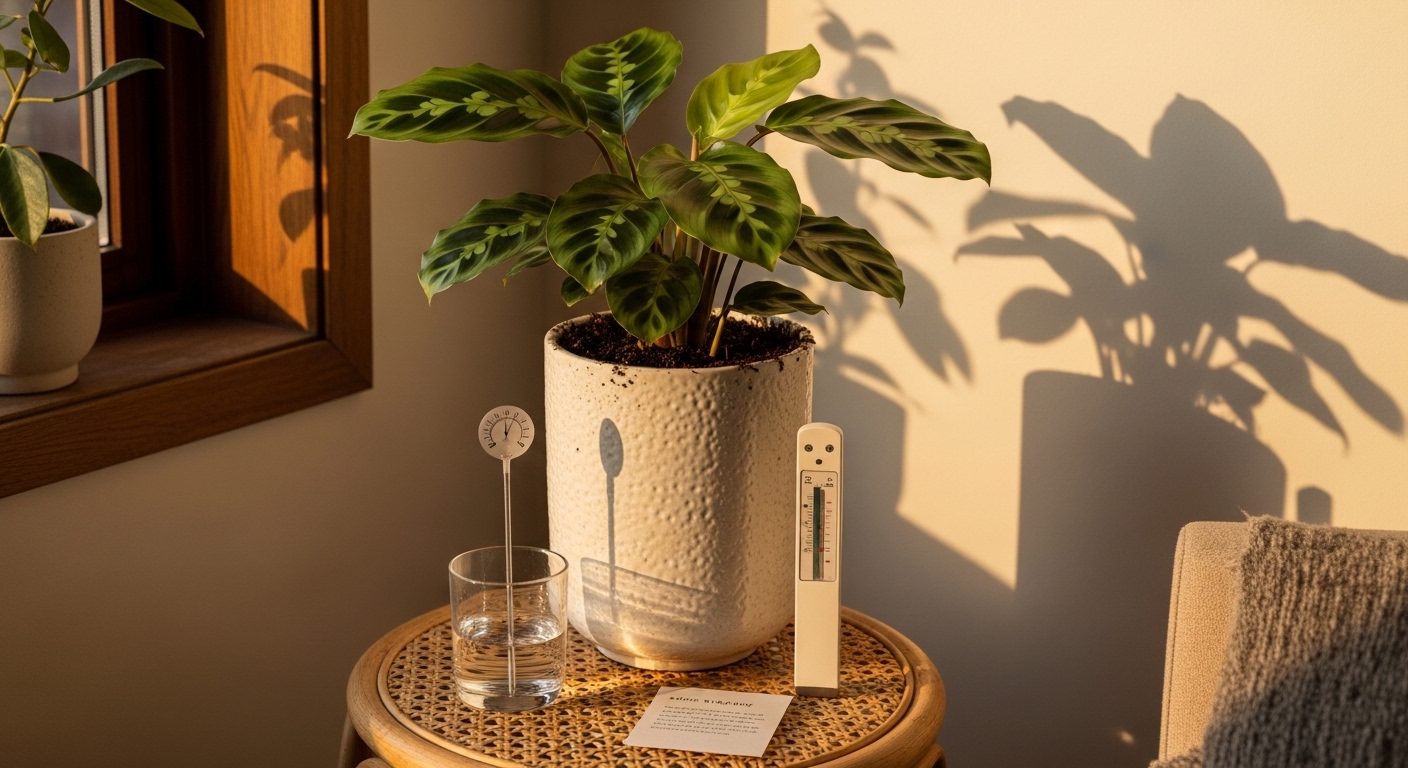
Calathea rewards patience more than perfection. Once you dial in filtered water, stable humidity, and consistent soil moisture, the drama settles — and what remains is one of the most visually striking foliage plants you can grow indoors. Start with one small adjustment: switch to filtered water this week and see how the plant responds over the next month. If you are also navigating humidity challenges with other tropical houseplants, exploring care guides for maranta or stromanthe may be a natural next step — they share similar needs and pair beautifully with calathea in a humid corner setup.


Comments
Post a Comment