Grow Salad Greens Indoors All Year: Full Guide
Growing your own salad greens indoors is one of those ideas that sounds ambitious until you actually try it — and then it becomes hard to stop. Lettuce, spinach, arugula, and microgreens are among the most forgiving crops you can grow inside, and with a basic container setup and a grow light, a continuous harvest is genuinely within reach. No garden bed required. No outdoor space needed. Just a windowsill or a small shelf, a little planning, and the right approach to indoor salad gardening year-round.
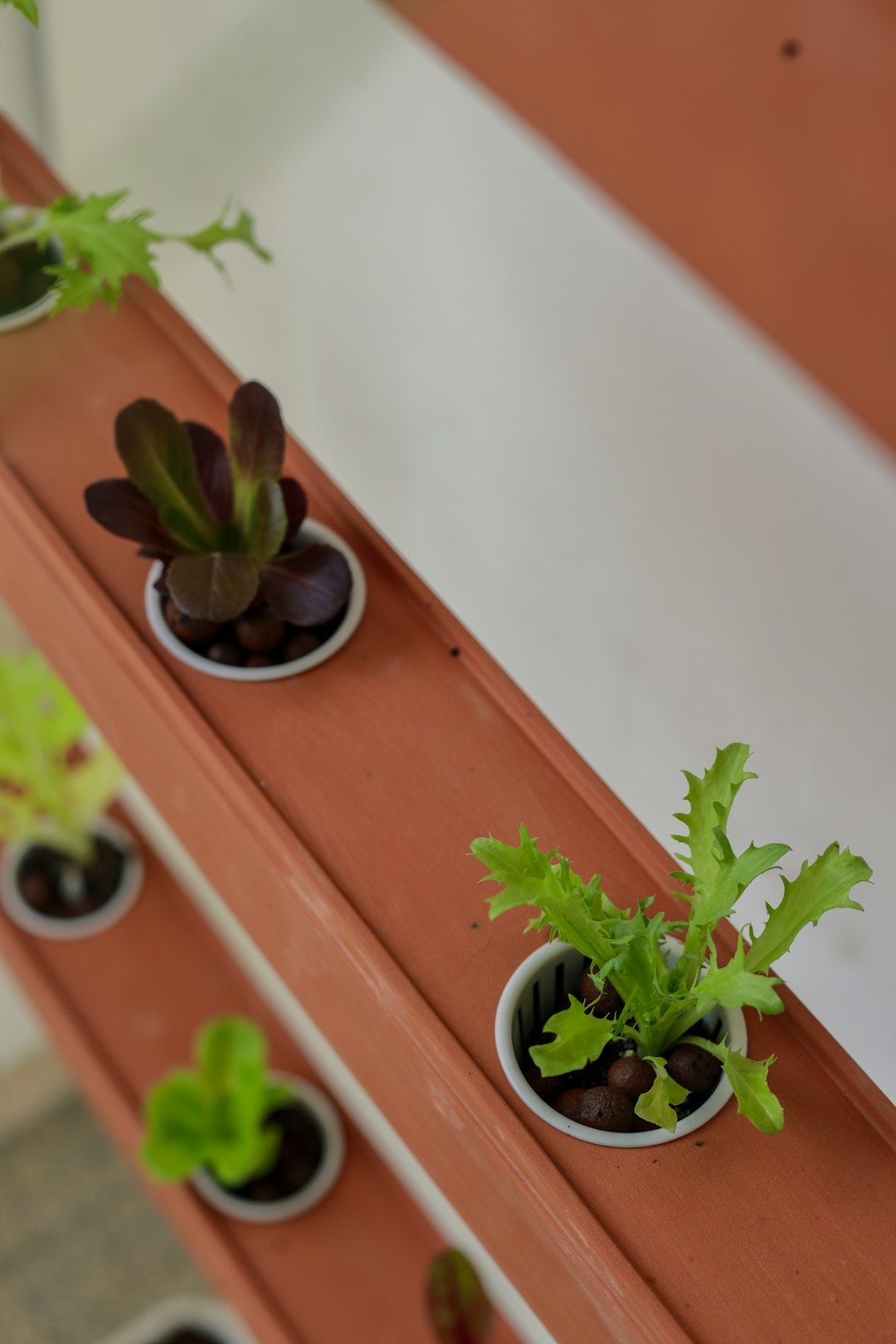
Planning Your Indoor Salad Space
Before you sow a single seed, it helps to think about your space honestly. A south- or east-facing windowsill can work for greens during summer months, but in winter — when natural light drops significantly — most indoor growers find that a dedicated grow light makes the difference between scraggly seedlings and genuinely harvestable leaves.
You don't need a large footprint. A single shelf measuring roughly 60–90 cm wide can comfortably hold three to four rectangular planters and a microgreens tray. Think vertically if you're tight on space: a two-tier wire rack with grow lights mounted under each shelf doubles your growing capacity without taking up extra floor area.
Sketch out a rough plan before buying anything. Note where your light source will be, how far it sits from the plants (most LED grow bars for greens work well at 20–30 cm above the canopy — always follow the manufacturer's guidance), and where you'll water without making a mess. A simple drip tray under each container solves most of that.
Succession planting is the single most useful habit you can build as an indoor salad grower. Sow a new small container every 10–14 days, and you'll rarely face a gap between harvests.
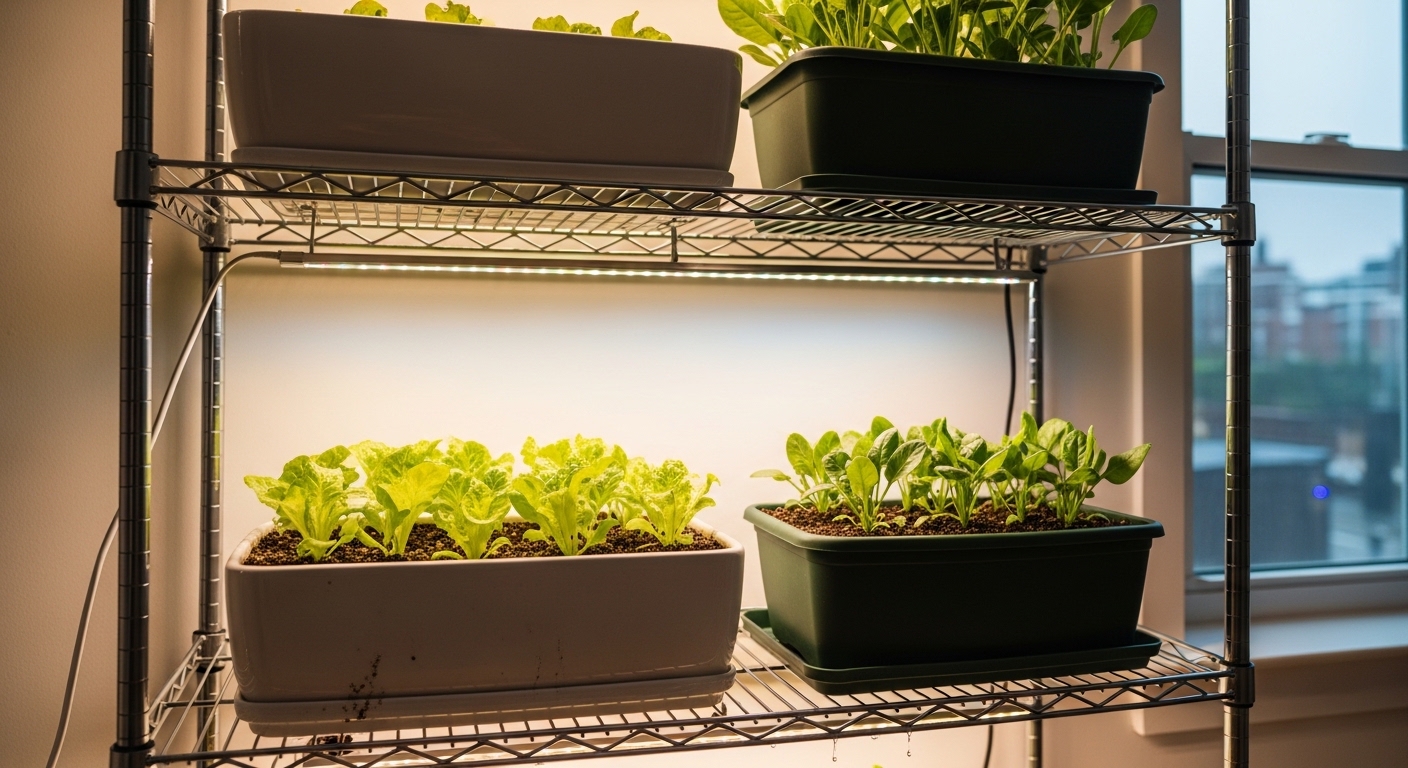
Best Containers and Substrate Setup
Container choice matters more than most beginners expect — not for aesthetics, but for root depth and drainage. Salad greens are relatively shallow-rooted, which is good news: you don't need deep pots. A container that's 10–15 cm deep is generally sufficient for lettuce, spinach, and arugula. Microgreens need even less — a tray just 3–5 cm deep works well.
Drainage holes are non-negotiable. Waterlogged roots are the fastest way to lose a crop of greens. If you fall in love with a decorative container that lacks drainage, use it as a cachepot and place a well-draining inner pot inside.
For substrate, a lightweight potting mix designed for containers tends to work better than standard garden soil, which can compact and restrict airflow. Many indoor growers add a portion of perlite to improve drainage — roughly one part perlite to three or four parts potting mix is a common starting ratio. For microgreens specifically, a thin layer of fine coconut coir or a dedicated microgreens growing medium keeps things simple and clean.
- Rectangular window boxes (60 cm): Ideal for rows of lettuce or a mix of greens — efficient use of shelf space.
- Shallow nursery trays with drainage: Best for microgreens and dense spinach sowings.
- Individual 15 cm round pots: Good for single arugula or cut-and-come-again lettuce plants.
- Self-watering planters: Useful if you travel or tend to forget watering — the reservoir helps buffer dry spells.
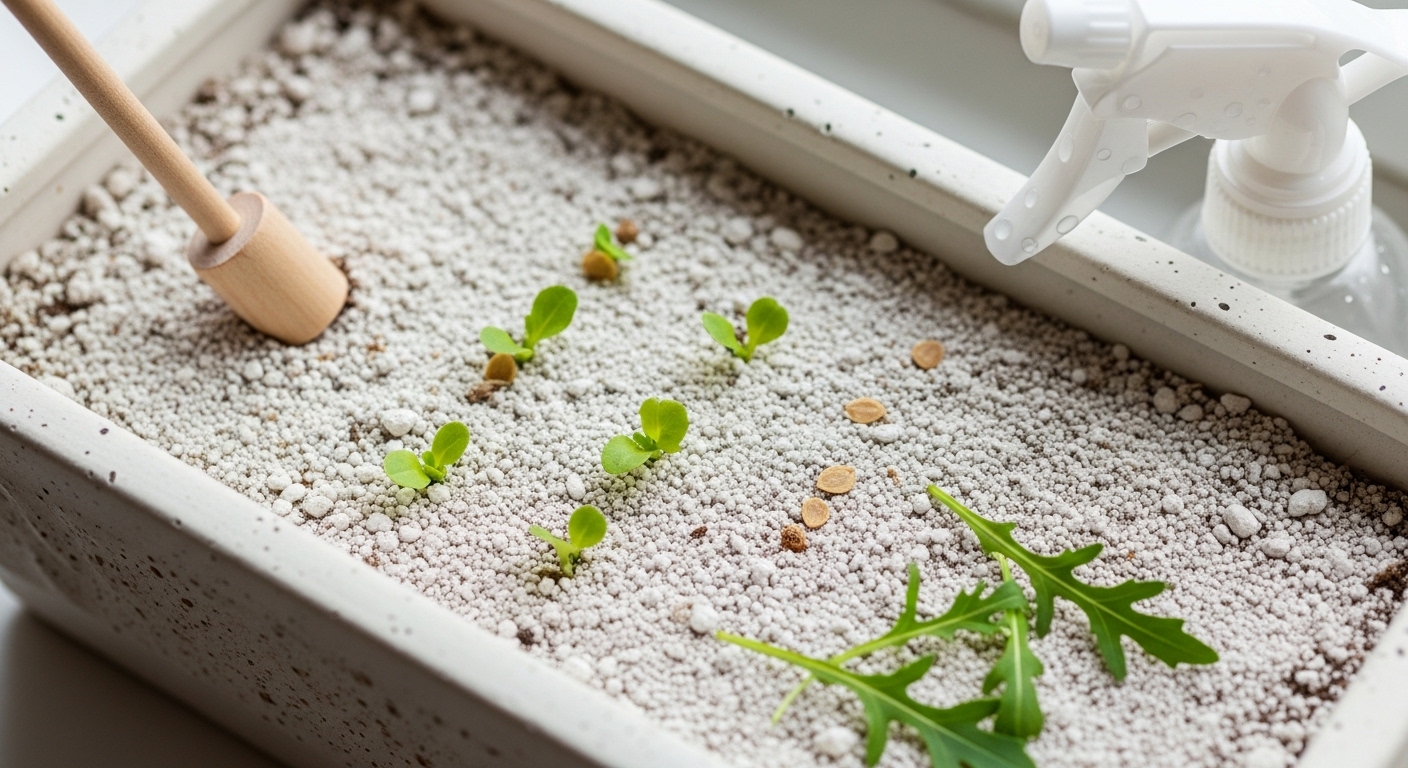
Which Greens to Grow — and When
Not all salad greens behave the same way indoors, and matching the right variety to your setup makes a real difference. The good news: lettuce, spinach, arugula, and microgreens are all well-suited to container growing and tolerate the lower light levels typical of indoor environments better than fruiting crops like tomatoes or peppers.
Lettuce is the most forgiving of the group. Loose-leaf varieties like 'Black Seeded Simpson', 'Oak Leaf', or 'Salanova' types are better choices than heading varieties indoors — they allow cut-and-come-again harvesting, meaning you take outer leaves and the plant keeps producing. Sow seeds 1 cm deep and thin to about 10 cm apart once seedlings are established.
Spinach germinates best when soil temperatures are on the cooler side — around 10–18°C is generally ideal. It can bolt (send up a flower stalk and turn bitter) if temperatures climb above 24°C consistently, so keep it away from heat vents. Baby spinach leaves are ready to harvest in as little as 25–30 days from sowing.
Arugula is fast and peppery, and it grows almost eagerly indoors. It can be ready to harvest in 21–28 days. One thing to know: arugula bolts quickly once it matures, so succession sowing every two weeks keeps the supply steady without the bitterness that comes from overgrown plants.
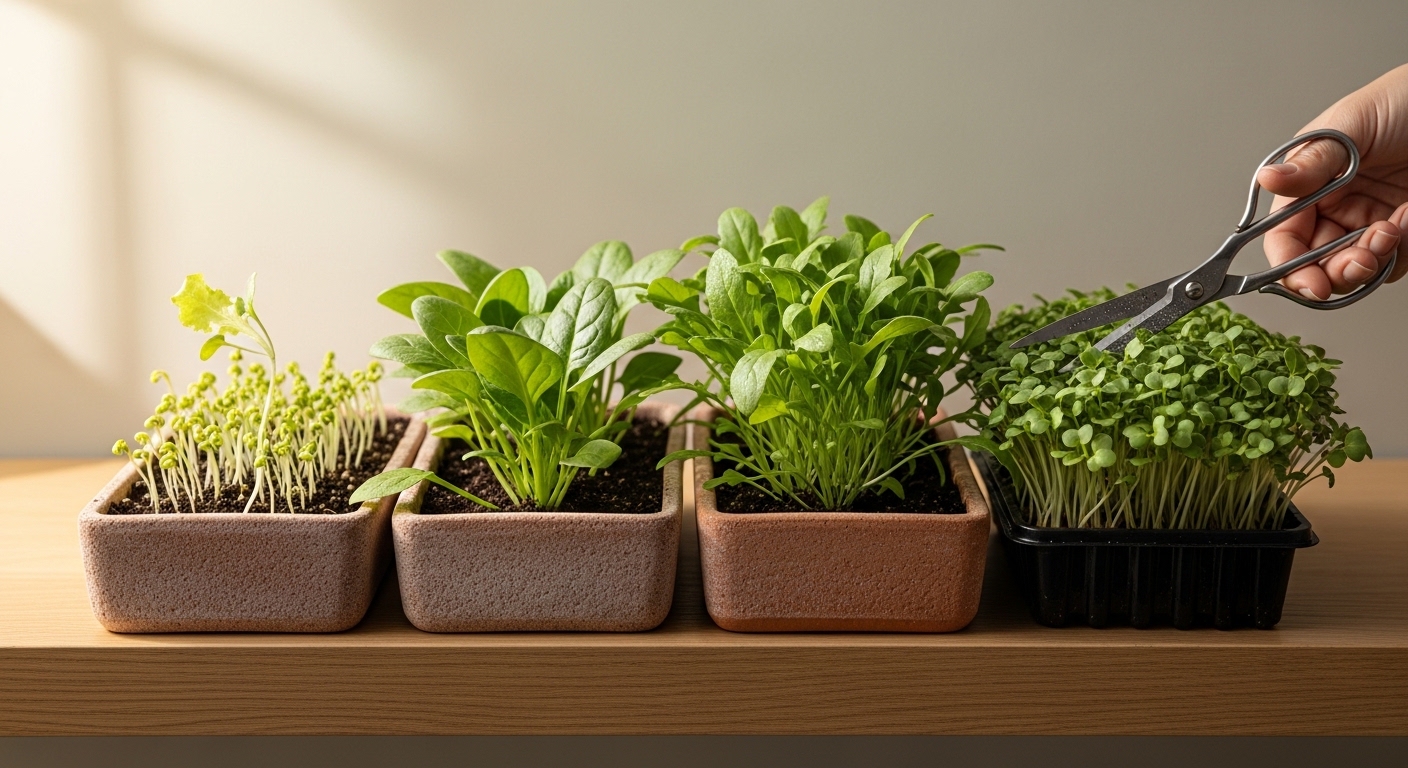
Microgreens — including radish, sunflower, pea shoots, and broccoli — are in a category of their own. They're harvested at the seedling stage (usually 7–14 days after germination), require no special soil depth, and can be grown on a sunny windowsill or under a basic grow light. They're also among the most nutrient-dense things you can grow at home, gram for gram.
- Lettuce: Sow 1 cm deep, thin to 10 cm, harvest outer leaves from 30–45 days.
- Spinach: Sow 1–2 cm deep, prefers cooler temps, harvest baby leaves from 25–30 days.
- Arugula: Scatter-sow on the surface, lightly cover, harvest from 21–28 days.
- Microgreens: Dense surface sowing, harvest at 7–14 days with scissors just above soil level.
Light, Water, and Feeding Indoors
Salad greens need less light than fruiting plants, but they still need consistent, quality light to grow well. In most indoor environments — especially in winter — natural window light alone tends to produce stretched, pale plants. A full-spectrum LED grow light in the 5000–6500K color temperature range generally supports healthy leafy growth. Aim for 12–14 hours of light per day for most greens; a simple plug-in timer removes the guesswork entirely.
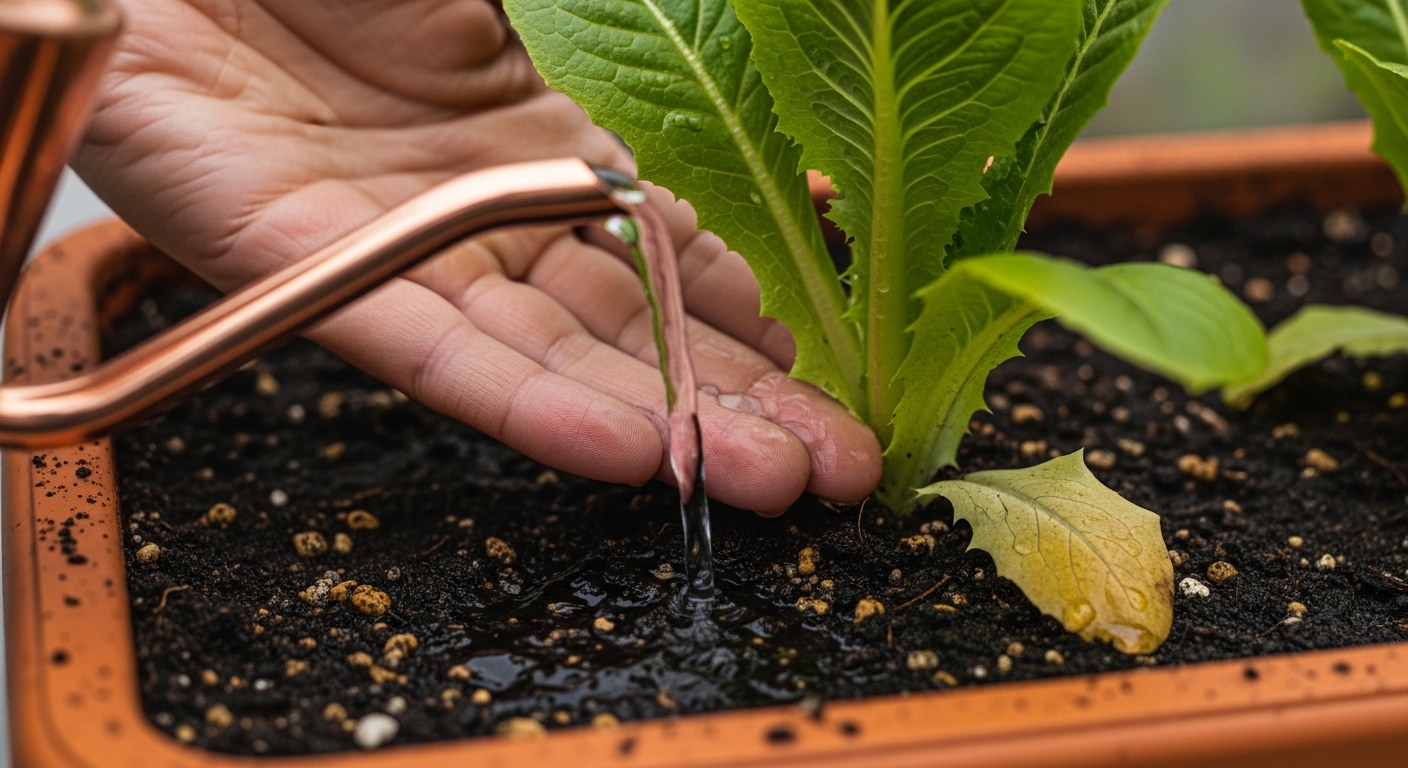
Watering is where most indoor growers run into trouble, in both directions. Overwatering is the more common mistake — salad greens sitting in soggy soil are prone to damping off and root rot. Water when the top 2 cm of soil feels dry to the touch, and always water at the base of the plant rather than overhead when possible. In a warm, dry apartment, this might mean watering every 2–3 days. In a cooler room, once every 4–5 days may be enough.
Feeding is less critical for greens than for fruiting crops, but a light application of a balanced liquid fertilizer every 2–3 weeks can help maintain healthy color and growth rate — particularly in containers, where nutrients deplete faster than in open ground. Many growers find a diluted fish emulsion or seaweed-based feed works well for leafy crops. Go light: over-fertilizing with high-nitrogen feeds can sometimes encourage soft, watery growth that's more prone to pest pressure.
Succession Planting: The Key to Year-Round Harvests
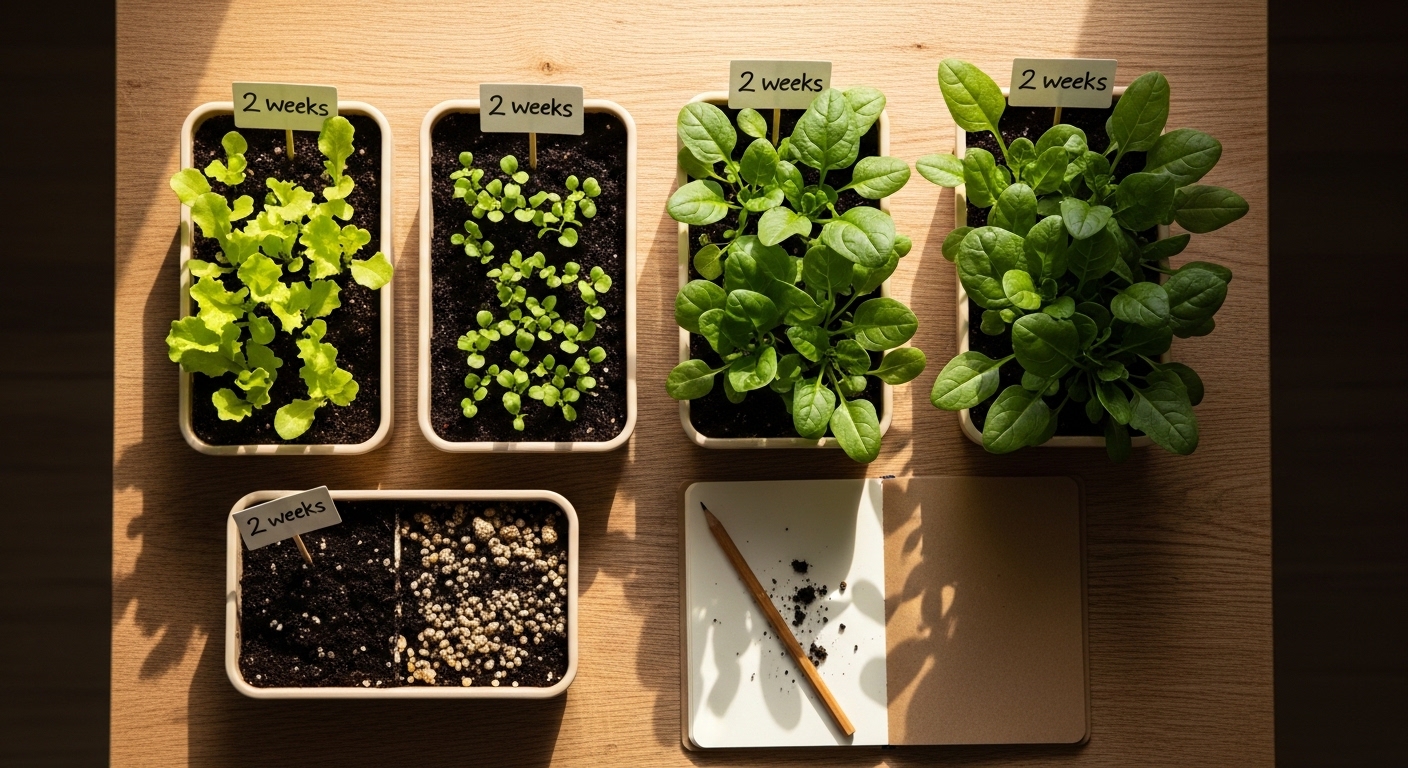
Succession planting simply means sowing small amounts at regular intervals rather than planting everything at once. For indoor salad greens, sowing one or two containers every 10–14 days means you'll always have plants at different stages — some just germinating, some ready to harvest, some mid-growth. It's the difference between a one-week salad glut and a steady, ongoing supply.
A simple rotation works well in practice. Keep three to four containers in active use at any time, labeled with the sow date. When one container is fully harvested and the plant is spent, clear it, refresh the soil (or replace it entirely), and sow again. For cut-and-come-again crops like loose-leaf lettuce, a single container can produce multiple harvests before it needs replacing — typically three to four cuts over four to six weeks.
It's common to see a slight slowdown in germination speed during the depths of winter, even under grow lights, simply because ambient room temperature drops. Placing containers on top of a refrigerator or using a basic seedling heat mat during germination can help maintain the 18–22°C range that most salad greens prefer for sprouting. Once seedlings are up, they're generally happy at normal room temperature.
- Label every container with the sow date — it sounds obvious, but it's easy to lose track.
- Stagger sowing by 10–14 days for continuous harvest.
- Refresh or replace potting mix between cycles to avoid nutrient depletion.
- Use a heat mat during germination in winter if your room runs cool.
- Keep a simple notebook or phone note tracking what's growing and when it was sown.
Indoor Salad Garden Setup Checklist
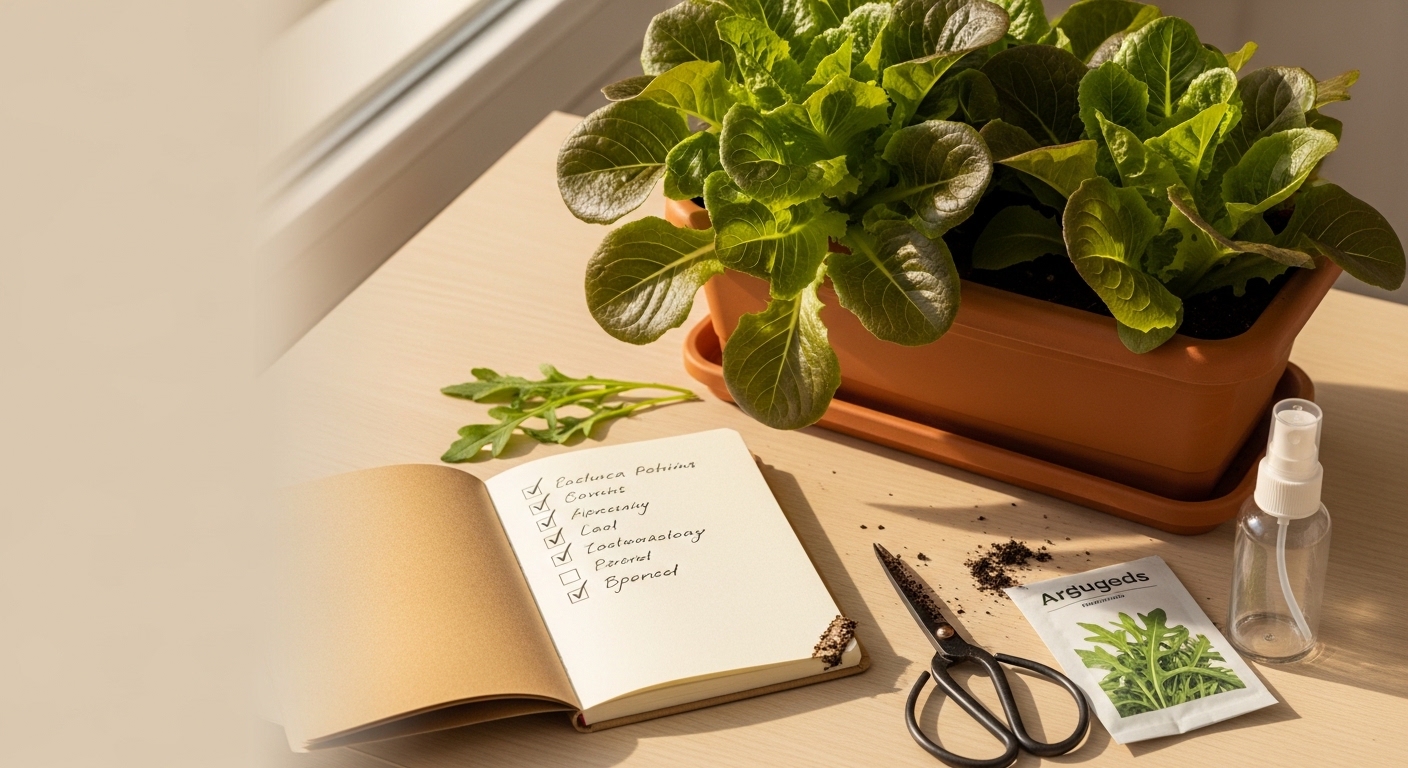
Whether you're starting from scratch or refining a setup that's already partially in place, this checklist covers the essentials. Run through it before your first sowing and revisit it each time you start a new succession cycle.
- Choose your location: Identify a shelf, windowsill, or countertop with access to a power outlet for your grow light.
- Set up your grow light: Mount a full-spectrum LED bar 20–30 cm above where your plant canopy will sit. Follow manufacturer instructions and consult a licensed electrician if any wiring is involved. Set a timer for 12–14 hours of daily light.
- Prepare your containers: Ensure all pots have drainage holes and drip trays. Fill with a lightweight potting mix blended with perlite (roughly 3:1 ratio).
- Source your seeds: Choose loose-leaf lettuce varieties, baby spinach, standard arugula, and at least one microgreens variety to start.
- Sow your first batch: Sow seeds at the correct depth for each species, water gently, and label with the date.
- Set your succession schedule: Mark your calendar or set a phone reminder to sow the next container in 10–14 days.
- Monitor and adjust: Check soil moisture every 1–2 days, watch for leggy growth (a sign of insufficient light), and feed lightly every 2–3 weeks once plants are established.
- Harvest regularly: For cut-and-come-again crops, begin harvesting outer leaves once plants reach 8–10 cm tall. Regular harvesting encourages continued leaf production.
Closing
The first time you snip arugula leaves from a container you sowed yourself and add them directly to a bowl — that moment makes the whole setup feel worth it. Indoor salad gardening rewards consistency more than expertise. Start with one container of loose-leaf lettuce and one tray of microgreens, get comfortable with the rhythm, and build from there. Your next step: set up your grow light, sow your first container this week, and mark the date. If you're also curious about growing herbs indoors alongside your greens, that's a natural next topic to explore — basil, chives, and cilantro pair beautifully with the same setup.


Comments
Post a Comment