Rubber Plant Care Guide: Ficus Elastica Tips
The rubber plant — Ficus elastica — has a reputation for being easygoing, and mostly that's true. But ask anyone who has watched a healthy specimen suddenly drop six leaves overnight, and you'll understand why this plant deserves a little more attention than a windowsill and a wish. Whether you're growing a deep burgundy 'Burgundy' cultivar or a variegated 'Tineke,' the fundamentals of rubber plant care come down to consistency: stable light, measured watering, and an environment that doesn't swing between extremes. Get those right, and this plant will reward you with broad, glossy leaves and steady upward growth for years.
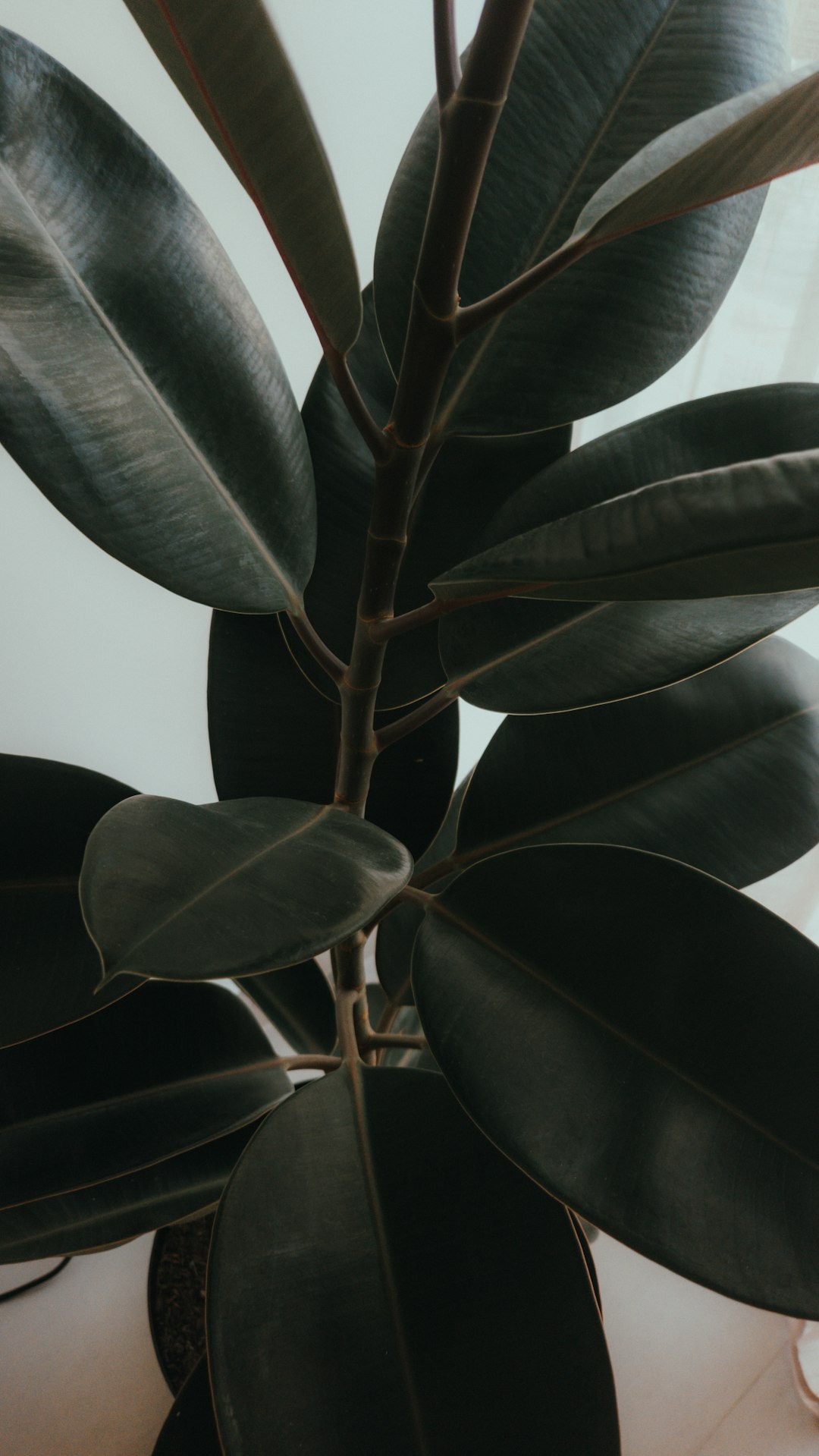
Species Overview & Origin
Ficus elastica is native to the tropical rainforests of South and Southeast Asia — particularly India, Nepal, and Indonesia — where it grows as a large canopy tree reaching well over 30 metres in the wild. Indoors, it typically tops out between 1.5 and 3 metres, depending on pot size and pruning. It belongs to the Moraceae family, making it a relative of the fiddle-leaf fig and the common fig.
The plant gets its common name from the milky white latex sap it produces, which was historically used as a source of rubber before Hevea brasiliensis took over commercially. That sap is worth knowing about: it can cause skin irritation and is generally considered toxic to cats and dogs — the ASPCA is a useful general resource if you have pets at home and want to check current guidance.
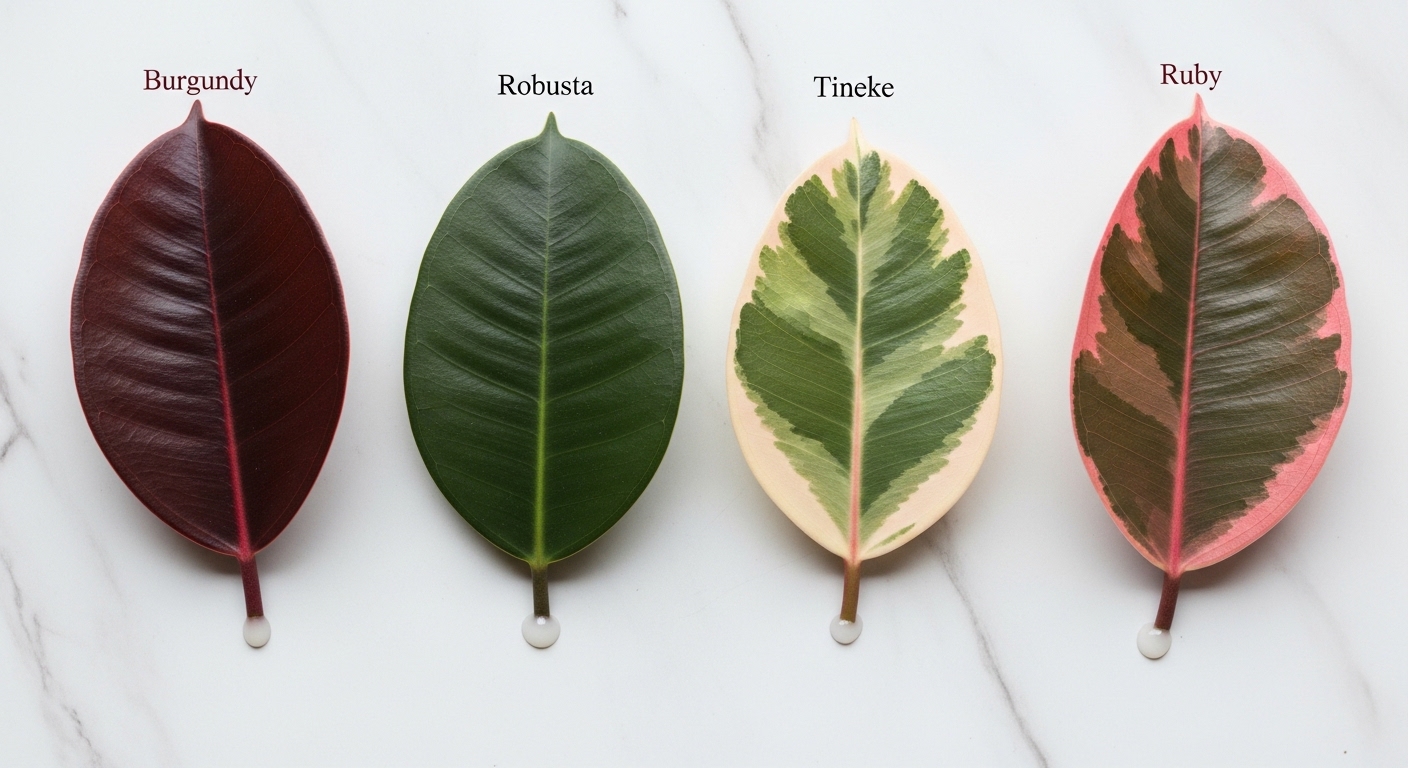
Popular cultivars you'll commonly find include:
- 'Burgundy' — near-black leaves with a deep red midrib; the most dramatic of the group
- 'Robusta' — classic dark green, broad leaves; the most forgiving cultivar for beginners
- 'Tineke' — cream, green, and pink variegation; needs slightly more light to maintain colour
- 'Ruby' — pink and red tones with green patches; the most light-hungry of the common cultivars
Light & Temperature Needs
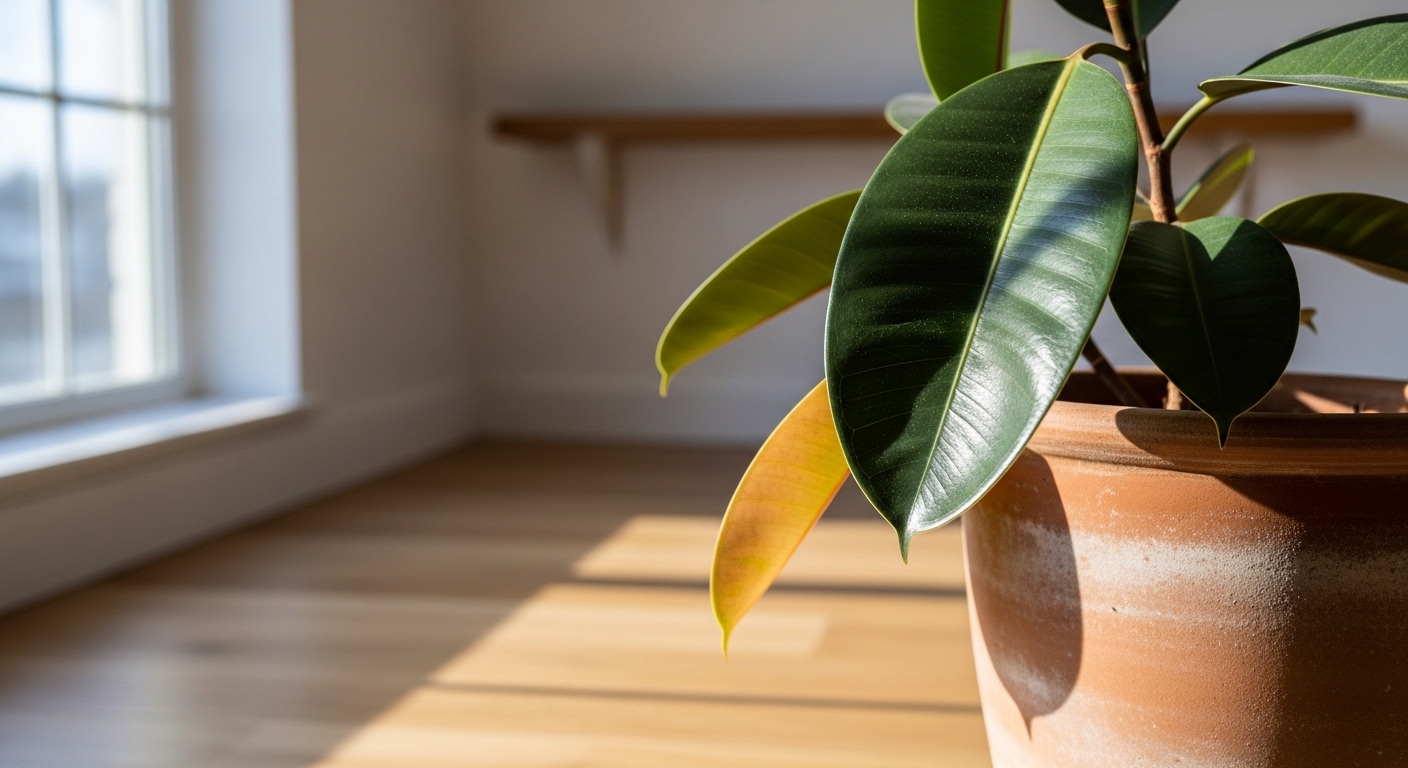
Rubber plants do best in bright, indirect light — think a spot within 1 to 2 metres of a south- or east-facing window, where they receive good ambient brightness without direct midday sun scorching the leaves. Direct sun for extended periods can bleach or burn the leaf surface, particularly on variegated cultivars.
That said, Ficus elastica is more light-tolerant than many tropical houseplants. It can adapt to medium-light conditions, though growth will slow noticeably and variegated forms may lose their colour contrast. If your space is genuinely dim, a 'Robusta' will cope better than a 'Tineke.'
Temperature is where consistency matters most. Rubber plants generally prefer a range of 15–29°C (60–85°F) and dislike cold draughts, air conditioning vents, and sudden drops below 12°C. One frustrating pattern many growers notice: a plant that sits happily all summer near a window will begin dropping leaves the moment autumn draughts start coming through the frame. Moving the pot even 30 cm away from a draughty window can make a real difference.
Stability matters more than perfection. A rubber plant in a slightly dim but draught-free corner will often outperform one placed in bright light next to a cold window in winter.
Watering & Humidity Guide
Water your rubber plant when the top 2–3 cm of soil feels dry to the touch. In most indoor environments during the growing season (spring through early autumn), this typically means watering every 7–10 days. In winter, when growth slows, many plants need water only every 14–21 days — sometimes less.
Overwatering is the most common mistake with Ficus elastica. The roots are susceptible to rot in consistently wet soil, and the early signs — slight yellowing of lower leaves, a faint musty smell from the pot — are easy to miss until the problem is advanced. Always check the soil before watering rather than following a fixed schedule.
When you do water, water thoroughly until it drains freely from the bottom, then empty the saucer after 30 minutes. Letting the pot sit in standing water is a reliable path to root rot.
On humidity: rubber plants are more tolerant of average indoor humidity (40–60%) than many tropical species. They don't generally need misting or a humidifier, though they'll appreciate it if your home drops below 30% in winter due to central heating. Grouping plants together can help maintain a slightly more humid microclimate around the foliage.
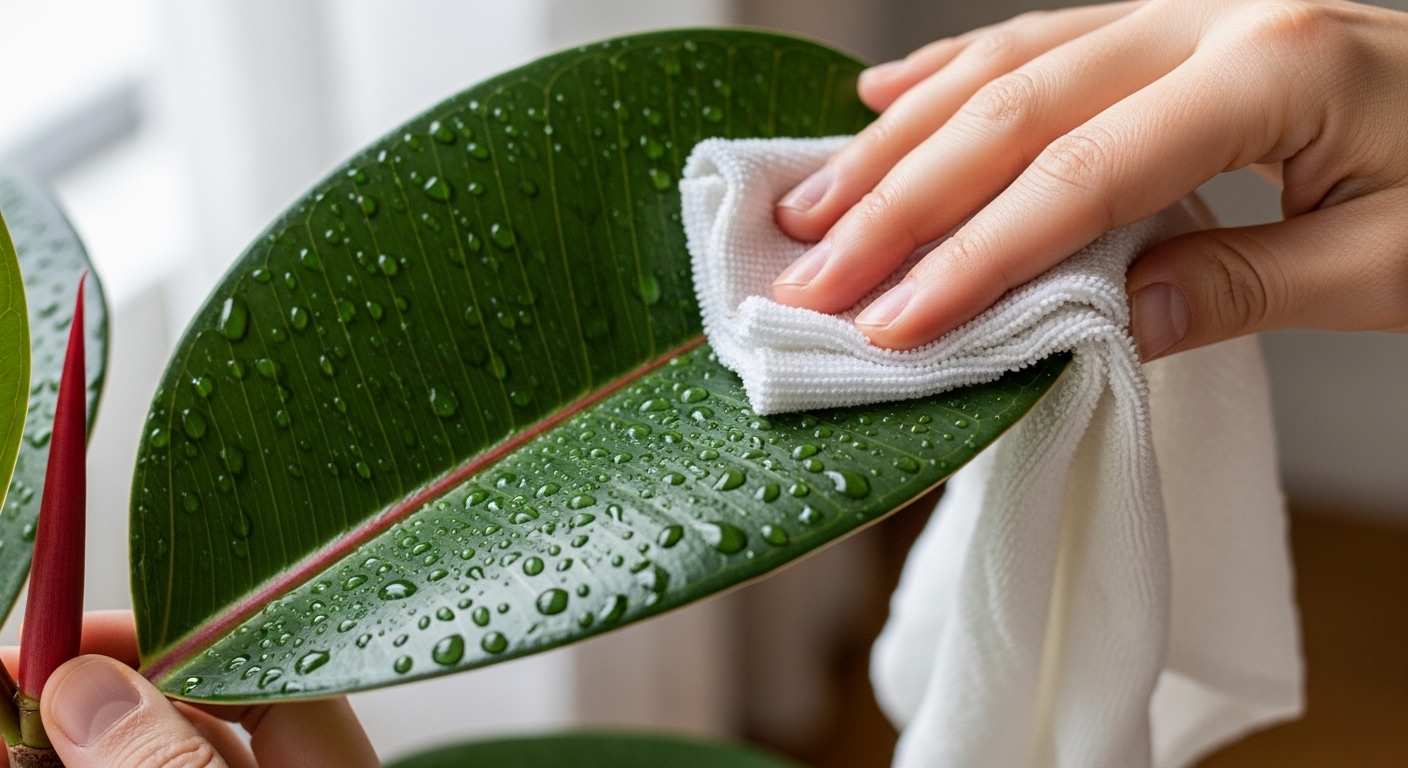
Leaf cleaning deserves its own mention. Those broad leaves collect dust quickly, and a dusty surface reduces the leaf's ability to absorb light efficiently. Wipe leaves gently with a damp, soft cloth every few weeks — support the leaf from underneath with your other hand to avoid stressing the stem. Avoid leaf-shine products, which can clog stomata over time.
Soil, Potting & Fertilizing
A well-draining, aerated mix is the foundation of healthy rubber plant roots. A standard indoor potting mix works as a base, but many growers find it benefits from amendment — roughly 60–70% quality potting mix combined with 20–30% perlite or coarse sand, plus a small amount of bark or coco coir for structure. The goal is a mix that holds some moisture without becoming waterlogged.
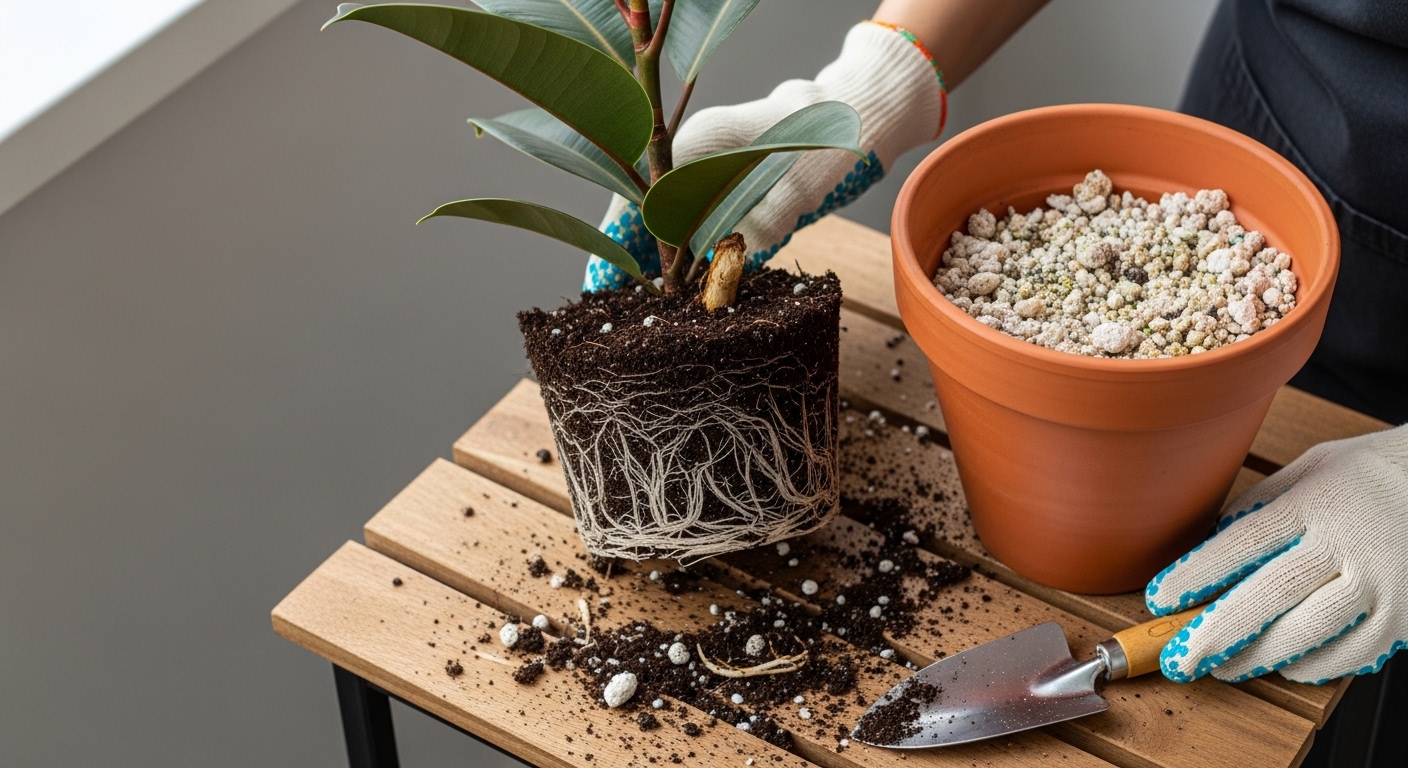
Repot when you see roots emerging from the drainage holes or circling visibly at the soil surface — typically every 1–2 years for younger plants, less frequently as they mature. Move up one pot size at a time (around 5 cm larger in diameter). Going too large too quickly leaves excess wet soil around the roots, increasing rot risk.
For fertilizing, a balanced liquid fertilizer (such as a 10-10-10 or similar NPK ratio) applied monthly during the growing season is generally sufficient. Reduce to every 6–8 weeks in late summer, and stop entirely through winter when the plant is not actively growing. Over-fertilizing can cause salt build-up in the soil, which may show as brown leaf tips.
Pruning for shape is straightforward. Use clean, sharp scissors or pruning shears and cut just above a leaf node — the small bump where a leaf meets the stem. The plant will typically branch from just below the cut, which is how you encourage a bushier form rather than a single tall trunk. Always wear gloves: the latex sap can irritate skin and stain fabric.
Common Problems & Fixes
Leaf drop and yellowing are the two complaints that come up most often with rubber plants, and both usually trace back to environmental stress rather than disease.
- Sudden leaf drop — Almost always triggered by a change: being moved to a new location, a cold draught, overwatering, or a sharp temperature drop. The plant is reacting to stress, not necessarily dying. Stabilise its environment and hold off on watering until the soil is appropriately dry.
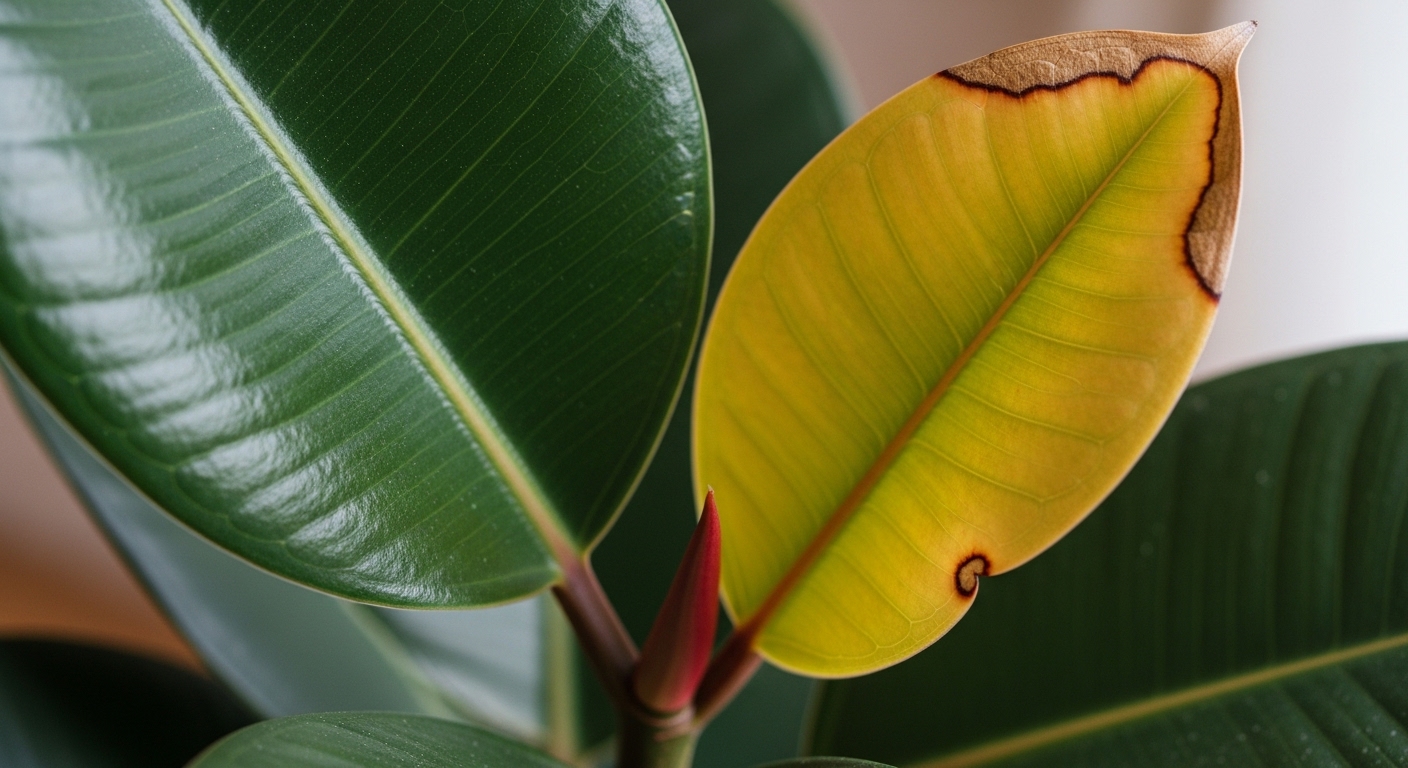
- Yellow lower leaves — A small number of lower leaves yellowing and dropping is normal as the plant matures and redirects energy upward. If multiple leaves across the plant are yellowing, check for overwatering first, then consider whether light levels have dropped.
- Brown leaf edges or tips — Often linked to low humidity, inconsistent watering, or fertilizer salt build-up. Flush the soil thoroughly with water every few months to reduce salt accumulation.
- Pale, washed-out leaves — Usually a sign of too much direct sun, particularly on variegated cultivars. Move the plant back from the window or filter the light with a sheer curtain.
- Leggy, slow growth — Insufficient light is the most likely cause. Even a shade-tolerant cultivar like 'Robusta' will stretch and slow in genuinely dim conditions.
Pests are less common on rubber plants than on some other houseplants, but spider mites, scale insects, and mealybugs can appear — particularly on plants that are already stressed. The first sign is often a sticky residue on leaves or fine webbing near the stem joints. Isolate affected plants promptly and treat with a diluted neem oil solution or insecticidal soap, following the product instructions carefully.
Symptom: White cottony clusters in leaf axils → Likely cause: Mealybugs → Fix: Remove manually with a cotton swab dipped in rubbing alcohol, then treat the whole plant with neem oil solution.
Frequently Asked Questions
Can I propagate a rubber plant at home?
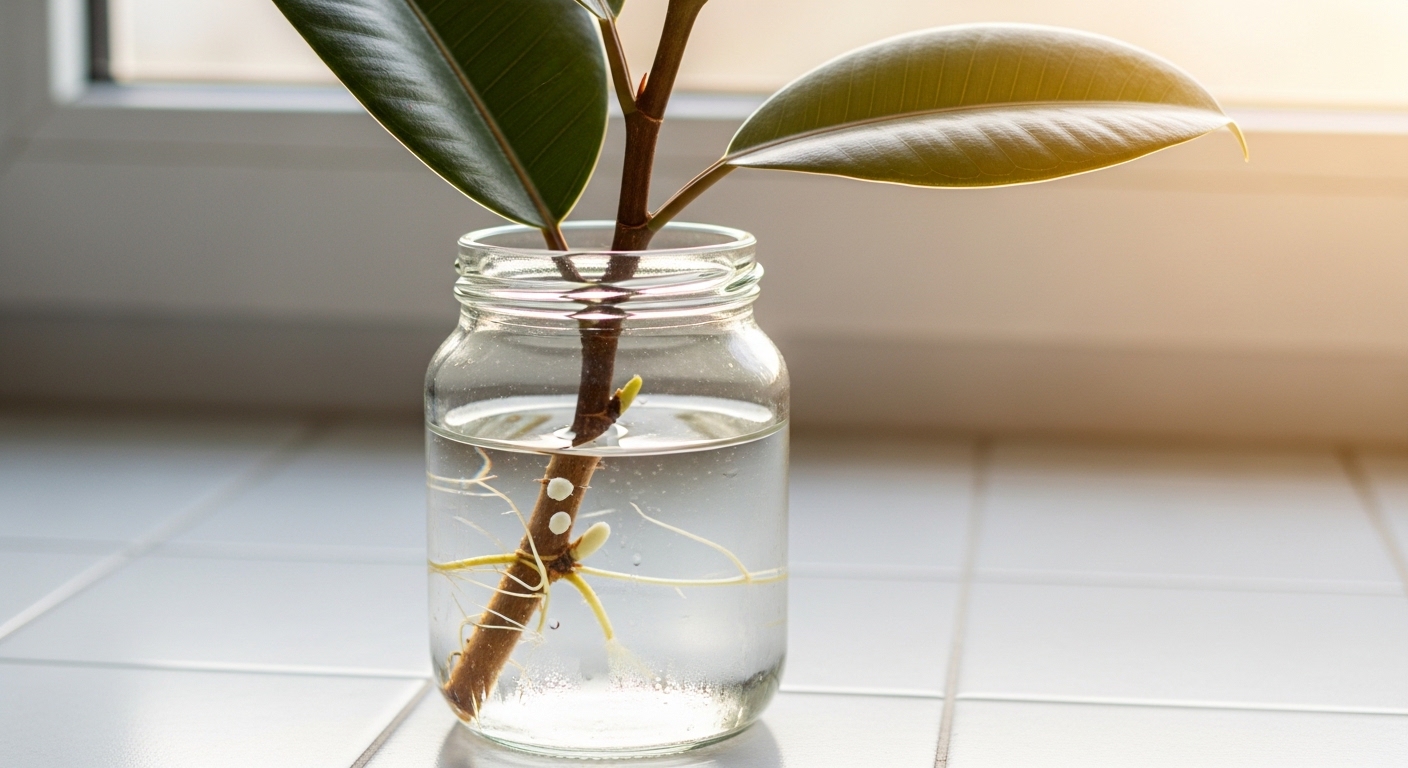
Yes — stem cuttings are the most reliable method for home propagation. Take a cutting of 10–15 cm with at least 2–3 leaves, allow the cut end to dry for 20–30 minutes so the latex sap stops flowing, then place it in water or a moist propagation mix. Rooting generally takes 4–8 weeks in warm conditions (above 20°C). Air layering is another option for thicker stems and tends to produce a more robust root system before separation.
How fast does a rubber plant grow?
In good conditions during the growing season, many growers see 30–60 cm of new growth per year. Growth slows considerably in winter and in lower light. Pot size also plays a role — a root-bound plant in a small pot will grow more slowly than one with room to expand.
Why is my rubber plant not growing new leaves?
The most common reasons are insufficient light, the dormancy of winter, or a pot that is either too small (root-bound) or too large (excess wet soil). Check light levels first — even moving the plant 50 cm closer to a window can make a noticeable difference over a few weeks.
Is the rubber plant safe for pets?
Ficus elastica is generally considered toxic to cats and dogs if ingested. The ASPCA maintains a plant toxicity database that is a useful reference for pet owners — always check current listings rather than relying on general claims.
Should I mist my rubber plant?
Misting is not necessary for most rubber plants in average indoor humidity. It can provide a brief humidity boost, but the effect is short-lived. If your home is very dry in winter, a small humidifier nearby or grouping plants together tends to be more effective than misting.


Comments
Post a Comment