Fiddle Leaf Fig Care Guide for Beginners
The fiddle leaf fig has a reputation for being dramatic — and honestly, it earns it. Ficus lyrata is one of the most visually striking indoor trees you can grow, with its large, violin-shaped leaves and bold upright form. But for beginners, it can feel like a mystery: one week it looks stunning, the next it's dropping leaves with no obvious explanation. The good news is that once you understand what this plant actually needs, fiddle leaf fig care becomes far more manageable than the internet would have you believe.
Species Overview & Origin
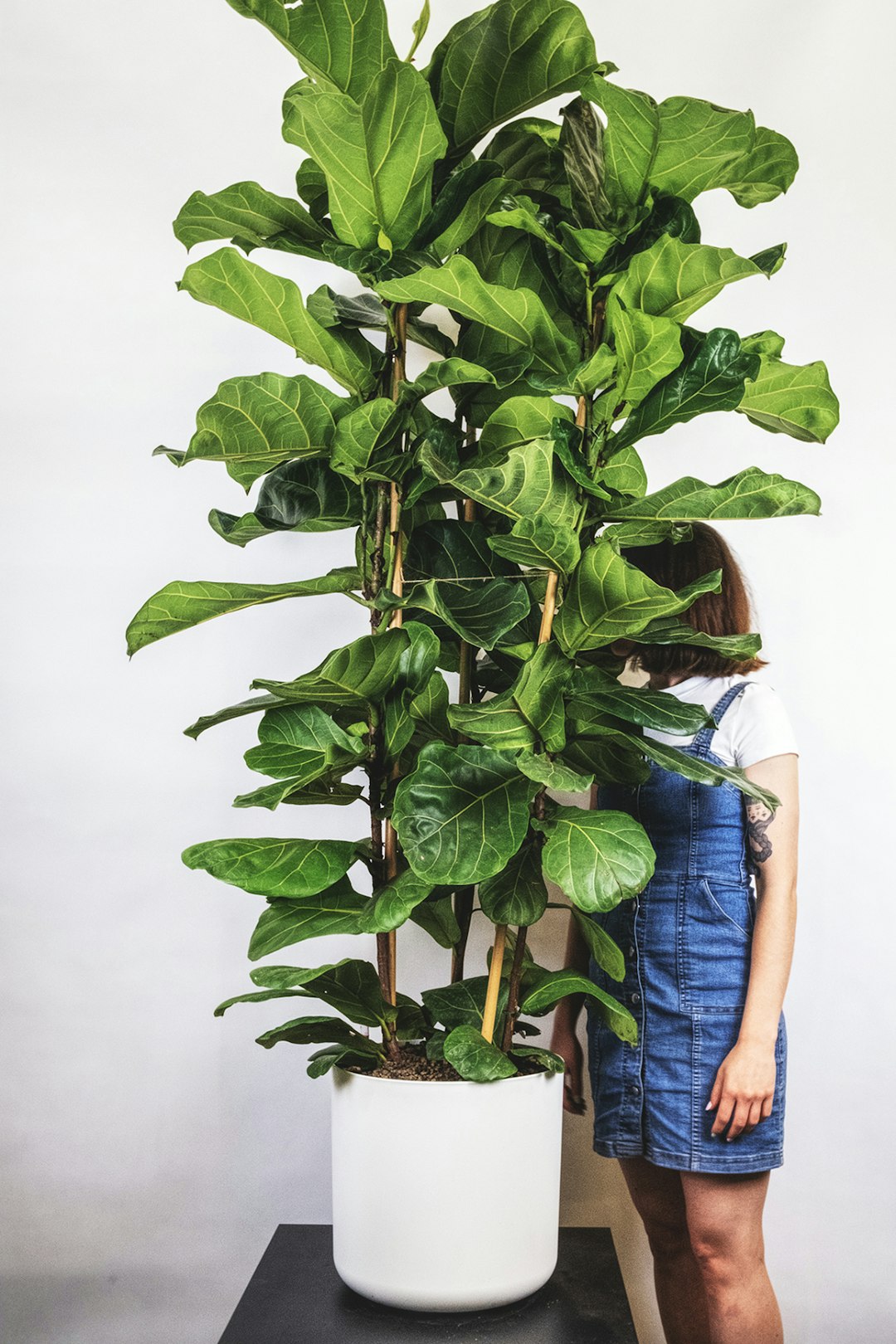
Ficus lyrata is native to the tropical rainforests of western and central Africa, where it grows as a canopy tree reaching up to 12 metres tall. In its natural habitat, it receives bright but filtered light through the forest canopy, consistent warmth, and high ambient humidity. Understanding this origin is genuinely useful — it explains almost every care decision you'll make.
Indoors, fiddle leaf figs are grown as statement trees or compact shrubs depending on the variety. The standard Ficus lyrata can reach ceiling height over several years, while the dwarf cultivar 'Bambino' stays more compact and is generally considered slightly more forgiving for beginners. Both share the same core care requirements.
One thing worth knowing upfront: this plant dislikes change. Moving it from a nursery to your home, shifting it between rooms, or even rotating it frequently can trigger leaf drop. Many growers find the first few weeks after bringing one home to be the most nerve-wracking — some leaf loss during this adjustment period is completely normal.
Light & Temperature Needs
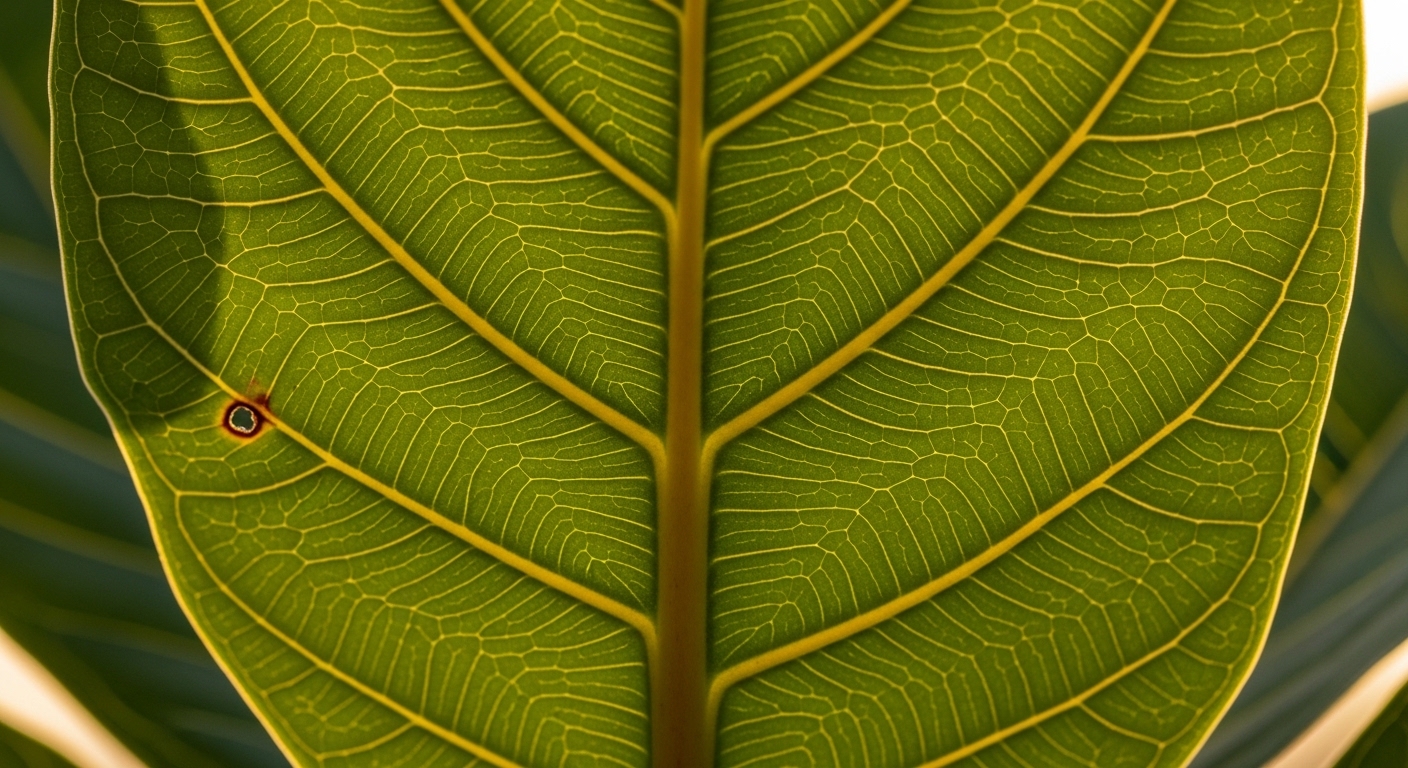
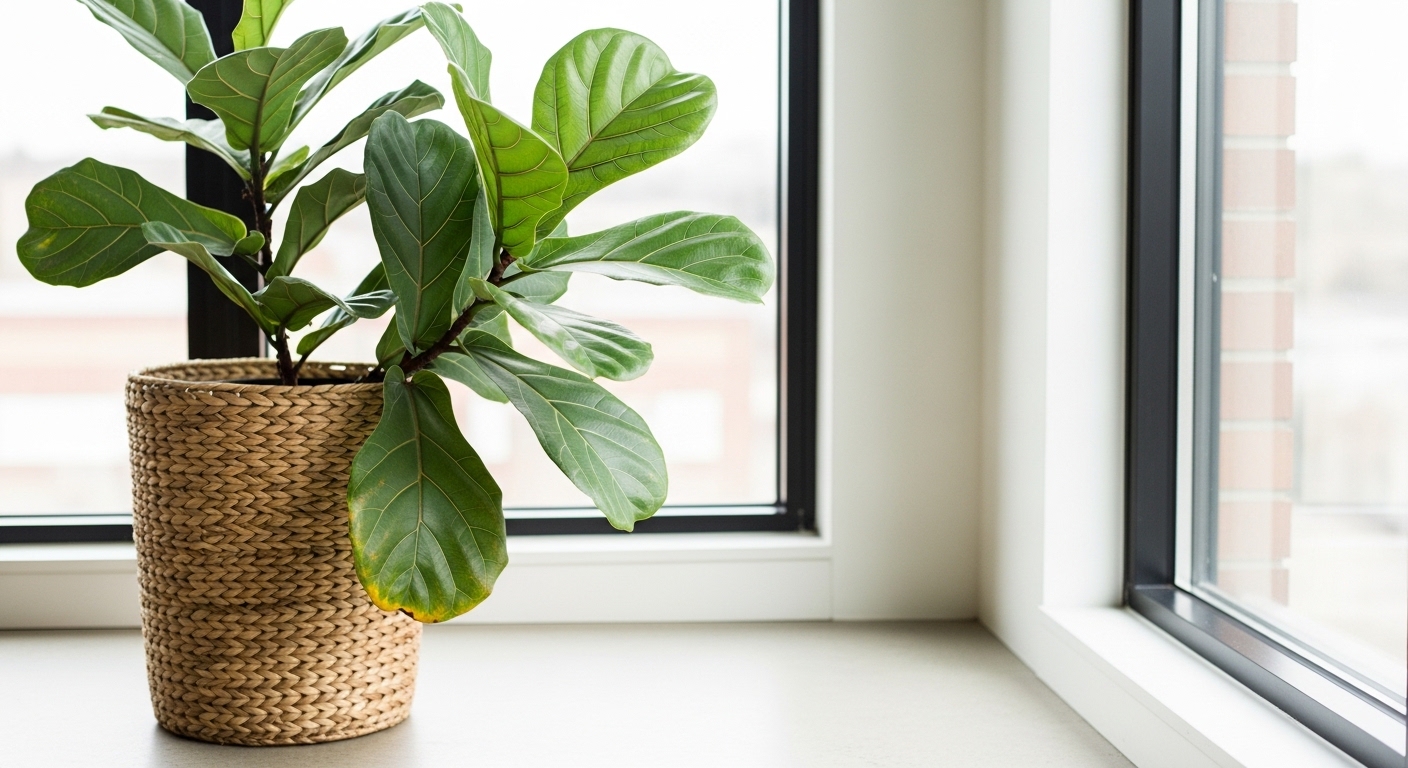
Fiddle leaf figs need bright, indirect light for most of the day — ideally 6 or more hours. A spot within 1–2 metres of a large south- or east-facing window (in the northern hemisphere) tends to work well. Direct midday sun through glass can scorch the leaves, leaving pale or brown bleached patches, but gentle morning sun is generally tolerated and even beneficial.
Low light is one of the most common reasons fiddle leaf figs struggle indoors. In dim conditions, the plant slows its growth significantly, becomes more susceptible to root rot from overwatering, and may drop its lower leaves over time. If your space doesn't offer strong natural light, a full-spectrum grow light positioned close to the canopy can help — follow manufacturer instructions for safe installation, and consult a licensed electrician if hardwiring is involved.
Temperature-wise, fiddle leaf figs prefer a stable range of roughly 16–24°C (60–75°F). They are sensitive to cold draughts, air conditioning vents, and open windows in winter. Keep the plant away from exterior doors and heating or cooling units. A sudden temperature drop — even a brief one from a draught — can cause rapid leaf drop that looks alarming but is usually recoverable.
Consistency matters more than perfection. A fiddle leaf fig in a slightly less-than-ideal spot that never gets moved will often outperform one placed in a better location but frequently repositioned.
Watering & Humidity Guide
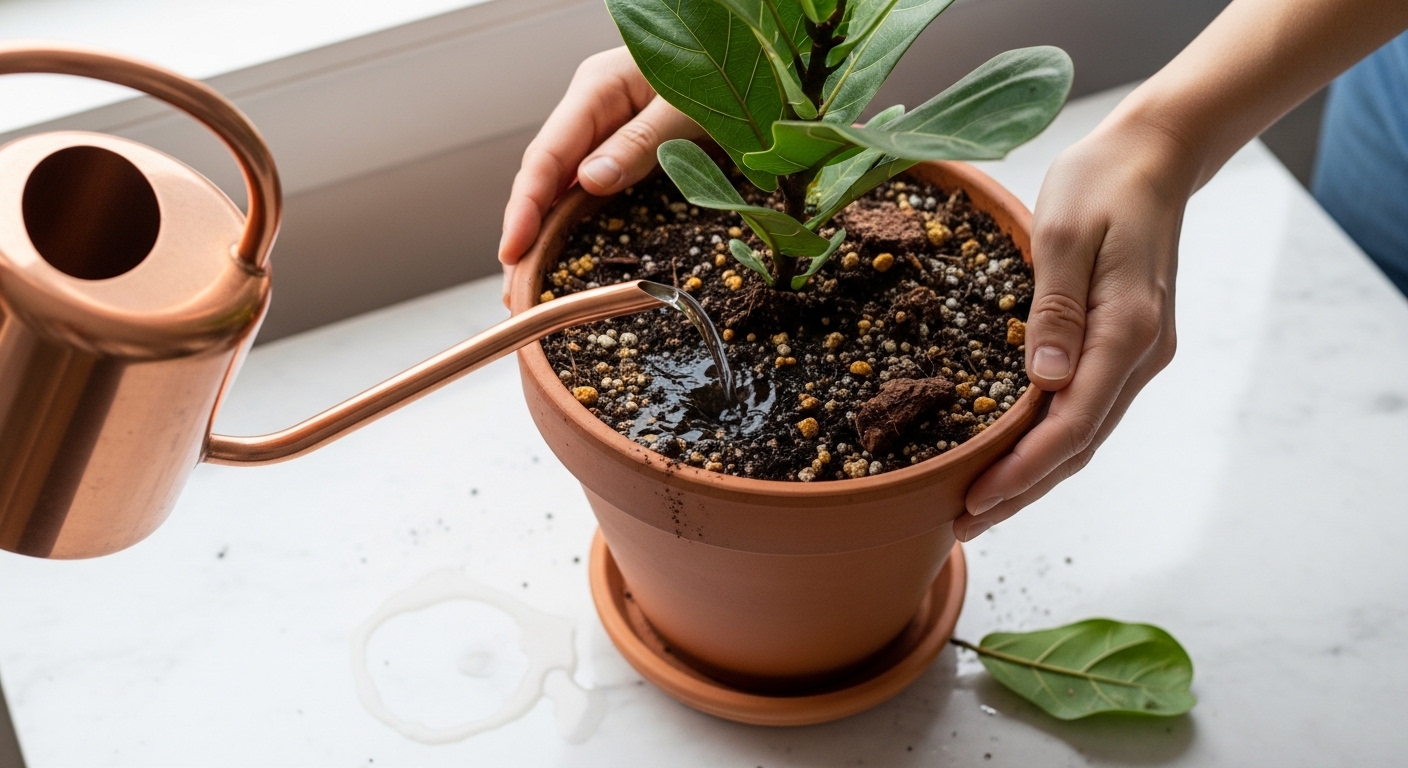
Water your fiddle leaf fig when the top 3–5 cm (about 1–2 inches) of soil feels dry to the touch. In most indoor environments, this means watering roughly every 7–10 days in spring and summer, and stretching to every 10–14 days in autumn and winter when growth slows. Always water thoroughly until it drains from the bottom, then empty the saucer after 30 minutes to prevent the roots from sitting in standing water.
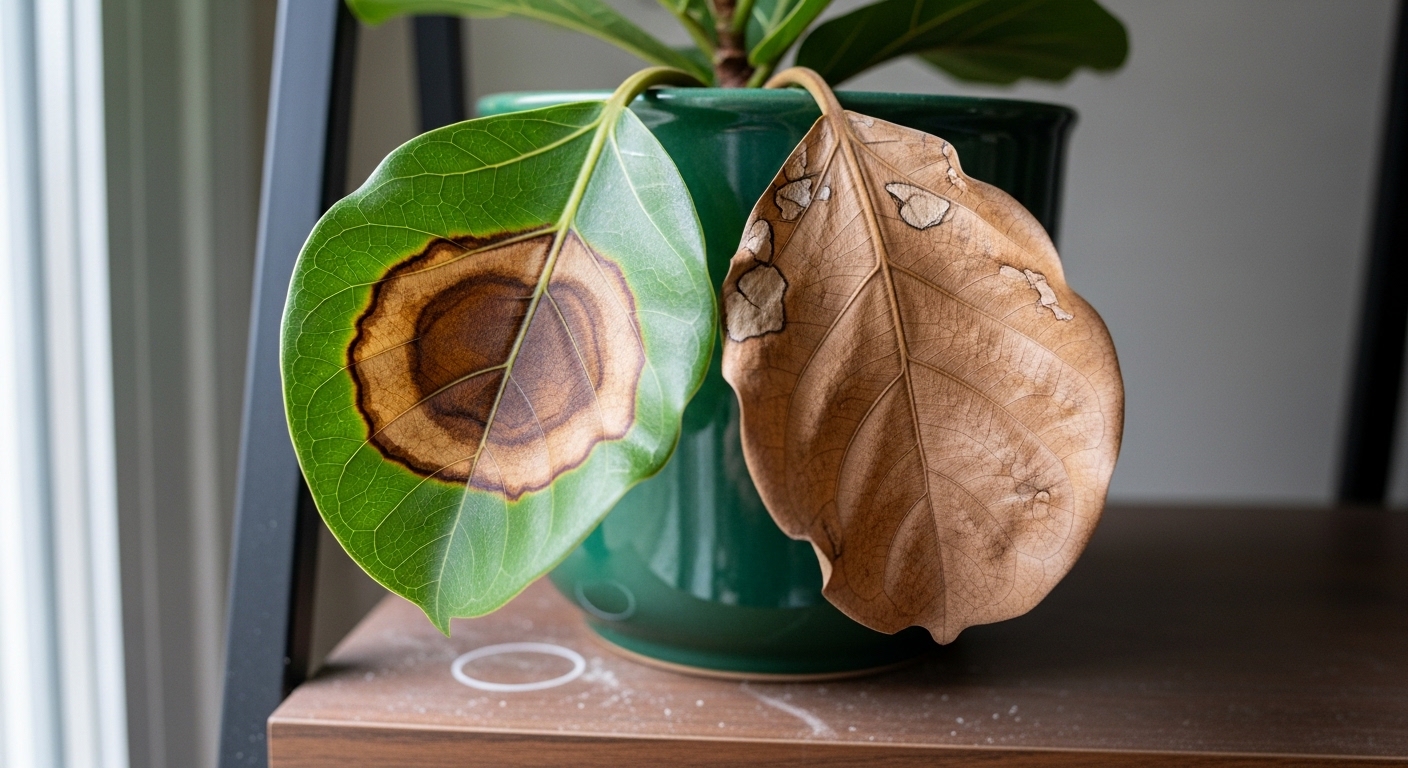
Overwatering is the leading cause of root rot in fiddle leaf figs, and root rot is the leading cause of plant loss. The early signs are easy to miss: the soil stays wet for longer than expected, lower leaves develop brown spots that start in the middle of the leaf rather than at the edges, and the plant may look slightly limp despite moist soil. If you catch it early — before the roots are fully compromised — reducing watering frequency and improving drainage can often turn things around.
Underwatering produces a different pattern. Leaves may curl slightly, brown edges appear first (rather than central spots), and the soil pulls away from the pot edges as it shrinks. The plant tends to look thirsty rather than sick.
For humidity, fiddle leaf figs generally prefer 30–65% relative humidity. Most modern homes fall within this range, but rooms with forced-air heating in winter can drop significantly lower. Grouping plants together, placing a tray of water near (not under) the pot, or running a humidifier nearby can help maintain adequate moisture in the air. Misting directly onto the leaves is debated among growers — it can help briefly, but it may also encourage fungal issues if the leaves stay wet in low-airflow rooms.
Soil, Potting & Fertilizing
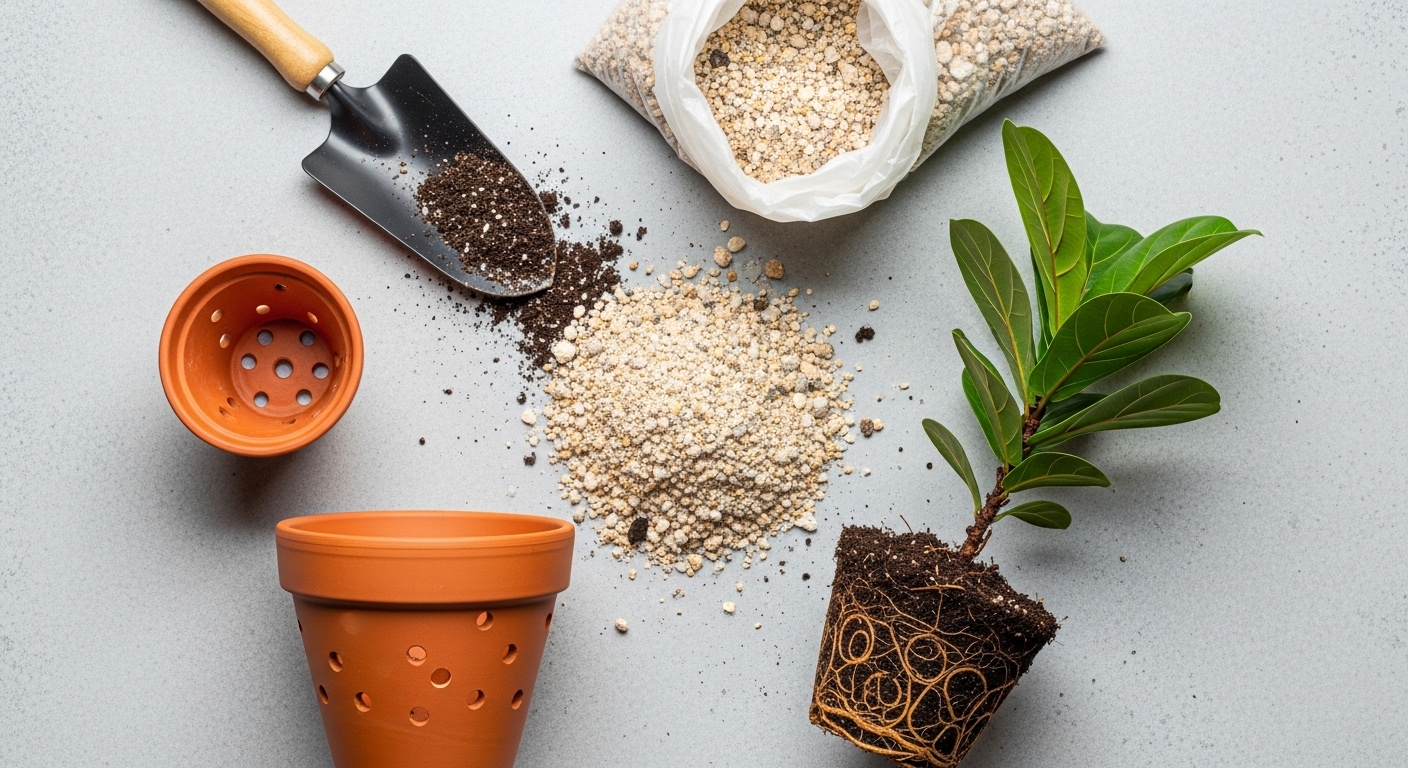
Fiddle leaf figs need a well-draining potting mix that holds some moisture without becoming waterlogged. A good starting point is a high-quality indoor potting mix amended with perlite — roughly a 2:1 ratio of potting mix to perlite works well for most growers. This improves aeration around the roots and reduces the risk of compaction over time.
Repotting is generally needed every 1–2 years, or when roots begin circling the bottom of the pot or emerging from drainage holes. Choose a new pot that is only 5–7 cm (2–3 inches) larger in diameter than the current one. Going too large too quickly means excess soil holds moisture the roots can't absorb, increasing rot risk. Spring is the best time to repot — the plant is entering its active growing season and recovers from root disturbance more readily.
Fertilizing during the growing season (roughly spring through early autumn) can support healthy new leaf development. A balanced liquid fertilizer diluted to half the recommended strength, applied monthly, is a reasonable approach for most indoor conditions. Avoid fertilizing in autumn and winter when the plant's growth naturally slows — feeding during dormancy can cause salt buildup in the soil without the plant benefiting from the nutrients.
Common Problems & Fixes
Most fiddle leaf fig problems show up on the leaves first. Learning to read the pattern of damage — where on the leaf, how quickly it spreads, which leaves are affected — tells you a lot about the underlying cause.
Brown spots in the center of leaves, spreading outward: Usually indicates overwatering or root rot. Check the soil moisture and drainage immediately. Allow the soil to dry out more between waterings and inspect the roots if the problem persists.
Brown, crispy edges or tips: Often caused by low humidity, underwatering, or exposure to dry heating air. Check your watering frequency and consider increasing ambient humidity.
Yellowing lower leaves: A small amount of lower leaf yellowing is normal as the plant matures. Widespread yellowing, however, can indicate overwatering, nutrient deficiency, or insufficient light.
Sudden leaf drop: Almost always triggered by environmental stress — a temperature shock, being moved, a cold draught, or a dramatic change in light. If the remaining leaves look healthy, give the plant time to adjust rather than immediately changing its care routine.
Pale, bleached patches: Direct sun scorch. Move the plant slightly further from the window or filter the light with a sheer curtain.
- Check watering habits first — overwatering causes more problems than any other single factor.
- Assess light levels before assuming a disease or pest issue.
- Avoid moving the plant as a first response to leaf drop — stability often helps more than relocation.
- Inspect the undersides of leaves regularly for early signs of spider mites or scale insects, which can appear as fine webbing or small sticky bumps.
- Only adjust one variable at a time so you can identify what actually made a difference.
Frequently Asked Questions
Why is my fiddle leaf fig dropping leaves after I just brought it home?
This is one of the most common experiences new owners have, and it is almost always a stress response to the change in environment. Nurseries and garden centres keep plants in very specific conditions — often high humidity, consistent temperature, and bright light. Moving to a home environment changes all of these at once. Give the plant 4–6 weeks to settle before making any significant care changes. Avoid moving it again during this period.
How do I know if my fiddle leaf fig is getting enough light?
Healthy new growth is the clearest indicator. If your plant is producing new leaves regularly during spring and summer — even just a few per season — it is likely receiving adequate light. Slow or no growth combined with pale, small new leaves suggests the light level is too low. You can also use a basic light meter app on your phone to get a rough reading; fiddle leaf figs generally do well above 200–400 foot-candles of indirect light.
Can I put my fiddle leaf fig outside in summer?
Many growers do move their fiddle leaf figs outdoors during warm months, and the increased light and humidity can genuinely benefit the plant. If you try this, transition it gradually — start with a shaded outdoor spot for a week or two before introducing brighter conditions. Avoid direct midday sun, watch for sudden temperature drops at night, and bring it back indoors well before autumn temperatures fall below 15°C (59°F).
Is the fiddle leaf fig toxic to pets?
Ficus lyrata is generally considered toxic to cats and dogs if ingested, as it contains a milky latex sap that can cause gastrointestinal irritation and skin reactions. The ASPCA lists Ficus species as toxic to pets — check their database directly for the most current information, and consult your veterinarian if you have concerns about your specific pet.
How often should I wipe the leaves?
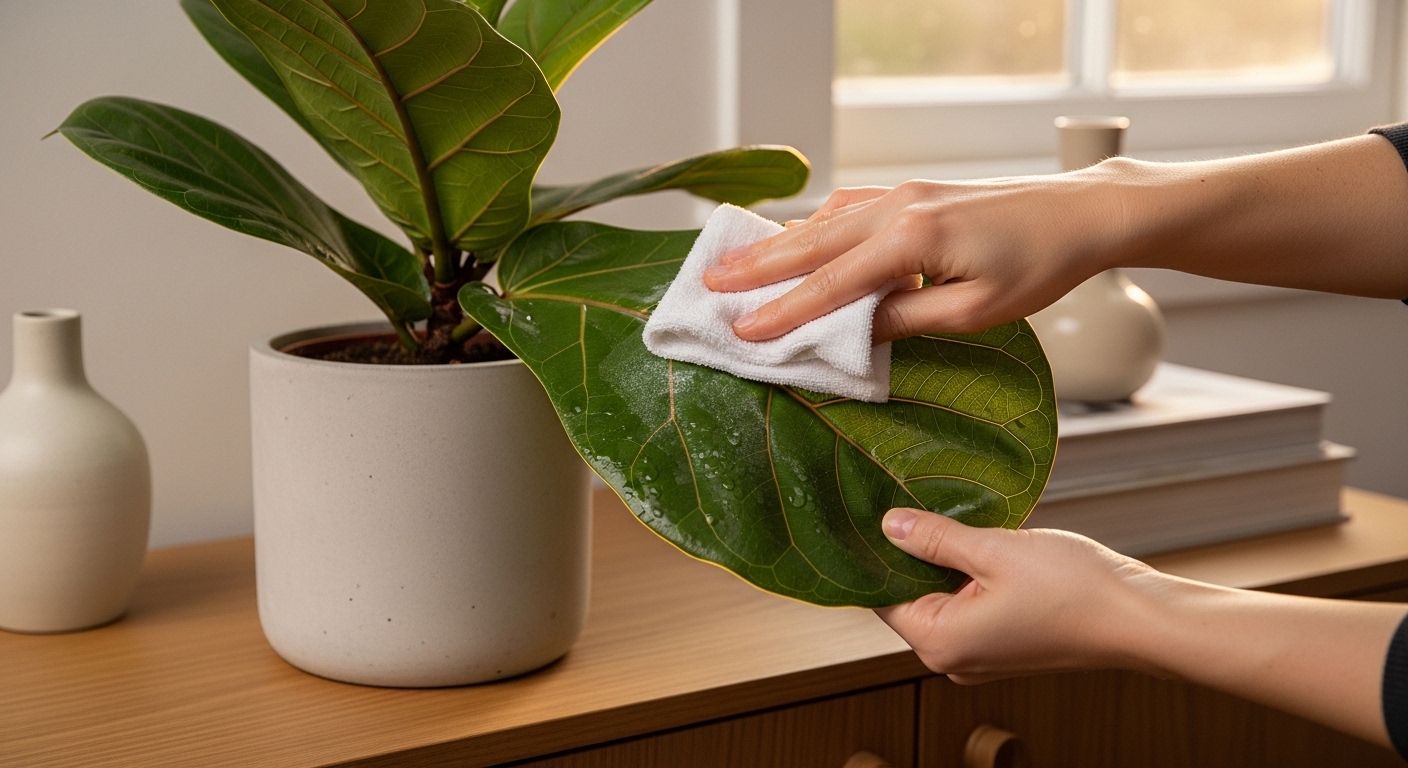
Dust accumulates on the large leaf surfaces and can reduce the plant's ability to absorb light efficiently. Wiping leaves gently with a damp soft cloth every few weeks is generally sufficient. Support the leaf from underneath while wiping to avoid stressing the stem attachment point.
The fiddle leaf fig rewards patience more than fuss. Find it a bright, stable spot, water it thoughtfully, and resist the urge to constantly adjust its care routine in response to every minor change. Most setbacks — a few dropped leaves, a brown edge here and there — are recoverable with time and consistency.
If you are just starting out, consider pairing your fiddle leaf fig knowledge with a deeper look at indoor humidity management or root rot prevention — both topics come up again and again with this plant, and understanding them well makes a real difference. You have already taken the most important step: learning what this plant actually needs before the problems start.


Comments
Post a Comment