Growing Tomatoes on a Balcony: Tips for Success
Growing tomatoes on a balcony is one of the most rewarding things a small-space gardener can do — and one of the most humbling. The combination of heat, wind exposure, and limited root volume means tomatoes will test your attention in ways a garden bed never would. But get the fundamentals right, and a single well-chosen container variety can produce more fruit than you'd expect from such a compact setup. This guide covers everything from choosing the right tomato variety for balcony containers to watering routines, support structures, and the problems most likely to catch you off guard.
Planning Your Balcony Space for Tomatoes
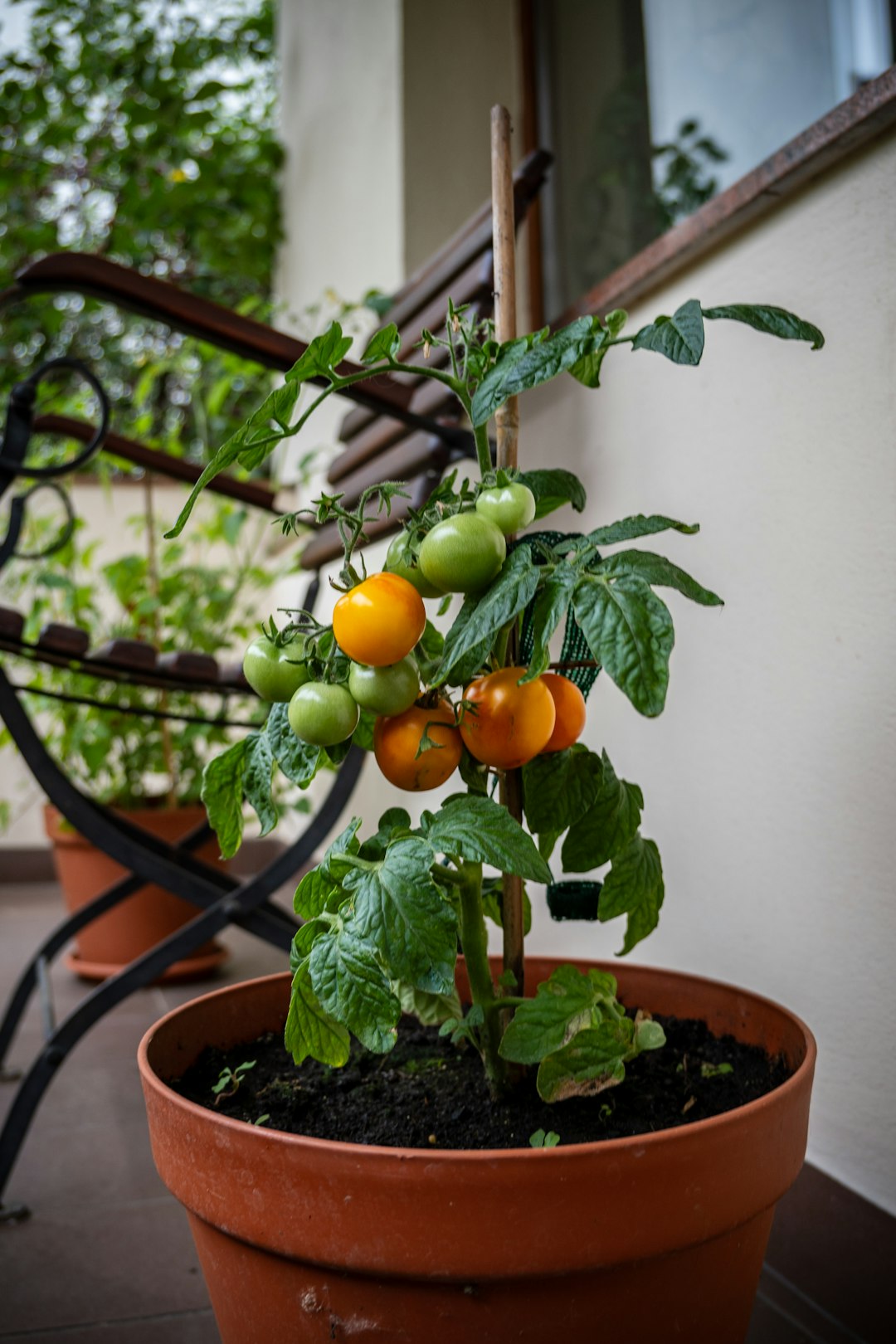
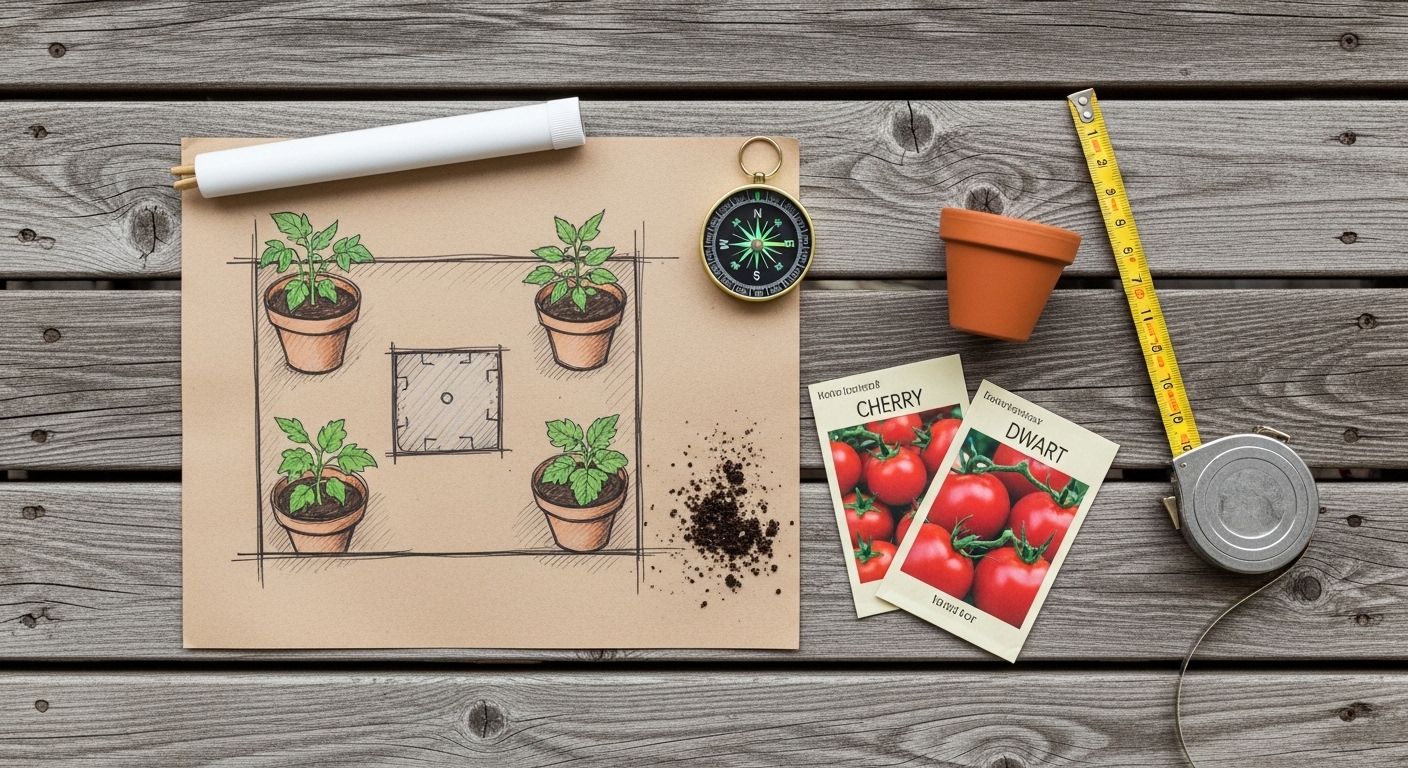
Before you buy a single seed packet, spend a few days observing your balcony. Tomatoes need a minimum of six to eight hours of direct sunlight daily — not bright indirect light, but actual sun on the leaves and fruit. South- or west-facing balconies generally work well in the northern hemisphere. East-facing ones can struggle in the afternoon, which is when tomatoes do much of their photosynthetic heavy lifting.
Wind is the factor most balcony growers underestimate. Higher floors create wind tunnels that can snap stems, dry out containers in hours, and physically damage flowers before they set fruit. If your balcony is exposed, a simple mesh windbreak or a strategic arrangement of taller plants can reduce turbulence significantly.
Think about weight, too. Large containers filled with moist soil are heavy. Check your balcony's load-bearing capacity if you plan to grow more than two or three pots, and consider lightweight perlite-heavy mixes to reduce the overall load.
Choosing the Right Container and Setup
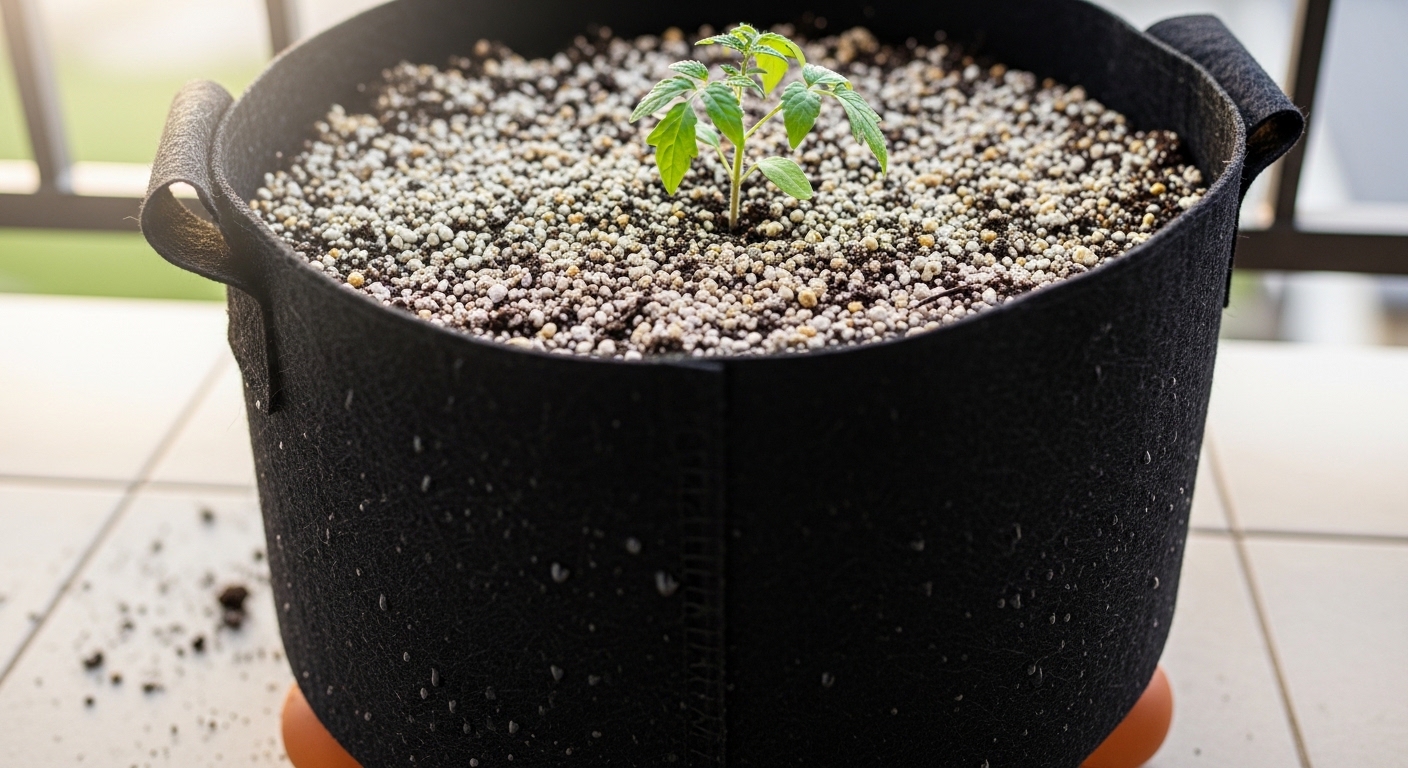
Pot size is non-negotiable with tomatoes. A container that is too small will restrict root development, cause rapid moisture loss, and stress the plant during fruiting. For most compact or dwarf varieties, aim for a minimum of 30–40 litres per plant. Larger indeterminate types need even more — some growers use 60-litre fabric grow bags with excellent results.
Fabric grow bags are worth considering seriously. They air-prune roots naturally, which prevents the circling root problems common in plastic pots, and they drain more efficiently than solid-sided containers. The trade-off is that they dry out faster, which means more frequent watering in hot weather.
Whatever container you choose, drainage is essential. Tomatoes sitting in waterlogged soil will develop root rot quickly. Ensure your pots have multiple drainage holes, and elevate them slightly on pot feet or bricks to allow free flow. A saucer is fine in spring, but remove it during summer heat to prevent standing water.
A common mistake is starting with a pot that looks generously sized in spring, only to find the plant rootbound and heat-stressed by July. When in doubt, go one size larger than you think you need.
Best Tomato Varieties for Balcony Growing
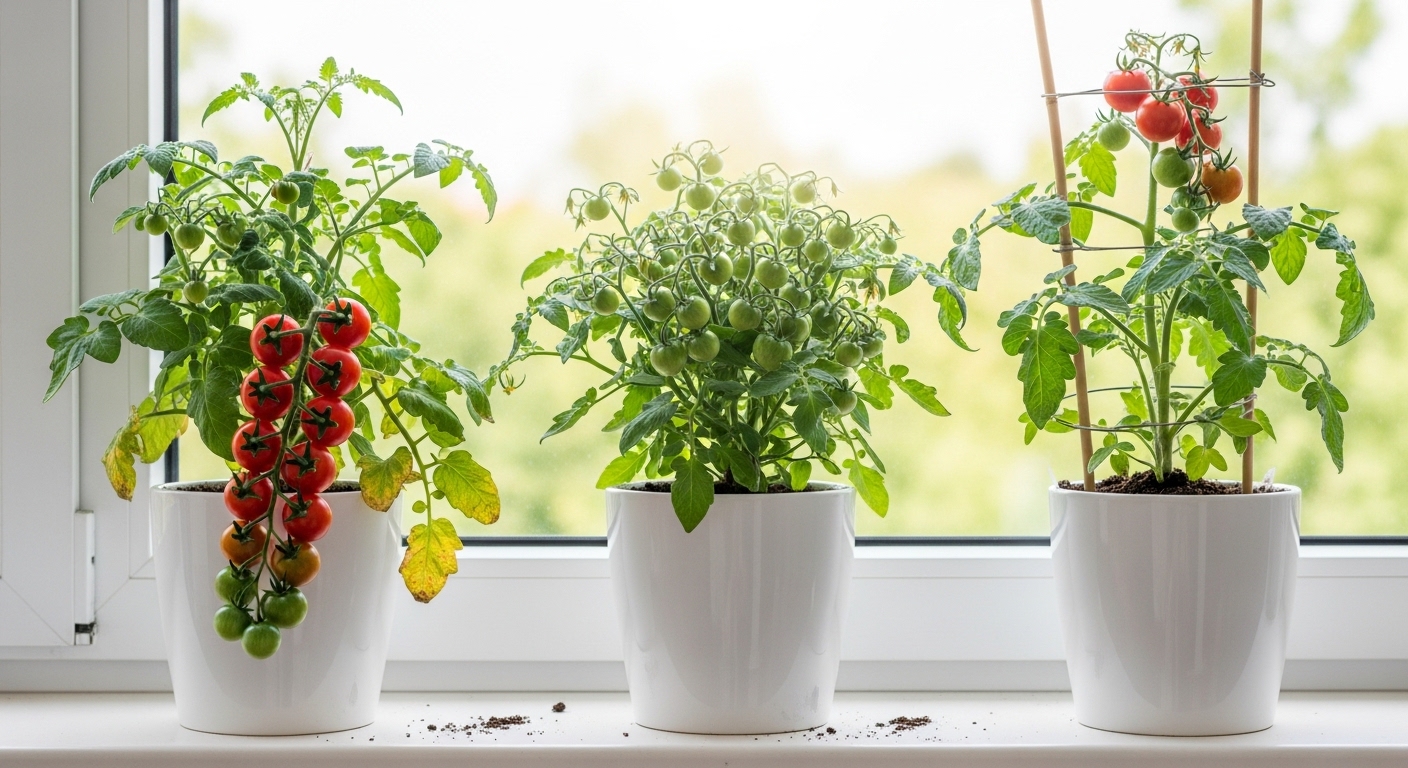
Not all tomatoes are suited to container life. The most important distinction is between determinate (bush) and indeterminate (vining) types. Determinate varieties stop growing at a set height, fruit in a concentrated period, and generally need less structural support — making them more manageable on a balcony.
That said, some compact indeterminate varieties perform beautifully in containers if you stay on top of pruning and support. The key is choosing varieties bred specifically for small-space growing.
Varieties many balcony growers find reliable include:
- Tumbling Tom (Red or Yellow): A trailing determinate variety well-suited to hanging baskets or the edge of deep containers. Produces small, sweet cherry tomatoes without needing staking.
- Balconi Red / Balconi Yellow: Bred specifically for container and balcony growing. Compact, bushy habit with continuous cherry tomato production through the season.
- Patio Choice Yellow: A dwarf determinate type that stays under 45 cm. Good disease resistance and reliable fruiting even in partially sheltered spots.
- Tiny Tim: One of the most compact options available, reaching around 30–40 cm. Produces small but flavourful red cherry tomatoes and fits even a modest container.
- Bush Early Girl: A slightly larger determinate variety that fruits earlier than most, which is useful on balconies with a shorter warm season.
Avoid large beefsteak or full-sized indeterminate varieties unless you have very deep containers, a south-facing wall for support, and a high tolerance for daily maintenance.
Watering and Nutrition in Containers
Container tomatoes dry out faster than ground-grown plants, and inconsistent watering is the single most common cause of problems — including blossom end rot, fruit cracking, and flower drop. The goal is to keep the soil evenly moist, not wet and not bone dry.
A practical approach: water when the top 2–3 cm of soil feels dry to the touch. In warm summer weather, this may mean watering once or even twice daily for large, fruiting plants. Push your finger into the soil rather than relying on surface appearance — the top can look dry while the lower portion remains moist.
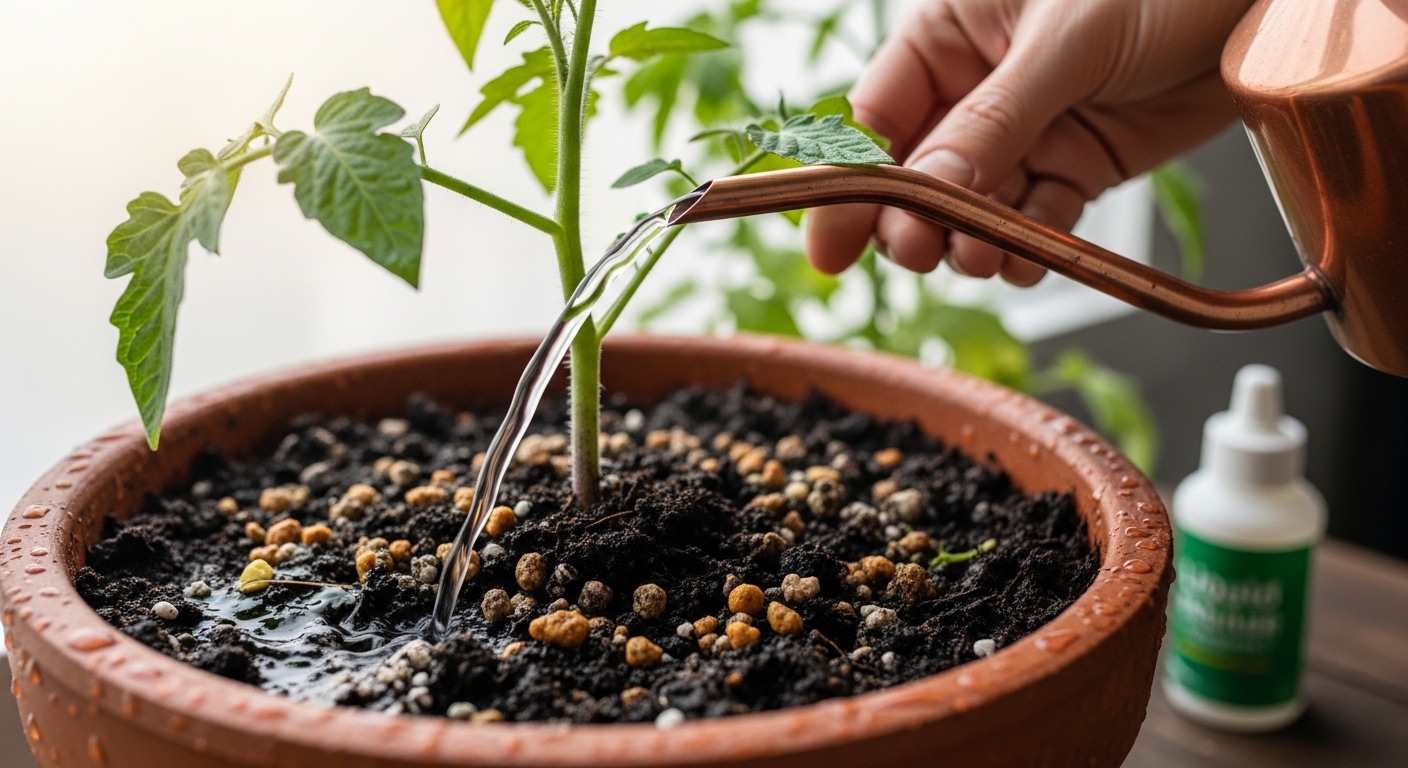
Watering in the morning is generally preferable. It gives foliage time to dry before evening, which reduces the risk of fungal issues like early blight. Avoid wetting the leaves directly; aim the water at the base of the plant and the soil surface.
For nutrition, tomatoes are heavy feeders once they begin flowering. A balanced liquid fertiliser applied every one to two weeks during the growing season can help support fruit development. Once the first flowers appear, many growers switch to a formula higher in potassium, which is associated with fruit quality and ripening. Follow the product's recommended dilution rate — overfeeding can cause lush leafy growth at the expense of fruit.
Support Structures for Balcony Tomatoes
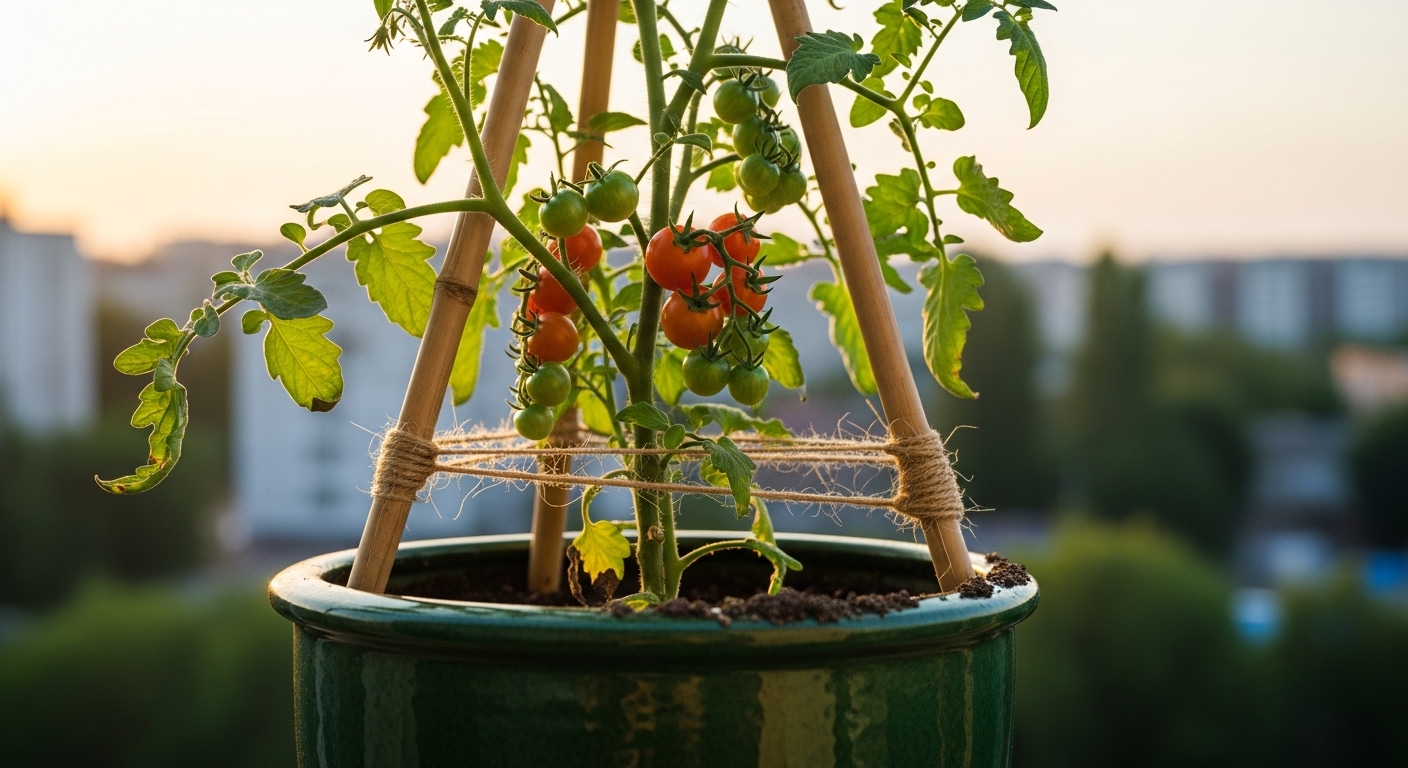
Even compact determinate varieties benefit from some form of support once they begin carrying fruit. A single bamboo cane and loose ties are enough for most dwarf types. For slightly larger plants, a tripod of three canes tied at the top gives more stability and allows the plant to spread naturally.
On windy balconies, anchor support structures to the container itself rather than relying on them to stand freely. Canes pushed deep into the soil and secured to the pot rim with cable ties or wire will hold far better in gusts than a free-standing cage.
For compact indeterminate varieties, a tomato spiral stake or a simple trellis panel fixed to the balcony wall works well. Tie the main stem loosely every 20–25 cm as it grows, using soft twine or silicone plant clips to avoid cutting into the stem. Check ties regularly — stems thicken quickly during the growing season.
Common Balcony Tomato Problems and Fixes
Most balcony tomato problems are predictable once you know what to look for. Catching them early makes a significant difference.
- Blossom end rot: A dark, sunken patch on the base of the fruit. Caused by calcium deficiency, which is almost always a result of irregular watering rather than a lack of calcium in the soil. Consistent moisture is the fix.
- Flower drop: Flowers open but fall without setting fruit. Often caused by temperature extremes (above 35°C or below 10°C), low humidity, or lack of pollination. On a balcony, gently shaking the plant on warm days can help distribute pollen.
- Fruit cracking: Radial or concentric splits in ripe or near-ripe fruit. Usually follows a period of drought followed by heavy watering. Even out your watering schedule and harvest fruit as soon as it reaches full colour.
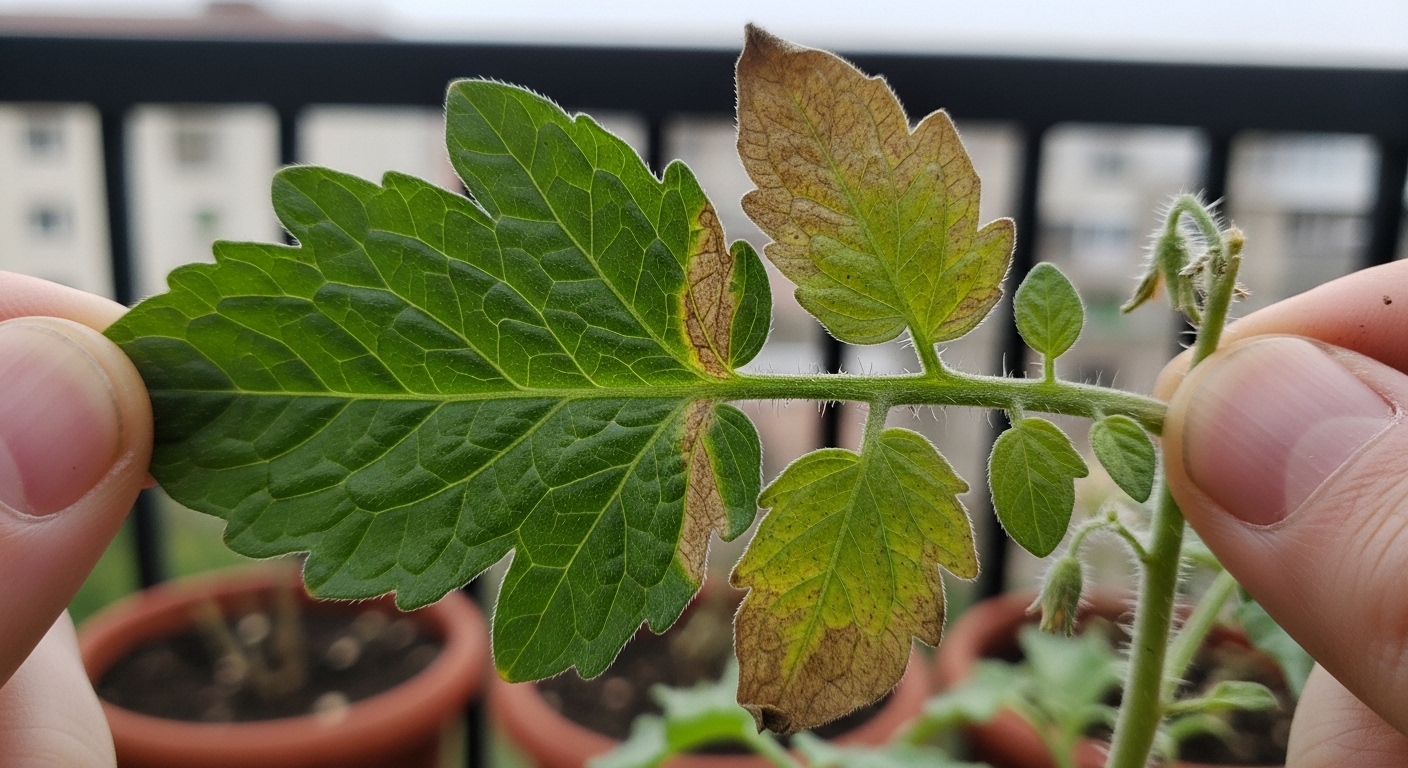
- Yellowing lower leaves: Some lower leaf yellowing is normal as the plant matures. Widespread yellowing moving upward may indicate nitrogen deficiency or overwatering — check soil moisture first before adjusting feeding.
- Whitefly: Tiny white insects that cluster on the undersides of leaves. Many growers find yellow sticky traps helpful for monitoring and reducing populations. Neem-based sprays are a commonly used organic option — always test on a small area first.
Symptom: Leaves curling upward and feeling dry → Likely cause: Heat stress or underwatering. Water deeply and consider moving the pot to a slightly more sheltered position during peak afternoon heat.
Symptom: Dark spots with yellow halos on lower leaves → Likely cause: Early blight (a fungal issue). Remove affected leaves immediately, avoid overhead watering, and ensure good airflow around the plant.
Balcony Tomato Care Checklist
Use this as a seasonal reference to keep your plants on track from planting through to the final harvest.
- Early spring: Choose your variety and source seeds or young transplants. Prepare containers with fresh potting mix and check drainage holes are clear.
- After last frost: Move plants outdoors gradually over five to seven days to harden off before leaving them outside full-time.
- At planting: Bury the stem deeply — tomatoes can root along buried stems, which strengthens the plant. Set up your support structure before the plant needs it.
- Weekly through summer: Check soil moisture daily. Water at the base in the morning. Remove any yellowing or diseased lower leaves. Check ties and adjust support as the plant grows.
- Once flowering begins: Switch to a potassium-rich liquid feed every one to two weeks. Gently shake plants on still days to encourage pollination.
- As fruit develops: Harvest regularly once fruit reaches full colour. Leaving overripe fruit on the plant slows new fruit development.
- End of season: Remove spent plants and refresh potting mix before storing containers. Do not compost diseased plant material.
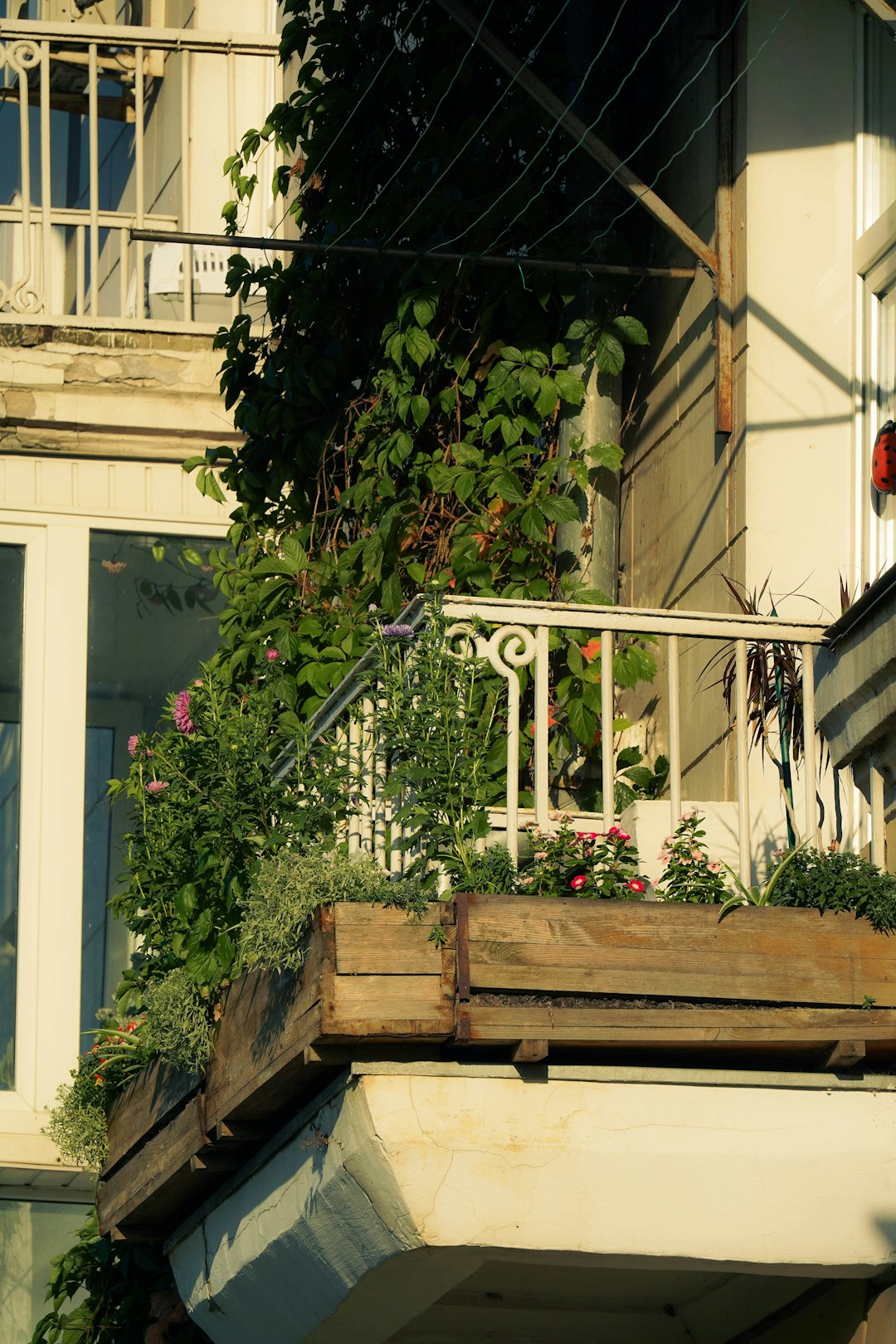
There is something genuinely satisfying about picking a tomato you grew yourself from a balcony that, a few months ago, was just an empty concrete ledge. Start with one compact variety in a well-draining container, nail your watering routine, and let the season teach you the rest. Your next step: get your container and potting mix ready before you source your plants — setup day goes much more smoothly when everything is already in place. If you find yourself also battling pests or noticing unusual leaf symptoms, exploring common container plant problems is a natural next topic to dig into.


Comments
Post a Comment