How to Grow Strawberries in Containers
Growing strawberries in containers is one of the most rewarding things you can do with a sunny balcony, patio, or windowsill. The fruit is real, the harvest is personal, and the setup requires far less space than most people assume. Whether you are working with a single terracotta pot or a row of hanging baskets, strawberries adapt surprisingly well to container life — as long as you get a few fundamentals right from the start. This guide walks through everything: variety selection, drainage, sunlight, watering rhythm, feeding, and what to do with all those runners.
Planning Your Space
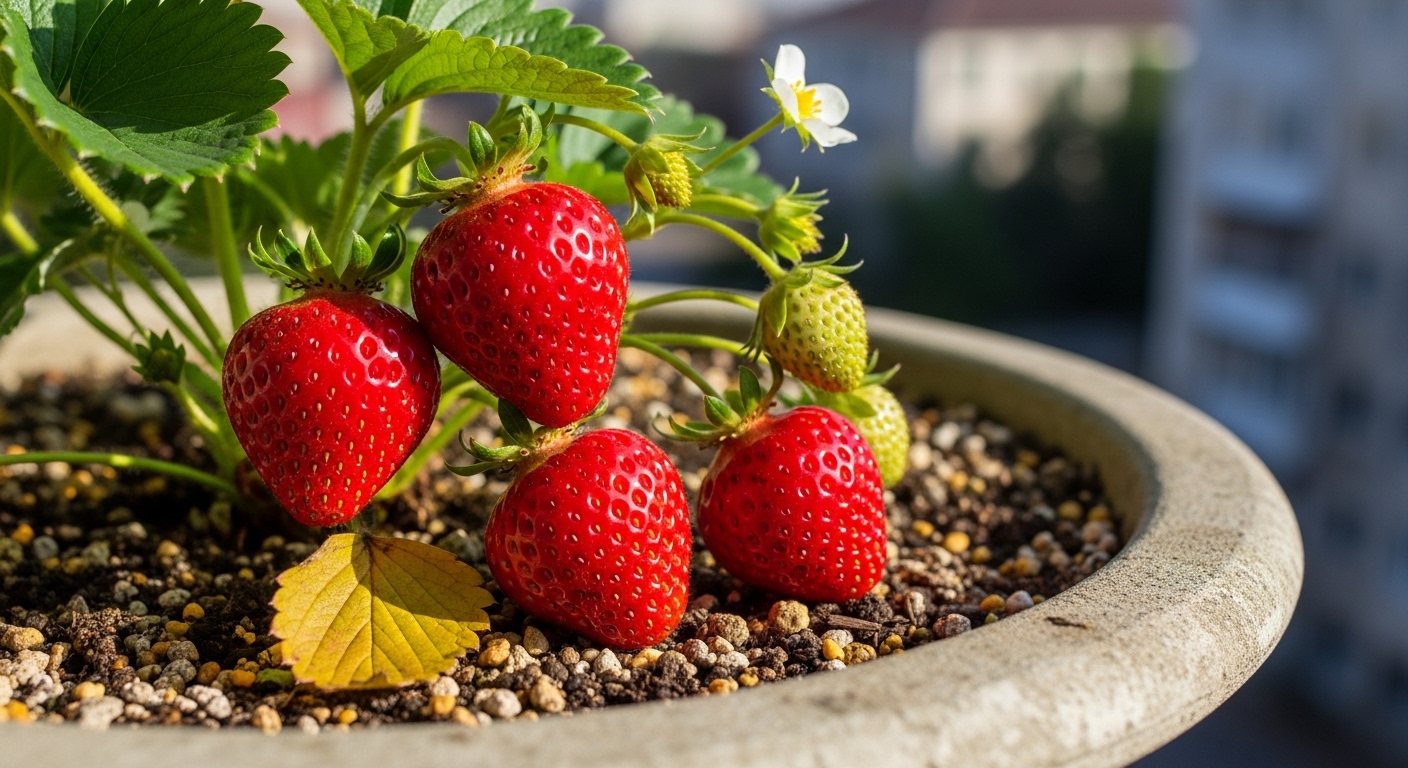
Before buying a single plant, take an honest look at your available space and light. Strawberries need a minimum of six hours of direct sun daily to produce well — south- or west-facing spots tend to work best in most climates. A balcony that gets afternoon shade may still work for everbearing varieties, but expect a lighter harvest.
Think about access too. You will be checking these plants regularly — watering, feeding, pinching runners, harvesting. Placing containers somewhere inconvenient usually means they get neglected. A spot near a door or within easy reach of a hose or watering can makes a real difference in how consistently you care for them.
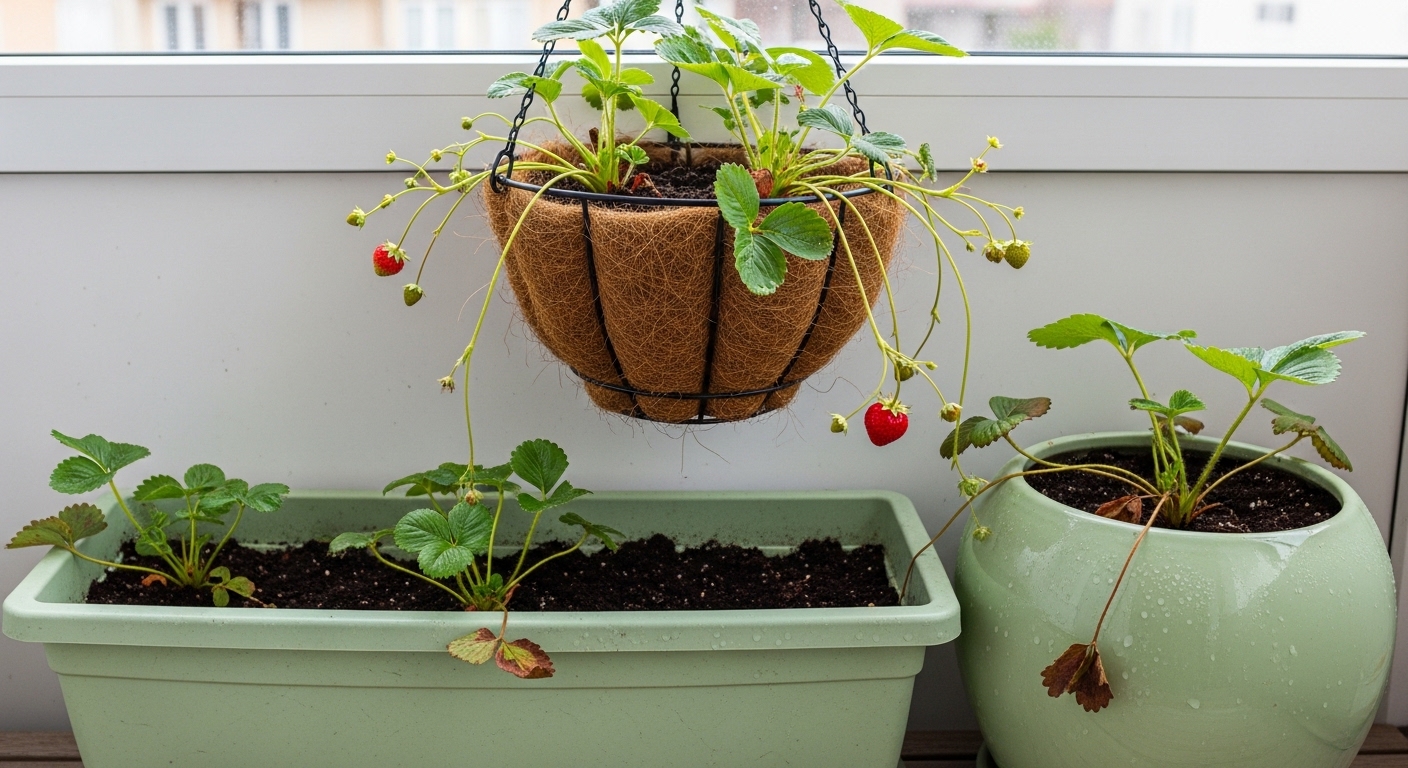
Vertical space is worth considering from the start. Strawberries trail naturally, and hanging baskets or tiered planters can turn a small footprint into a surprisingly productive setup. Even a single hanging basket can yield a meaningful harvest if the variety and conditions are right.
Best Containers and Setup Ideas
The right container makes container strawberry growing significantly easier. Drainage is non-negotiable — strawberry roots are highly susceptible to rot in waterlogged conditions. Whatever container you choose, it must have adequate drainage holes at the base.
Good container options include:
- Terracotta pots (25–30 cm diameter): Breathable walls help prevent overwatering; ideal for single plants or small clusters.
- Hanging baskets (30–35 cm): Great for trailing varieties; line with coir liner to retain moisture while allowing drainage.
- Strawberry tower planters: Vertical pockets allow multiple plants in a small footprint; water evenly from the top.
- Window boxes (at least 20 cm deep): Suitable for a row of plants along a railing or ledge.
- Fabric grow bags: Excellent drainage and air pruning of roots; affordable and easy to store off-season.
Avoid containers shallower than 15–20 cm — strawberry roots need room to establish, and shallow pots dry out too quickly in warm weather. If you are using a decorative container without drainage holes, plant into a slightly smaller nursery pot that fits inside it, and always remove standing water from the outer container after watering.
A container that drains freely and holds just enough moisture is the single biggest factor in healthy container strawberries. Get the vessel right before worrying about anything else.
Plant Selection for Small Spaces
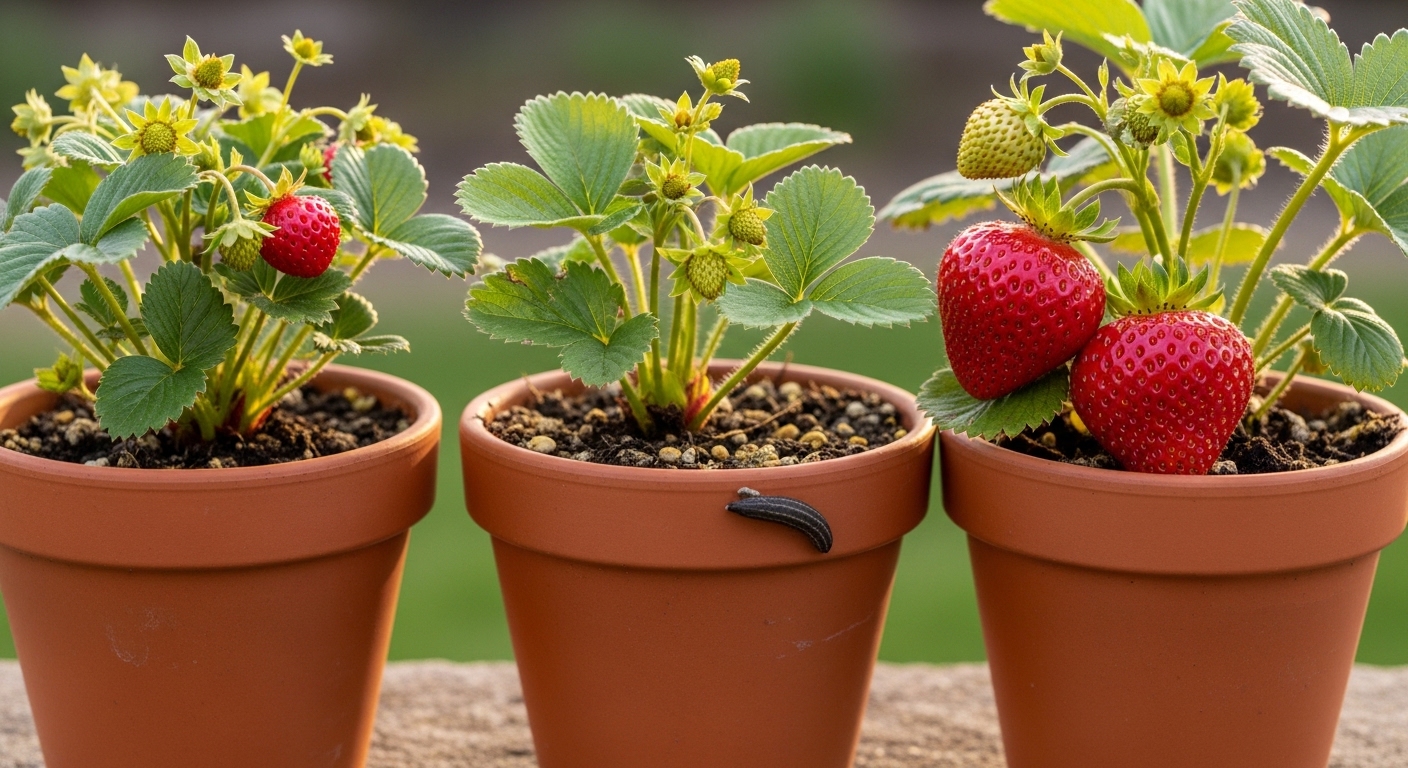
Choosing the right strawberry variety is arguably the most important decision in container growing. The three main types behave quite differently, and matching variety to your space and expectations saves a lot of frustration.
The main strawberry types for containers:
- June-bearing varieties (e.g., Honeoye, Elsanta): Produce one large, concentrated crop in early summer. Excellent flavour, but you get one window of harvest per season.
- Everbearing varieties (e.g., Albion, Seascape): Produce two flushes — typically spring and autumn — with lighter fruiting in between. Good for balconies where space is limited.
- Day-neutral varieties (e.g., Tristar, Evie 2): Fruit continuously from late spring through autumn regardless of day length. Smaller individual berries, but a long harvest window. Many growers find these the most satisfying for container setups.
- Alpine strawberries (Fragaria vesca): Tiny, intensely flavoured berries on compact, runner-free plants. Excellent for small pots and window boxes.
For hanging baskets specifically, look for varieties described as trailing or compact — they fill the basket naturally and the runners become part of the display rather than a management problem.
Watering and Nutrition in Containers
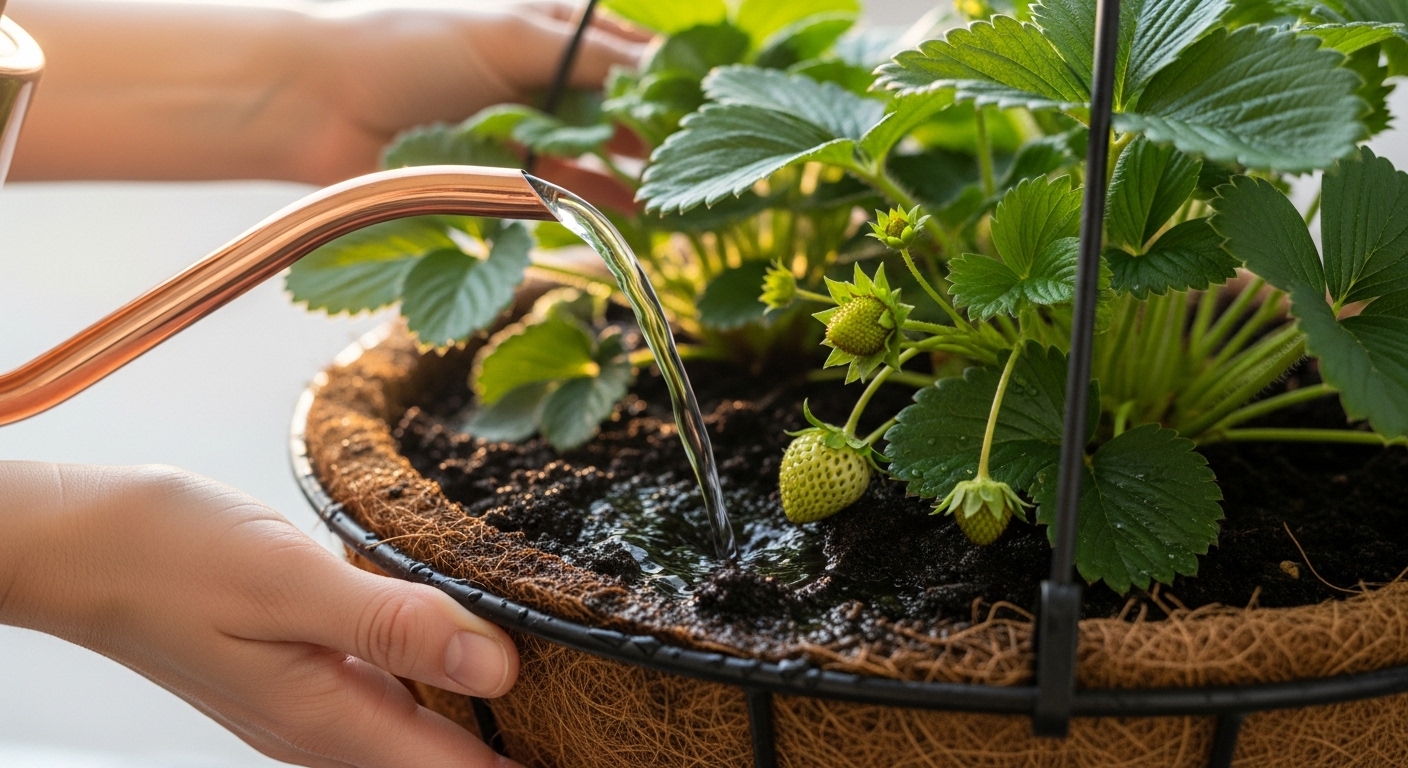
Container strawberries dry out faster than in-ground plants, especially in terracotta or hanging baskets exposed to wind. During active growth and fruiting, check soil moisture daily in warm weather. Water when the top 2 cm of compost feels dry to the touch — not before, not long after.
When watering, aim at the soil rather than the foliage or fruit. Wet leaves and berries sitting in humid conditions can encourage grey mould (Botrytis), which spreads quickly in a dense container planting. A long-spouted watering can gives you more control than a spray nozzle.
Feeding is where many container growers underperform. Container compost exhausts its nutrients relatively quickly, and strawberries are hungry plants during fruiting. A general feeding approach that works well:
- From planting until first flowers appear: a balanced liquid fertiliser (roughly equal N-P-K) every two weeks supports leaf and root development.
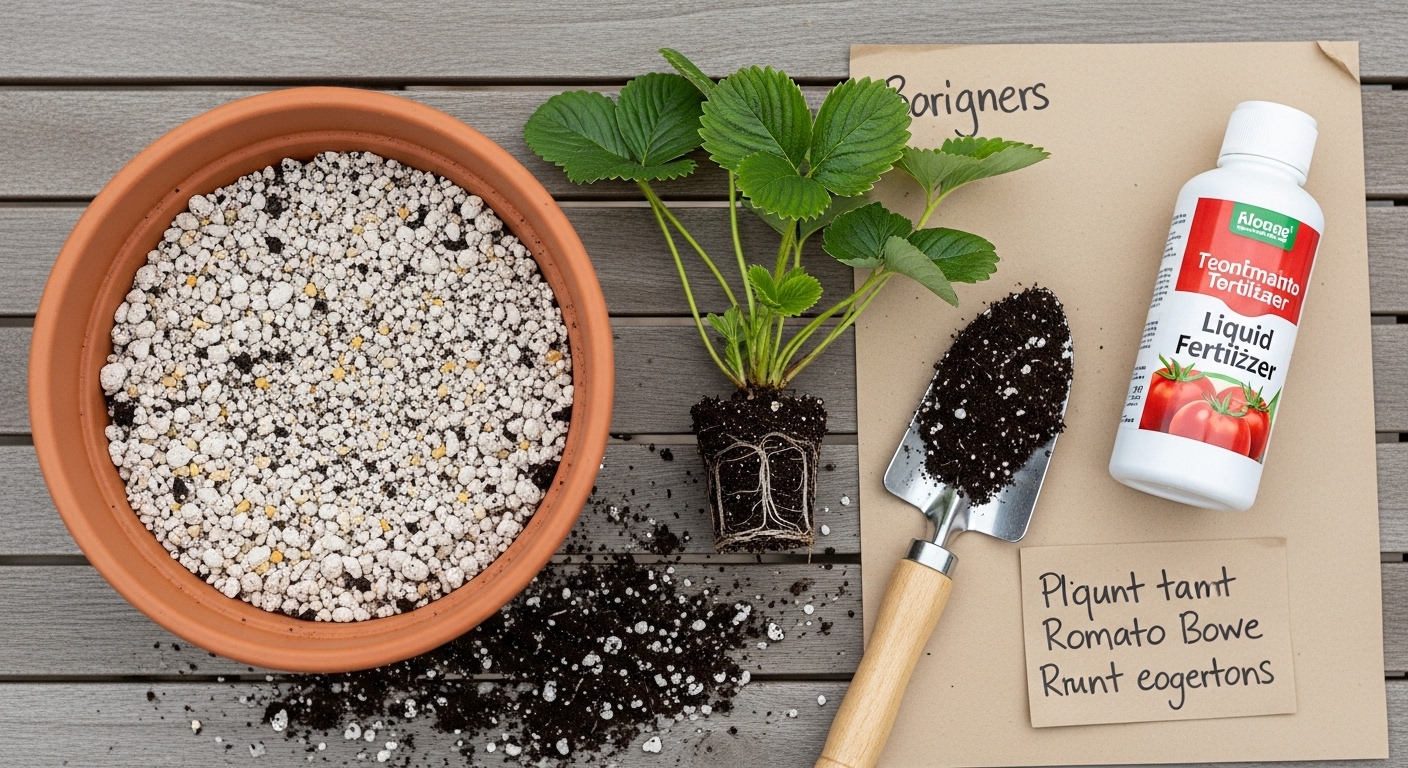
- Once flowering begins: switch to a high-potassium feed (tomato fertiliser works well) every 7–10 days to support fruit development.
- After the main harvest: reduce feeding and allow plants to harden off before winter.
It is common to see pale, slightly yellow leaves mid-season in container strawberries — this is often a sign that nutrients have been depleted rather than a watering problem. Resuming a regular feed usually shows improvement within 10–14 days.
Maximizing Vertical Space
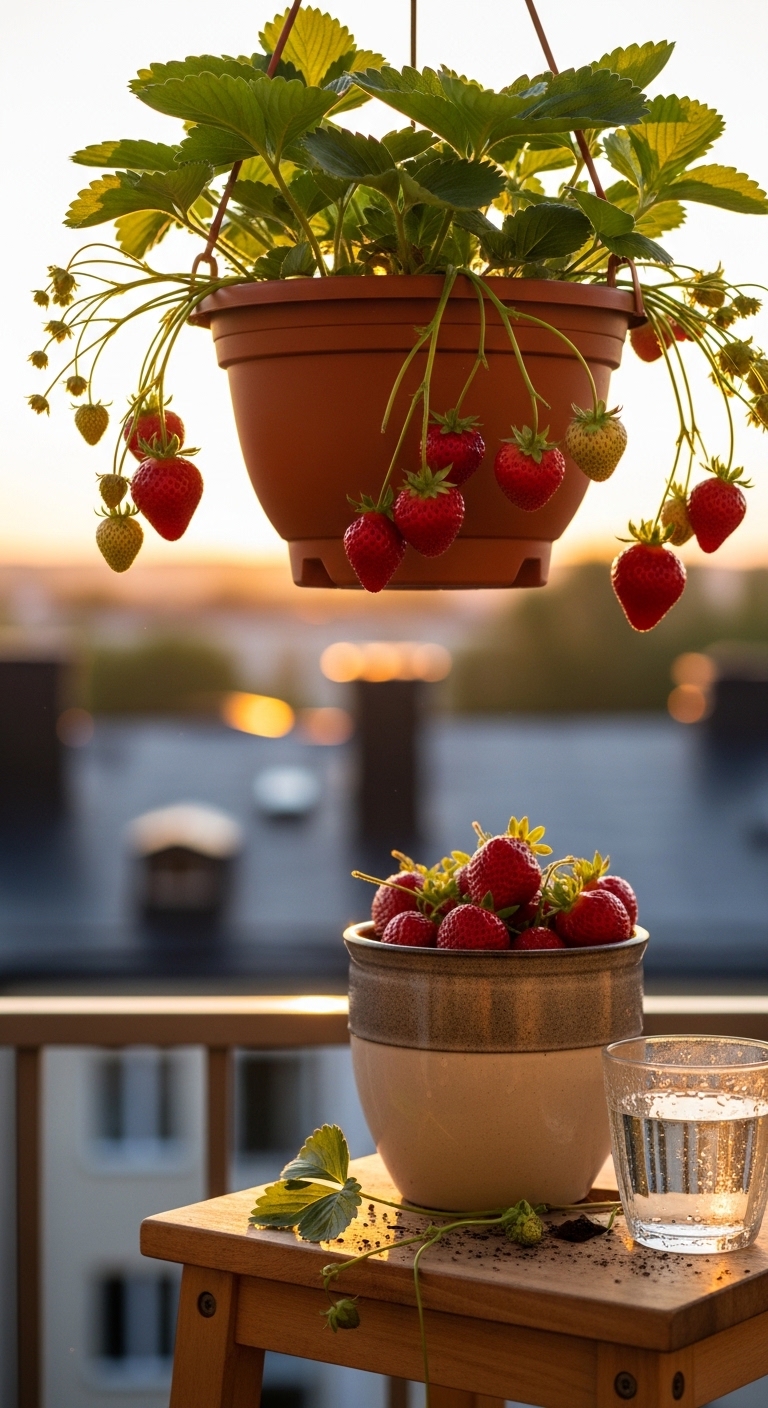
One of the underused advantages of container strawberries is how naturally they lend themselves to vertical growing. Strawberry plants produce runners — long horizontal stems that extend outward and develop new plantlets at their tips. In a hanging basket or elevated planter, these runners cascade downward and can root into additional containers placed below, effectively multiplying your harvest without buying new plants.
A few approaches worth trying:
- Stacked tower planters: Plant one variety per pocket and allow runners to trail between levels. Water from the top and ensure each pocket drains into the one below rather than pooling.
- Hanging basket with satellite pots: Suspend a basket and place small pots on a shelf or railing below. Guide runners into the pots and pin them lightly with a bent wire or hairpin. Once rooted (usually 3–4 weeks), sever the runner from the parent plant.
- Wall-mounted pocket planters: Felt or fabric pocket systems mounted on a sunny wall can hold 6–12 plants in a very small footprint.
If you are not interested in propagating runners, simply pinch them off at the base as they appear. This redirects the plant's energy back into fruit production, which is generally the better choice during the first fruiting season.

Beginner-Friendly Setup Checklist
Before your first strawberry plants go into containers, run through this checklist. Getting these basics in place from the start prevents most of the common problems new growers encounter.
- Choose a container with adequate drainage holes and a minimum depth of 15–20 cm.
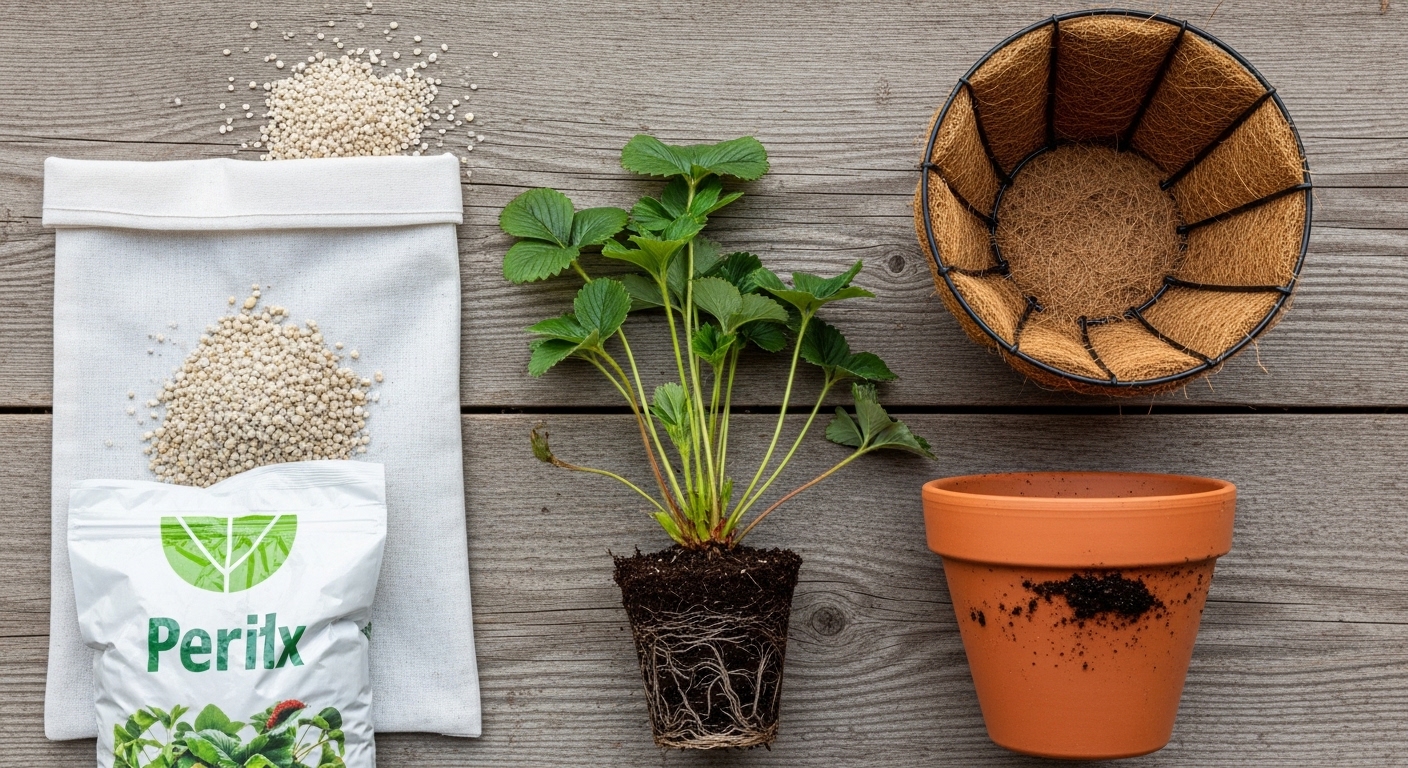
- Select a potting mix designed for containers — avoid garden soil, which compacts and drains poorly in pots. Add 20–25% perlite for improved drainage.
- Pick a variety suited to your space: trailing types for hanging baskets, compact day-neutral or alpine varieties for small pots.
- Position containers in a spot that receives at least 6 hours of direct sun daily.
- Plant at the correct depth: the crown (where leaves meet roots) should sit just at soil level — not buried, not elevated.
- Water in well after planting and check moisture daily during the first two weeks.
- Begin a feeding schedule once new growth is visible — balanced feed first, then switch to high-potassium once flowering starts.
- Decide early whether you want to keep runners for propagation or remove them to focus energy on fruit.
- In colder climates, move containers to a sheltered spot or unheated greenhouse over winter to protect roots from hard freezes.
Container strawberries reward consistency more than expertise. Once you find the watering rhythm that suits your specific setup — and commit to a regular feeding schedule — the plants tend to settle in and produce reliably. The first ripe berry you pick from your own balcony or windowsill has a way of making the whole effort feel completely worthwhile.
If you are ready to take the next step, start with two or three plants in a single container this season before scaling up. And if you find yourself curious about propagating those runners into new plants, exploring vegetative propagation techniques is a natural next topic — the process is simpler than it looks and can keep you in free strawberry plants for years.


Comments
Post a Comment