Best Vegetables to Grow in Pots on a Patio
Growing vegetables on a patio is one of the most rewarding things you can do with a small outdoor space — and it is far more achievable than most beginners expect. The key is matching the right plant to the right container. Tomatoes, peppers, lettuce, and radishes are among the most reliable patio vegetables, each well-suited to container life when given the correct pot size, drainage, and consistent care. Whether you have a sunny balcony or a modest courtyard, this guide walks you through everything you need to get started with patio container vegetable gardening.
Planning Your Patio Growing Space
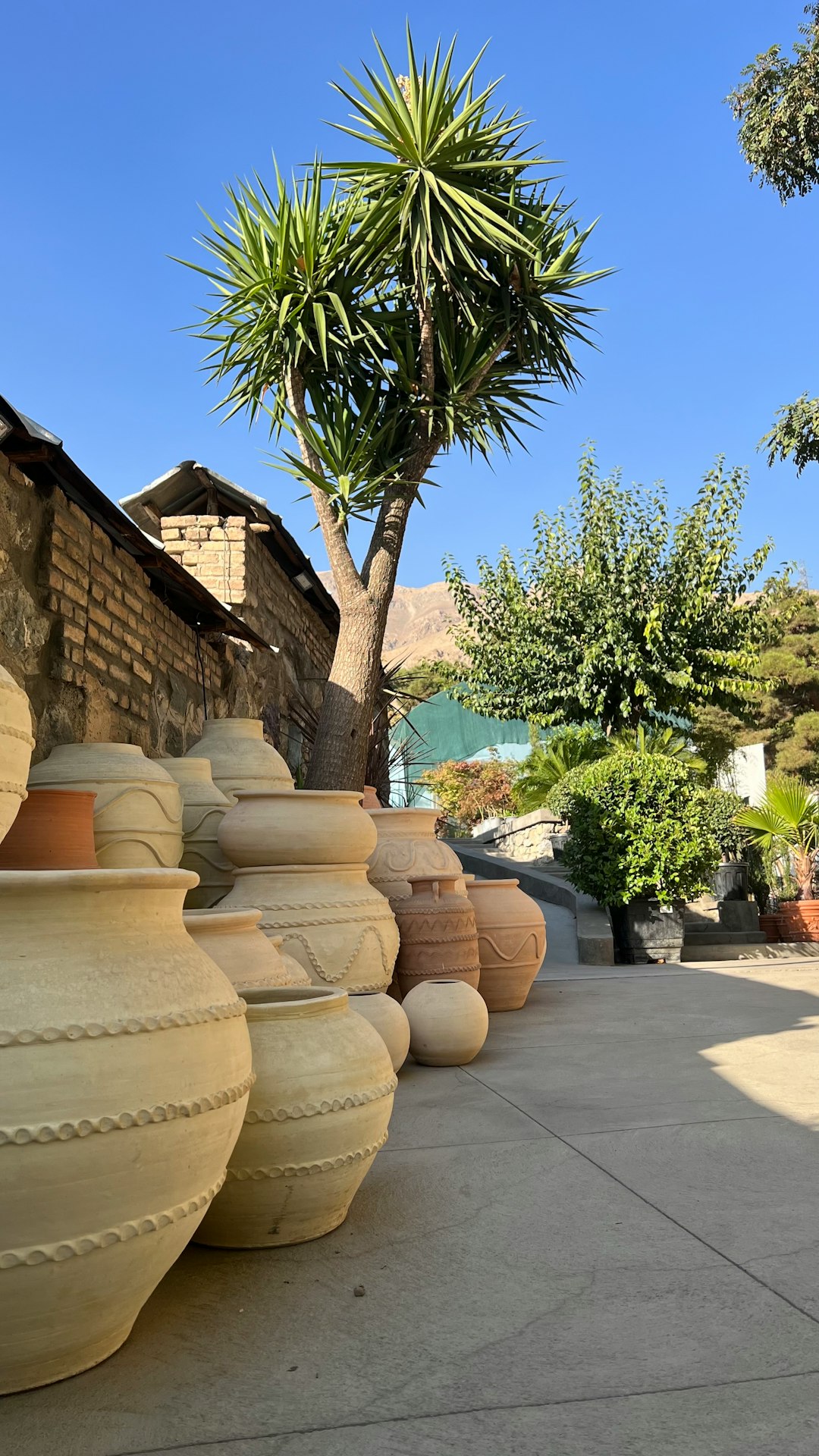
Before buying a single seed packet, spend a few days observing your patio. How many hours of direct sunlight does it actually receive? Most fruiting vegetables — tomatoes, peppers — need at least six hours of direct sun daily, while leafy crops like lettuce can manage on four. That single observation will shape every plant choice you make.
Think about airflow too. Patios enclosed by walls can trap heat and reduce air circulation, which raises the risk of fungal issues. A light breeze is genuinely beneficial for pollination and disease prevention. If your space is very sheltered, give plants a little extra spacing between pots.
Consider weight when planning your layout. Large containers filled with moist compost are heavy. If you are on a balcony, check the load-bearing guidance for your building and opt for lightweight plastic or fabric grow bags for the biggest planters.
Best Containers and Setup Ideas
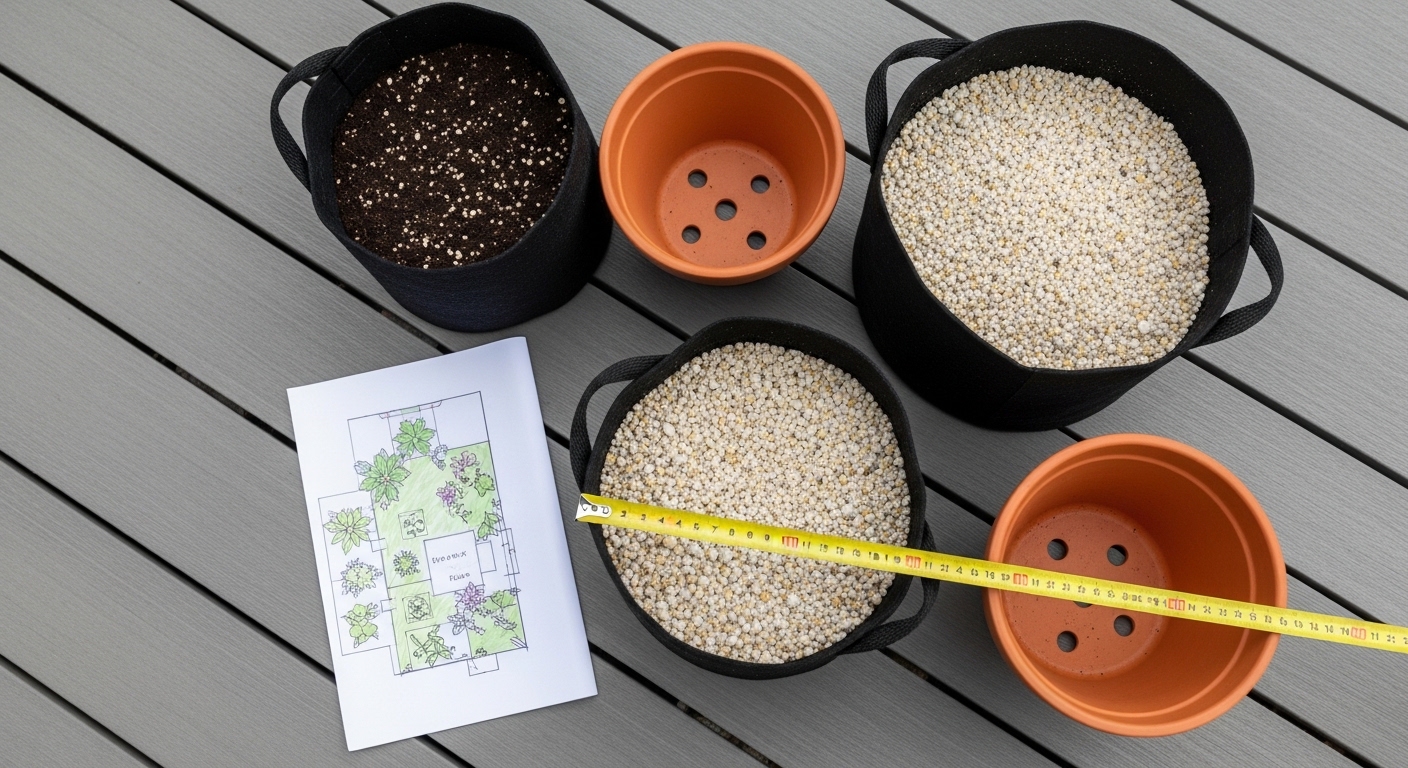
Container choice matters more than most beginners realise. The wrong pot size is the single most common reason patio vegetables underperform — roots become cramped, moisture fluctuates wildly, and yields drop.
Here is a practical container size guide for the most popular patio vegetables:
- Tomatoes (indeterminate/cordon types): minimum 30–40 cm diameter, at least 35 cm deep — a 20-litre pot or large grow bag works well.
- Tomatoes (compact/determinate bush types): 25–30 cm diameter pot is generally sufficient.
- Peppers (sweet and chilli): 25–30 cm diameter, 30 cm deep — one plant per pot.
- Lettuce: 20–25 cm diameter for individual heads; a long window box (60 cm+) suits cut-and-come-again varieties planted in rows.
- Radishes: 15–20 cm deep container — they have a short taproot and do well in window boxes or shallow troughs.
- Dwarf French beans: 25–30 cm diameter, one or two plants per pot.
- Spring onions: any container at least 15 cm deep; dense sowing works well.
Whatever material you choose — terracotta, glazed ceramic, plastic, or fabric — drainage is non-negotiable. Every container must have adequate drainage holes. Sitting in waterlogged compost is far more damaging to most vegetables than a missed watering.
A layer of coarse grit or broken crockery at the base of a pot does not meaningfully improve drainage — what matters is a free-draining compost mix and unobstructed holes at the bottom.
Top Patio Vegetables: Tomatoes, Peppers, Lettuce, and Radishes
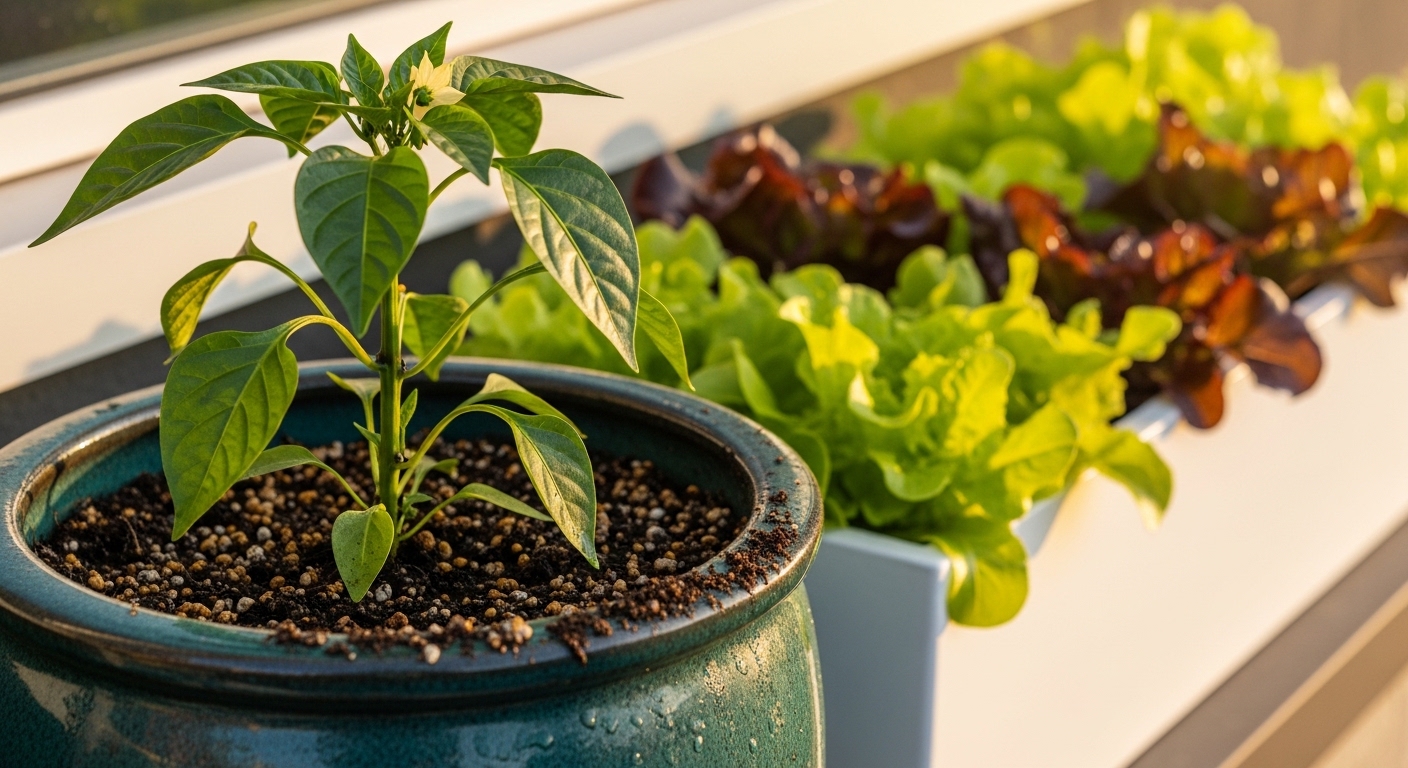
These four crops consistently perform well in containers and cover a range of growing seasons, so you can have something productive on your patio from early spring through to autumn.
- Tomatoes: Compact bush varieties like 'Tumbling Tom' or 'Balcony Red' are well-suited to pots. They need a sunny position, consistent watering, and weekly liquid feeding once the first flowers appear. Cordon types need staking and regular side-shoot removal.
- Peppers (sweet and chilli): Both types grow well in containers and actually tend to fruit more reliably in pots than in open ground in cooler climates, as the soil warms faster. They appreciate the same sunny, sheltered spot as tomatoes.
- Lettuce: One of the easiest and fastest patio crops. Loose-leaf varieties can be harvested leaf by leaf from about four weeks after sowing. Avoid sowing in the hottest part of summer — lettuce bolts (runs to seed) quickly in sustained heat above around 25°C.
- Radishes: Possibly the most beginner-friendly vegetable in existence. Many varieties are ready to harvest in as little as three to four weeks from sowing. They are ideal for filling gaps between slower-growing crops.
- Dwarf French beans: Compact, productive, and surprisingly well-suited to containers. They fix their own nitrogen and need little feeding beyond a balanced compost.
- Courgettes: One plant per large (30-litre+) container. They are hungry and thirsty but can produce generously on a sunny patio.
Watering and Nutrition in Containers
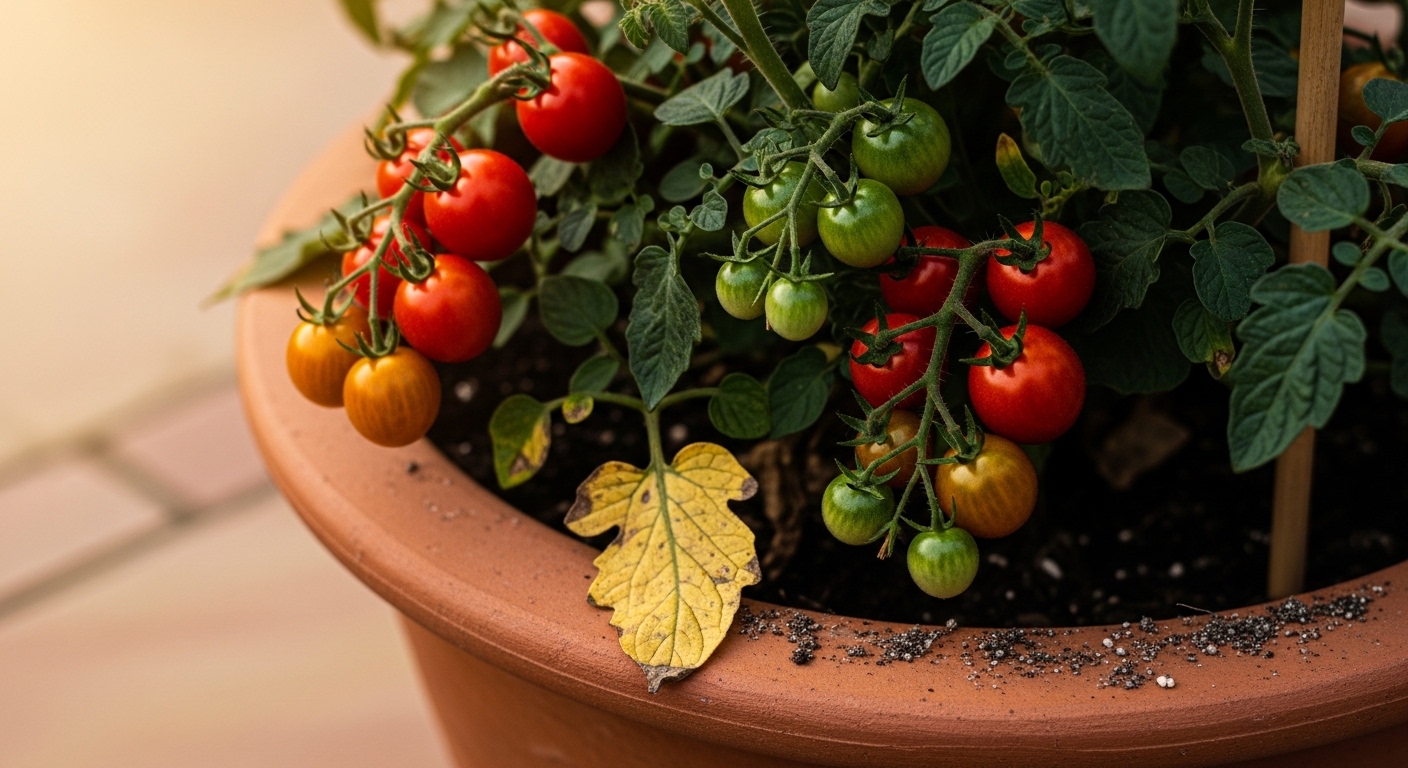
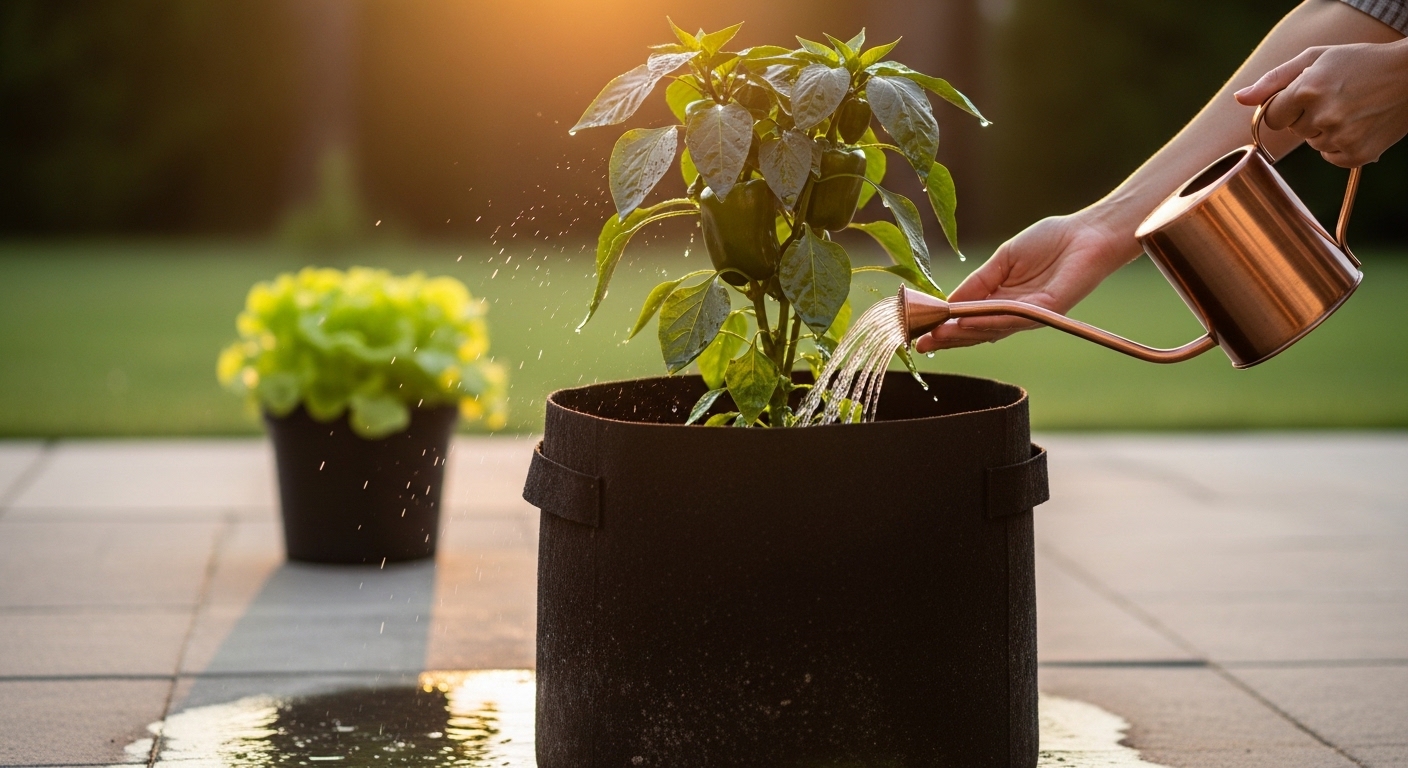
Container vegetables dry out far faster than garden-bed plants. In warm weather, large pots may need watering once or even twice daily. The most reliable method is to check the soil directly: push your finger about 2 cm into the compost — if it feels dry at that depth, water thoroughly until it drains freely from the bottom.
Avoid light, frequent splashes. Shallow watering encourages roots to stay near the surface, making plants more vulnerable to heat stress. Water deeply and less often where possible.
Nutrition is the other critical factor. Potting compost is typically exhausted of nutrients within four to six weeks of planting. From that point, regular liquid feeding keeps your vegetables productive:
- Tomatoes and peppers: switch to a high-potassium liquid feed once flowers appear — generally every seven to ten days.
- Lettuce and leafy crops: benefit from a balanced or nitrogen-rich feed every two weeks to support leaf growth.
- Radishes: generally need no additional feeding if planted in fresh compost — they grow too quickly for feeding to make much difference.
- Beans and courgettes: a balanced liquid feed every two weeks once flowering begins tends to support steady cropping.
Many growers find that self-watering containers — those with a built-in reservoir — significantly reduce the stress of daily watering during summer holidays or heatwaves. They are worth considering for tomatoes and peppers in particular.
Maximising Vertical Space on a Patio
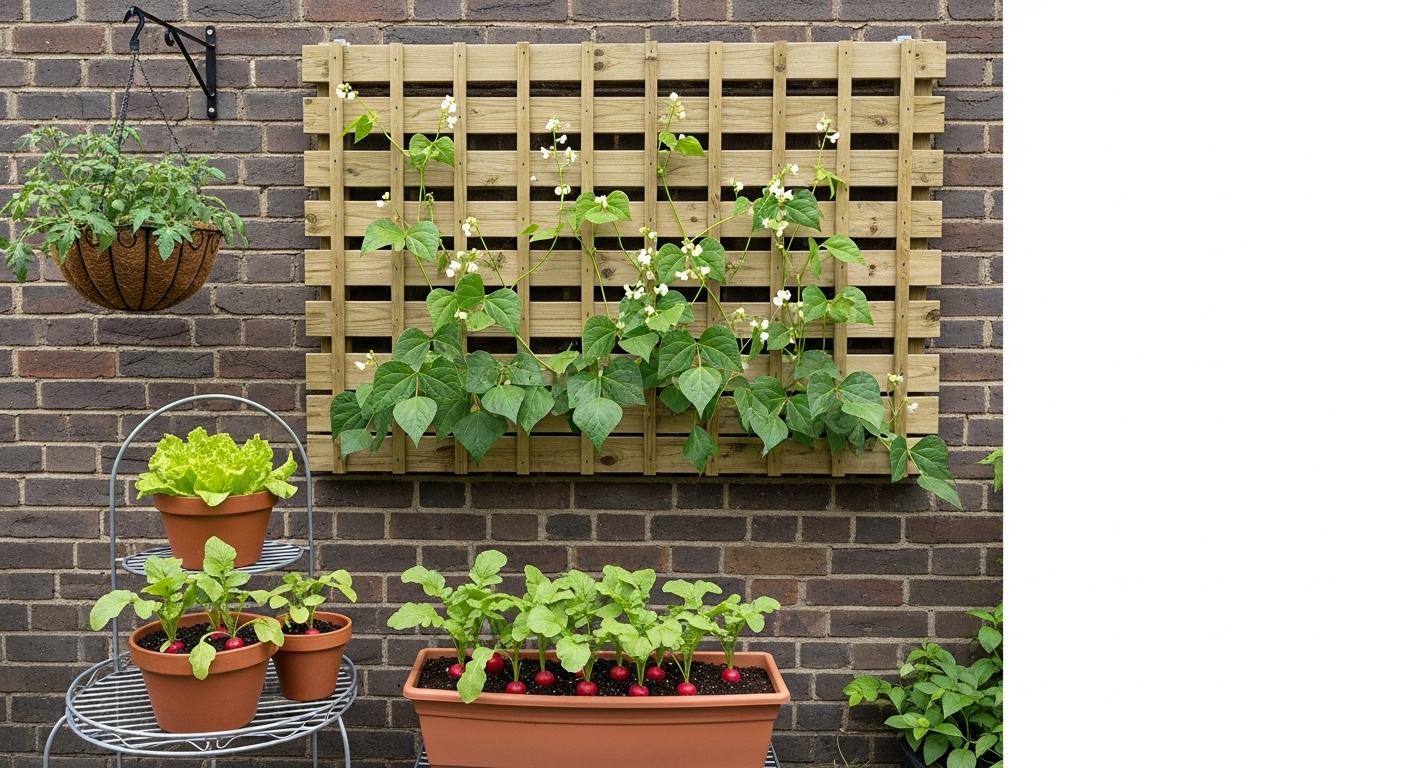
When floor space runs out, look up. Vertical growing is one of the most effective ways to increase your patio yield without adding more pots at ground level.
A few approaches that work particularly well for vegetables:
- Wall-mounted pocket planters: ideal for lettuce, herbs, and radishes — each pocket functions as an individual container.
- Tiered plant stands: allow you to stack smaller pots at different heights, improving light access for lower plants.
- Trellis or wire mesh panels: fix to a sunny wall and train climbing beans, small-fruited cucumbers, or even indeterminate tomatoes upward. This also improves airflow around the plants.
- Railing planters: long, narrow containers that hook over balcony or patio railings — well-suited to lettuce, spring onions, and trailing herbs.
- Hanging baskets: compact tomato varieties like 'Tumbling Tom' were practically bred for this — they trail naturally and fruit prolifically.
One practical note: vertical planters and hanging baskets dry out faster than ground-level pots because they are exposed to more air movement on all sides. Check moisture levels more frequently during warm spells.
Beginner-Friendly Patio Setup Checklist
Getting started is simpler than it looks. Work through this checklist before your first planting session and you will avoid the most common early mistakes.
- Assess your patio's daily sun hours — count from when direct light first hits the space to when it leaves.
- Choose containers with adequate depth and drainage holes for each crop (see size guide above).
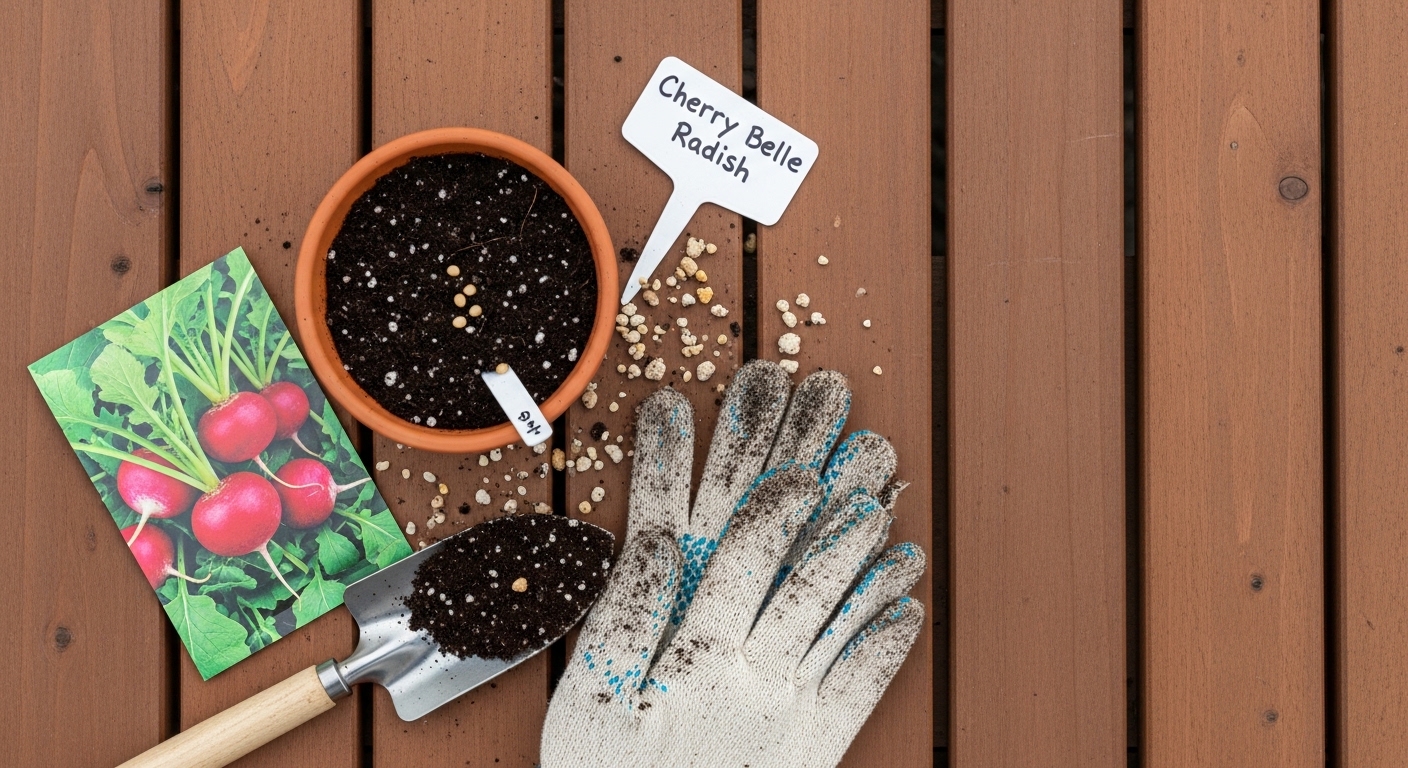
- Fill with a good-quality peat-free multipurpose compost mixed with 20–30% perlite for improved drainage and aeration.
- Position the heaviest pots first, before filling with compost — moving a full 20-litre pot is awkward and unnecessary.
- Sow or transplant after your last expected frost date — for most temperate regions, this falls between late March and mid-May.
- Label every pot at planting time — variety names matter when you want to repeat successes next season.
- Set a watering reminder for the first two weeks until checking becomes habit.
- Begin liquid feeding four to six weeks after planting, or when the first flowers appear on fruiting crops.
- Check under leaves weekly for early signs of pests — catching aphids or whitefly early makes management much easier.
- Harvest regularly — picking lettuce leaves, beans, and radishes frequently encourages continued production.
Starting a patio vegetable garden does not require a lot of space, specialist equipment, or experience — just a few well-chosen containers, the right compost, and a willingness to check on your plants regularly. Pick one or two crops from this list for your first season, get comfortable with the rhythm of container watering and feeding, then expand from there. There is something genuinely satisfying about eating a tomato or a handful of radishes that you grew yourself, even if the growing space is just a few square metres of paving. If you find yourself wanting to extend the season or grow through cooler months, exploring cold-hardy crops and season-extension techniques is a natural and rewarding next step.


Comments
Post a Comment