Container Gardening for Beginners: The Complete Guide
Container gardening is one of the most accessible ways to grow food, flowers, and herbs — even when your only outdoor space is a narrow balcony or a sunny windowsill. But many beginners hit the same wall early on: plants that wilt despite regular watering, roots that rot in pots without drainage, or seedlings that stall because the soil mix was too dense. The good news? Most of these problems are entirely preventable once you understand a few core principles. This guide walks you through everything you need to get started with container gardening on the right foot.
Planning Your Space
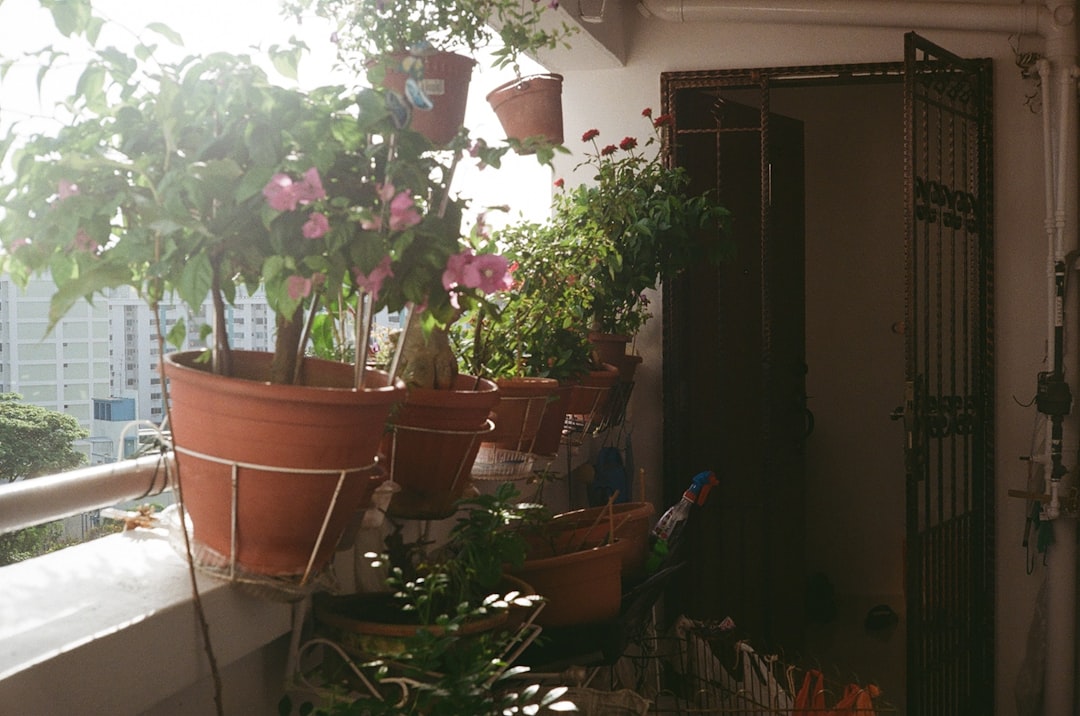
Before you buy a single pot, spend a few days observing your space. How many hours of direct sunlight does it receive? Does the wind pick up in the afternoon? Is there a water source nearby, or will you be carrying a watering can up a flight of stairs? These details shape every decision that follows.
Most edible plants — tomatoes, peppers, herbs, leafy greens — need at least 6 hours of direct sun daily. Shade-tolerant plants like ferns, impatiens, and some mint varieties can manage with 3 to 4 hours. Matching your plant list to your actual light conditions is the single most important planning step beginners tend to skip.
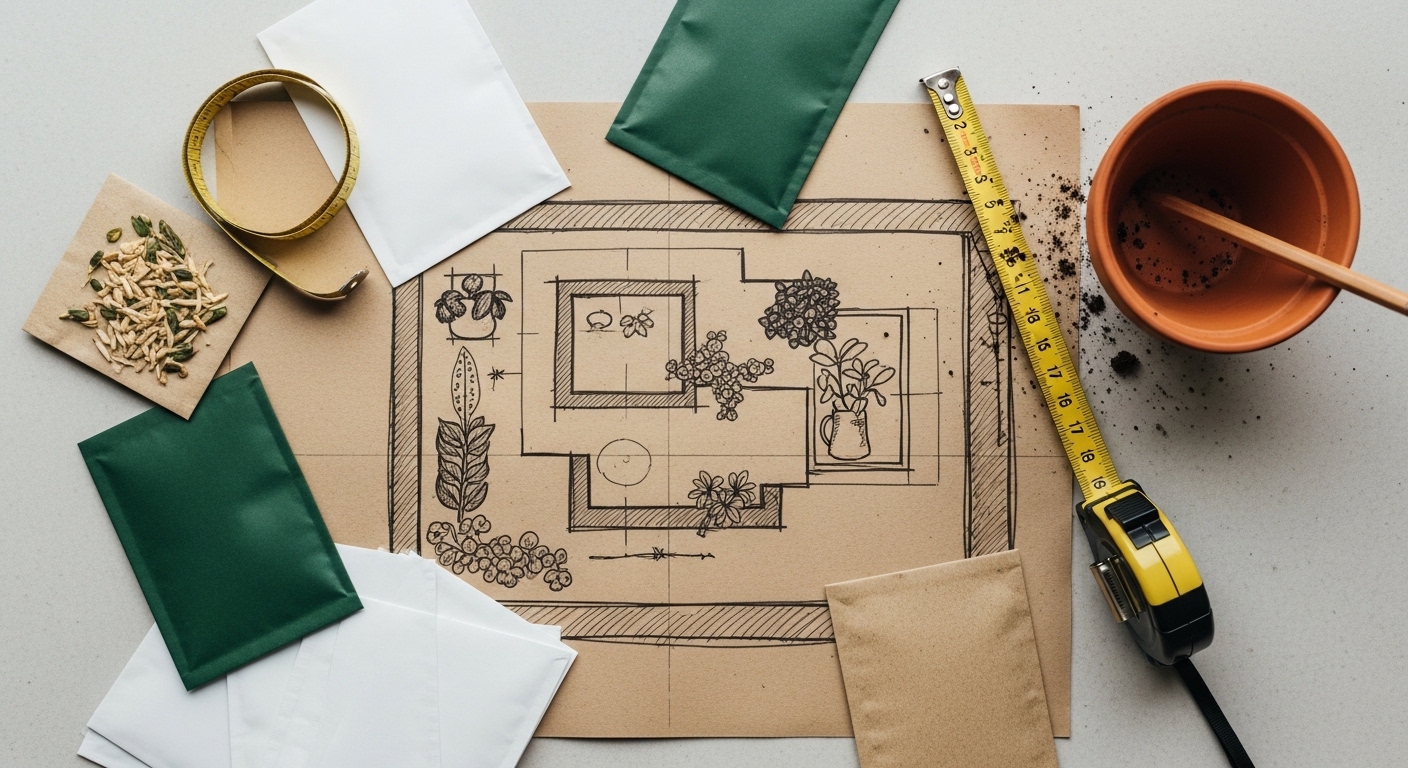
Sketch a rough layout before purchasing. Think about which plants will grow tall (and cast shade on shorter neighbors), which will trail over pot edges, and which need to stay accessible for frequent harvesting. A little forethought prevents a lot of rearranging later.
Best Containers and Setup Ideas
The right container does more than hold soil — it regulates moisture, temperature, and root health. Choosing well here saves you from a lot of troubleshooting down the line.
Drainage is non-negotiable. Every container must have at least one drainage hole. Roots sitting in waterlogged soil will rot, often before you notice anything wrong above the soil line. If you fall in love with a decorative pot that lacks drainage, use it as a cachepot — place a functional grow pot inside it and remove it for watering.
Material matters more than most beginners expect:
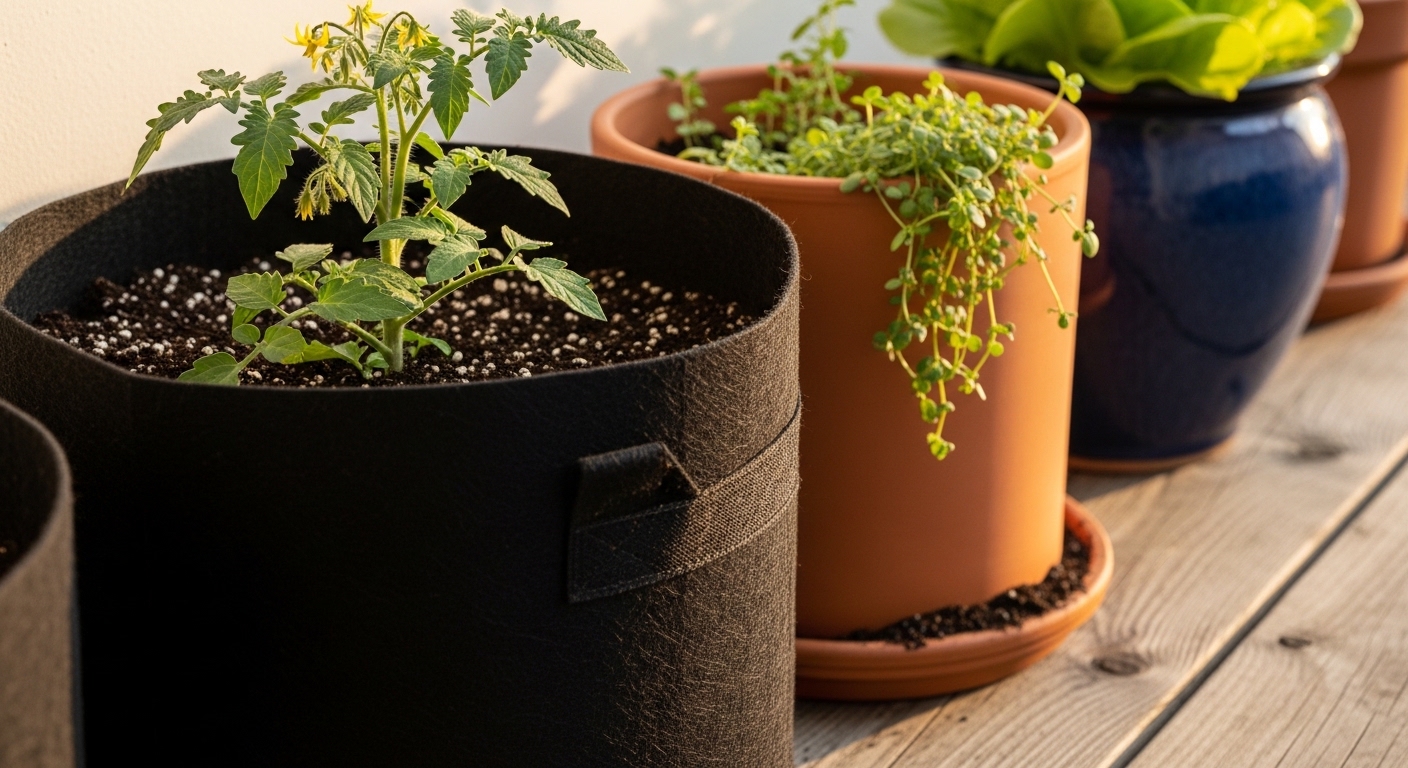
- Terracotta — breathable, helps prevent overwatering, but dries out faster and can crack in frost
- Glazed ceramic — retains moisture longer, heavier, good for moisture-loving plants
- Plastic — lightweight, affordable, retains moisture well, ideal for balconies with weight limits
- Fabric grow bags — excellent air pruning of roots, great drainage, folds flat for storage
- Wooden crates or boxes — insulate roots from heat, but need lining to prevent rot
Pot size is where many beginners underestimate. A pot that is too small restricts root development and dries out within hours on a warm day. As a general guide:
- Herbs (basil, parsley, chives): minimum 15–20 cm diameter
- Lettuce and leafy greens: 20–25 cm diameter, at least 15 cm deep
- Tomatoes and peppers: 30–40 cm diameter, 30+ cm deep
- Dwarf fruit trees or large perennials: 45–60 cm diameter minimum
When in doubt, go one size up. A larger pot holds more soil volume, which buffers moisture and temperature fluctuations — two of the biggest stressors for container plants.
Plant Selection for Small Spaces
Not every plant adapts well to life in a pot. The best container plants tend to have compact root systems, tolerate some moisture fluctuation, and offer a strong return for the space they occupy. Here are reliable choices across categories:
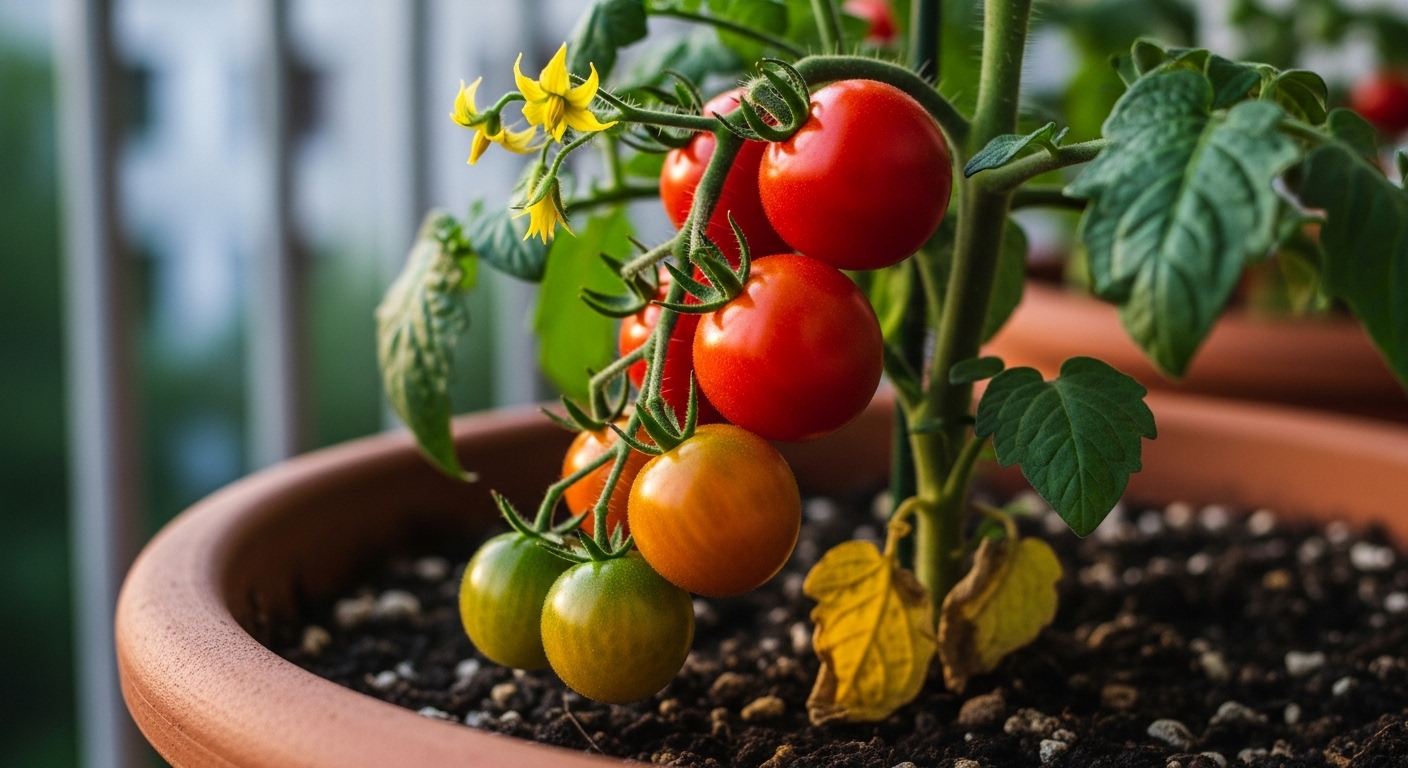
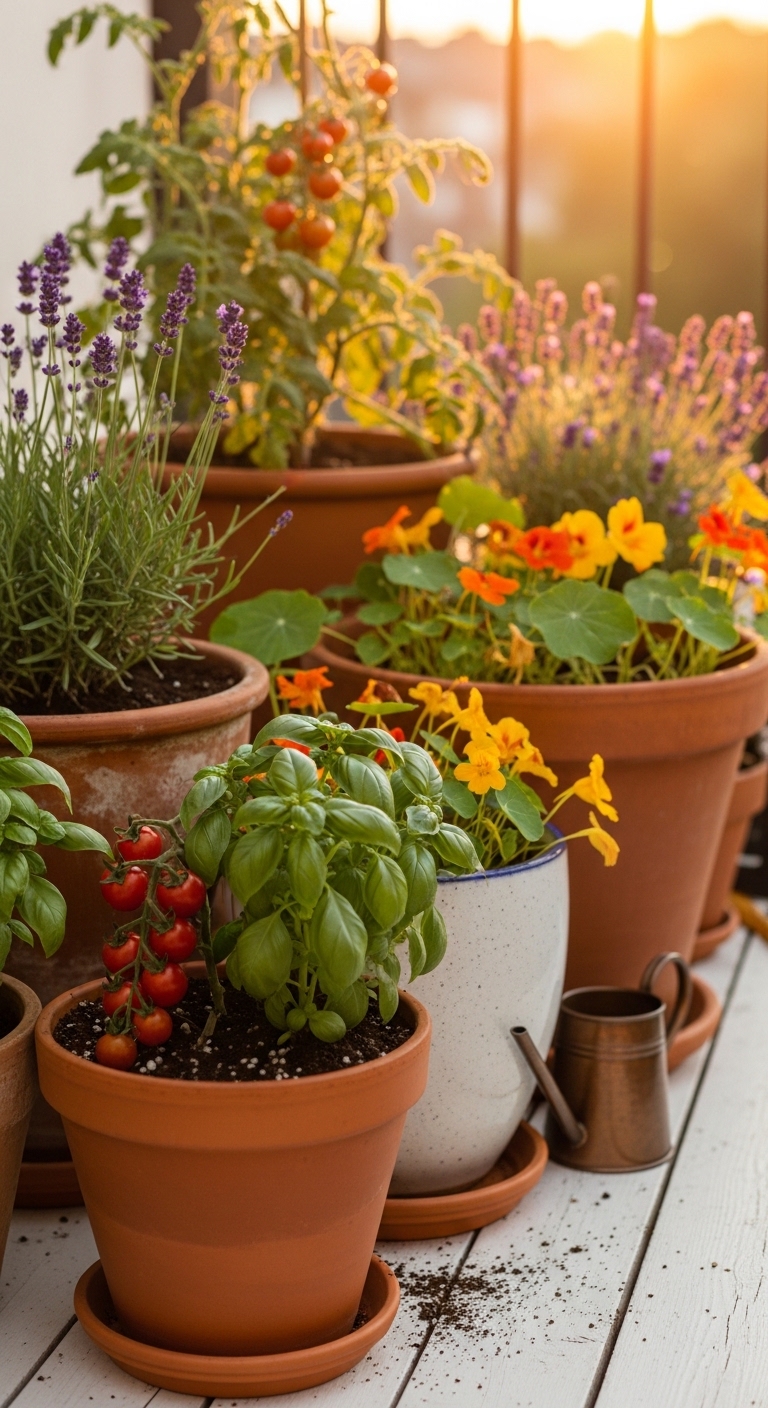
- Cherry tomatoes — productive, manageable size; choose patio or dwarf varieties for pots under 35 cm
- Basil — fast-growing, fragrant, pairs well with tomatoes in neighboring pots
- Lettuce and spinach — shallow roots, quick harvest, ideal for window boxes
- Dwarf chili peppers — compact, ornamental, and genuinely productive in a 25 cm pot
- Nasturtiums — edible flowers, trail beautifully, tolerate poor soil
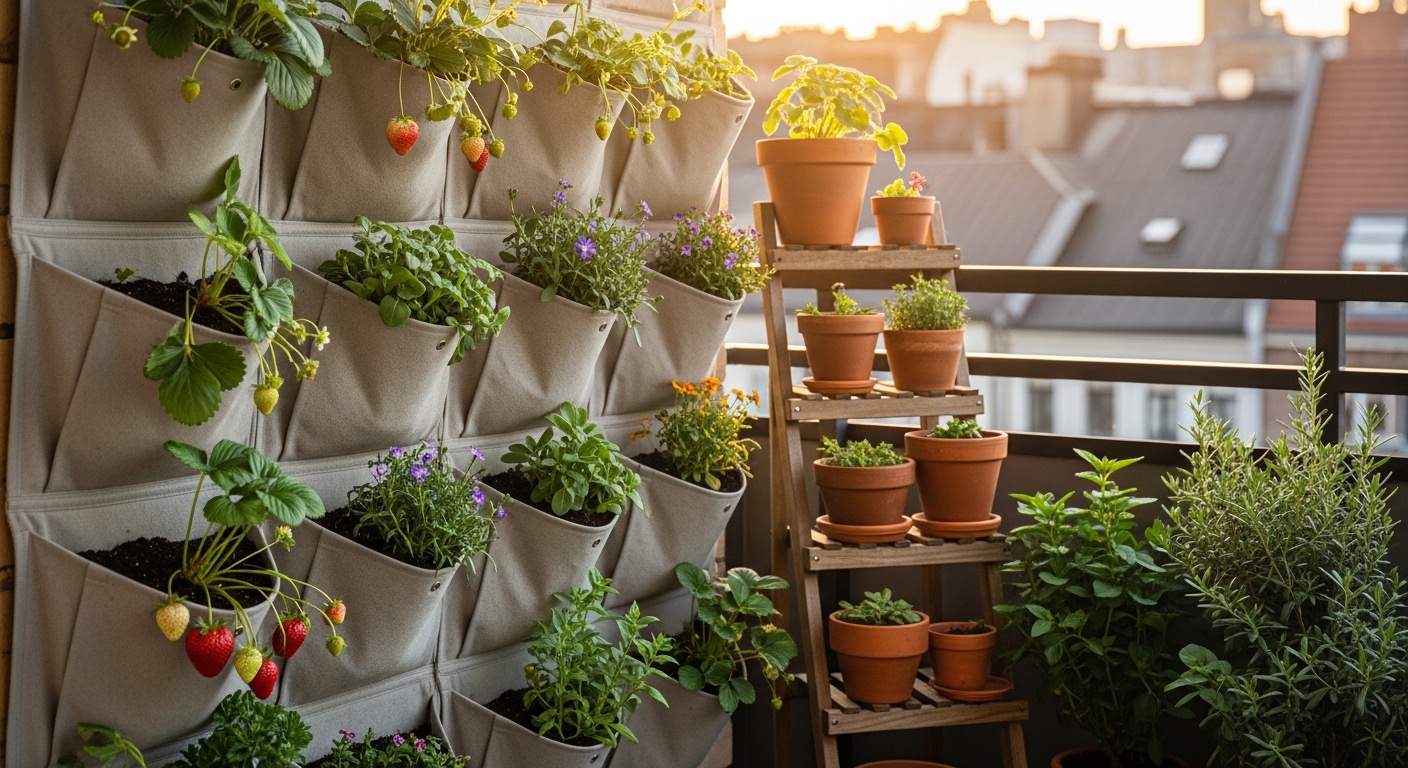
- Strawberries — well-suited to hanging baskets and tiered planters
- Mint — vigorous grower that actually benefits from container confinement (it can take over a garden bed)
- Marigolds — low-maintenance, deter some pests, add color through the season
One thing many growers notice early on: compact or 'patio' variety labels on seed packets and plant tags are genuinely useful guides, not just marketing. A standard indeterminate tomato in a 30 cm pot will struggle; a 'Tumbling Tom' or 'Balcony Red' in the same pot can produce well all summer.
Watering and Nutrition in Containers
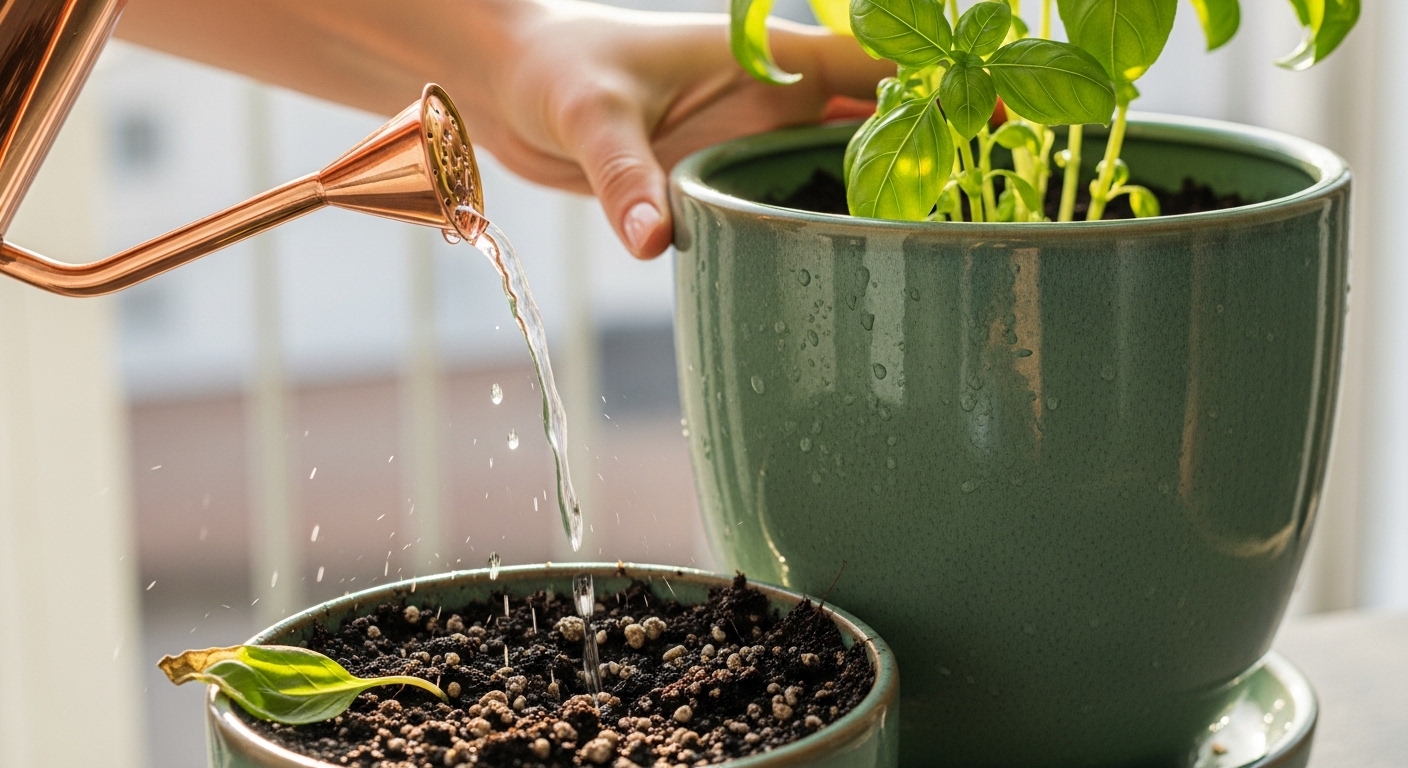
Container plants dry out faster than garden beds because the soil volume is limited and pots — especially terracotta and dark-colored containers — absorb and release heat. In warm weather, some pots may need watering daily. In cooler seasons or for moisture-retaining glazed pots, every 2 to 3 days may be sufficient.
The most reliable method: push your finger 2 cm into the soil. If it feels dry at that depth, water thoroughly until it drains freely from the bottom. If it still feels moist, wait another day. Avoid light, frequent splashes — these wet only the surface and encourage shallow root growth.
Nutrition depletes faster in containers too. Rain and regular watering gradually flush nutrients from the limited soil volume. A balanced liquid fertilizer applied every 2 weeks during the growing season generally keeps most edibles and flowering plants performing well. For heavy feeders like tomatoes, a potassium-rich feed once fruits begin to form can help support development.
Signs your container plants may need attention:
Wilting despite moist soil — possible root rot from poor drainage or overwatering
Pale or yellowing leaves — often a sign of nitrogen deficiency or waterlogged roots
Stunted growth mid-season — may indicate the pot is too small or nutrients are depleted
Soil pulling away from pot edges — the mix has dried out and become hydrophobic; soak the pot in a tray of water for 20 minutes to rehydrate
Maximizing Vertical Space
When floor space runs out, look up. Vertical growing is one of the most practical strategies for small-space container gardeners, and it does not require expensive systems.
Simple approaches that work well:
- Wall-mounted pocket planters — fabric or felt pockets attached to a fence or wall, ideal for herbs and strawberries
- Tiered plant stands — allow multiple pot sizes at different heights, maximizing sun exposure for each level
- Railing planters — hook-on containers that sit over balcony railings, freeing up floor space entirely
- Trellises in large pots — a bamboo trellis or simple wire frame inserted into a deep container lets climbing plants like beans, cucumbers, or small-fruited squash grow vertically
- Hanging baskets — excellent for trailing plants like strawberries, nasturtiums, or cherry tomatoes bred for hanging growth
Weight is a real consideration on balconies. Wet soil is significantly heavier than dry, and large containers can be surprisingly heavy once planted. Check your balcony's load rating if you plan to use many large pots, and consider lightweight plastic containers or fabric bags for upper-level placements. When in doubt, consult your building's specifications or a structural professional.
Beginner-Friendly Setup Checklist
Before your first seeds go in or your first transplants arrive, run through this list. It covers the essentials that make the difference between a container garden that struggles and one that genuinely produces.
- Assess your light — count actual hours of direct sun over two or three days before choosing plants
- Choose containers with drainage holes — no exceptions; add a saucer underneath to protect surfaces
- Select the right pot size — match container depth and width to the root system of your chosen plants
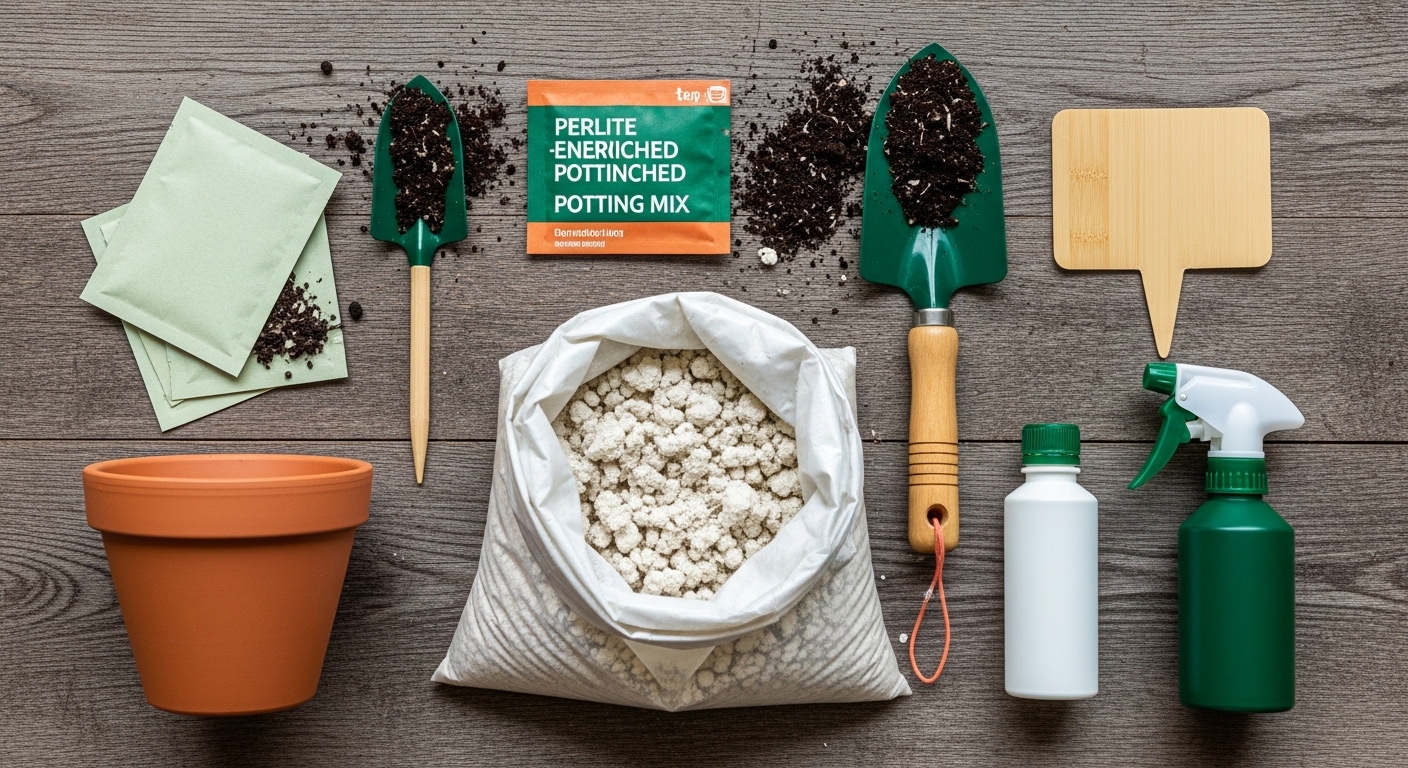
- Use a quality potting mix — never use garden soil in containers; it compacts and drains poorly. Look for a mix containing perlite or coarse sand for aeration
- Set up a watering routine — check soil moisture daily in warm weather, every 2 days in cooler periods
- Plan your fertilizing schedule — start feeding with a balanced liquid fertilizer 4 to 6 weeks after planting, or sooner if using a nutrient-free mix
- Position plants before filling with soil — wet, planted containers are heavy and difficult to move
- Label everything — seedlings look remarkably similar; a simple stick label saves confusion later
Getting your first container garden set up well takes a bit of upfront thought, but the payoff is real. There is something genuinely satisfying about harvesting a handful of cherry tomatoes or snipping fresh basil from a pot you planted yourself — even if that pot is sitting on a third-floor balcony in the middle of a city. Start with two or three containers, choose plants suited to your light, and build from there. If you find yourself curious about growing edibles indoors through winter, exploring indoor grow light setups is a natural next step. And if pests start showing up uninvited — as they sometimes do — a guide to common container garden pests is worth having bookmarked.


Comments
Post a Comment