Vertical Garden Ideas for Small Outdoor Spaces
Limited square footage doesn't have to mean limited growing space. Vertical gardening — the practice of growing plants upward on walls, frames, and tiered structures — is one of the most practical ways to reclaim unused surface area on a balcony, patio, or narrow courtyard. Whether you're working with a single fence panel or a tiny terrace, a well-planned vertical garden can produce herbs, flowers, and even vegetables without taking up a single square meter of floor space. This guide covers everything from structure selection to sun exposure management, so you can build something that actually works — not just looks good in photos.
Planning Your Vertical Space
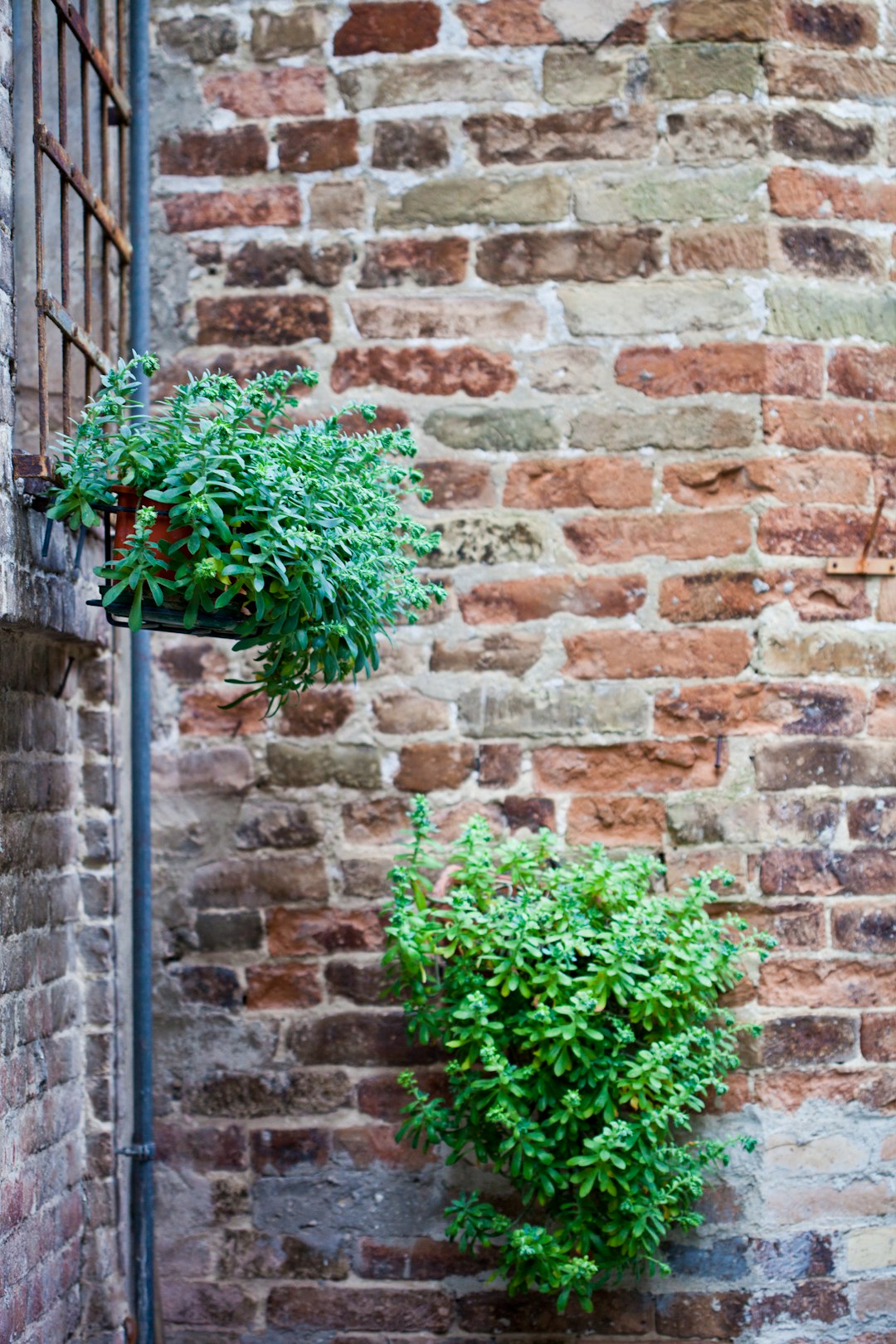
Before buying a single planter, spend a few days observing your space. Note where direct sun falls in the morning versus the afternoon, which walls get wind exposure, and whether there are any overhangs that might block rainfall. These observations will shape every decision that follows — from which plants you choose to how often you'll need to water.
Measure your available wall or fence area carefully. A standard pallet frame is roughly 120 x 80 cm, while modular wall planter systems can be configured in almost any dimension. Think about weight, too — a fully planted, watered vertical garden can be surprisingly heavy, and not every wall or railing is rated for that load. When in doubt, consult a structural professional before mounting anything permanently.
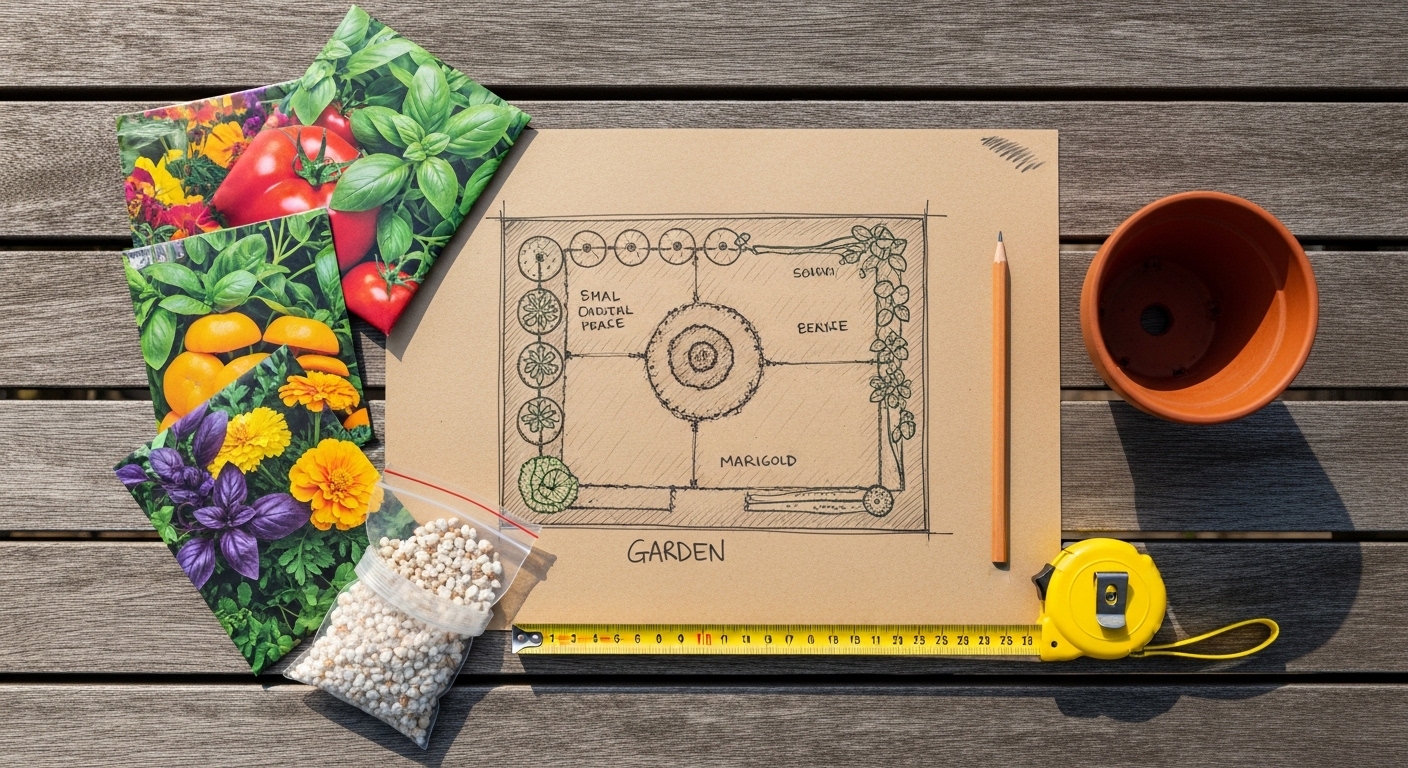
Sketch a rough layout before committing. Group plants with similar water and light needs together — this makes irrigation far simpler and reduces the chance of overwatering drought-tolerant plants sitting next to thirsty ones.
Best Containers and Structure Ideas
The structure you choose determines how your vertical garden functions day to day. Each option has real trade-offs worth understanding before you invest time and money.
Wall planters — whether fabric pocket systems, ceramic wall-mounted pots, or modular plastic panels — are the most versatile option for renters or anyone who wants flexibility. Fabric pocket planters are lightweight, affordable, and drain well naturally, though they tend to dry out faster than rigid containers, especially in summer heat.
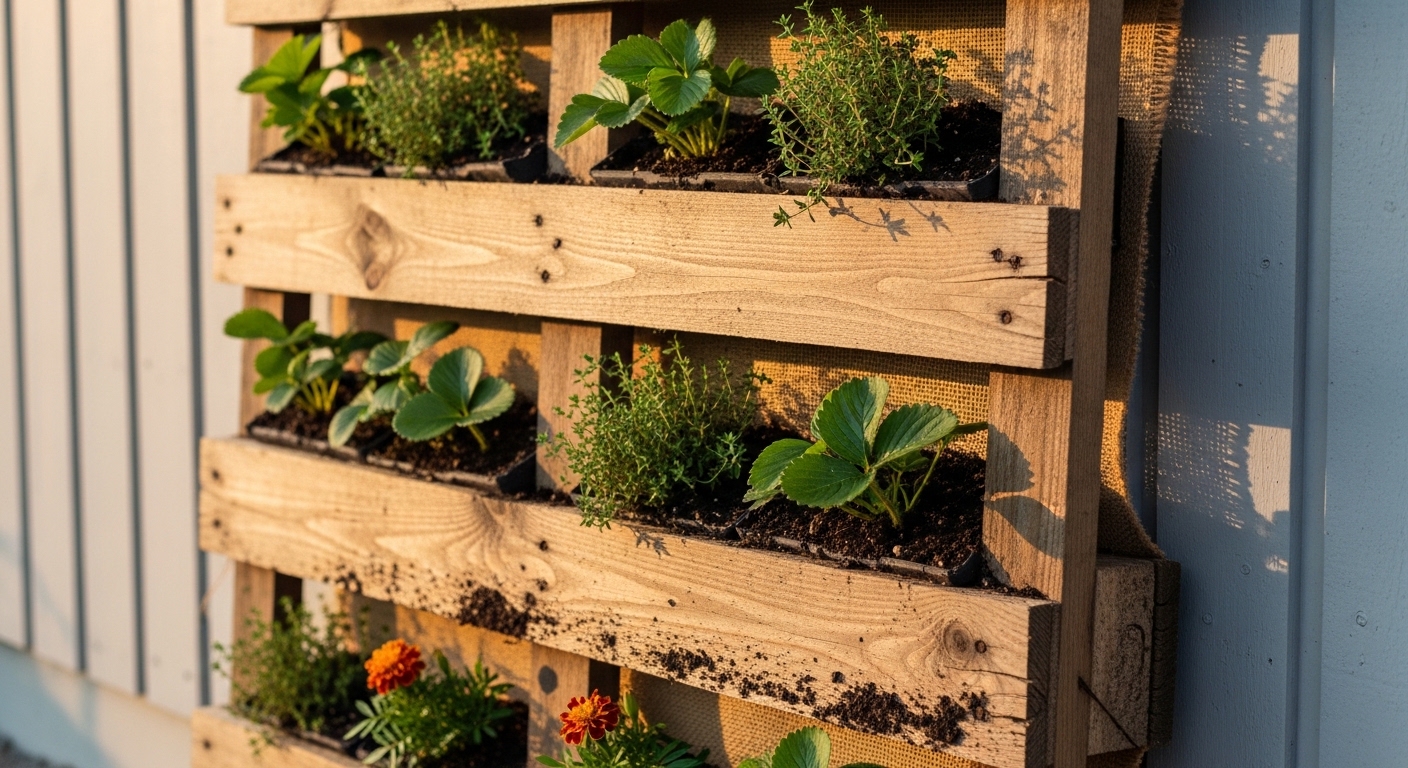
Pallet frames are a popular DIY choice. A reclaimed wooden pallet can be lined with landscape fabric, filled with a lightweight potting mix, and stood upright against a wall or fence. Many growers find that pallets work best when planted and left horizontal for two to three weeks before being stood upright — this gives roots time to anchor before gravity becomes a factor. Look for pallets stamped "HT" (heat-treated) rather than "MB" (methyl bromide-treated), which is a chemical treatment you'd want to avoid in a food garden.
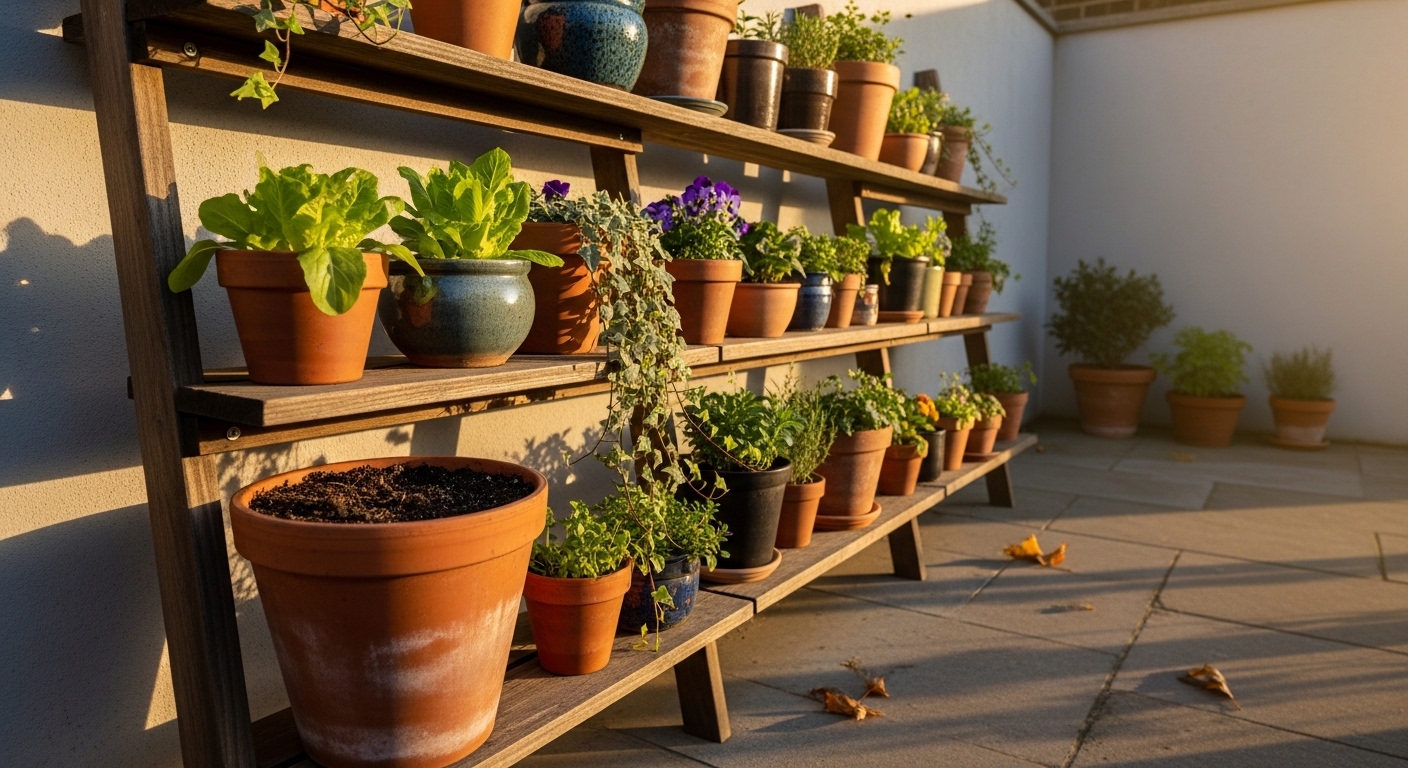
Tiered shelving — freestanding metal or wooden ladder shelves — offers the most flexibility for container swapping and seasonal rotation. They don't require any wall mounting, which makes them ideal for renters, and you can move individual pots around as sun patterns shift through the seasons.
- Fabric pocket planters: Lightweight, good drainage, best for herbs and annuals
- Pallet frames: DIY-friendly, rustic aesthetic, suits trailing and compact plants
- Modular wall panels: Scalable, clean look, higher upfront cost
- Tiered ladder shelves: No mounting required, easy to reconfigure, suits mixed container sizes
- Rail planters: Clip onto balcony railings, minimal footprint, good for herbs and flowers
Plant Selection for Vertical Gardens
The best plants for vertical gardens share a few key traits: compact root systems, tolerance for shallower soil volumes, and ideally, some drought resilience. Deep-rooted vegetables like carrots or parsnips are poor candidates. Shallow-rooted herbs, trailing flowers, and compact leafy greens tend to perform much better.
Sun exposure is the single biggest variable in plant selection. A south-facing wall in full sun for six or more hours per day opens up a very different plant palette than a shaded north-facing fence that gets only reflected light.
For sunny walls (6+ hours direct sun):
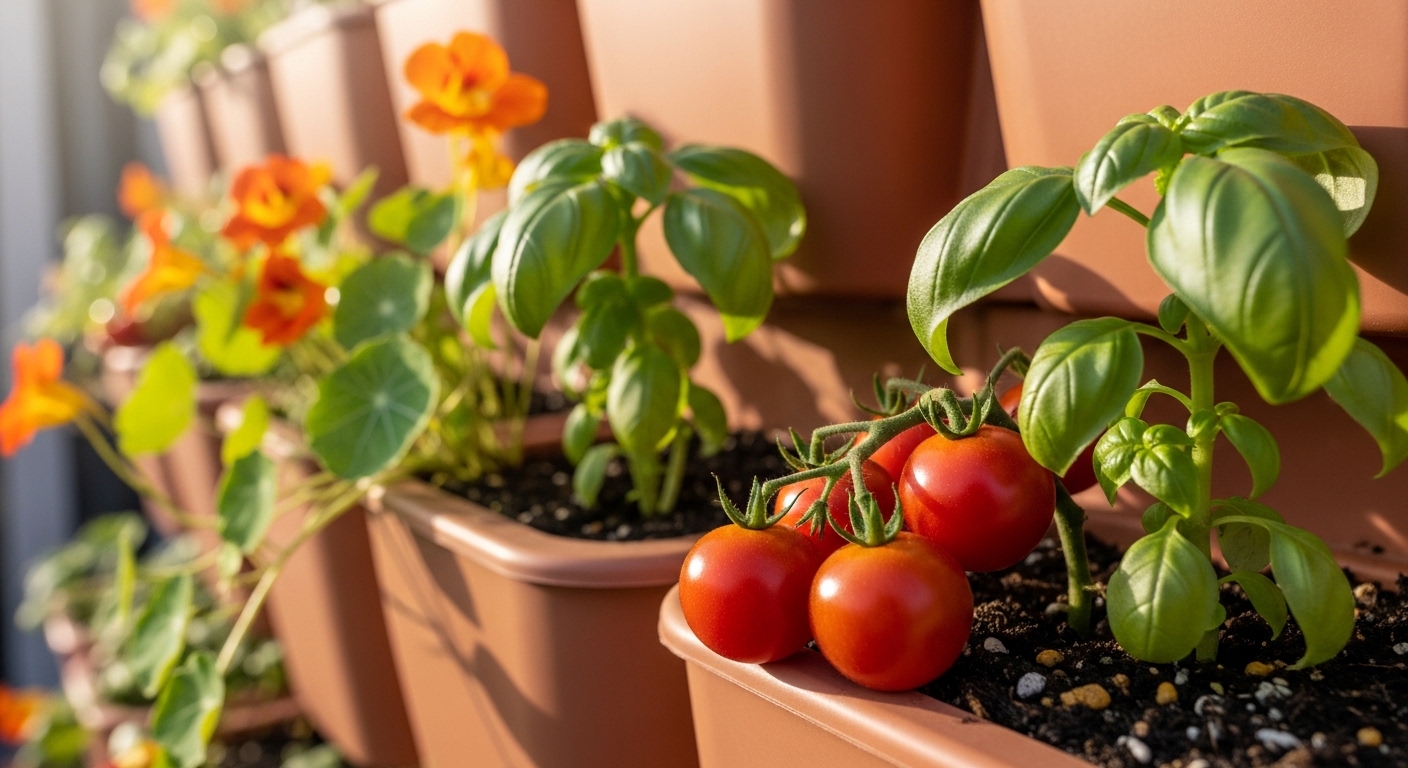
- Basil: Loves heat, harvest regularly to prevent bolting
- Cherry tomatoes (compact varieties): Need deep pockets or larger containers, very rewarding
- Nasturtiums: Trail beautifully, edible flowers, extremely low-maintenance
- Thyme and oregano: Drought-tolerant once established, fragrant
- Strawberries: Ideal for pocket planters, fruit cascades attractively
For partial shade (3–5 hours sun):
- Mint: Actually prefers some afternoon shade, spreads vigorously so keep contained
- Lettuce and spinach: Bolt less quickly with shade protection in warmer months
- Ferns and begonias: For purely ornamental walls with limited light
- Parsley and chives: Tolerant of lower light, consistent producers
Place your most drought-tolerant plants at the top of a vertical structure — heat rises, and upper pockets dry out significantly faster than lower ones. Moisture-loving plants do better toward the base.
Watering and Nutrition in a Vertical Setup
Watering is where most vertical gardens struggle. Gravity pulls moisture downward, meaning upper pockets dry out faster, and hand-watering from the top can leave lower sections either waterlogged or barely damp depending on your structure. Getting this right early saves a lot of frustration.
For small setups with fewer than 12 pockets or containers, hand-watering with a long-spout watering can works fine — but check soil moisture at multiple levels, not just the top. Push your finger or a wooden skewer about 2–3 cm into the soil in both upper and lower pockets. Water when the upper pockets feel dry at that depth, and adjust frequency based on what you observe in the lower sections.
For larger installations, a simple drip irrigation system makes a significant difference. A basic timer-controlled drip line threaded through or behind your structure can deliver consistent moisture to each planting zone. Follow manufacturer instructions when setting up any irrigation hardware, and check emitter flow rates to ensure even distribution across all levels.
Nutrition matters more in vertical gardens than in ground beds, because containers have finite soil volume and nutrients leach out with frequent watering. A balanced liquid fertilizer applied every two to three weeks during the growing season generally keeps plants producing well. Slow-release granular fertilizer worked into the potting mix at planting time can also reduce how often you need to feed.
- Check soil moisture at multiple vertical levels — not just the top
- Water slowly to allow absorption rather than runoff
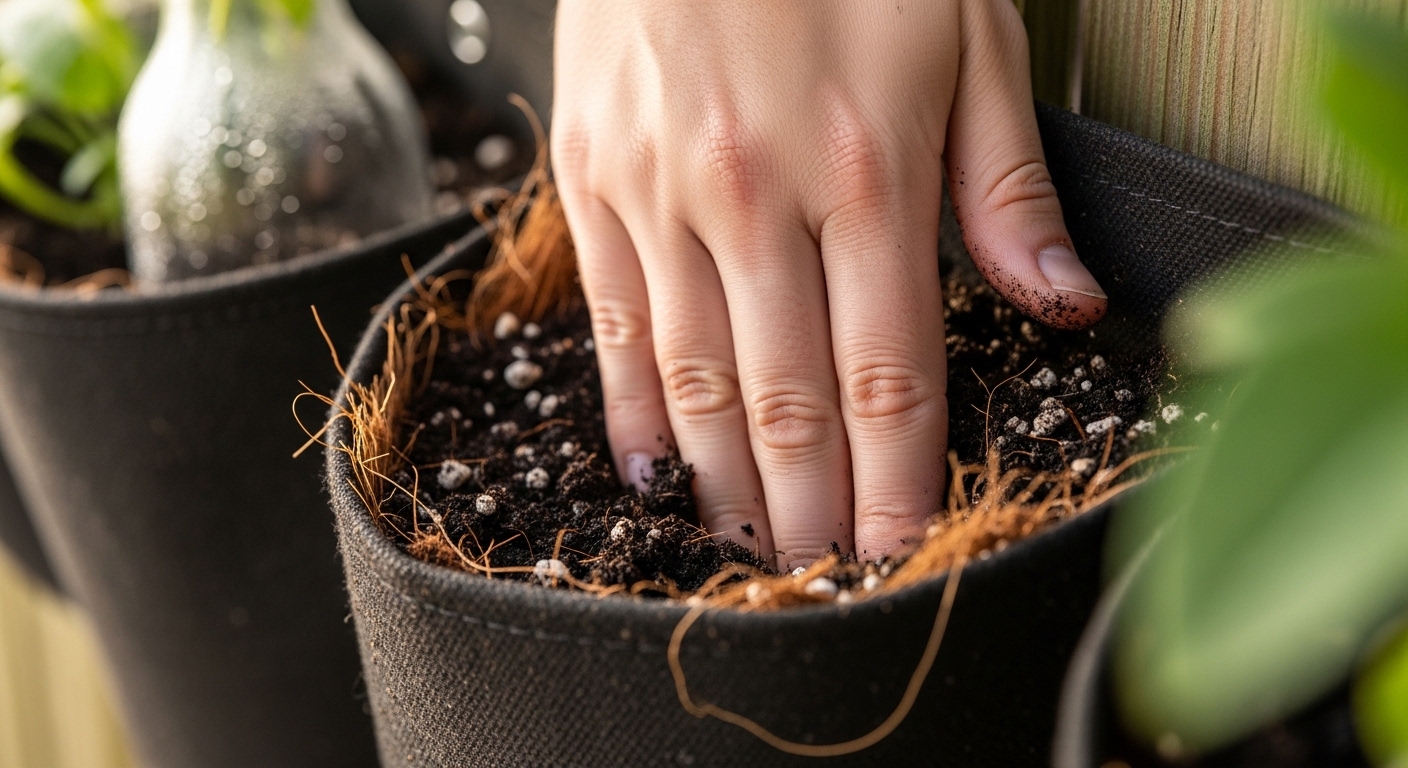
- Use a water-retentive potting mix with added coconut coir for vertical pockets
- Feed with liquid fertilizer every 2–3 weeks during active growth
- In hot weather, check moisture daily — small containers can dry out within 24 hours
Managing Sun Exposure and Seasonal Shifts
Sun exposure in a vertical garden isn't static. The angle of sunlight changes significantly between spring and late summer, and a wall that receives six hours of direct sun in June may get considerably less in October. This seasonal shift affects both plant health and your watering schedule — cooler, lower-light conditions mean slower evaporation and slower growth.
One advantage of tiered shelving systems over fixed wall planters is the ability to reposition containers as seasons change. In late summer, you might move heat-loving herbs to a sunnier shelf position while shifting cool-season greens like lettuce to a shadier spot to extend their productive life before the first frost.
For fixed wall planter systems, managing sun exposure comes down to plant selection and timing. Cool-season crops — spinach, lettuce, pansies, chives — can be planted in early spring or autumn when sun intensity is lower. Swap them out for heat-tolerant herbs and flowers as temperatures climb. Many growers find that a simple seasonal rotation, planned before planting, prevents the frustration of watching cool-season plants bolt in midsummer heat.
If your only available wall faces north or receives heavy shade, don't give up on the idea entirely. Shade-tolerant ferns, begonias, and trailing ivy can create a genuinely striking ornamental wall, and herbs like mint, parsley, and chives will produce reasonably well with just a few hours of indirect light.
Beginner-Friendly Setup Checklist
Getting started doesn't require a big budget or advanced DIY skills. A basic vertical garden can be assembled in an afternoon with a few key materials and a clear plan.
- Observe your space for at least 3 days — track sun hours and wind exposure before choosing a location
- Choose your structure — fabric pocket planter, pallet, modular panel, or tiered shelf based on your wall type and budget
- Check load-bearing capacity — confirm your wall, fence, or railing can support the weight of a fully planted, watered system
- Select a lightweight potting mix — avoid heavy garden soil; look for mixes with perlite and coconut coir for better drainage and water retention
- Choose plants matched to your light conditions — group by water needs, place drought-tolerant varieties at the top
- Set up a watering routine before planting — decide whether you'll hand-water or install a drip line
- Plant, water thoroughly, and monitor daily for the first two weeks — new plantings in vertical systems need close attention while roots establish
- Plan a seasonal swap — decide in advance which plants will replace cool-season crops when temperatures rise
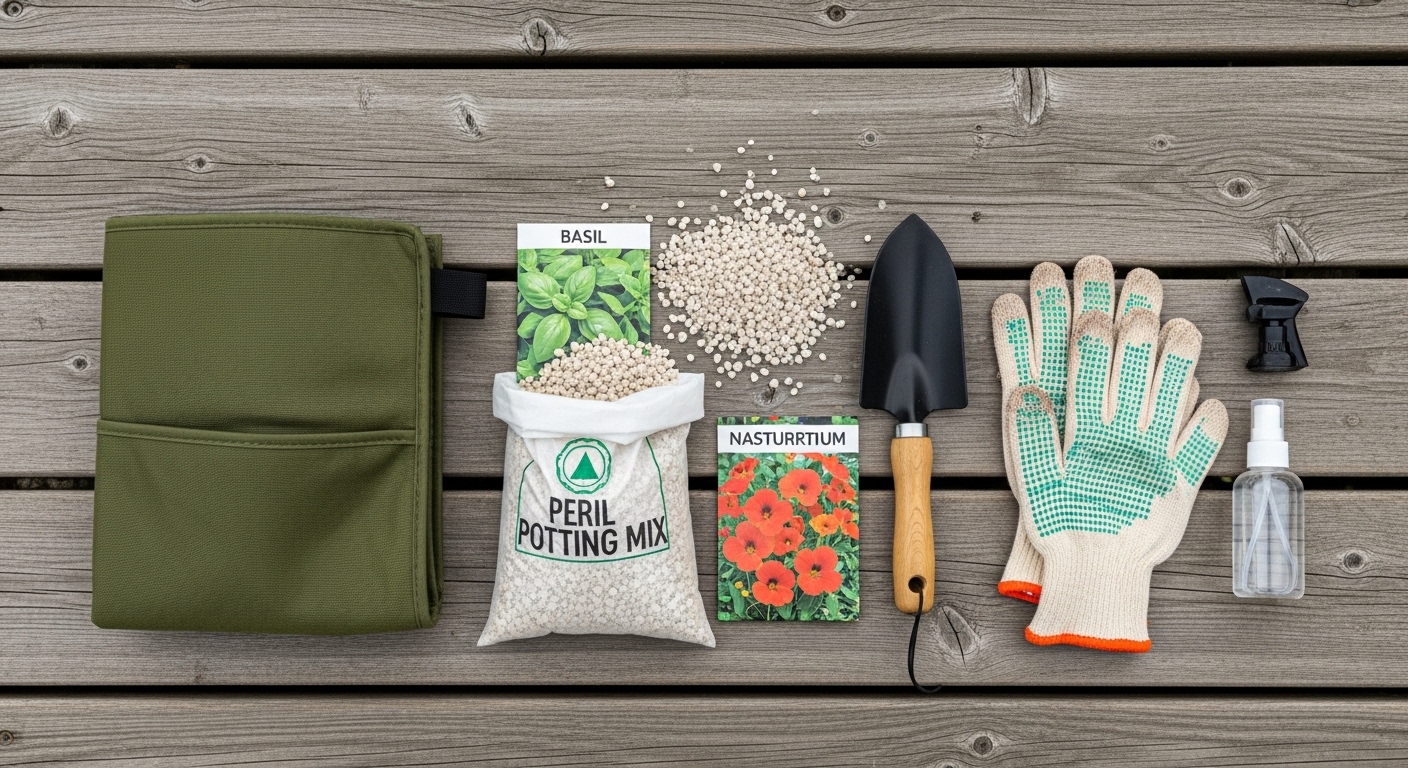
Starting small is genuinely the right move here. A single fabric pocket planter with six to eight herb pockets teaches you more about vertical gardening — moisture management, sun tracking, root behavior in shallow soil — than any amount of reading. Once you understand how your specific wall and microclimate behave through one growing season, expanding becomes much more intuitive.
There's something quietly satisfying about harvesting fresh basil or picking a handful of strawberries from a wall that was bare concrete six weeks ago. Give it one season, pay attention to what your plants are telling you, and the next iteration will be noticeably better. If you're also thinking about container soil mixes or balcony irrigation systems, those topics are worth exploring alongside your vertical setup — they connect directly to everything covered here.


Comments
Post a Comment